Liquid Chalk vs Block Chalk — Pros & Cons (2026)
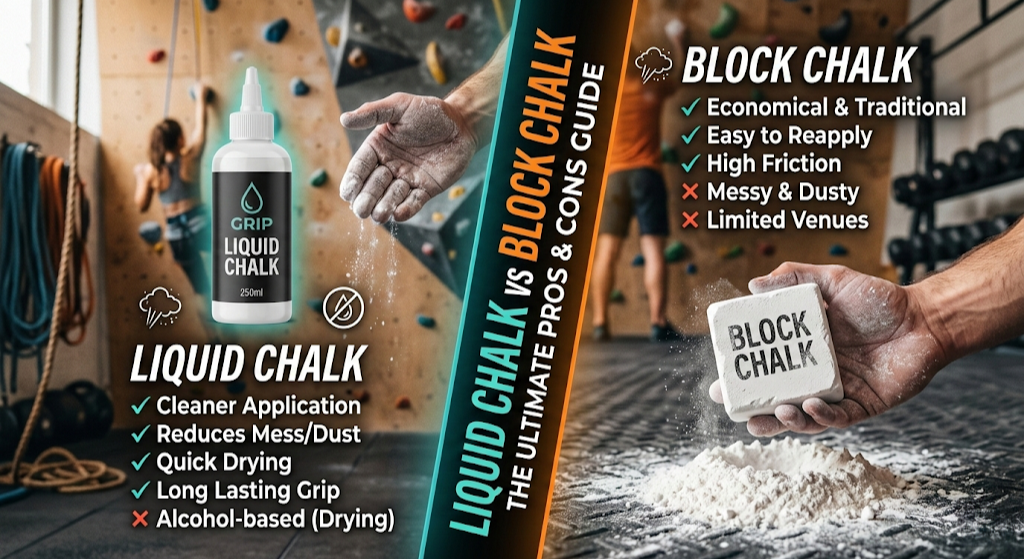
Both types are magnesium carbonate. Both eliminate the moisture variable between your palms and the bar. But how they apply, how long they last, where you can use them, and how much they cost per session are meaningfully different. Here’s the complete breakdown so you can pick the right chalk — or learn why most serious lifters use both.
📋 In This Guide
The liquid vs block chalk debate comes up in every strength gym because both types are everywhere — and because the people who swear by each have real reasons. Liquid chalk users love the clean application and gym-policy compliance. Block chalk users point to purity of feel and cost per use. Neither camp is wrong. They’re optimising for different things.
The productive question isn’t which type is better in the abstract — it’s which is better for your specific training context, and whether the answer changes across different movements in the same session.
Quick Answer — Which Should You Use?
How Each Type Works
Both liquid and block chalk are magnesium carbonate — the same compound. The difference is purely in how the compound is prepared and delivered to the skin surface.
- Composition: Magnesium carbonate suspended in an isopropyl alcohol solution
- Application: Squeeze a small amount onto palms, rub together for 10–15 seconds until the alcohol evaporates and a dry chalk layer remains
- Mechanism: The alcohol carries the MgCO₃ into fine skin creases and locks it there as it evaporates — producing a more even, deeper-bonded chalk layer than friction-applied block chalk
- Durability: Lasts through 3–5 sets before reapplication is needed; longer in lower-sweat conditions
- Mess: Minimal — dried chalk doesn’t flake off during application; excess stays on hands rather than dusting the floor
- Composition: Pure compressed magnesium carbonate — no additives, no carrier solution
- Application: Rub the block directly against the palms, or break off and crumble a section for a chalk bucket; friction transfers MgCO₃ to skin surface
- Mechanism: Chalk coats the outer skin surface and fills moisture — doesn’t bond as deeply as alcohol-delivered liquid chalk but provides excellent coverage with heavier application
- Durability: 1–2 sets per application under heavy loading; reapply frequently for max-effort work
- Mess: Significant — excess chalk dusts during application and transfers to equipment, bars, and floor with each set
- Both types do the same thing: They absorb moisture from the palm surface, reducing the coefficient of friction drop that occurs when skin is wet. Sweat dramatically reduces grip security — chalk neutralises it.
- Liquid chalk’s alcohol evaporation creates a binding effect that surface-applied block chalk doesn’t replicate, producing slightly longer-lasting coverage per application.
- Block chalk, applied heavily, provides more chalk mass on the surface — preferred by some powerlifters for a maximally loaded feel on single max-effort pulls where fresh application per set is practical.
- Neither type changes your actual grip strength. Both only manage moisture. The base grip strength remains yours.
Liquid Chalk — Full Breakdown
Liquid chalk has become the default for gym-goers who train in commercial facilities, CrossFit boxes with chalk restrictions, or any environment where mess management matters. Here’s the complete picture of where it excels and where it falls short.
- Gym-policy compliant almost everywhere. The vast majority of gyms that ban loose chalk explicitly permit liquid chalk because there’s no dust or floor contamination. If you train commercially, liquid chalk is the only viable option in most facilities.
- Longer lasting per application. The alcohol-bonded layer holds through 3–5 consecutive sets before meaningful performance degradation — important for high-rep accessory work, circuit training, and WODs where you can’t re-chalk between every set.
- Portable and clean. A 50 ml bottle fits in any gym bag pocket. Application is contained to the hands. No chalk bucket, no mess on the barbell between sets, no white powder footprints across the floor.
- Better for high-sweat hands. The alcohol-evaporation mechanism drives chalk deeper into palm creases — producing better coverage for lifters with naturally moist skin than surface-applied block chalk achieves.
- Consistent application. No technique required — squeeze, rub, wait for alcohol to dry. Experienced and inexperienced users apply it equally well.
- Higher cost per session. A 50 ml bottle providing ~50 uses costs roughly £8–12. Block chalk at equivalent application frequency is 4–6× cheaper per use.
- Skin drying with frequent use. Isopropyl alcohol dries the skin. Daily liquid chalk users frequently report cracking, peeling, and skin thinning — requiring regular hand moisturiser use between sessions.
- Cannot be applied mid-set. Unlike block chalk which you can dust onto your hands in seconds, liquid chalk needs 10–15 seconds of alcohol evaporation time — not practical under a loaded bar.
- Less tactile feedback on the bar. The thinner, more even coating provides slightly less of the chalk-on-knurling texture that many advanced lifters prefer for precise grip positioning on heavy pulls.
- Variable quality across brands. Low-quality liquid chalk often has too little MgCO₃ concentration and performs closer to hand sanitiser than real chalk — buying cheap is often a false economy.
Block Chalk — Full Breakdown
Block chalk is the original, unmodified version — pure magnesium carbonate with nothing added. It remains the preferred format in serious strength facilities, weightlifting clubs, and any environment where performance is prioritised over mess management.
- Lowest cost per use by a significant margin. A 1 kg bag of block chalk costs £8–15 and lasts months of regular training. Per-application cost is roughly 5–8× lower than liquid chalk.
- Maximally loaded feel on the bar. Heavy block chalk application provides a thick, textured layer on the knurling that many advanced lifters describe as providing better proprioceptive feedback on bar position during heavy pulls.
- No skin-drying effect. Pure MgCO₃ with no alcohol component — no cumulative skin damage from repeated application. Preferred by lifters with sensitive or already-dry skin.
- Instant application. Block chalk can be applied in under 5 seconds. You can chalk up between attempts in competition, between reps in a superset, or seconds before a max-effort set with no waiting period.
- No concentration variability. 100% MgCO₃ is 100% MgCO₃ — no risk of under-concentration or filler ingredients degrading performance.
- Banned in most commercial gyms. The most significant practical limitation — if your gym prohibits chalk, block chalk is not an option regardless of its performance advantages.
- Significant mess. Block chalk dusts onto bars, floors, clothing, and adjacent equipment. A chalk bucket is essential for containing it, and still requires routine floor and bar cleaning.
- Shorter duration per application. Under heavy sweat conditions, a single block chalk application lasts 1–2 sets maximum. High-volume accessory work requires frequent re-chalking.
- Not portable in the same way. Carrying a loose chalk block without a dedicated container is impractical. Chalk balls offer a more portable format but at some compromise on application coverage.
- Variable application technique. A beginner applying too little block chalk gets noticeably worse coverage than an experienced user — there’s a skill element to getting even, adequate coverage that liquid chalk eliminates.
Sport-by-Sport Recommendation Guide
The right chalk type varies meaningfully by training context. Here’s the direct recommendation for each major discipline:
| Sport / Context | Recommended Type | Why | Notes |
|---|---|---|---|
| Powerlifting (training) | Block chalk | Max tactile feedback, instant re-application between sets | Liquid as backup in restricted facilities |
| Powerlifting (competition) | Block chalk | All serious meets provide chalk buckets; block is standard | Train with block to match competition conditions |
| Olympic weightlifting | Block chalk | Bar speed and tactile feedback critical for snatch/clean grip | Liquid acceptable for accessories only |
| CrossFit / MetCon | Liquid chalk | Lasts multiple movements in a WOD without re-chalking | Many boxes have chalk policies — liquid is safe |
| Commercial gym training | Liquid chalk | Policy compliance — nearly all commercial gyms ban block chalk | Spider Chalk, FR Secret Stuff for high-sweat users |
| Rock climbing (indoor) | Either / chalk ball | Wall-specific rules vary; chalk ball is lowest-mess option | Excess chalk damages holds — use sparingly regardless |
| Grip training (grippers / carries) | Liquid chalk | Longer duration suits multi-set grip sessions; less reapplication | Block for farmer’s carries in chalk-permitted facilities |
| High-sweat hands | Liquid chalk | Alcohol-bonded layer resists sweat better than surface-applied block | FR Secret Stuff or Spider Chalk specifically for this use case |
Top Picks in Each Category
One recommendation per format — the best-performing option based on testing across real training sessions, not just application feel.
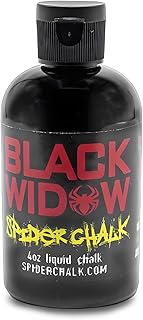
It was specifically developed for powerlifters and gymnasts who had been forced into liquid chalk by gym policies but wanted performance closer to block chalk. For high-sweat-hand lifters in commercial gyms, it closes the gap with block chalk more than any other liquid format tested. The bottle design also prevents over-application — a genuine issue with cheaper squeeze bottles that dispense too much per use and burn through the product quickly.
- High MgCO₃ concentration — noticeably thicker dry layer than competitors
- 4–5 sets per application under real heavy loading
- Controlled bottle dispenser prevents over-use and waste
- Gym-policy compliant — accepted everywhere liquid chalk is permitted
- Best choice for naturally sweaty hands
- Higher cost than basic liquid chalk brands
- Like all liquid chalk, dries skin with frequent daily use
- Still doesn’t match block chalk’s tactile feedback on max-effort pulls

The block format means you control application density precisely — light dust for accessory work, heavy chalk for max-effort deadlifts. In testing at training weights above 180 kg, heavy block chalk application provides a distinctly different grip feel compared to liquid chalk: denser, more textured, with better knurling engagement feedback. This isn’t placebo — the thicker surface coating genuinely changes what you can feel happening at the bar-hand interface. The only requirement is a gym that permits it.
- Lowest cost per use of any chalk format — fraction of liquid cost
- Maximum tactile feedback on bar knurling
- No alcohol — no skin-drying side effects
- Instant application — no drying time required
- Standard format for all serious strength competitions
- Banned in most commercial gyms — check before using
- Creates significant chalk dust during application and lifting
- Requires chalk bucket for clean use; can’t use without one
- Shorter duration per application than liquid chalk
Full Head-to-Head Comparison
| Factor | Liquid Chalk | Block Chalk | Winner |
|---|---|---|---|
| Grip performance | Very good — bonded layer | Best — maximum surface coverage | Block chalk |
| Duration per application | 4–5 sets | 1–2 sets | Liquid chalk |
| Cost per session | £0.20–0.30 / use | £0.02–0.05 / use | Block chalk |
| Gym policy compatibility | Permitted almost everywhere | Banned most commercial gyms | Liquid chalk |
| Mess / cleanliness | Minimal dust, contained | Significant dust and floor coverage | Liquid chalk |
| Application speed | 10–15 sec drying time | Under 5 seconds | Block chalk |
| Skin health | Dries skin — alcohol content | No skin impact — pure MgCO₃ | Block chalk |
| Portability | 50 ml bottle — any bag | Requires container / chalk bag | Liquid chalk |
| Tactile bar feedback | Good — thin even layer | Best — thick textured layer | Block chalk |
| Competition standard | Accepted at most meets | Standard at all serious meets | Block chalk |
Frequently Asked Questions
Use What Your Gym Allows — Then Optimise From There
The liquid vs block decision is largely made by your gym for you. If you train commercially, liquid chalk is probably your only option — buy the highest-concentration product you can find and manage skin dryness with hand cream. If you train in a chalk-permitted facility, block chalk on heavy sets and liquid as a portable backup gives you the best of both.
The trap to avoid: spending mental energy optimising chalk type when the more meaningful grip variable is often simply using enough chalk, applied correctly, on every set that requires it.
WHICH CHALK IS BEST FOR SWEATY HANDS?
We tested five chalk types under real high-sweat training conditions. Here’s what actually works.
Best Chalk for Sweaty Hands →