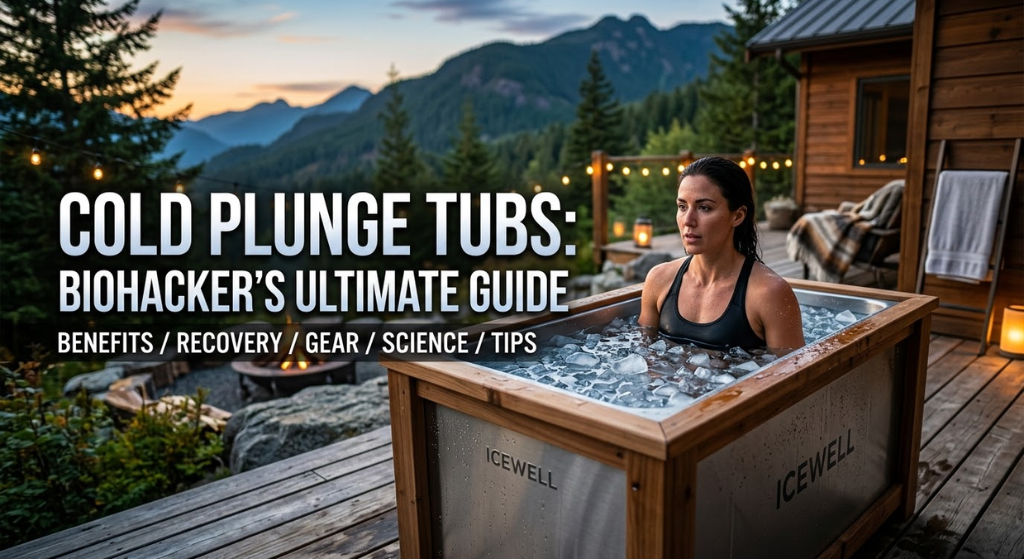
Cold water immersion is one of the most researched, most accessible, and most misunderstood biohacking tools available. The dopamine boost is real. The anti-inflammatory effects are clinically documented. The fat-burning claims are mostly overstated. This guide cuts through the noise — covering what the science actually supports, how to build a protocol for your specific goals, which temperatures and durations produce which effects, and which cold plunge tubs on Amazon are genuinely worth buying.
🧊 Bottom Line Up Front1. Temperature matters more than duration. 50–59°F (10–15°C) is the evidence-backed sweet spot — cold enough to trigger the neurochemical and metabolic responses, warm enough to be sustainable for 2–5 minute sessions. Going colder than this produces diminishing returns for most benefits and increases cardiovascular risk. 2. Eleven minutes per week is the minimum effective dose — split across 2–4 sessions (Huberman Lab synthesis of current research). 3. Do not cold plunge immediately after strength training — cold immersion blunts the inflammatory signal needed for muscle protein synthesis and can reduce strength gains when used within 1 hour of resistance training.
50–59°FThe optimal temperature range — 10–15°C
11 minMinimum effective weekly exposure — split across 2–4 sessions
250%Dopamine increase above baseline — sustained for hours post-plunge
What the Science Actually Says — Benefits Graded by Evidence
The cold plunge market is worth an estimated $338 million and growing — and with that growth has come a substantial amount of marketing-driven overstatement of what the research actually demonstrates. Here is an honest, evidence-graded breakdown of the most commonly cited benefits.
✓ Strong Evidence
Dopamine & Mood Elevation
Cold water immersion produces a sustained 250% increase in dopamine above baseline, alongside significant rises in norepinephrine (up to 300%) and serotonin. Unlike stimulant-induced neurotransmitter spikes, these increases are gradual in onset and sustained for 2–4 hours post-plunge — producing a calm, focused state rather than a crash. The effect is consistent across study populations and does not require extreme temperatures or durations.
✓ Strong Evidence
Reduced DOMS & Perceived Soreness
Cold water immersion consistently reduces delayed onset muscle soreness (DOMS) and perceived recovery time in athletic contexts. The vasoconstriction-then-vasodilation cycle reduces localized inflammatory markers and improves tissue perfusion post-exercise. Important caveat: this benefit comes at a cost — the same anti-inflammatory effect that reduces soreness can also blunt the anabolic adaptation signal when used immediately after strength training. Best applied for recovery between sessions, not immediately after lifting.
✓ Strong Evidence
Improved Stress Resilience
Regular deliberate cold exposure trains the nervous system’s capacity to manage acute stress — the principle of hormesis. Cold immersion produces a controlled stress response that gradually shifts the stress threshold, making the baseline stress response in daily life feel more manageable. Research on neurohormesis confirms that short-term cold exposure builds neural resilience that extends to non-cold stressors. This is the benefit most consistently reported by long-term practitioners.
≈ Probable Benefit
Metabolic Rate & Brown Fat Activation
Cold exposure activates brown adipose tissue (BAT), which generates heat by burning calories — a process called thermogenesis. A 2015 study demonstrated a 43% increase in peripheral insulin sensitivity after 10 days of mild cold acclimation. The effect is real but modest for most people: meaningful BAT activation requires consistent, sustained cold exposure over weeks. The caloric expenditure from a single 5-minute cold plunge is small. Long-term metabolic improvements are more significant than short-term calorie burn claims.
≈ Probable Benefit
Cellular Resilience & Cold-Shock Proteins
Cold exposure triggers production of cold-shock proteins, particularly RNA-binding motif protein 3 (RBM3), which enhances cellular repair mechanisms and may have anti-aging effects at the cellular level. A 2024 study in Advanced Biology demonstrated that brief cold immersion initiates cellular changes supporting metabolic health and immune function. Cold exposure also increases mitochondrial biogenesis. The research is promising but still maturing.
⚠ Limited Evidence
Immune System Enhancement
Some studies show cold exposure increases white blood cell counts and NK cell activity in the short term. A 2016 RCT found cold shower practitioners reported 29% fewer sick days than controls. However, the mechanisms are not well understood, and the effect size is modest. Cold plunging does not prevent infection — it may modulate immune readiness in mild ways. Extreme cold exposure in immunocompromised individuals can have the opposite effect.
✗ Overhyped
Significant Fat Loss
Cold plunging alone will not produce meaningful fat loss. The caloric expenditure from shivering and thermogenesis during a 5-minute plunge is modest — roughly 20–30 calories above resting. While long-term BAT adaptation may marginally increase baseline metabolic rate, the effect size is far smaller than social media claims suggest. Cold plunging supports metabolic health as part of a comprehensive lifestyle, but is not a fat-loss protocol in isolation.
✗ Overhyped
Testosterone & Growth Hormone Surge
Claimed testosterone and growth hormone increases from cold plunging are not supported by robust human evidence. Some studies show transient increases in certain hormones, but the effect sizes are small, short-lived, and inconsistent across populations. The claims circulating on social media about cold plunges dramatically increasing testosterone or GH are extrapolations from limited, often rodent-model research. Don’t choose a cold plunge protocol based on hormone optimization claims.
🧊
The honest summary: Cold water immersion is a genuinely useful biohacking tool with real, measurable effects on mood, stress resilience, and recovery. The dopamine and stress-adaptation effects alone justify the practice. The fat loss, testosterone, and immunity claims are significantly overstated. Go in with accurate expectations and you’ll find it extraordinarily valuable — go in expecting a metabolic transformation and you’ll be disappointed. Full science breakdown at Cold Plunge Benefits — What Science Actually Says.
The Temperature Guide — What Each Zone Does
Temperature is the most important variable in cold water immersion — more important than duration, frequency, or breathing technique. Different temperature zones produce genuinely different physiological responses. Understanding these zones allows you to target the specific benefit you’re seeking rather than defaulting to “as cold as possible.”
Cold Water Immersion Temperature Spectrum
32°F / 0°CNear-freezing
44°F / 7°CExtreme
50°F / 10°COptimal low
59°F / 15°COptimal high
65°F / 18°CCool water
65–70°F / 18–21°C
Cool water — minimal therapeutic effect. Uncomfortable but not challenging. Does not trigger the cold shock response or meaningful neurochemical adaptation at rest. May provide some circulation benefit during exercise.
59–65°F / 15–18°C
Beginner zone — entry-level cold therapy. Triggers mild cold shock response and norepinephrine release. Accessible for beginners and suitable for building initial tolerance before moving to the optimal range. Good starting point for the first 2–4 weeks.
50–59°F / 10–15°C
★ Optimal therapeutic range. Consistently shown in research to produce the strongest combination of dopamine/norepinephrine release, cold-shock protein activation, metabolic response, and anti-inflammatory effects — without the cardiovascular strain of near-freezing temperatures. This is the standard institutional range (medical facilities, elite sport). Target this zone for all protocols once acclimated.
44–50°F / 7–10°C
Advanced — diminishing returns, increasing risk. Stronger cold shock response but not proportionally stronger therapeutic benefit compared to 50–59°F. Cardiovascular stress increases significantly. Reserve for experienced practitioners with no cardiovascular risk factors. Duration must be reduced proportionally.
Below 44°F / 7°C
Extreme — not recommended for routine practice. Near-freezing temperatures produce severe cold shock and significant cardiovascular demand. Risk of cold shock syncope, cardiac arrhythmia, and hypothermia increases dramatically. No evidence of proportionally greater therapeutic benefit. Not justified for health biohacking.
Cold Plunge Protocols by Goal
Protocol design — temperature, duration, timing, and frequency — should be determined by your primary goal. These are the four most common biohacking use cases, each with a distinct optimal protocol structure. For the full beginner protocol and timing guide, see How Cold, How Long — The Beginner’s Cold Plunge Protocol.
Protocol 1 — Dopamine & Mental PerformanceMost Popular
Temperature
50–59°F (10–15°C) — the optimal range for sustained neurochemical elevation
Duration
2–5 minutes per session. The dopamine rise peaks during the 3–5 minute window and remains elevated 2–4 hours post-plunge.
Timing
Morning, within 1 hour of waking. Pairs with the natural cortisol peak to produce a sharp, sustained alertness state. Replaces or reduces caffeine dependence for many practitioners.
Frequency
Daily or 5×/week. 11 minutes total weekly minimum. Daily practice produces the strongest neuroadaptation over time.
Breathwork
Slow, controlled nasal breathing during immersion. Physiological sigh (double inhale through nose, long exhale) to manage the initial cold shock response. Do NOT hyperventilate before entering — this suppresses CO₂ and increases blackout risk.
50–59°F (10–15°C) — sufficient for anti-inflammatory vasoconstriction without excessive cardiovascular stress post-exercise
Duration
5–15 minutes. Longer exposure (up to 15 min) is appropriate for endurance recovery where muscle hypertrophy is not the goal.
Timing
Within 30–60 minutes post-endurance training. Effective for reducing DOMS and accelerating readiness for next session. NOT recommended within 4 hours of strength/hypertrophy training.
Frequency
2–4× per week aligned with training days. On heavy training days: post-session. On rest days: morning for mental performance benefit.
Key Note
Avoid post-strength-training cold immersion. Cold blunts the inflammatory cascade required for muscle protein synthesis and hypertrophy signalling. Use heat (sauna) or passive recovery instead within 4 hours of lifting.
Protocol 3 — Metabolic Optimization & Brown Fat ActivationBiohacking
Temperature
55–59°F (13–15°C) — sufficient for shivering thermogenesis and BAT activation without extreme cardiovascular stress
Duration
5–10 minutes — long enough to allow shivering to begin. Shivering post-plunge activates succinate release and BAT thermogenesis; do not suppress it.
Timing
Within 60 minutes after a carbohydrate-rich meal. A 2025 study demonstrated a 20–30% reduction in postprandial glucose spike when cold exposure followed carbohydrate consumption — likely via enhanced GLUT4 glucose uptake in active brown fat.
Key Note
Allow shivering to occur naturally post-plunge — do not rush to warm up. Shivering generates succinate, which activates BAT directly. Warming artificially suppresses this metabolic activation window.
Frequency
Daily for 4–6 weeks to produce meaningful BAT adaptation. Intermittent cold exposure produces acute effects but not the sustained BAT activation that drives long-term metabolic change.
50–59°F (10–15°C) — the neurological adaptation occurs within this range without requiring extreme temperatures
Duration
2–4 minutes — focus is on quality of breath control and maintaining calm during cold shock, not duration maximization
Timing
Morning, before any stimulants. Track HRV daily (Oura, WHOOP, or Apple Watch) — meaningful HRV improvement is typically visible after 3–4 weeks of consistent practice.
Method
The goal is deliberate parasympathetic activation during the cold stress. Control breathing immediately on immersion — if you can slow your breathing within 30 seconds of entry, you’re training the stress response most effectively. The calm-during-discomfort is the adaptation, not the temperature itself.
Frequency
5–7× per week. HRV adaptation requires consistent stimulus — inconsistent practice produces inconsistent results.
Biohacker Stacking — Combining Cold with Other Interventions
Cold water immersion produces its strongest effects when stacked intelligently with complementary interventions. The order of operations matters significantly — some combinations are synergistic, others are counterproductive, and a few are genuinely dangerous.
🔥 Best Pairing
Sauna + Cold Plunge (Contrast Therapy)
The most evidence-backed cold plunge pairing. Sauna heat (170–190°F) followed by cold plunge (50–59°F) creates dramatic vascular cycling — extreme vasodilation then vasoconstriction. Sequence: sauna 10–15 min → cold plunge 2–3 min → repeat 2–4 rounds. Combined heat-cold contrast produces superior cardiovascular adaptation, HRV improvement, and growth hormone release vs either alone. The Norwegian “hot-cold” protocol is a well-studied implementation.
✓ Synergistic
Morning Sunlight + Cold Plunge
Cold plunging after morning light exposure (10–30 min outdoor light within 30 min of waking) stacks two of the most powerful circadian rhythm anchors available. Morning sunlight sets cortisol and serotonin; cold plunge amplifies dopamine and norepinephrine. Together they produce a robust, stimulant-free alertness state with lasting mood stability throughout the day. Huberman Protocol: light → movement → cold plunge in the first hour of waking.
⚠ Order Matters
Cold Plunge + Strength Training
Never cold plunge within 4 hours after strength training. The inflammatory signal that cold blunts (primarily IL-6 and mTOR pathway activation) is the same signal that drives muscle protein synthesis. Doing so measurably reduces hypertrophy adaptation. Cold plunge can be done in the morning if strength training is in the afternoon, or 4+ hours post-session. Pre-training cold plunge (1+ hours before lifting) shows no meaningful negative effect and may enhance CNS activation.
✗ Avoid
Cold Plunge + Wim Hof Hyperventilation
Never combine Wim Hof-style hyperventilation breathing with cold water immersion. Hyperventilation reduces blood CO₂, which can suppress the urge to breathe and cause hypoxic blackout — this has caused drowning deaths in cold water. Deliberate breathwork immediately before cold plunging should involve slow, controlled breathing only. The Wim Hof breathing exercises are safe on dry land; they become dangerous in or immediately before entering cold water.
🧬 Advanced
Cold Plunge + CGM Monitoring
For biohackers using continuous glucose monitors (CGM): timing cold exposure within 60 minutes of a carbohydrate meal and monitoring the postprandial glucose response provides real-time feedback on individual metabolic sensitivity. The 20–30% glucose spike reduction observed in research is highly individual — CGM data allows you to identify your personal optimal window and cold duration for maximum metabolic benefit from each session.
💤 Sleep Stack
Evening Cold Plunge Protocol
Cold plunging 2–3 hours before bed leverages the body’s natural temperature regulation during sleep onset. The post-plunge core temperature rise and subsequent drop mirrors the sleep-wake cycle’s thermoregulation, potentially deepening slow-wave sleep. Use a warmer temperature (59–65°F) for evening sessions — very cold temperatures close to bedtime can activate the stress response and delay sleep onset. Contrast this with morning protocol, which uses colder temperatures for alertness.
Beginner Cold Plunge Programme — Week by Week
Most people fail at cold plunging because they start too cold, too long, or without building the psychological tolerance that makes the practice sustainable. This 8-week progressive programme builds competence and confidence systematically. For the complete duration and temperature guide, visit How Cold, How Long — The Beginner’s Protocol.
Weeks 1–2
Cold Showers Only
End shower with 30–60 sec cold. 65°F+. Build initial tolerance. 5×/week.
Weeks 3–4
Entry-Level Plunge
59–65°F (15–18°C). 1–2 min. 2–3×/week. Focus on breathing control.
Weeks 5–6
Optimal Range Entry
55–59°F (13–15°C). 2–3 min. 3–4×/week. Work toward 11 min/week total.
Weeks 7–8
Full Protocol
50–55°F (10–13°C). 3–5 min. 4–5×/week. Implement goal-specific protocol.
Session Structure — Every PlungeStandard Template
Pre-Plunge
Set a timer. Slow breathing (4 counts in, 6 counts out) for 60 seconds before entry. Do not hyperventilate.
Entry
Enter slowly. Resist the urge to gasp. Take a physiological sigh (double nasal inhale, long exhale) on first contact to manage cold shock response. Then slow your breathing within 30 seconds.
During
Maintain slow nasal breathing throughout. If heart rate feels extreme or breathing cannot be controlled — exit. Safety over duration every time.
Exit
Do not towel off immediately — allow natural rewarming for 5–10 minutes (shivering is productive). Then warm naturally via movement before shower or heat.
Post-Plunge
Never follow cold plunge with sauna immediately after strength training (see stacking section). Post-plunge sauna is excellent for recovery and contrast protocol days.
Safety, Risks & Contraindications
Cold water immersion has a real safety profile — it is not a casual wellness activity for everyone. Cardiovascular risk, specifically, is genuine and must be assessed before starting any cold plunge protocol.
⚠ Absolute Contraindications
Do Not Cold Plunge If
Uncontrolled hypertension or history of heart attack
Cardiac arrhythmia or diagnosed heart disease
Raynaud’s syndrome or other peripheral circulation disorders
Diabetes — reduced sensation and circulation can mask danger signals
Anxiety disorders — cold shock can trigger panic attacks
Post-surgery (within 3 months) — circulation changes may affect healing
Never plunge alone — always have someone present or nearby
⚠️
The cold shock response is real and dangerous for cardiovascular patients. The first 30 seconds of cold immersion produce gasping, hyperventilation, and a spike in heart rate and blood pressure. In healthy individuals this is manageable. In those with undiagnosed or poorly-managed cardiac conditions, this spike can trigger arrhythmia or cardiac events. If you have any cardiovascular history or risk factors, obtain physician clearance before beginning a cold plunge protocol.
Tub Types Explained — Inflatable vs Barrel vs Hard-Shell
The cold plunge market has expanded dramatically. Three distinct product categories serve different budgets, spaces, and biohacking approaches — and the differences between them matter for both training utility and long-term use.
Inflatable / Portable Tubs
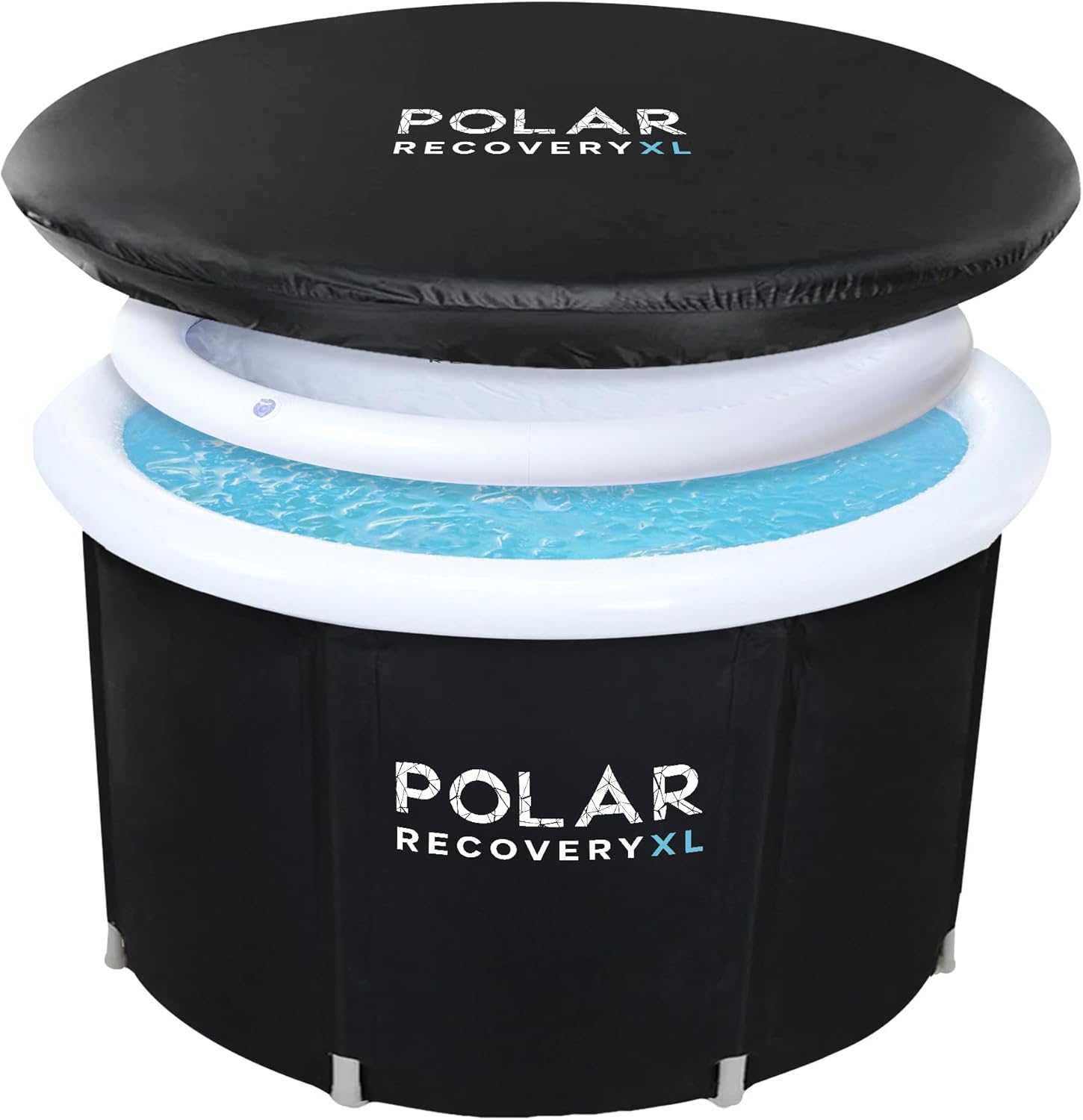
The most accessible category — multi-layer insulated tubs (typically PVC inner + foam insulation + nylon outer) that inflate or fold out for use. Price range $60–200 on Amazon. Require manual ice to reach target temperature (typically 50–55°F requires 20–30 lbs of ice). Best for: budget-constrained practitioners, apartment users, and those wanting to try cold plunging before investing in permanent infrastructure. Key limitation: ice cost and inconvenience at scale — at daily use, ice becomes expensive and time-consuming. For outdoor use year-round, seeBest Cold Plunge Tubs for Outdoor Use.
Barrel / Upright Tubs (Hard Shell)
Mid-tier category ($400–800) — hard-shell polypropylene or recycled plastic barrels that maintain temperature better than inflatables due to wall thickness and insulation. Sit upright (seated position rather than lying flat). Better for small outdoor spaces — compact footprint. Still require ice unless paired with a separate chiller unit. Best for: dedicated outdoor setup with limited footprint, practitioners wanting a durable permanent solution without the cost of a full chiller system.
Chiller-Equipped Tubs
Premium category ($800–$15,000+) — tubs with integrated or compatible chiller units that maintain precise temperatures without ice. Set your target temperature (50°F, 55°F, etc.), turn on the chiller, and the water stays there indefinitely with built-in filtration. Best for: serious biohackers doing daily protocols who want zero maintenance friction. The most important purchase criterion in this category is chiller power (horsepower) — a 0.5 HP chiller will struggle to maintain 50°F in ambient temperatures above 80°F. Premium options (Sun Home Pro, Polar Monkeys) achieve genuine temperature precision and self-clean filtration. Note: most chiller-equipped options are brand-direct, not Amazon-available — the Amazon picks in this guide cover the best inflatable and portable options.
Best Cold Plunge Tubs on Amazon
These are the best Amazon-available cold plunge tubs across five categories. All are inflatable or portable designs — the correct entry point for most biohackers starting their cold plunge journey. For permanent chiller-equipped setups, see the full outdoor tub guide.
🛒 Best Amazon Cold Plunge Tubs
🏆 Best Overall
The Cold Pod XL Ice Bath Tub
116 gal · Multi-layer insulated · UV-reflective cover · Indoor & outdoor · Fits 6’7″ · Easy-drain system
Most biohackers → The Cold Pod XL. Best balance of capacity, insulation quality, and value. The UV-reflective cover maintains temperature longer between plunges — critical for reducing daily ice cost.
Budget-first → Polar Recovery. Proven design, highly reviewed, lowest entry price. Start here and upgrade when you’re committed to a daily protocol.
Want session tracking → Brisk Bear. Built-in digital timer removes the need for a separate device during immersion — useful when you’re trying to hit specific protocol durations and don’t want a phone near water.
Small outdoor space, durable setup → VEVOR Barrel. Barrel shape has a smaller footprint than oval tubs and maintains structural rigidity better than purely inflatable designs outdoors.
Travel / apartment → PolarPod. 7.7 lbs empty makes it genuinely portable. Triple insulation means less ice required per session than single-layer competitors.
Frequently Asked Questions
The amount varies by tub insulation, ambient temperature, and starting water temperature — but a useful working estimate is 30–50 lbs of ice per session to bring 80–100 gallons of tap water (typically 60–70°F) down to the 50–59°F optimal range. In hot weather (above 85°F ambient), you’ll need more — closer to 50–60 lbs. A quality multi-layer insulated tub (like the Cold Pod XL or PolarPod) will hold that temperature for 1–2 hours with the cover on, making it suitable for a single-session daily protocol. If ice cost is a concern at scale (daily use adds up to $15–30/week in ice), this is the strongest argument for upgrading to a chiller-equipped tub — which eliminates ice entirely at a higher upfront cost.
The answer depends entirely on your training goal. For strength and hypertrophy: cold plunge in the morning, do resistance training in the afternoon — ideally with at least 4 hours of separation. Cold immersion within 4 hours of strength training measurably reduces muscle protein synthesis signalling and blunts hypertrophy adaptations. For endurance and cardiovascular training: cold plunge post-session (within 30–60 minutes) is beneficial — it reduces DOMS and speeds readiness for the next session without the hypertrophy cost, because endurance adaptation pathways are not disrupted by anti-inflammatory effects in the same way. For mental performance without training: morning cold plunge first thing, before any training. This produces the strongest dopamine elevation for the day.
The 11-minute weekly total is Dr. Andrew Huberman’s synthesis of multiple research studies identifying the threshold for consistent neurochemical and metabolic benefit. It represents a minimum effective dose — not an optimal dose. In practice, 11 minutes is easily achievable with 2–4 sessions of 2–5 minutes each at 50–59°F. The research basis for this number draws primarily from studies on dopamine release, norepinephrine elevation, and brown fat activation, each of which shows diminishing returns after the initial exposure in a session but cumulative benefits across the week. More than 11 minutes per week produces additional benefits up to a point — most serious cold therapy practitioners do 20–30 minutes per week across daily sessions. The 11-minute threshold is a pragmatic minimum for the time-constrained, not a ceiling.
For inflatable tubs without built-in filtration, a maintenance routine is essential to avoid bacterial growth. Standard protocol: shower before each plunge (remove sweat, sunscreen, and skin oils that degrade water quality); use a floating pool filter or submersible pump with a UV sanitizer between sessions; add a small amount of hydrogen peroxide (food-grade 3%, 1/4 cup per 80 gallons) or non-chlorine pool shock weekly; and change the water completely every 3–4 weeks. The cover is critical — UV-reflective covers prevent algae growth in outdoor tubs and slow bacterial development. In hot climates (above 85°F ambient), water will degrade faster — change more frequently. Some practitioners add food-grade chlorine tablets at minimal concentration (1–2 ppm) for daily-use tubs in warm weather.
Daily cold plunging is appropriate for experienced practitioners, but beginners should build to it gradually over 4–8 weeks. The physical adaptation (cardiovascular and thermoregulatory) and the psychological adaptation (managing cold shock and staying calm during immersion) both require progressive exposure to develop safely. The 8-week beginner programme in this guide starts with cold showers and works to full daily plunges at optimal temperatures. Jumping to daily cold plunging at 50°F as a complete beginner risks triggering an unmanageable cold shock response — not dangerous in a healthy person, but discouraging enough to end the practice prematurely. Build tolerance incrementally, and by week 6–8 you’ll find daily practice comfortable and even anticipated rather than dreaded.
The testosterone-boosting claims around cold plunging are significantly overstated. Some studies show transient testosterone increases immediately post-cold exposure, but the effect sizes are small, inconsistent, and not sustained over the hours following a plunge. The human research on cold water immersion and testosterone is limited, often conducted in small samples, and produces conflicting results — some studies show modest increases, others show no significant change. The social media claim that cold plunging dramatically increases testosterone is an extrapolation that goes well beyond what the evidence supports. If testosterone optimization is your goal, sleep quality, resistance training, body composition, zinc and vitamin D status, and stress management produce far larger, more consistent, and better-documented effects than cold immersion.
The rewarming method matters — and for metabolic optimization protocols, the natural rewarming period is specifically valuable. The biohacker approach: exit the tub, dry off minimally, and allow shivering to occur naturally for 5–10 minutes before applying any external heat. Shivering activates succinate release, which drives brown adipose tissue thermogenesis — this is one of the most important metabolic activation windows in the cold plunge protocol. Artificially suppressing shivering (hot shower immediately, heated blanket) reduces this benefit. After the natural shivering phase, movement (light walking, dynamic stretching) is the most efficient rewarming method. A hot shower or sauna after the shivering phase is beneficial and enhances contrast therapy effects. If you’re cold plunging for mental performance rather than metabolic goals, a warm shower sooner is fine — the dopamine and norepinephrine rise is not affected by rewarming method.
✓ Final VerdictCold water immersion is one of the most accessible, evidence-supported biohacking tools available — but only when used correctly. Target 50–59°F (10–15°C), 2–5 minutes per session, 11+ minutes per week total. Never cold plunge within 4 hours of strength training. Never hyperventilate before entering cold water. Build tolerance over 6–8 weeks. Stack intelligently with sauna contrast therapy and morning sunlight for the strongest combined effect. Treat fat-loss and testosterone claims with scepticism. The mood elevation, stress resilience, and recovery benefits are real, meaningful, and more than sufficient justification for a daily practice.