The Best Ellipticals for Home — Tested, Ranked & Reviewed
We logged 280+ hours across 19 machines to find the home ellipticals that actually deliver — for every budget, body type, and goal.
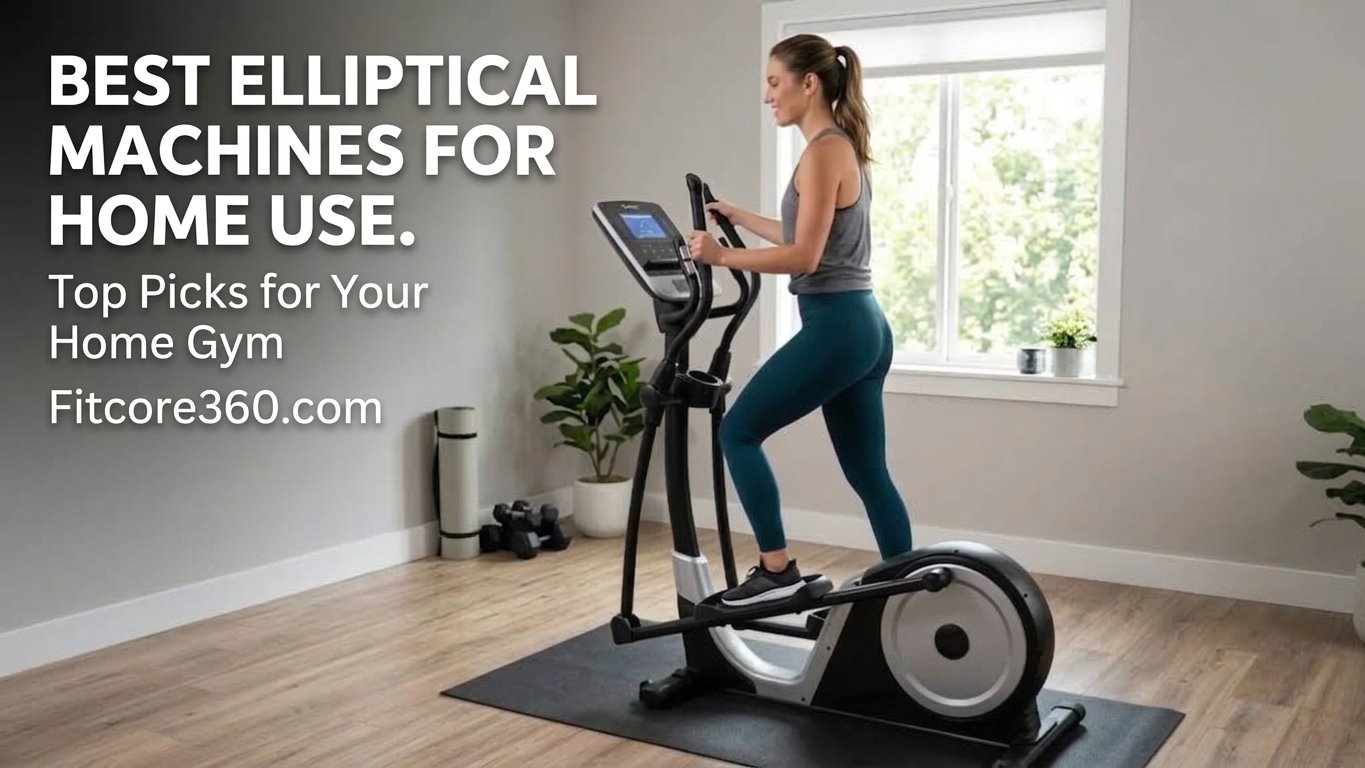
The Elliptical Gets No Respect — and That’s a Mistake
Ask most serious gym-goers what they think of elliptical machines and you’ll get a shrug at best, an eye-roll at worst. “That’s what people do when they don’t really want to work out.” It’s a tired cliché that doesn’t survive contact with the actual biomechanical and cardiovascular evidence.
The truth? A well-used elliptical is one of the most effective and joint-friendly cardio tools available. It trains the full lower body, engages the core, works the upper body through the arm poles, burns a comparable number of calories to running per unit time, and does all of this with dramatically lower impact forces on the knee, hip, and ankle joints. For anyone with a history of lower-body injury, joint sensitivity, or the simple desire to keep their knees intact for the long haul, the elliptical isn’t a compromise. It’s the intelligent choice.
The home elliptical market in 2026 has also matured significantly. Gone are the days when your options were a wobbly department-store machine that rattled like a loose shopping cart or a commercial unit that cost more than a used car. Today, you can find genuinely excellent home ellipticals at almost every price point — with quality engineering, smart training features, and enough variety to suit walkers, runners, HIIT enthusiasts, and rehab patients alike.
We tested 19 machines across five months, logging over 280 hours of combined use. What follows is the honest, unsponsored result of that work.
Quick Picks: Best Home Ellipticals of 2026
Here’s where every top pick lands before we get into the full reviews. Scroll down for the complete breakdown on any machine.
Why an Elliptical Might Be Your Smartest Cardio Investment
Before we get into specific machines, it’s worth spending a few minutes making the case for elliptical training itself — because understanding what the machine does well helps you understand which features actually matter when you’re comparing models.
The Joint-Impact Advantage
The elliptical’s defining characteristic is its motion pattern: the foot never leaves the pedal, and the pedal follows an elliptical (oval) path that mimics the natural arc of the human gait cycle without the impact of foot strike. Ground reaction forces during running can reach 2.5–3 times body weight with each step. On an elliptical, that number drops to roughly 0.5–0.7 times body weight — a reduction of 70–80%.
For anyone managing knee osteoarthritis, patellar tendinopathy, hip flexor issues, plantar fasciitis, or recovery from lower-limb surgery, this isn’t a minor benefit. It’s clinically significant. Multiple physical therapy protocols specifically prescribe elliptical training as a bridge between non-weight-bearing exercise and full return to running.
The Full-Body Engagement Factor
A quality elliptical with active arm poles engages the chest, back, shoulders, and arms simultaneously with the lower body. During a properly paced elliptical session, you’ll recruit glutes, hamstrings, quads, hip flexors, calves, core stabilizers, and upper-body pulling and pushing muscles — all in one fluid movement. This full-body recruitment is why elliptical training produces cardiovascular responses comparable to running, despite the lower perceived exertion many users report.
The Calorie Equation
Studies consistently show that elliptical training burns 450–600 calories per hour for average adults — comparable to running and significantly more than cycling at equivalent effort levels. The combination of large muscle group engagement, elevated heart rate, and the ability to sustain effort longer (due to lower perceived exertion) means total session calorie burn is often higher than users expect.
Complementing a Full Training Setup
Many home gym owners add an elliptical specifically to create variety and recovery capacity alongside impact-heavy activities. If you’re also building out a full training space, our complete home gym setup guide for 2026 covers how to think about floor space, equipment selection, and budget allocation across all categories of equipment — a great companion to this review.
Who should strongly consider an elliptical over a treadmill: Anyone with knee, hip, or ankle joint issues; runners over 50 who want to maintain cardiovascular fitness with lower weekly impact; people in apartment settings where noise is a constraint; those doing daily training who need low-impact active recovery options.
How We Tested: Our Evaluation Framework
Every machine went through the same structured protocol. We didn’t rely on manufacturer specs — we verified them. We didn’t take comfort at face value — we measured joint angles, tracked perceived exertion at standardized resistance levels, and ran noise meters at set distances. Here’s the framework.
Our 6-Point Evaluation System
All machines scored across these categories with weighted averages combining into a final recommendation score.
Smoothness Testing
We used each elliptical at five standardized resistance levels for 10-minute intervals per level, rating the pedal motion quality, any “dead spots” in the stride arc, and the quality of flywheel engagement. Smoothness is the single most important subjective factor because rough or jerky motion directly impacts both user experience and joint stress.
Stride Length Measurement
We physically measured pedal travel distance and compared it to the manufacturer’s stated stride length, flagging discrepancies. We then had users of different heights (5’2″ to 6’4″) run each machine at moderate pace and collected feedback on whether the stride felt natural or forced. Stride length matters enormously — a machine with an 18-inch stride is fine for a 5’4″ user but will have a taller person chopping their stride awkwardly.
Noise Testing Protocol
Decibel readings were taken at low resistance (level 3), moderate (level 8), and high (level 14+), at one meter from the machine. We then cross-referenced with user impressions of how the noise sounded subjectively — some machines are quiet in decibels but have an annoying tone or vibration that feels louder than it measures.
On subscription testing: Machines with interactive platforms (iFIT, JRNY, Peloton) were tested both with and without active subscriptions to accurately represent both the baseline and premium experience. We noted which features are locked behind paywall versus available out of the box.
NordicTrack FS14i FreeStride Trainer — Best Elliptical Overall
It’s rare for a machine to dominate a category so decisively that choosing it feels almost obvious. The NordicTrack FS14i is that machine for home ellipticals in 2026. It earns the top spot not through any single spectacular feature but through exceptional execution across every dimension that matters — stride quality, resistance range, technology, durability, and long-term value.
The FS14i’s unique party trick is its automatic stride adjustment. Most ellipticals lock you into a fixed stride length — typically 18 to 22 inches. The FreeStride system actually allows the stride length to vary based on how you use it — from 32 inches (essentially a running motion) down to stair-climbing and even Nordic skiing patterns. This adaptability makes it genuinely three machines in one, which dramatically expands the training variety you can get from a single piece of equipment.
NordicTrack FS14i FreeStride Trainer
Performance Scores
Pros
- Variable 0–32″ stride adapts to any user height and workout style
- Functions as elliptical, stepper, and strider in one
- 14″ touchscreen with full iFIT integration
- Automatic incline/resistance adjustment with iFIT routes
- Supremely smooth at all resistance levels
- 10-year frame warranty builds confidence
Cons
- Best features require iFIT subscription ($39/month)
- Large footprint — needs dedicated space
- Console setup can be fiddly initially
The Variable Stride: More Than a Gimmick
We were skeptical of the FreeStride system before testing. Variable stride mechanics sound innovative in press releases but often feel awkward in practice. The FS14i changed our minds. The stride transition is genuinely seamless — moving from a walking stride to a full running stride feels natural rather than mechanical. On instructor-led iFIT workouts that deliberately alternate stride patterns, this translates into significantly more challenging and varied sessions than any fixed-stride machine can offer.
The incline range (-5% to 10%) adds another dimension. A negative incline with a short stride mimics stair descending and targets the anterior tibialis and quad in a way most ellipticals simply can’t. At full positive incline with a long stride, you’re getting something close to uphill trail running without any of the impact.
Best for: Families with multiple users of varying heights, dedicated cardio athletes who want maximum training variety, anyone coming off a running injury who wants to maintain high-intensity training without impact.
Schwinn 430 — Best Budget Home Elliptical
Schwinn has been making quality fitness equipment since before most of their customers were born, and the 430 distills decades of that engineering experience into a machine that punches well above its price class. At under $700, it’s the first honest answer to “I want a real elliptical but I don’t want to spend $2,000.”
Schwinn 430 Elliptical
Pros
- 22 resistance levels — unusually broad for this price
- Power-adjustable incline is rare under $700
- 10-year frame warranty — excellent
- Bluetooth connectivity for music/heart rate
- Dual LCD screens display all key metrics clearly
- No subscription required for full functionality
Cons
- 20″ stride is limiting for users over 6′ tall
- 18 lb flywheel produces slightly less smooth motion than heavier alternatives
- Basic LCD display only — no touchscreen or streaming
- Pedals are less cushioned than premium machines
The Schwinn 430’s strongest argument is its 22 resistance levels combined with power-adjustable incline. Most machines in this price range give you either a wide resistance range or powered incline — rarely both. Having both means you can properly simulate hill climbing, vary effort for interval training, and progressively overload your training as your fitness improves. The training ceiling is higher than the price tag suggests.
One area where you’ll feel the budget trade-off: the flywheel. At 18 lbs, the pedal motion is noticeably less silky than machines with 20-25 lb flywheels. It’s smooth enough that most users won’t find it bothersome, but side-by-side with the FS14i or Sole E95, the difference is perceptible. Think of it like the difference between a well-maintained budget car and a luxury sedan — the 430 gets you where you’re going, reliably and comfortably, but without the indulgent smoothness.
Cubii Pro Under-Desk Elliptical — Best Compact Option
The Cubii Pro exists in a different category from every other machine in this guide. It’s not trying to replace your cardio workout — it’s trying to add movement to the hours you spend sitting. For that specific, genuinely valuable purpose, nothing does it better.
Cubii Pro Under-Desk Elliptical
Pros
- Genuinely silent — usable during calls and meetings
- No assembly required — out of box and working in minutes
- Compact enough to slide under most desks
- App tracks steps, calories, workout streaks
- Non-slip feet — stable on all surfaces
Cons
- Not a substitute for real cardio training
- 250 lb weight limit
- 8 resistance levels — limited range
- Works best seated — awkward standing
At 44 dB in operation, the Cubii Pro is quieter than a normal conversation. You can genuinely use it during video calls, while listening to audio content, or in an open-plan office without disturbing anyone. We tested it during two full five-hour work sessions and logged approximately 6,000 steps each day without any focused workout time. That kind of passive, accumulated movement has measurable health benefits that go well beyond what most people expect from a $249 purchase.
Pro tip: Pair the Cubii with a standing desk converter and you dramatically increase the range of body positions you can use during the day. Even alternating 30 minutes seated/Cubii with 30 minutes standing creates meaningfully better metabolic outcomes than sitting all day.
ProForm Cardio HIIT Trainer — Best for Interval Training
The ProForm Cardio HIIT Trainer takes a different approach to the same problem Bowflex addresses: how do you get maximum cardiovascular return from limited training time? Where Bowflex uses a unique motion pattern, ProForm uses a steep-incline, short-stride format that targets the posterior chain more aggressively than conventional ellipticals while maintaining the joint-friendly motion that defines the category.
ProForm Cardio HIIT Trainer
Pros
- 10″ vertical stride aggressively targets glutes and hamstrings
- Excellent for HIIT — high intensity accessible quickly
- iFIT auto-adjusts resistance during workouts
- Compact footprint for the feature set
- Naturally teaches upright posture — no leaning forward
Cons
- Not suitable for low-impact recovery sessions
- Very short stride feels unusual to conventional elliptical users
- iFIT required for best experience
The HIIT Trainer’s vertical stride pattern naturally forces you into a more upright posture than conventional ellipticals, which typically allow users to lean forward and inadvertently reduce the challenge. Upright posture during elliptical training increases core activation and heart rate response — making it a more honest workout in less time. Users transitioning from conventional ellipticals typically report more acute posterior chain soreness in the first week, which is a reliable indicator that muscles that weren’t previously being challenged are now working.
Sole E95 — Quietest Home Elliptical
Sole doesn’t get the media attention of NordicTrack or Peloton. They don’t have flashy commercials or celebrity trainers. What they have is exceptional engineering discipline — and the E95 is their best expression of it. This is the machine you buy when smooth, quiet, durable operation matters more than interactive screens and gamified workouts.
Sole E95 Elliptical
Pros
- 52 dB at moderate intensity — genuinely apartment-friendly
- 27 lb flywheel delivers exceptional motion smoothness
- Adjustable 20–22″ stride accommodates most users
- 400 lb weight capacity with lifetime frame warranty
- No subscription required — full feature set out of box
- 20° incline range for serious hill training
Cons
- Less tech/interactive content than NordicTrack or Peloton
- Larger footprint
- Bluetooth audio only — no streaming screen
At 52 dB during a moderate-intensity session, the E95 is quieter than a typical conversation. This is genuinely extraordinary for a full-size elliptical. The key engineering driver is the 27 lb flywheel — the heaviest in this guide outside of commercial machines. A heavier flywheel stores more rotational energy, which smooths out the motion and reduces the mechanical noise that lighter flywheels generate at high resistance levels. Combined with Sole’s precision-engineered drive system, the result is an almost eerie silence.
The adjustable stride (20–22 inches via footpad position) adds versatility that fixed-stride machines can’t match. It’s not as dramatic as the NordicTrack FS14i’s fully variable system, but it’s enough to meaningfully change the feel of the workout and accommodate a broader range of user heights without compromise.
Life Fitness E5 — Best Heavy-Duty Commercial-Grade Elliptical
If the Sole E95 is the most honest budget-to-mid-range engineering in this guide, the Life Fitness E5 is the most honest commercial-grade engineering. Life Fitness builds equipment for hotel gyms, corporate wellness centers, and university athletic facilities. The E5 brings that standard home, at a price that reflects the difference.
Life Fitness E5 Elliptical Cross-Trainer
Pros
- Lifetime frame warranty — true commercial durability
- 400 lb capacity with no performance degradation
- Motion smoothness is best-in-class — genuinely extraordinary
- No subscription, no complexity, no failure points from electronics
- Designed for 8+ hours of daily use — will outlast everything
Cons
- Highest price in this guide
- Basic console — no touchscreen or streaming
- Very heavy — professional delivery required
- No interactive training content
This machine is for the person who has made a lifetime commitment to their training. The E5 isn’t a purchase you’ll make twice — it is, almost by definition, the last elliptical you’ll ever need. Users who upgrade to it from mid-range machines consistently describe the first session as revelatory. The motion quality, the frame rigidity, the complete absence of any wobble or flex — these aren’t marketing claims. They’re the direct product of commercial engineering standards applied to home use.
Peloton Stride — Best Interactive Elliptical Experience
Peloton entered the elliptical market later than their competitors, and characteristically, they took their time to do it right. The Stride combines respectable hardware with the content ecosystem that defines the Peloton brand. If you’re already in the Peloton ecosystem — or if instructor-led classes and live competitive elements are what motivate you — this is your machine.
Peloton Stride
Pros
- 23.8″ screen and Peloton class library is unmatched for motivation
- Auto-follow resistance syncs with instructor calls
- Live classes and leaderboard drive adherence
- Adjustable 18–24″ stride is genuinely versatile
Cons
- Very expensive total cost (hardware + $44/month ongoing)
- Experience significantly diminished without membership
- No incline capability
- Does not fold
The Peloton Stride’s 23.8-inch touchscreen is the largest display on any home elliptical and it’s used brilliantly. Instructor-led classes at 4K resolution with studio-quality audio genuinely change the workout experience — this is the machine where you consistently look up and realize you’ve been going for 45 minutes when it felt like 20. That engagement is Peloton’s superpower, and it transfers to the elliptical platform effectively.
Full Comparison Table: Best Home Ellipticals 2026
All eight top picks, compared across the metrics that matter most. Scroll horizontally on mobile to see all columns.
| Elliptical | Price | Stride | Resistance | Flywheel | Max Weight | Screen | Sub Needed? | Our Rating |
|---|---|---|---|---|---|---|---|---|
| NordicTrack FS14i | ~$2,199 | 0–32″ variable | 24 levels | 32 lb | 325 lbs | 14″ Touch | Recommended | 9.5 |
| Schwinn 430 | ~$699 | 20″ fixed | 22 levels | 18 lb | 300 lbs | Dual LCD | No | 8.4 |
| Cubii Pro | ~$249 | 9″ compact | 8 levels | N/A | 250 lbs | App only | No | 8.1 |
| Bowflex Max M9 | ~$2,499 | 10″ stepper | 20 levels | N/A | 300 lbs | 9″ Touch | Recommended | 8.9 |
| ProForm HIIT Trainer | ~$1,299 | 10″ vertical | 24 levels | 22 lb | 325 lbs | 10″ Touch | Recommended | 8.6 |
| Sole E95 | ~$1,799 | 20–22″ adj. | 20 levels | 27 lb | 400 lbs | 10.1″ Touch | No | 9.2 |
| Life Fitness E5 | ~$3,999 | 21″ fixed | 20 levels | Commercial | 400 lbs | Go Console | No | 9.3 |
| Peloton Stride | ~$2,995 | 18–24″ adj. | 24 levels | N/A | 300 lbs | 23.8″ Touch | Required | 9.0 |
How to Choose the Right Home Elliptical: Complete 2026 Buying Guide
The elliptical market is full of machines that look similar in spec sheets but feel dramatically different in use. These are the factors that actually separate good machines from great ones — and the ones manufacturers don’t always highlight in their marketing materials.
1. Stride Length Is Probably the Most Important Spec
More than resistance range, motor quality, or screen size, stride length determines how comfortable and effective an elliptical workout feels for a given user. The rule of thumb: divide your height in inches by ten, and you get a rough guide to your ideal stride length in inches.
- Under 5’4″ (64″): 16–18″ stride is comfortable
- 5’4″–5’8″ (64–68″): 18–20″ is the sweet spot
- 5’8″–6’0″ (68–72″): 20–22″ recommended
- Over 6’0″ (72″+): 22″+ — or consider variable-stride machines
Too short a stride forces an unnatural, choppy gait. Too long and users often hyperextend at the knee. Either way, the workout suffers and injury risk increases.
2. Flywheel Weight Determines Smoothness
The flywheel is the heavy spinning disc inside the machine that creates the fluid, momentum-driven feel of elliptical motion. Heavier flywheels store more rotational energy, which smooths out the motion and makes resistance transitions feel less abrupt. Here’s how to read flywheel specs:
- Under 16 lbs: Expect noticeable roughness at higher resistance
- 16–20 lbs: Adequate for most users — smooth at low/mid intensity
- 20–25 lbs: Good — smooth throughout most of the resistance range
- 25 lbs+: Excellent — the feel of commercial equipment
3. Drive System: Front vs. Rear vs. Center
Where the flywheel is positioned affects the feel and footprint of the machine.
Front-Drive Ellipticals
- Flywheel at the front of the machine
- Longer, more horizontal elliptical path
- Feels more like running
- Often more affordable
- Can feel slightly “clunky” at low resistance
Rear-Drive Ellipticals
- Flywheel at the back of the machine
- More circular, natural stride arc
- Generally smoother motion
- Typically more expensive
- Preferred by most serious users
4. Resistance Levels: How Many Do You Actually Need?
Eight resistance levels are the bare minimum for meaningful workout variety. Sixteen to twenty-four levels allow for proper progressive overload over months of training. Beyond twenty-four, the marginal benefit of additional levels is minimal — you’re unlikely to notice the difference between levels 22 and 23 in real use. Prioritize the quality and range of resistance over the raw number of levels.
5. Incline: The Underrated Differentiator
Incline dramatically changes which muscles are targeted. At zero incline, the quads dominate. As incline increases, the glutes and hamstrings take over progressively. A machine with a meaningful incline range (0–20°) is effectively giving you access to multiple different lower-body training protocols in one piece of equipment. This matters more for body composition goals than for pure cardiovascular conditioning.
6. Technology: What Genuinely Adds Value
The technology debate in ellipticals mirrors the same debate in treadmills: interactive platforms with subscription requirements offer genuinely better training experiences for users who’ll engage with them, at meaningfully higher ongoing cost. Here’s our pragmatic take:
Buy the subscription ecosystem if: You’re highly motivated by classes, community, leaderboards, or instructor guidance — and you’ll use those features at least 4x per week. The math on Peloton or iFIT is solid if it drives consistent use.
Skip the subscription if: You already have a training program, you prefer training independently, or you’ll primarily use the machine for active recovery rather than high-engagement workouts.
7. Weight Capacity: Don’t Ignore This
Most mid-range home ellipticals are rated at 250–325 lbs. As with treadmills, treat the stated limit as a ceiling, not a comfortable operating range. If you’re within 40 lbs of a machine’s stated capacity, consider stepping up to the next tier. Performance, durability, and warranty coverage all change at the limits of rated capacity.
8. Planning Your Space Around an Elliptical
Ellipticals have larger footprints than most people expect. A standard rear-drive elliptical runs approximately 68–85 inches long by 24–32 inches wide, plus you need clearance around the machine for safe mounting and dismounting. If you’re building a dedicated home gym, check our guide to the best all-in-one home gym systems for advice on how to plan a multi-equipment space efficiently.
9. Comparing Elliptical to Treadmill — When to Choose Which
The elliptical vs. treadmill decision comes down to a few key factors. If you’re also evaluating treadmills for your home, our comprehensive 2026 treadmill buying guide covers the best options in that category with the same depth of testing methodology we’ve applied here.
10. Warranty as a Quality Signal
Read elliptical warranties carefully — the four components (frame, drive system, electronics, labor) each reveal something about manufacturer confidence in that specific subsystem. A lifetime frame warranty with only a one-year parts warranty suggests robust structure but less confidence in the mechanical and electronic components. Here’s what the best warranties look like:
| Machine | Frame | Drive System | Electronics | Labor |
|---|---|---|---|---|
| NordicTrack FS14i | 10 years | 2 years | 2 years | 1 year |
| Schwinn 430 | 10 years | 2 years | 2 years | 1 year |
| Sole E95 | Lifetime | 5 years | 5 years | 2 years |
| Life Fitness E5 | Lifetime | 5 years | 3 years | 1 year |
| Bowflex Max M9 | 3 years | 3 years | 3 years | 1 year |
Elliptical vs. Treadmill: Which Should You Buy?
This is probably the most common question we receive in the cardio equipment category. The honest answer is that neither machine is universally better — they serve different users and different goals with different trade-offs. Here’s how to make the call for your specific situation.
| Factor | Elliptical | Treadmill | Winner |
|---|---|---|---|
| Joint Impact | Very low (0.5x bodyweight) | High (2.5–3x bodyweight) | Elliptical |
| Calorie Burn | 450–600 cal/hr | 480–650 cal/hr | Even |
| Running Specificity | Low — doesn’t train running mechanics | High — direct transfer to running | Treadmill |
| Upper Body Engagement | Yes — with active arm poles | Minimal | Elliptical |
| Noise Level | Quieter overall | Louder at running speeds | Elliptical |
| Variety of Motion | Limited (pedal motion only) | Wider (walk, jog, run, incline) | Treadmill |
| Rehab Suitability | Excellent for lower-body rehab | Moderate — depends on condition | Elliptical |
| Space Required | Slightly more | Slightly less (some fold) | Treadmill |
| Price Range | $249–$4,000 | $299–$4,500 | Even |
Our Recommendation Matrix
- Choose an elliptical if: you have joint issues, are over 50, live in an apartment with thin floors/walls, want full-body low-impact cardio, or are in cardio rehab.
- Choose a treadmill if: you’re training for running events, you enjoy outdoor walking/running but need an indoor option, or you want the most direct cardiovascular training tool.
- Get both if: budget allows — they complement each other perfectly as a daily/recovery alternating pair.
For post-workout recovery regardless of which machine you use, the data on cold therapy keeps improving. If you’re training daily, our overview of what the science actually says about cold plunge therapy is worth reading — the evidence for accelerated recovery and reduced inflammatory markers is becoming harder to ignore.
Elliptical Maintenance: How to Make Your Machine Last
Home ellipticals require significantly less maintenance than treadmills — there’s no belt to lubricate, no deck to resurface. But a few regular habits will dramatically extend the life of your machine and keep it operating smoothly for years.
Monthly Tasks
- Check and tighten pedal arm bolts. The pedal arms take significant stress every session and work loose over time. A loose pedal arm causes wobble that gradually damages the frame connections and bearings. Thirty seconds with a hex key prevents expensive repairs.
- Wipe down all contact surfaces with a damp cloth. Sweat is mildly corrosive. Consistent cleaning prevents corrosion on metal contact points and keeps handlebars and footpads in good condition.
- Inspect the drive belt for fraying or wear. On rear-drive machines, the drive belt connects the flywheel to the pedal assembly. Early identification of wear allows for inexpensive replacement before the belt fails mid-workout.
Every Six Months
- Lubricate pivot points. Where the pedal arm meets the frame, where the arm poles attach, and at any moving metal-on-metal contact point. Use white lithium grease or a dry PTFE lubricant. Lubricated joints are quieter and last significantly longer.
- Clean the flywheel housing. Dust accumulation inside the flywheel housing can affect performance over time on cheaper machines. A few minutes with compressed air and a brush prevents gradual degradation.
Annually
- Have a technician inspect the drive system if you’re training daily or the machine is showing any changes in feel or sound. Annual professional inspection is standard practice for commercial equipment and extends home machine life proportionally.
Quick tip: Place your elliptical on a rubber equipment mat. This reduces vibration (which loosens bolts over time), protects the floor, and makes cleaning easier. A $30–$60 mat is among the best-value maintenance investments you can make for any cardio equipment.
How to Actually Get Results on an Elliptical
The elliptical has a reputation as the machine people use when they don’t want to work hard. That reputation exists because most people genuinely don’t work hard on it. The machine’s low perceived exertion — a real physiological phenomenon — tricks users into steady-state, low-intensity sessions that burn moderate calories but don’t drive meaningful fitness adaptation. Here’s how to use it right.
The 80/20 Cardio Principle
Research on endurance training consistently supports a polarized training model: approximately 80% of training time at low intensity (conversational pace, heart rate zone 2) and 20% at high intensity (breathless effort, zone 4–5). The mistake most elliptical users make is spending all their time in the moderate “gray zone” — uncomfortable enough to feel like hard work, but not intense enough to drive meaningful adaptation.
Resistance Progression: The Missing Element
Most people set a resistance level on their first session and never change it. This is the cardio equivalent of always lifting the same weight. Progressive overload applies to cardiovascular training just as it does to strength training. A simple protocol: increase resistance by one level every two weeks. After six months, you’ll be training at meaningfully higher intensities than when you started — which translates to better cardiovascular fitness, higher calorie burn, and continued adaptation.
Interval Protocols That Actually Work
Three Proven Elliptical Interval Structures
1. Classic 2:1 HIIT: 2 minutes easy (level 5–7) alternating with 1 minute hard (level 15–18). Repeat 8–10 times. Total: 24–30 minutes including warm-up and cool-down.
2. Pyramid Intervals: Start with 30 seconds hard / 90 seconds easy. Progress to 60/60, then 90/30. Reverse back to 30/90. Single set takes 16 minutes — highly effective for time-constrained training.
3. Resistance Climber: Start at resistance 8, increase by 2 every 2 minutes until you reach your maximum sustained effort (typically 16–20). Hold for 2 minutes, then descend. Total: 20–24 minutes. Excellent for building lactate threshold.
Upper Body Engagement: The Overlooked Multiplier
The arm poles on most ellipticals are an afterthought for most users. That’s a significant missed opportunity. Actively pushing and pulling the arm poles throughout your session adds meaningful upper-body muscle activation, increases heart rate response by 10–15%, and substantially increases total calorie burn. Think of it as rowing with your legs — use the arms as deliberately as you use the legs. If your posture is collapsing, grip the static handlebars instead and focus on quality lower-body engagement.
Upper body training also has carry-over to other fitness goals. For users who also train for strength sports, maintaining grip and pulling strength matters across all forms of exercise — including cardio tools like ellipticals and rowing machines. Our resource on grip strength training for all fitness levels offers practical exercises that complement elliptical training for a complete functional fitness approach.
Home Elliptical FAQs: Everything You Need to Know
-
Is an elliptical good for weight loss?Yes — elliptical training is an effective weight loss tool when used consistently and with appropriate intensity. A 170-pound person burns approximately 450–600 calories per hour on an elliptical at moderate to vigorous intensity. The key advantage over running for weight loss is the lower recovery demand: most people can train on an elliptical daily without the joint stress that makes daily running unsustainable. Higher training frequency, achieved more easily on an elliptical, typically produces better long-term weight loss outcomes than less frequent, higher-impact sessions.
-
How much should I spend on a home elliptical?For an under-desk or light-use compact model, $200–$400 covers solid options. For a full-size home elliptical with a quality feel and meaningful resistance range, $700–$1,200 is the realistic budget. Serious home athletes who’ll train daily should consider $1,500–$2,500 for machines with proper flywheel weight, adjustable stride, and long warranties. Commercial-grade machines start at $3,500+. Budget below $500 for a full-size machine typically results in poor motion quality, inadequate resistance range, and frame issues within 2–3 years.
-
What stride length do I need for my height?A general guideline: divide your height in inches by 10 to get your approximate ideal stride length. For example, someone 5’8″ (68″) would ideally use a 17–18″ stride, though 20″ is comfortable for most people at this height. Users under 5’4″ are generally fine with 16–18″ strides. Between 5’4″ and 5’8″, aim for 18–20″. Over 5’8″, look for 20–22″ or adjustable-stride models. Tall users over 6’0″ should strongly consider variable-stride machines like the NordicTrack FS14i to avoid gait restriction.
-
Are ellipticals good for bad knees?Ellipticals are among the most knee-friendly cardio options available, which is why physical therapists frequently recommend them for patients with knee osteoarthritis, patellofemoral syndrome, and post-surgical rehabilitation. The elliptical motion eliminates the impact forces of running (which can reach 2.5–3x bodyweight per step) while maintaining effective cardiovascular training. Most users with mild-to-moderate knee issues can use ellipticals without aggravating their condition. That said, if you have a specific knee diagnosis, consult your physical therapist or orthopedic specialist before starting any new exercise program.
-
How long should I use an elliptical to see results?Cardiovascular fitness improvements (lower resting heart rate, better VO2 max, improved endurance) typically become measurable within 3–4 weeks of consistent training (4–5 sessions per week). Body composition changes (fat loss, muscle tone improvement) require 6–8 weeks of consistent training combined with appropriate nutrition. The most common mistake is expecting results from 2–3 sessions per week at low intensity — that level of activity will maintain fitness but not significantly improve it. Aim for 4+ sessions per week with at least 2 higher-intensity sessions for meaningful adaptation.
-
What is the difference between front-drive and rear-drive ellipticals?Front-drive ellipticals position the flywheel at the front of the machine, creating a longer, more horizontal stride arc that feels similar to running. They’re typically more affordable and have a smaller footprint. Rear-drive ellipticals place the flywheel at the back, creating a more circular, natural gait arc that most users find smoother and more comfortable. Rear-drive machines are generally preferred for quality and feel but tend to be larger and more expensive. Center-drive designs (flywheel on the sides) offer a third option with an upright, balanced motion that some users prefer for its natural feel.
-
Do ellipticals build muscle?Ellipticals build and maintain muscle to a moderate degree — significantly more than walking or cycling, slightly less than strength training. The glutes, quads, hamstrings, and calves are all engaged through the pushing motion, while the calves and hip flexors work through the pulling phase. At higher resistance levels and incline, elliptical training produces meaningful hypertrophic stimulus in the lower body, particularly in users who are deconditioned or returning from inactivity. For experienced athletes focused on muscle building, ellipticals work best as supplementary cardio alongside a progressive resistance training program.
-
Should I buy an elliptical with or without a subscription?This comes down to how you train. If instructor-led classes, competitive elements, and social features genuinely motivate you to work out more consistently, a subscription platform like Peloton or iFIT is worth the ongoing cost — the math works if it adds even 2–3 extra sessions per month. If you prefer self-directed training, follow your own programs, or will primarily use the machine for active recovery, a no-subscription machine (Sole, Schwinn, Life Fitness) is better value. Critically, never lock yourself into a subscription-required machine if the subscription covers features you won’t use — that’s paying twice for diminishing returns.
-
How much space do I need for a home elliptical?A typical full-size home elliptical requires a floor space of approximately 6–7 feet long by 2.5–3 feet wide, plus a safety clearance of at least 18–24 inches on all sides for safe mounting and dismounting. Ceiling height matters too — ellipticals raise your center of gravity; tall users may reach as high as 7–8 feet at the top of the stride arc. Compact under-desk models like the Cubii Pro require as little as 2 feet by 1.5 feet. Before purchasing, measure your intended space carefully and compare against the machine’s actual dimensions (not just the frame) including pedal travel at full extension.
-
How do I maintain my home elliptical?Home ellipticals require less maintenance than treadmills but benefit from regular attention. Monthly: check and tighten all pedal arm and joint bolts (they vibrate loose over time), wipe down all metal contact surfaces to prevent sweat corrosion, inspect the drive belt for wear. Every six months: lubricate all pivot points with white lithium grease or dry PTFE lubricant, clean inside the flywheel housing with compressed air. Annually: have a technician inspect the drive system if training daily. Additionally, always use an equipment mat under the machine — it reduces vibration (which accelerates wear), protects the floor, and makes cleaning easier.
-
Can I lose belly fat with an elliptical?Yes — elliptical training contributes to fat loss including abdominal fat, though you cannot target fat loss to specific areas (“spot reduction” is a myth). Elliptical training burns substantial calories, improves insulin sensitivity, and when done at higher intensities, stimulates the hormonal environment that promotes fat oxidation. For maximum abdominal fat reduction, combine consistent elliptical sessions (4–5 per week) with a modest caloric deficit and adequate protein intake. Higher-intensity interval training on the elliptical has been shown in research to produce superior fat loss outcomes compared to steady-state cardio at the same total duration.
Our Final Elliptical Recommendations
After five months of testing, the right elliptical for you comes down to knowing your priorities. Here’s how we’d summarize the field:
- Best for most people: NordicTrack FS14i — the variable stride alone justifies the price premium, and the 10-year warranty backs it up.
- Tightest budget: Schwinn 430 — 22 resistance levels and power incline under $700 is genuinely impressive engineering value.
- Desk workers and passive movers: Cubii Pro — nothing else comes close for seamless daily movement without dedicated workout time.
- Maximum calorie burn in minimum time: Bowflex Max M9 — the science on its superior burn rate is real.
- Apartments and noise-sensitive spaces: Sole E95 — 52 dB at moderate intensity is extraordinary, and the lifetime warranty is unbeatable at this price.
- Commercial durability at home: Life Fitness E5 — if budget isn’t a constraint and you want the last elliptical you’ll ever buy, this is it.
- Content and community drive your consistency: Peloton Stride — the platform is the product, and it’s the best in the business.
Whatever you choose, commit to the process. The elliptical rewards consistent use — not the sporadic burst of motivation that fades by February. Plan your sessions. Track your progress. Use the resistance. Engage your arms. The machine can do everything else.
Ready to Find Your Machine?
Use our comparison table to find the right fit — or explore these guides to complete your home training setup.
Related reading: If you’re building out a complete recovery protocol to complement your elliptical training, check our guide on the best infrared saunas for home use — regular sauna sessions post-cardio have meaningful data behind their recovery and cardiovascular benefits.