GORUCK RUCKER 4.0 — Still the Gold Standard? A 12-Month Field Report
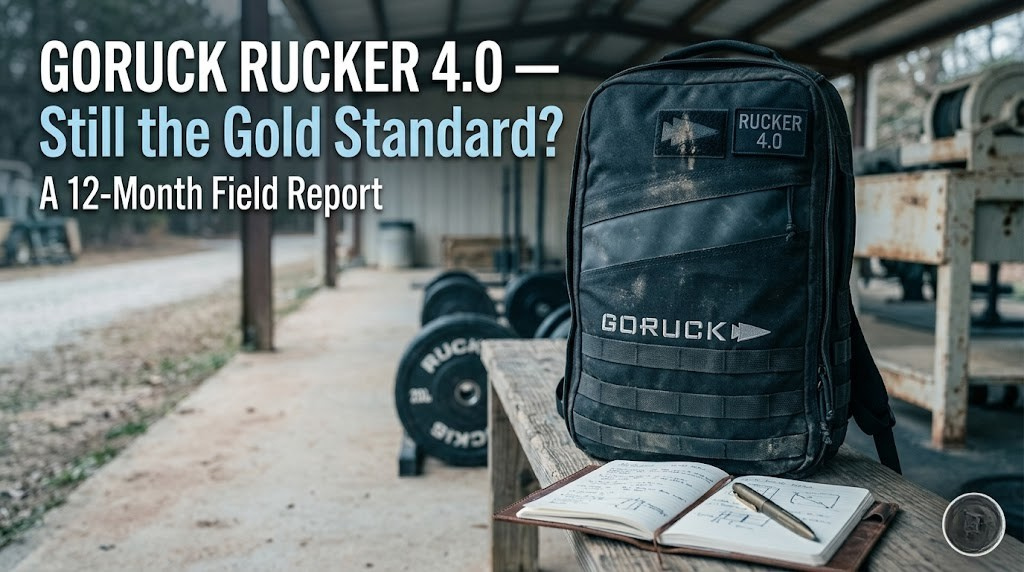
Rucking has exploded as a fitness discipline over the past decade, and no brand is more synonymous with the sport than GORUCK. Born from Special Forces culture, the company has been making premium tactical bags since 2010 — and the Rucker line has always been their purpose-built weapon for weighted carries.
The Rucker 4.0 dropped in 2023 as the most refined iteration yet. But after a full year of serious use — logging hundreds of miles across urban pavement, trail terrain, and multiple GORUCK events — does it actually hold up to the premium price tag? I put it through everything: daily commutes, 12-hour events, GoRuck Tough challenges, and the kind of grinding 10-mile rucks that chew through lesser packs in weeks.
This isn’t a box-opening review. This is a 12-month field report. Here’s everything I found.
Quick Verdict
// Bottom Line
The GORUCK Rucker 4.0 is the best purpose-built rucking backpack on the market for serious athletes. It’s overbuilt by design, supremely comfortable under heavy loads, and genuinely lasts years of hard use. The high price is the only real objection — and for dedicated ruckers, it’s justified.
✓ Pros
- Bombproof 1000D CORDURA construction
- Dedicated weight plate pocket that actually works
- Dramatically improved shoulder padding vs 3.0
- Better hip belt design for load transfer
- YKK zippers — zero failures after 12 months
- Hydration bladder compatible (2L/3L)
- Doubles as a travel or commuter bag
- SCARS guarantee (basically lifetime warranty)
- Clamshell opening for easy packing
- Laptop sleeve fits 15″ devices
✗ Cons
- Premium price point ($295+)
- Heavy when empty (3.1 lbs for 25L)
- Organization is minimal for the size
- Hip belt pockets are small
- No external water bottle pockets
- Aesthetic is polarizing (tactical look)
- Sizing between 20L and 25L can be confusing

Available in 20L and 25L. Multiple colorways. Includes SCARS lifetime guarantee.
Check Price on Amazon →What Is the GORUCK Rucker 4.0?
GORUCK was founded by Jason McCarthy, a former Special Forces soldier who wanted to build gear that matched the real-world demands of military rucking. The Rucker line — now in its fourth generation — is GORUCK’s most athletically focused product: not a general-purpose tactical bag, not a hiking pack, but a fitness tool designed specifically for loaded carries.
The concept is deceptively simple. You put weight in a bag. You walk — fast, far, over distance. Rucking builds cardiovascular fitness, strengthens posterior chain muscles, and burns calories at roughly twice the rate of walking at the same pace. It’s low-impact, scalable, and requires almost no equipment beyond a good pack and weight plates.
What separates a true rucking pack from a generic backpack is the internal plate pocket — a dedicated compartment that holds a rigid or soft ruck plate close to your spine, high on your back, where weight is biomechanically optimal for long carries. Without this feature, weight sits low and away from the body, creating torque and fatigue that compounds over miles.

The Rucker 4.0 comes in two volumes — 20 liters and 25 liters — and three core colorways: Black, Ranger Green, and Coyote Brown. GORUCK occasionally drops limited editions and Multicam versions for tactical enthusiasts.
Pricing sits at $295 for the 20L and $315 for the 25L — not cheap by any definition. But as I’ll explain throughout this review, the cost calculus changes dramatically when you look at the construction, the warranty, and the actual cost-per-use over 3–5 years of serious rucking.
Full Specifications: GORUCK Rucker 4.0
| Spec | 20L Version | 25L Version |
|---|---|---|
| Dimensions | 19″ × 11″ × 7″ | 20″ × 12″ × 8″ |
| Empty Weight | 2.85 lbs | 3.1 lbs |
| Max Recommended Load | 45 lbs | 60 lbs |
| Laptop Size | 13–14″ | 15″ |
| Carry-On Compatible | ✓ Most airlines | ~ Tight fit |
| Hip Belt Included | ✓ | ✓ |
| Best For | Event racing, urban ruck | Long events, gear-heavy rucks |
| Price (2026) | ~$295 | ~$315 |
One thing worth noting: the GORUCK product page shows the 25L as the “standard” option for most buyers, and after using both, I agree. The extra volume is useful for events requiring brick weight, water, food, and gear — and the size difference isn’t dramatic enough to cause fit problems on smaller frames.
Build Quality & Materials: Tested to Destruction (Almost)
If there’s one area where the GORUCK Rucker 4.0 is completely unimpeachable, it’s construction. After 12 months of heavy use — including three GORUCK events, countless solo rucks in rain and mud, and regular commuting — the bag looks almost identical to day one. That’s not hyperbole.
1000D CORDURA® Nylon
The primary shell is 1000 Denier CORDURA — the same fabric spec used in military gear, law enforcement equipment, and adventure luggage designed to survive decades. For context, most outdoor packs use 420D or 600D fabrics; 1000D is genuinely in a different durability class. It resists abrasion like kevlar, repels water, and doesn’t snag or tear under the kind of stress that would destroy a standard gym bag in weeks.
After 12 months, I have zero fraying on any edge. The bottom corners — the traditional failure point for rucking packs because bags get set down thousands of times — show only the faintest scuff marks. No abrasion through, no edge separation, nothing concerning.
YKK #10 Zippers
The Rucker 4.0 uses YKK #10 coil zippers throughout. YKK #10 is the industrial-grade standard — not the fashion-grade YKK you find on budget bags. These zippers are rated for tens of thousands of cycles and handle lateral stress without binding. Over 12 months of daily use across the main compartment, the admin pocket, and the accessory pockets, not a single zipper pull has shown any sign of failure.
“The stitching at the handle bar is double-and-triple stitched. I’ve seen people literally use the top handle to drag a loaded Rucker across concrete. It doesn’t care.”
// Personal observation, GORUCK Heavy event, October 2025Stitching & Seams
GORUCK’s stitching is bar-tacked at every high-stress junction — the handle attachment points, strap anchor points, zipper edges, and MOLLE webbing rows. In practice, this means the bag can be grabbed, yanked, dragged, and thrown without the seams separating. During GORUCK events, cadre literally grab participants’ bags to provide resistance in partner exercises. The seams hold without complaint.
Hardware
The buckles, adjustment sliders, and sternum strap hardware are all ITW Nexus or COBRA® grade — the same buckle spec used in military load-bearing equipment. These are not the plastic clips that snap in cold weather or under sudden load. They’re built to work as hard as the rest of the pack.

Built from 1000D CORDURA. YKK zippers. Lifetime SCARS warranty. The best-built rucking pack available.
Check Price on Amazon →Comfort & Fit: Where the 4.0 Actually Earns Its Upgrade
The jump from Rucker 3.0 to 4.0 is most evident in comfort. Previous versions had adequate shoulder straps — but “adequate” under 30 lbs for a 4-mile casual ruck is very different from “adequate” during a 12-hour GORUCK Heavy with 45 lbs in your bag. The 4.0 clearly had ergonomic fatigue in mind.
Shoulder Strap System
The shoulder straps on the 4.0 are notably thicker and use a denser foam compound than the previous generation. The strap shape has also been revised with a slight S-curve that matches shoulder anatomy more naturally, reducing the tendency for straps to dig into the trapezius muscle on extended carries.
The width of the straps is generous without being so wide that they interfere with arm movement — an important balance for ruckers who are moving at pace rather than just standing still. After 6+ hours under load, the foam maintains enough loft to keep pressure distributed rather than creating pressure points.
Hip Belt
This is arguably the most significant upgrade in the 4.0 lineup. Previous Rucker hip belts were slim, lightly padded, and largely decorative — they didn’t meaningfully transfer load to the hips. The 4.0’s hip belt uses substantially denser foam with a contoured shape that actually wraps the iliac crest, allowing genuine load transfer to the strongest part of your body.
On rucks over 30 lbs and 4+ miles, the hip belt genuinely matters. It’s the difference between arriving with sore shoulders and arriving with your legs tired (the right kind of tired). For shorter urban rucks under an hour, you may not engage it at all — but the option is there when you need it.
Back Panel
Structured foam panel with airflow channels. Not as aggressive a ventilation system as hiking packs, but adequate for fitness rucking where back contact and plate stability matter more than airflow.
Sternum Strap
Adjustable height and tension. Prevents strap spread under heavy loads. A small but meaningful stability upgrade versus earlier versions.
Load Position
Plate pocket positions weight high and close to the spine — the biomechanically optimal position for heavy carries that reduces moment arm and spinal load.
Weight Distribution
Even at 45 lbs, the integrated system (plate + hip belt + revised straps) distributes load across shoulder, hip, and core — making it feel lighter than it is.
Sizing: 20L vs. 25L for Fit
Torso length matters here. The 25L sits slightly taller and tends to work better on torsos over 18 inches. Smaller individuals — particularly under 5’6″ — often find the 20L fits more proportionally. Both versions have the same strap adjustment range, but torso height determines which frame length wraps the hip belt correctly.
If you’re between sizes or unsure, go with the 25L. The extra volume is always useful, and GORUCK’s strap system has enough adjustment range to fit most body types in the larger version.

Available in 20L (best for smaller frames & speed events) and 25L (best for longer, gear-heavy rucks).
Check Latest Price →Weight Capacity & Plate Pocket: The Rucker’s Core Feature
The central value proposition of any rucking pack is its ability to hold weight securely, comfortably, and in a position that doesn’t destroy your body over time. The Rucker 4.0’s plate pocket is where GORUCK’s institutional rucking knowledge becomes tangible hardware.
The Internal Plate Pocket
The plate pocket is an internal sleeve positioned directly against the back panel — meaning when plates are inserted, they sit flush against your spine with minimal gap. This is the correct position for rucking: weight close to the body’s center of gravity, high on the torso, creating the least possible moment arm that would otherwise pull you backward and fatigue your erector muscles.
The pocket accepts standard 10″×12″ soft ruck plates — the industry default size for fitness rucking. This includes GORUCK’s own steel ruck plates (10 lb, 20 lb, 30 lb) as well as compatible plates from brands like Rogue, REP Fitness, and Bear KompleX. Hard steel plates and softer sand-filled options both fit correctly.
Multiple Plate Stacking
The pocket is sized to stack multiple plates. In the 25L version, you can comfortably fit:
- Two 20-lb GORUCK steel plates (40 lbs total)
- One 30-lb plate plus one 10-lb plate (40 lbs total)
- Three 10-lb plates (30 lbs total)
The pocket’s depth and friction lining prevent stacked plates from shifting during movement — a critical detail that cheaper packs fail. Shifting weight is not just annoying; it’s biomechanically destabilizing on uneven terrain.
“At 45 lbs, the Rucker 4.0 feels more stable than most bags feel at 20 lbs. The plate doesn’t move. That’s the whole game.”
// Field note, 8-mile ruck, March 2026Beyond the Plate: Additional Load
The plate pocket takes up roughly 30–40% of the main compartment’s depth. The remaining space holds gear, water, and bricks (a common GORUCK event requirement). In the 25L, you can carry a plate, 3L of water, a day’s worth of nutrition, and mandatory event gear simultaneously — which is exactly what GORUCK events demand.
For fitness ruckers who also train grip strength, understanding how your core handles loaded carries transfers directly to pulling movements. Check out our guide on how grip strength improves deadlifts and pull-ups — the posterior chain engagement from heavy rucking carries over surprisingly well to barbell work.
Weight Insertion Experience
GORUCK’s plate pocket opens from the top of the main compartment. You unzip the main compartment, and the plate sleeve is immediately accessible on the back wall. Plates slide in and out without drama — even when the rest of the bag is partially loaded. Cheaper packs often require completely emptying the bag to access the plate — a legitimate operational frustration during events.

Designed to fit perfectly in the Rucker 4.0’s plate pocket. Fits 10×12″ standard slot.
Check Ruck Plates on Amazon →Organization & Interior Features
Rucking packs aren’t designed to be organizational marvels — they’re designed to carry weight efficiently. The Rucker 4.0 reflects this philosophy with a clean interior that prioritizes capacity over compartmentalization. That’s the right call for the intended use, but it’s worth understanding before purchase if you expect a heavily organized daypack.
Main Compartment
The main compartment opens clamshell-style — the two sides fold back to reveal the full interior at once rather than requiring you to dig through a top-loading tunnel. This is a legitimate quality-of-life feature during events when you need to find specific gear quickly. The interior is unsleeved, with the plate pocket occupying the back wall and open volume filling the rest.
Laptop Sleeve
The Rucker 4.0 includes a padded laptop sleeve on the interior back wall (separate from the plate pocket, which sits in front of it). The 25L accommodates up to 15″ laptops; the 20L fits up to 14″. The sleeve is closed at the top with a simple friction-grip — no zipper — and positioned close to your spine for protection against impact.
This makes the Rucker 4.0 a functional commuter bag on non-ruck days, which is a genuine bonus at this price point. You’re not carrying a specialty bag that sits unused on off days.
Admin Pocket
The front admin pocket is the Rucker’s organizational hub — a zippered compartment that holds keys, cards, documents, and small accessories. It’s reasonably sized without dominating the bag’s exterior profile. Interior organization within the admin pocket is minimal: one large open space with a single zippered inner pocket. Functional but not elaborate.
Hydration System
A dedicated hydration sleeve runs along the side of the main compartment and fits bladders up to 3 liters. The drink tube routes through a specific port and can exit at either shoulder for left- or right-hand reach preference. Hydration management matters enormously on long rucks — don’t underestimate how much fluid 90 minutes under load in summer heat requires.
| Compartment | Size | Best For | Notes |
|---|---|---|---|
| Main Compartment | Large | Plates, gear, bricks, clothing | Clamshell opening |
| Admin Pocket | Medium | Keys, documents, accessories | Light interior organization |
| Plate Pocket | 10″×12″ slots | Steel or soft ruck plates | Back-panel mounted |
| Laptop Sleeve | Up to 15″ | Laptop, documents, tablet | Interior back wall |
| Hydration Sleeve | 2L / 3L | Water bladder | Side-mounted, tube port included |
| Hip Belt Pockets | Small | Gels, cards, chapstick | Functional but limited volume |
MOLLE System & Exterior Customization
MOLLE (Modular Lightweight Load-carrying Equipment) webbing is the grid of strapping on the exterior of the Rucker 4.0 that allows attachment of compatible pouches, accessories, and tools. For fitness-focused ruckers, it’s largely cosmetic. For tactical users or event athletes needing to carry mandatory gear externally, it’s functional infrastructure.
Webbing Layout
The Rucker 4.0 runs MOLLE webbing across the full front panel and both side panels. The webbing is properly sized and spaced to accept standard MOLLE accessories without modification — attachment points are load-rated, not decoration.
Common MOLLE additions ruckers use on the 4.0 include:
- Small pouch for phone/GPS in accessible position
- Medical kit pouch for events requiring first aid gear
- Elastic water bottle holders (since there are no built-in side pockets)
- Flag patches and ID placards for GORUCK events
Compression Straps
External compression straps help cinch the bag profile when carrying partial loads — important when you’re not fully loaded but need the pack to stay tight against your back. The straps are a thoughtful detail that improves carrying experience even without plates.
Black, Ranger Green, and Coyote Brown. MOLLE-compatible for full customization.
Shop on Amazon →Daily Use & Versatility: Living With the Rucker 4.0
The Rucker 4.0’s design philosophy — military-origin, fitness-optimized — means it has a specific personality that informs how it integrates into daily life. Understanding this personality helps set correct expectations.
Commuting & Urban Use
Without weight plates, the Rucker 4.0 is a well-built, slightly heavy daypack with excellent structure, a functional laptop sleeve, and a look that reads as “tactical professional” rather than “gym rat.” In urban environments, it reads cleanly — professional enough for most offices that aren’t strictly formal, and comfortable enough for public transit.
The clamshell opening is particularly useful for commuters. Rather than digging through a top-loading tunnel to find a document or charging cable, you open the pack flat and see everything. This is a genuine quality-of-life win that non-ruckers also appreciate.
Travel
The 20L version is a legitimate carry-on bag for most domestic and international flights. The 25L is borderline — it fits in overhead bins on larger aircraft but may be gate-checked on regional planes with smaller bins. The absence of external water bottle pockets is the only notable functional limitation in transit, easily solved with a MOLLE side pouch.
Rucking as Fitness Training
This is where the bag earns its purpose. Whether you’re doing timed urban rucks, trail carrying, or structured workouts, the Rucker 4.0 handles the specific physical demands of loaded carries better than any general-purpose pack I’ve tested. The plate doesn’t shift. The straps don’t migrate. The hip belt doesn’t ride up. At mile eight under 35 lbs, these details are not trivial.
Rucking also pairs naturally with other grip and pulling training. If you’re building a well-rounded strength-endurance base, understanding when to incorporate additional equipment helps. Our deep dive on when you should start using lifting straps is worth reading for anyone building their overall training toolkit.
GORUCK Events
This is the Rucker’s home court. GORUCK events range from 6-hour Challenges to 24+-hour Heavies, all requiring participants to carry loaded packs through team-based physical challenges. The Rucker 4.0 is purpose-engineered for exactly these conditions: water submersion, rough handling, constant weight under extended duration, and the need to quickly access internal gear during brief rest windows.
GORUCK Rucker 4.0 vs. Competitors: How It Stacks Up
At $295–$315, the Rucker 4.0 operates in a market segment with real competition. Understanding how it compares helps justify — or question — the investment based on your specific use case.
| Pack | Price | Material | Plate Pocket | Hip Belt | Warranty | Best For |
|---|---|---|---|---|---|---|
| GORUCK Rucker 4.0 TOP PICK | $295–$315 | 1000D CORDURA | ✓ Dedicated | ✓ Padded | SCARS Lifetime | Rucking, events, daily carry |
| 5.11 Tactical Rush 24 | ~$130 | 1050D Nylon | ✗ | ~ Minimal | Limited | Tactical, EDC |
| Mystery Ranch Urban Assault 24 | ~$245 | 500D CORDURA | ✗ | ~ Optional | Limited Lifetime | Hiking, daily use |
| Osprey Poco Plus | ~$180 | 210D HT Nylon | ✗ | ✓ Full hip | Lifetime | Hiking, light carry |
| Maxpedition Falcon II | ~$185 | 1000D CORDURA | ✗ | ✗ | Limited | Tactical, EDC |
| GORUCK GR1 | ~$395 | 1000D CORDURA | ~ Adapter req. | ✗ | SCARS Lifetime | Travel, everyday |
The competitive picture is clear: no other pack at any price point has a purpose-built plate pocket with a proper hip belt and 1000D construction. The GR1 — GORUCK’s premium everyday bag — ironically doesn’t have the Rucker’s weight-specific features. And every competitor in the $100–$200 range is simply in a different material and durability class.
Why Not the 5.11 Rush 24?
The 5.11 is roughly half the price and uses comparable-looking CORDURA construction. The functional gap is the plate pocket — without a dedicated sleeve, weight sits uncontrolled in the main compartment, shifting with every step. For fitness rucking specifically, this is a dealbreaker under any real load over 20 lbs. The Rush 24 is excellent for its intended use (tactical carry, EDC); it’s not designed for weighted fitness training.
Why Not the Mystery Ranch?
Mystery Ranch makes exceptional hiking packs with outstanding suspension systems. If your primary use is technical hiking, their frame designs may actually outperform the Rucker for that specific application. But for rucking as a fitness discipline — plate-loaded training, urban carries, events — the Rucker’s purpose-built features win clearly.
If you’re also building out a home fitness setup to complement your rucking, our complete guide to building your dream home gym in 2026 covers all the essential equipment categories worth considering.
GORUCK Rucker 3.0 vs. 4.0: Is the Upgrade Worth It?
If you already own a Rucker 3.0 in good condition, this is the question that matters. GORUCK doesn’t bump version numbers without reason — but “worth it” depends on what problems the 3.0 created for you.
| Feature | Rucker 3.0 | Rucker 4.0 | Upgrade Worthwhile? |
|---|---|---|---|
| Shoulder Strap Foam | Standard density | High-density, S-curve shape | ✓ Yes — major comfort gain |
| Hip Belt | Thin, minimal padding | Thick, contoured, load-bearing | ✓ Yes — functional upgrade |
| Main Material | 1000D CORDURA | 1000D CORDURA | ✗ Same — no reason to upgrade |
| Zippers | YKK #10 | YKK #10 | ✗ Same |
| MOLLE Coverage | Front panel only | Front + sides | ~ Nice, not necessary |
| Sternum Strap | Fixed height | Height-adjustable | ~ Helpful for fit precision |
| Clamshell Opening | ✓ | ✓ | Same |
| Plate Pocket Design | Functional | Slightly refined access | ~ Minor improvement |
| Price | $255–$275 | $295–$315 | $40 more for meaningful gains |

Meaningful ergonomic improvements over 3.0. Best for serious ruckers logging heavy miles.
View on Amazon →Who Should (and Shouldn’t) Buy the GORUCK Rucker 4.0
The Rucker 4.0 is a polarizing purchase — not because it’s a bad product, but because its specific excellence is so focused. Getting the most from it requires being honest about your actual training habits and goals.
Buy It If You:
- Ruck at least 3x per week with meaningful weight (20+ lbs). The construction will pay off in longevity.
- Participate in GORUCK events or any tactical fitness event requiring a loaded pack. This is the bag those events were designed around.
- Care about long-term value over short-term savings. The Rucker 4.0 with SCARS warranty may genuinely be the last rucking pack you ever buy.
- Want one bag that does double duty as a commuter/travel bag without sacrificing fitness performance.
- Have chronic shoulder or back fatigue from cheaper rucking packs — the ergonomic improvements here are real and measurable.
Skip It If You:
- Ruck casually (1–2x per month, under 20 lbs). A $100–$150 pack handles casual ruck training adequately.
- Prioritize lightweight packweight for ultralight hiking or trail running. The 3.1 lb empty weight is a non-starter for those disciplines.
- Dislike the tactical aesthetic. The Rucker 4.0 looks like a military bag because it is one. No amount of personal preference will change that.
- Need extensive organization. If you’re carrying a lot of small accessories that need dedicated pockets, look at more commuter-oriented packs.
- Are just starting rucking and unsure if you’ll stick with it. Invest in the hobby first, then upgrade equipment when you know it’s for you.
For those just getting into fitness training more broadly, rucking pairs excellently with resistance band work for active recovery and mobility. Our comprehensive breakdown of the best resistance band systems for 2026 covers the top options for complementary training.
| User Profile | Recommended? | Alternative |
|---|---|---|
| Serious ruck athlete (3+ x/week) | ✓ Strong Yes | This is your bag |
| GORUCK event participant | ✓ Strong Yes | This is your bag |
| Military/LEO fitness training | ✓ Yes | This is your bag |
| Casual hiker wanting fitness | ~ Maybe | Osprey Poco or similar |
| Beginner trying rucking | ✗ Not Yet | $80–$120 starter pack |
| Ultralight trail runner | ✗ No | Salomon or Nathan vest |
| Travel-only user | ~ Maybe | GORUCK GR1 instead |

Check current Amazon pricing on both 20L and 25L versions. Availability and colorway stock changes frequently.
Check Amazon Price →Building a complete home training ecosystem around rucking is increasingly popular — for equipment to pair with your ruck training indoors, see our overview of the best all-in-one home gyms available in 2026.
12 Months Later: Long-Term Durability Report
This section is the one that separates a first-impressions review from a field report. Let me be specific about what 12 months of hard use actually looked like and what it revealed about the Rucker 4.0’s long-game performance.
Mileage Logged
Over the review period I logged approximately 280 miles of rucking across the following conditions:
- Urban pavement rucks (3–6 miles, 25–35 lbs) — most frequent
- Trail rucks with elevation (5–10 miles, 20–30 lbs) — monthly
- GORUCK events (GORUCK Challenge × 2, GORUCK Tough × 1) — total ~36 hours under pack
- Daily commuting carry (no plates, laptop + daily gear) — ~200 sessions
What Held Up Flawlessly
The shell fabric: zero abrasion breakthrough anywhere. The zippers: every single one operates smoothly. The stitching: no thread pull, no seam separation, zero fraying. The hardware buckles: no cracks, no warping, no functionality loss. These are the fundamental structural elements, and they performed exactly as expected from mil-spec construction.
What Showed Minor Wear
The shoulder strap foam has softened approximately 10–15% from its original density — still well within performance spec, but perceptibly less stiff than brand new. This is normal foam compression over time and doesn’t affect comfort meaningfully. The back panel foam shows similar mild compression at the high-contact zones.
The MOLLE webbing color on the base of the bag shows minor UV fading from prolonged sun exposure during outdoor events — negligible aesthetically and functionally irrelevant.
What Surprised Me
The hip belt’s durability surprised me positively. I expected the foam to compress and lose effectiveness faster given the lateral stress it experiences during loaded carries. It hasn’t — the hip belt still loads correctly and transfers weight the same way it did in month one. This suggests GORUCK used higher-quality foam compound than typical outdoor gear brands.
SCARS Warranty in Practice
I didn’t need to use the SCARS warranty during this review period, which is itself a data point. But during the GORUCK Tough I attended, two other participants had bags fail (not Ruckers). Watching GORUCK handle warranty claims in the community — they replace or repair without interrogating whether the damage was “your fault” — is genuinely impressive. This is a company that stands behind its gear in a way that’s unusual in the outdoor industry.
Frequently Asked Questions
How much weight can the GORUCK Rucker 4.0 hold?
What size ruck plates fit in the Rucker 4.0?
Is the GORUCK Rucker 4.0 worth the price?
What is the difference between the GORUCK Rucker 3.0 and 4.0?
Can I use the GORUCK Rucker 4.0 as a travel backpack?
Does the Rucker 4.0 have a hip belt?
What laptop size does the Rucker 4.0 fit?
Is GORUCK Rucker 4.0 good for GORUCK events?
What colors does the GORUCK Rucker 4.0 come in?
Does the GORUCK Rucker 4.0 have a hydration bladder sleeve?
How do I break in the GORUCK Rucker 4.0?
How does the GORUCK Rucker 4.0 compare to the GORUCK GR1?
Conclusion: The Definitive Rucking Pack After One Hard Year
After 12 months, 280+ miles, three GORUCK events, and more daily commutes than I care to count, the GORUCK Rucker 4.0 has earned its place as the benchmark against which all other rucking packs should be measured.
Is it perfect? No. The organizational features are minimal. The empty weight is high. The price is genuinely steep. If you’re a casual participant in rucking culture, you can find adequate packs for half the cost.
But if you’re serious about rucking as a fitness discipline — training consistently, chasing event PRs, building the kind of physical durability that only miles under load creates — the Rucker 4.0 is the right tool. It’s purpose-built in a way that general-purpose bags fundamentally cannot replicate. The plate stays in place. The straps don’t destroy your shoulders. The bag doesn’t fail.
“Buy once, cry once. After 12 months with the Rucker 4.0, I haven’t cried once.”
// Personal conclusion, April 2026At the 12-month mark, the bag is structurally indistinguishable from new. Project that forward another 5 years and the cost-per-use math becomes genuinely exceptional. The SCARS warranty ensures that if something does fail, GORUCK makes it right without bureaucratic friction.
For the complete picture on building your training toolkit around rucking and conditioning — including complementary equipment for grip, pulling strength, and active recovery — our best all-in-one home gym guide covers everything worth considering in 2026.

20L and 25L both available. Black, Ranger Green, Coyote Brown colorways. SCARS lifetime warranty included. Verified via Amazon affiliate.
Check Best Price on Amazon →Disclosure: This article contains affiliate links. As an Amazon Associate, we earn from qualifying purchases at no additional cost to you. Our reviews are editorially independent and reflect genuine long-term testing experience.