5 Best Muscle Stimulators for Pain Relief & Recovery — Tested & Ranked
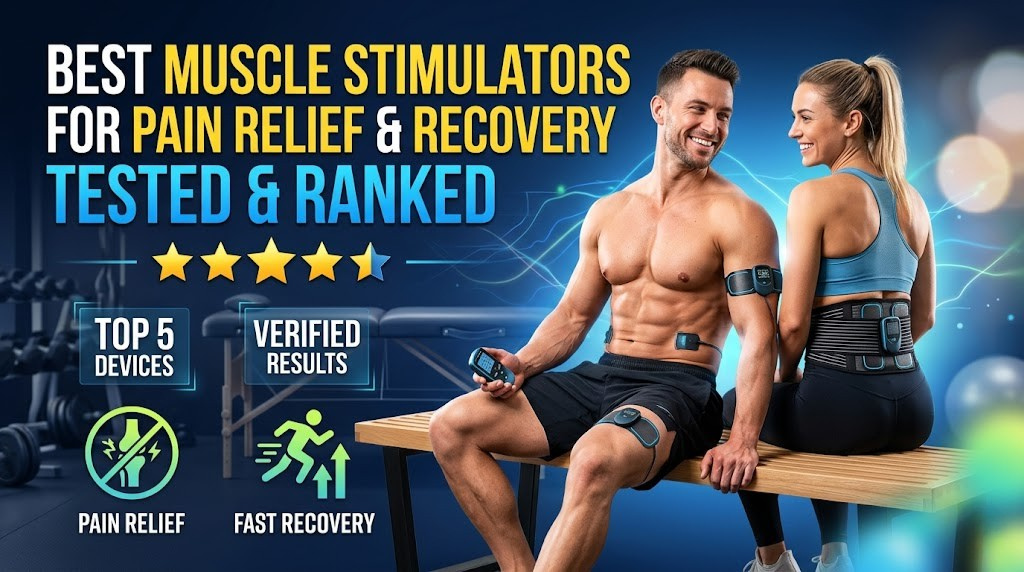
Muscle stimulators have moved well beyond hospital physiotherapy rooms. Today, millions of people use these compact, electrode-based devices at home to silence chronic back pain, accelerate post-workout recovery, rehab nagging injuries, and even improve muscle performance — all without reaching for a pill bottle.
But here’s the problem: walk into any search engine and you’ll be hit with hundreds of options ranging from $15 knockoffs to $400 professional units. Which ones actually work? Which are backed by real science? And which should you avoid entirely?
In this guide, we’ve done the heavy lifting. We evaluated the top-selling and highest-rated muscle stimulators on Amazon in 2026, cross-referenced real user reviews, studied the technology behind each device, and ranked the five best options for pain relief, athletic recovery, and everyday muscle care.
What Is a Muscle Stimulator?
A muscle stimulator — often sold as a TENS unit, EMS unit, or combined TENS/EMS device — is an electronic device that delivers low-voltage electrical impulses through adhesive electrode pads placed on your skin. Depending on the frequency and intensity of those pulses, the device can either block pain signals travelling to your brain, or directly stimulate your muscles to contract.
These aren’t fringe wellness gadgets. Electrical stimulation therapy has been used by physical therapists, sports medicine doctors, and chiropractors for decades. What’s changed is miniaturization: devices that once cost thousands of dollars and required a clinical setting can now fit in your palm and cost under $50.
Whether you’re dealing with chronic lower back pain, sciatica, post-exercise muscle soreness, or simply tight shoulders from hours of desk work, the right muscle stimulator can offer meaningful, drug-free relief. If you’re exploring how targeted electrical muscle therapy fits into a broader fitness recovery strategy, check out our deep-dive on resistance bands for physical therapy and rehab — combining modalities often delivers the best outcomes.
The global electrical muscle stimulation market is projected to surpass $800 million by 2027. Consumer adoption has exploded thanks to improved device safety, FDA clearance processes, and growing awareness of drug-free pain management alternatives.
TENS vs EMS — What’s Actually the Difference?
Before you buy, understanding the distinction between TENS and EMS will help you choose the right device for your specific goal. These two technologies use electrical current in fundamentally different ways.
TENS (Transcutaneous Electrical Nerve Stimulation)
TENS targets nerve fibers rather than muscles. It uses high-frequency electrical pulses (generally 80–150 Hz) to effectively “jam” pain signals before they reach the brain — a mechanism known as the gate control theory of pain. At lower frequencies (2–10 Hz), TENS also stimulates the release of endorphins, your body’s natural painkiller.
TENS is the go-to choice for:
- Chronic back, neck, and shoulder pain
- Sciatica and nerve-related pain
- Arthritis joint discomfort
- Post-surgical pain management
- Fibromyalgia and neuropathic pain
EMS (Electrical Muscle Stimulation)
EMS targets the muscles themselves. It mimics the electrical signals your nervous system sends to trigger muscle contractions. By repeatedly contracting muscles, EMS can improve muscle strength, reduce atrophy during injury recovery, boost circulation, and speed up the clearance of lactic acid after intense workouts.
EMS excels for:
- Athletic recovery (DOMS — delayed onset muscle soreness)
- Muscle re-education after injury or surgery
- Preventing muscle atrophy during immobilization
- Warm-up activation before training
- Improving muscle endurance and performance
Many of the top devices in this guide are dual-function TENS/EMS units — which is why they’re such compelling value picks. You’re essentially buying two specialized therapy tools in one pocket-sized package. This aligns well with a broader recovery toolkit; for example, if you’re also managing fatigue from intense strength training, you may find our resource on whether inversion therapy actually works complements your electrical stimulation routine nicely.
| Feature | TENS | EMS |
|---|---|---|
| Primary Target | Nerve fibers | Muscle fibers |
| Primary Goal | Pain relief | Muscle activation & recovery |
| Typical Frequency | 2–150 Hz | 20–100 Hz |
| Sensation | Tingling / buzzing | Muscle contraction |
| Best For | Chronic pain, sciatica, arthritis | DOMS, rehab, sports performance |
| FDA Cleared? | ✓ Yes (OTC) | ✓ Yes (many models) |
The 5 Best Muscle Stimulators of 2026
After analyzing hundreds of real-world Amazon reviews and comparing technical specifications, these five devices rose to the top. Each has been selected based on efficacy, value, ease of use, and verified user satisfaction.
AUVON 3-in-1 TENS Unit Muscle Stimulator
🏆 Best Overall
The AUVON 3-in-1 is, without question, the most impressive entry-level muscle stimulator you can buy right now. It packs an astonishing amount of functionality into a device that costs less than a single session with a physical therapist — and it actually delivers.
What makes this unit stand apart is its three-in-one approach: it functions as a TENS unit for pain relief, an EMS machine for muscle stimulation, and a massage device for general relaxation. With 24 preprogrammed modes and 40 intensity levels, the AUVON can handle everything from the gentlest tingling you’d want on a sensitive knee to deep, powerful stimulation for a stubborn lower back knot.
The rechargeable battery (built-in USB charging) means no fussing with AA batteries, and the 12 included electrode pads — a mix of 2″×2″ and 2″×4″ sizes — let you simultaneously target multiple body zones. The carry case is a genuinely useful inclusion, not an afterthought.
Long-term users praise the durability of both the device and the pads. Several verified purchasers note they’ve used the same unit for two or more years with consistent performance. For chronic back pain sufferers, sciatica patients, and athletes who want a single device that covers the full spectrum of electrical therapy, the AUVON 3-in-1 is a genuinely difficult unit to beat.
| Modes | 24 preprogrammed + EMS |
| Intensity Levels | 40 levels |
| Channels | Dual channel |
| Power | Rechargeable (USB) |
| Electrode Pads | 12 pads (2″×2″ & 2″×4″) |
| FSA/HSA Eligible | Yes |
| FDA Status | Cleared |
Pros
- 3-in-1 TENS, EMS, and massage modes
- 40 intensity levels — highly granular control
- 12 pads included in box
- USB rechargeable — no battery costs
- Included carry case
- FSA and HSA eligible
- Strong long-term durability record
Cons
- Display could be larger for older users
- Wired connection (no wireless option)
- Auto-shutoff at 60 min requires restart
The AUVON 3-in-1 is the benchmark entry-level unit. If you don’t know exactly what you need yet, this is the safest, most feature-packed starting point on the market.
24 Modes · 40 Intensities · USB Rechargeable · 12 Pads Included
🛒 View on AmazonBelifu Dual Channel TENS EMS Unit — 24 Modes
💰 Best Value
The Belifu consistently ranks among the top-selling TENS/EMS units on Amazon for one simple reason: it delivers clinical-grade functionality at a price that makes premium electrical therapy accessible to essentially everyone.
This device leverages what Belifu calls “human body simulation technology” — microcomputer-controlled pulse patterns that mimic various manual massage techniques including kneading, acupuncture, cupping, and scraping. The result is a sensation that feels far more natural and therapeutic than the mechanical buzzing you get from cheaper units.
The dual-channel design means you can treat two separate body areas simultaneously — a game-changer if you’re dealing with, say, both lower back pain and a sore shoulder at the same time. The 24 massage modes cover an impressive range from gentle nerve stimulation to deep muscle contraction, and the 36 intensity levels provide enough granularity to dial in exactly the right sensation for different body parts and pain types.
The included drawstring storage bag and fastening cable ties are small but thoughtful touches that keep your accessories organized. Replacement pads are widely available and affordable. For budget-conscious buyers who still want a comprehensive therapeutic experience, the Belifu is essentially unbeatable.
| Modes | 24 modes |
| Intensity Levels | 36 levels |
| Channels | Dual channel |
| Power | Rechargeable |
| Electrode Pads | 10 pads included |
| Storage | Drawstring bag + cable ties |
| Auto-Shutoff | 10–60 min (adjustable) |
Pros
- Excellent price-to-feature ratio
- Human body simulation massage tech
- Dual channel for treating two areas
- Organized storage included
- Adjustable session timer
- Wide replacement pad availability
Cons
- Interface learning curve for beginners
- No wireless option
- 10 pads (fewer than some competitors)
The Belifu is the smart pick for budget-conscious buyers who want dual-channel flexibility and a comprehensive mode library without breaking the bank.
24 Modes · 36 Intensity Levels · Storage Bag Included · 10 Pads
🛒 View on AmazonOMRON Max Power Relief TENS Unit
🏅 Most Trusted Brand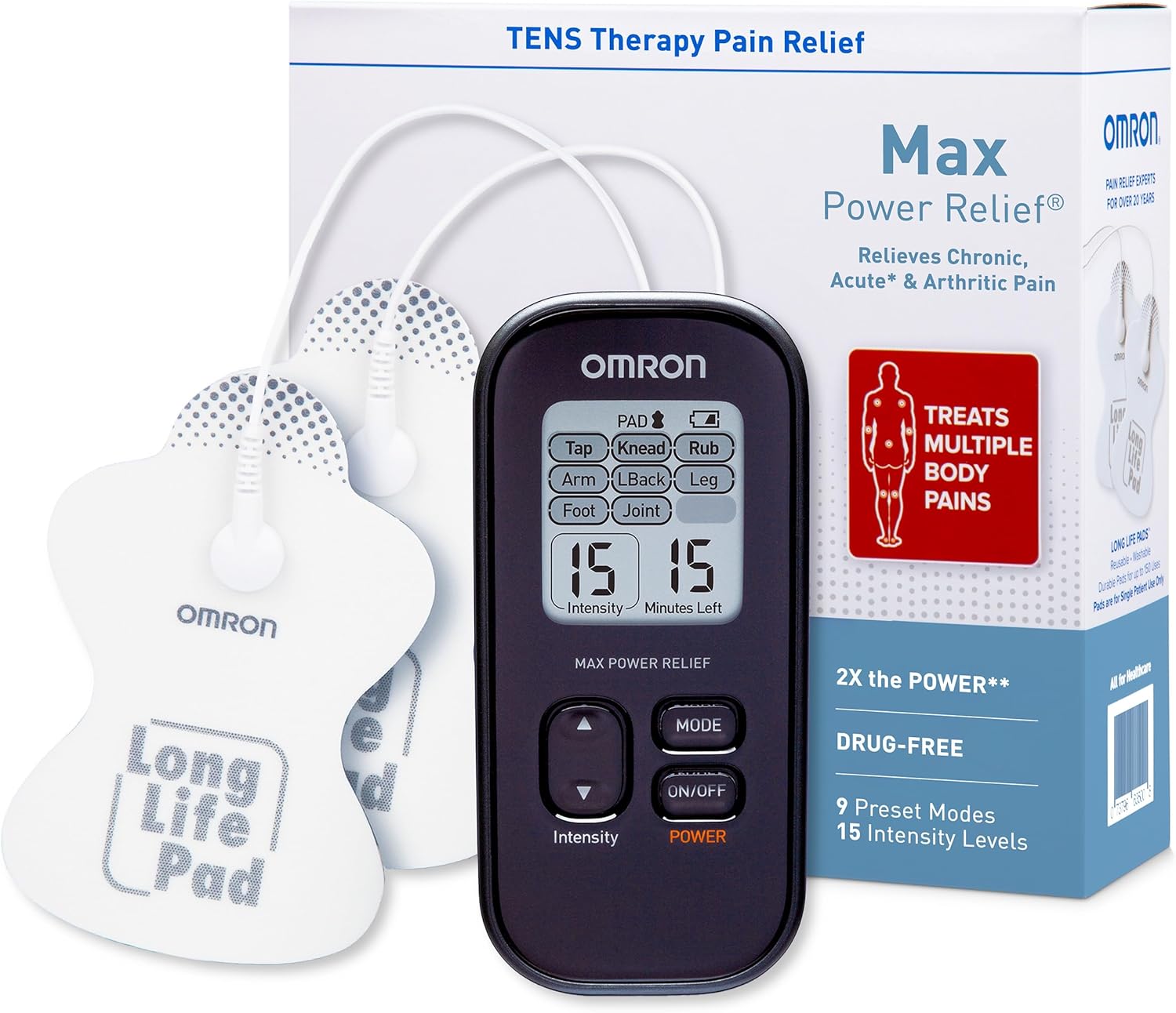
OMRON has been a household name in medical devices for over 80 years, and the Max Power Relief TENS unit carries that institutional credibility into the at-home pain relief space with authority. When you pick up this device, you immediately sense that it was engineered by people who deeply understand therapeutic electrical stimulation — not just consumer electronics.
The OMRON stands out for its genuinely intuitive one-button operation, which makes it the best pick for older adults, people with limited dexterity, or anyone who finds the maze of modes and settings on cheaper units overwhelming and off-putting. You place the pads, select your mode, and get to work. The interface doesn’t stand in the way of therapy.
Despite its simplicity, the Max Power Relief earns its name. The output intensity is among the strongest of any OTC unit, making it particularly effective for deeper muscle groups and persistent chronic pain. The specialized burst and modulation modes prevent the nervous system from habituating to the signal — a key reason many users report more lasting relief compared to fixed-frequency TENS devices.
This device is FDA-cleared for over-the-counter use, and OMRON backs it with excellent customer service and readily available replacement pads. If brand trust, clinical credibility, and ease of use are your priorities — especially for managing chronic conditions — the OMRON is your device.
OMRON’s dual-channel burst/modulation technology is the same approach used in clinical-grade TENS units that physical therapists use on patients. Getting that in an OTC device at this price is genuinely impressive. If you’re also looking at how to layer your recovery approach, see our guide on physical therapist-approved slant board exercises for a complementary movement protocol.
| Modes | 3 specialized (Normal, Burst, Modulation) |
| Intensity Output | High power (100 mA class) |
| Channels | Dual channel |
| Power | 9V battery |
| Electrode Pads | 2 reusable pads included |
| FDA Cleared | Yes (OTC) |
| Brand Heritage | 80+ years in medical devices |
Pros
- Trusted medical-grade brand
- Simple, intuitive dial interface
- High power output for deep relief
- Burst + modulation prevents habituation
- FDA cleared for OTC use
- Excellent customer support
Cons
- Fewer modes (3) vs competitors
- 9V battery (ongoing running cost)
- Only 2 pads in box
- No EMS functionality
The OMRON is the default recommendation for people who prioritize brand reliability, clinical credibility, and straightforward operation over a long list of modes.
Clinically Trusted · Drug-Free · High Power Output · FDA Cleared
🛒 View on AmazonComfytemp Wireless TENS Unit Machine
📱 Best Wireless
Freedom of movement is the Comfytemp’s entire design philosophy — and it delivers. This fully wireless TENS unit eliminates the tangled wire problem that plagues every wired unit on this list. The compact transmitter pods attach directly to your electrode pads and pair with your smartphone via Bluetooth, letting you control your therapy session from an app while you go about your day.
This isn’t just a gimmick. Being wire-free makes a meaningful practical difference — you can wear the Comfytemp during a work meeting, while cooking dinner, on a commute, or during a gentle walk. The sessions that tend to produce the best outcomes with TENS therapy are the ones people actually stick to consistently, and the Comfytemp removes the main friction point that causes people to skip sessions.
With 30 therapy modes and app-controlled intensity, the feature set is genuinely comprehensive. The FSA/HSA eligibility makes it accessible to anyone with a health flexible spending account. Two complete sets of electrode pads in the box mean you can set up multiple placement configurations and swap between them without re-pairing.
The Comfytemp is especially popular with office workers managing lower back pain, frequent travellers who want compact carry-on friendly therapy, and athletes who want to stack recovery sessions throughout the day without being tethered to a device.
| Connectivity | Wireless + App (Bluetooth) |
| Modes | 30 modes |
| Power | Rechargeable (USB) |
| Electrode Pads | 2 complete sets |
| FSA/HSA Eligible | Yes |
| Portability | Fully wireless wear-and-go |
| App Control | iOS & Android |
Pros
- 100% wire-free — maximum freedom
- Smartphone app control
- FSA and HSA eligible
- 30 therapy modes
- Two full pad sets included
- Ideal for active-lifestyle users
- Discreet — wearable under clothing
Cons
- App required for full feature access
- Higher price than wired units
- Bluetooth range limitations
- Pod battery needs recharging
The Comfytemp is the right pick for people whose lifestyle demands portability and discretion. If you can’t sit still while doing therapy, this is your machine.
30 Modes · App Controlled · FSA/HSA Eligible · Fully Wireless
🛒 View on AmazoniReliev TOP-Best TENS Massager Bundle
⚽ Best for Athletes
iReliev has earned an elite reputation by doing one thing exceptionally well: making a prescription-strength TENS device that fits on a credit card and sells for a fraction of clinical unit prices. The TOP-Best bundle has been recognized by Sports Illustrated, Men’s Journal, and Medical News Today as a top performer, and its fanbase includes some genuinely impressive names — reportedly trusted by elite professional athletes.
The unit’s 80mA output at 25 intensity levels is a standout specification. This is equivalent to prescription-strength output in clinical settings, meaning you’re getting meaningful therapeutic intensity, not a gentle buzz. The 8 preprogrammed therapy modes cover everything from general pain relief to arthritis-specific protocols (Mode P8 is specifically designed for arthritis management).
The “footprint of a credit card” description is barely an exaggeration — this is genuinely pocketable. For athletes who want discreet on-the-go therapy that they can use in a locker room or on a plane without drawing attention, the iReliev’s ultra-compact form factor is a significant practical advantage.
The bundle includes lead wires, electrode pads, and a belt clip, giving you everything needed to start therapy immediately. FDA-cleared for OTC use, this is also a responsible choice for anyone self-managing musculoskeletal conditions who wants a device their physical therapist or doctor would approve of. For athletes who are also thinking about their grip and upper body recovery stack, exploring the best grip strength trainers alongside electrical stimulation can produce excellent synergistic results.
| Modes | 8 preprogrammed (incl. arthritis P8) |
| Intensity Levels | 25 levels (80mA output) |
| Channels | Dual channel (2 or 4 pads) |
| Size | Credit card footprint |
| FDA Cleared | Yes (OTC) |
| Bundle Contents | Device, pads, wires, belt clip |
| Notable Users | Elite professional athletes |
Pros
- Prescription-strength 80mA output
- Ultra-compact credit card size
- Arthritis-specific mode (P8)
- Complete bundle included
- Trusted by elite athletes
- FDA cleared OTC
- Highly portable for travel
Cons
- Only 8 modes (fewer than rivals)
- Small display can be hard to read
- No EMS functionality
- Battery-powered (no USB recharge)
The iReliev is the ultimate travel companion for pain management. If maximum portability and prescription-strength output are your twin priorities, nothing else at this price comes close.
80mA Prescription Strength · Credit Card Size · FDA Cleared
🛒 View on AmazonFull Comparison Table — All 5 Muscle Stimulators
Use this side-by-side table to find the device that matches your specific needs, budget, and lifestyle.
| Device | Modes | Intensity | Wireless | EMS? | FSA/HSA | Best For |
|---|---|---|---|---|---|---|
| AUVON 3-in-1 | 24 | 40 levels | ✕ | ✓ | ✓ | Best overall value |
| Belifu Dual | 24 | 36 levels | ✕ | ✓ | ✕ | Budget-focused buyers |
| OMRON Max | 3 | 100mA class | ✕ | ✕ | ✓ | Brand trust + simplicity |
| Comfytemp | 30 | App-controlled | ✓ | ✕ | ✓ | Active lifestyle users |
| iReliev Bundle | 8 | 80mA (25 lvl) | ✕ | ✕ | ✕ | Athletes + travel |
Buyer’s Guide — What to Look for in a Muscle Stimulator
Choosing a muscle stimulator isn’t complicated once you understand what the key specifications actually mean for your real-world therapy experience. Here’s what actually matters — and what’s just marketing noise.
1. Modes and Intensity Levels
More modes sound better, but what matters is whether those modes target your specific condition. Look for devices with at least one TENS-specific mode for pain relief and at least one EMS mode for muscle recovery if you want versatile use. Intensity levels above 20 give you enough granularity to find the sweet spot for each body part and session type.
2. Number of Channels
Dual-channel devices let you control two pairs of electrode pads independently. This means you can treat your lower back and a knee simultaneously with different intensities — a major practical advantage for anyone with multiple pain points or recovery needs.
3. Power Source
USB rechargeable units (like the AUVON) eliminate ongoing battery costs and are significantly more convenient for daily use. Battery-powered units (like the OMRON) offer the advantage of never needing to wait for a recharge, but the running cost adds up. Consider which matters more to your usage pattern.
4. Electrode Pad Compatibility
Check that replacement pads are affordable and widely available for the device you choose. High-quality electrode pads are reusable but degrade over time — expect to replace them every 30–50 uses. Devices that use standard 2mm snap or pigtail connectors give you the most flexibility in replacement pad selection.
5. Wireless vs Wired
Wired devices are generally more reliable, less expensive, and require no charging between uses. Wireless devices offer freedom of movement that can meaningfully improve therapy compliance. Choose based on your lifestyle — if you’re desk-bound during sessions, wired works fine; if you’re active, wireless is worth the premium.
6. FDA Clearance
All five devices in this guide hold FDA clearance for OTC use. Always verify FDA status before purchasing any electrical therapy device. Clearance indicates that the device has been reviewed for safety and efficacy claims, which matters significantly when you’re applying electrical current to your body.
7. FSA and HSA Eligibility
If you have a Flexible Spending Account or Health Savings Account, TENS units are typically eligible medical expenses. The AUVON 3-in-1, OMRON, and Comfytemp all explicitly confirm FSA/HSA eligibility, which can effectively reduce your out-of-pocket cost by 25–35% if you’re in a middle income tax bracket.
- FDA cleared for OTC use — non-negotiable for safety
- Dual channel if you have multiple pain points
- USB rechargeable for daily convenience
- TENS + EMS combined if you want both pain relief and recovery
- Standard pad connectors for affordable replacements
- FSA/HSA eligible if you have an HSA or FSA account
- Wireless only if your lifestyle demands it — otherwise wired is fine
How to Use a Muscle Stimulator Correctly
Getting effective results from electrical stimulation therapy isn’t difficult, but placement and intensity matter significantly. Here’s a clear, practical protocol to follow for each session.
Step 1: Clean and Dry the Target Area
Electrode pads adhere best — and conduct electrical current most effectively — to clean, dry skin. Wipe down the target area with a damp cloth and allow it to dry fully before attaching pads. Avoid applying pads over lotion, oil, or sweaty skin, as these create resistance that reduces efficacy and can cause uneven stimulation sensations.
Step 2: Position Your Electrode Pads
Pad placement is the single most important factor in determining how effective your session will be. For pain relief, place pads either directly over the pain site or on either side of it to create a current pathway through the affected area. For muscle stimulation (EMS), place pads over the muscle belly — the thickest, most central part of the target muscle.
Never place pads: Over the front of the neck or throat area; across the chest (especially for anyone with heart conditions); over broken, irritated, or infected skin; directly over metal implants or pacemakers; on or near the eyes, mouth, or temples; or on a pregnant abdomen.
Step 3: Set Intensity — Start Low, Build Slowly
Begin at the lowest intensity setting and increase gradually until you feel a firm but comfortable tingling or buzzing sensation (for TENS) or a noticeable muscle contraction that isn’t painful (for EMS). A common mistake is jumping to high intensity immediately — this can cause muscle soreness and creates an aversive experience that discourages continued use. The right intensity should feel therapeutic, not punishing.
Step 4: Select Your Mode and Session Duration
For pain relief with TENS, sessions of 20–30 minutes are standard. For EMS muscle recovery, 15–20 minute sessions are typically recommended. Most devices have an auto-shutoff at 60 minutes as a safety measure. Don’t exceed two to three sessions per day on the same area — give tissues time to recover between sessions.
Step 5: Post-Session Care
Gently remove pads from the skin and re-apply the plastic backing to preserve adhesion for your next session. Wipe the skin with a clean cloth. Store pads flat in the protective sleeve if provided, or press them back-to-back to prevent the adhesive from drying out. Proper pad storage significantly extends their usable life.
Research consistently shows that regular, moderate-intensity TENS sessions (daily or near-daily) produce better long-term pain relief than occasional high-intensity sessions. Schedule your sessions like any other health routine — same time of day makes compliance much easier.
Who Should (and Shouldn’t) Use a Muscle Stimulator
Muscle stimulators are remarkably safe for most adults, but there are meaningful contraindications that must be taken seriously. This isn’t excessive caution — electrical current applied incorrectly or to the wrong person can cause genuine harm.
Who Benefits Most
The following groups consistently see the best outcomes from TENS/EMS therapy:
- Chronic lower back pain sufferers — the most studied and validated use case
- Sciatica and nerve pain patients — TENS frequency selection matters significantly here
- Post-workout athletes — EMS accelerates lactic acid clearance and speeds recovery
- Arthritis patients — particularly joints in hands, knees, and shoulders
- Office workers with repetitive strain injuries or postural neck/shoulder pain
- Fibromyalgia patients seeking drug-free adjunct therapy
- Post-surgical rehabilitation patients (under medical supervision)
Who Should Not Use a Muscle Stimulator
Do not use a TENS or EMS device if you:
- Have a pacemaker, ICD, or any implanted electronic device — this is an absolute contraindication
- Are pregnant (avoid abdominal or lower back use — consult your OB-GYN first)
- Have a history of epilepsy or seizure disorders
- Have deep vein thrombosis (DVT) or blood clots
- Have active cancer in or near the treatment area
- Have reduced skin sensation from neuropathy or nerve damage (you can’t feel when intensity is too high)
Always consult your physician before beginning electrical stimulation therapy if you have any active medical conditions, take blood thinners, or have metal implants. For anyone dealing with complex recovery needs, it’s worth understanding the full spectrum of recovery tools available — including how inversion tables for back pain might complement your electrical stimulation protocol.
Normal: Tingling, buzzing, mild skin redness under pads (fades within 30 minutes), slight muscle soreness after EMS sessions. Seek medical advice: Burning sensation during use, persistent skin irritation, significant redness lasting hours, muscle spasms that feel uncontrolled, or any chest discomfort.
Muscle Stimulators for Athletic Recovery — A Deeper Look
The sports performance community was actually one of the first mainstream adopters of electrical muscle stimulation. Professional athletes, elite coaches, and sports medicine teams have used EMS-based recovery protocols for decades — the technology has simply become democratized at the consumer level.
Here’s what the evidence actually shows about EMS for athletic recovery:
DOMS Reduction
Delayed onset muscle soreness — the ache you feel 24–48 hours after an intense training session — is caused primarily by micro-damage to muscle fibers and the resulting inflammatory response. EMS has been shown to accelerate blood circulation in the treated area, increase oxygen delivery, and help flush metabolic byproducts like lactic acid more efficiently. Multiple studies have documented meaningful reductions in DOMS severity among subjects using EMS recovery protocols vs. passive rest.
Muscle Activation and Warm-Up
EMS can also be used proactively, before training, to activate muscle fibers that are sometimes difficult to engage consciously. This is particularly useful for glute activation (a common weakness among desk workers) and for re-establishing neuromuscular connections after injury-related deconditioning. Many professional sports teams use EMS warm-up protocols as part of pre-game preparation.
Maintaining Strength During Injury
One of EMS’s most clinically validated uses is preventing or slowing muscle atrophy when a limb is immobilized due to injury or surgery. Even passive muscle contractions induced by EMS — contractions you don’t voluntarily produce — can meaningfully slow the rate of muscle loss during recovery periods. This makes electrical stimulation a valuable tool in structured rehabilitation programs.
If you’re building a comprehensive home gym recovery setup, electrical stimulation pairs well with other modalities. Explore how battle ropes for home gyms can complement your active recovery days alongside passive electrical therapy sessions.
Using Muscle Stimulators for Chronic Pain Management
For millions of people living with chronic pain, TENS therapy represents something genuinely meaningful: a way to reduce or eliminate dependence on over-the-counter pain medications, reduce the need for prescription analgesics, and manage pain actively rather than passively.
The Gate Control Theory in Practice
The primary mechanism by which TENS relieves pain is the gate control theory: non-painful electrical stimulation (the tingling sensation you feel during TENS) essentially “closes the gate” to pain signals traveling up the spinal cord to the brain. Large nerve fibers, stimulated by the TENS current, inhibit the activity of small-diameter pain fibers. The result is a real, measurable reduction in pain perception — not a placebo effect.
Endorphin Release at Low Frequency
At lower frequencies (typically 2–10 Hz), TENS also stimulates the release of endogenous opioids — your body’s natural endorphins. This is why some users report that the pain relief from TENS sessions continues for hours after the session ends, well beyond the immediate electrical stimulation effect. This is also why consistency matters: regular TENS sessions can build up a cumulative effect on endorphin levels and pain threshold.
Condition-Specific Protocols
Different chronic conditions respond best to different TENS parameters:
| Condition | Recommended Frequency | Intensity | Session Duration |
|---|---|---|---|
| Chronic low back pain | 80–100 Hz (high frequency) | Strong but comfortable | 20–30 min |
| Sciatica | 50–100 Hz | Moderate | 20–25 min |
| Arthritis (joints) | 4–8 Hz (low frequency) | Low-moderate | 30–45 min |
| Fibromyalgia | 2–4 Hz (very low) | Low | 20–30 min |
| Acute muscle pain | 80–150 Hz | Moderate-strong | 15–20 min |
These are general starting points — individual response varies. Track your results in a simple pain diary and adjust parameters based on what produces the best relief for your specific situation. For anyone managing serious back conditions, understanding the full range of therapeutic options is worthwhile — our guide on who should not use an inversion table provides useful perspective on layering recovery modalities safely.
Electrode Pads — Selection, Care, and When to Replace
The pads that connect your TENS or EMS device to your body are arguably as important as the device itself. Poor-quality or worn-out pads create uneven electrical contact, reduce therapy effectiveness, and can cause skin irritation. Here’s everything you need to know.
Types of Electrode Pads
- 2″×2″ square pads — the most common size; great for smaller joints (knees, elbows, wrists) and targeted spot treatment
- 2″×4″ rectangular pads — better for larger muscle groups (lower back, thighs, calves) where you want broader current coverage
- Butterfly-shaped pads — specifically designed to wrap around the knee or other curved joint surfaces
- Large back pads — some brands offer wide pads specifically for full lower back coverage
When to Replace Your Pads
Most quality electrode pads are rated for 30–50 uses. Signs that pads need replacing include: adhesion that no longer sticks reliably; burning or hot spots sensations during use (indicating uneven contact); visible separation of the gel coating from the pad surface; or reduced therapy effectiveness at the same settings that previously worked well.
Extending Pad Life
To maximize pad lifespan: always re-apply the backing after each use; store pads at room temperature away from direct sunlight; keep skin clean before application; and avoid touching the gel surface with your fingers. Adding a small drop of water to pads that feel less sticky can temporarily restore adhesion, but replacement is better for consistent therapy quality.
Replacement pads for the AUVON, Belifu, and OMRON devices are all available as multi-packs on Amazon for $10–$20, typically giving you 20–40 fresh pads per purchase. Build pad replacement into your therapy budget from day one.
The Science Behind Electrical Muscle Stimulation
Electrical stimulation therapy isn’t alternative medicine — it’s mainstream clinical science with decades of peer-reviewed research backing its core mechanisms. Understanding the science helps you use these devices more intelligently and set realistic expectations for outcomes.
How Electrical Pulses Interact with Body Tissue
When alternating current flows between two electrode pads placed on your skin, it creates an electrical field that penetrates through the skin layers and into underlying nerve and muscle tissue. The human body is predominantly water and electrolytes — an excellent electrical conductor. The current follows the path of least resistance between the two pad placements, interacting with any nerve or muscle fibers that fall within that pathway.
Frequency and Pulse Width Matter
The frequency (measured in Hz) and pulse width (measured in microseconds) of the electrical signal determine whether the device primarily stimulates sensory nerves (pain relief), motor nerves (muscle contraction), or both. This is why professional-grade devices offer fine-grained frequency control — different therapeutic effects require different electrical parameters.
Neuroplasticity Effects of Long-Term TENS Use
Emerging research suggests that consistent, long-term TENS therapy may produce neuroplastic changes in how the nervous system processes pain signals — meaning the benefits can extend beyond the electrical stimulation sessions themselves. Regular users often report that their baseline pain levels decrease over weeks and months of consistent therapy, not just during sessions.
This is a fast-evolving area of research, and the consumer devices covered in this guide are at the forefront of making these clinical benefits accessible. If you’re interested in the broader landscape of technology-driven home fitness and recovery, our comprehensive 2026 home gym setup guide puts muscle stimulators in context alongside other high-impact recovery investments.
Frequently Asked Questions
Here are the most common questions people ask before buying their first muscle stimulator — answered directly and without the marketing fluff.
-
Do muscle stimulators actually work for pain relief?Yes — TENS therapy has substantial clinical evidence supporting its effectiveness for various types of chronic and acute pain. Multiple randomized controlled trials have demonstrated that TENS significantly reduces self-reported pain scores compared to placebo devices for conditions including low back pain, arthritis, and neuropathic pain. Results vary by individual and condition, but the mechanism (gate control theory and endorphin release) is well-established, not hypothetical.
-
How long does it take to feel results from a TENS unit?Many users report noticeable pain reduction during or immediately after the first session. However, for chronic conditions, the most meaningful and lasting results typically develop over 2–4 weeks of consistent daily use. Think of TENS therapy like exercise — a single session helps, but a consistent protocol transforms outcomes.
-
Can I use a muscle stimulator every day?Daily use is generally safe and often recommended for chronic pain conditions. Most clinical guidelines suggest 1–3 sessions per day of 20–30 minutes each on the same area. Give your skin periodic breaks from pad placement to avoid irritation, and allow at least an hour between sessions on the same location.
-
What’s the difference between a TENS unit and an EMS unit?TENS (Transcutaneous Electrical Nerve Stimulation) targets nerve fibers to block pain signals and trigger endorphin release. EMS (Electrical Muscle Stimulation) targets muscle fibers directly, causing them to contract, which helps with muscle recovery, strength maintenance, and rehabilitation. Many of the best consumer devices now combine both functions in a single unit.
-
Is it safe to use a muscle stimulator while sleeping?No — using TENS or EMS devices during sleep is not recommended. Most manufacturers explicitly advise against it, and device safety guidelines generally require that users are awake and alert during sessions so they can respond to any discomfort or adverse sensation immediately. Most devices include an auto-shutoff for this reason.
-
Can I use a muscle stimulator on my neck?The back and sides of the neck (cervical muscle area) are generally acceptable placement sites for TENS. However, the front of the neck — particularly over the carotid arteries and throat — must be strictly avoided. TENS current near the carotid sinus can affect heart rate and blood pressure regulation. Always place pads on the posterior (back) neck muscles only.
-
Do electrode pads hurt when removed?Quality electrode pads use hypoallergenic gel adhesive that adheres firmly enough for reliable electrical contact but removes gently without significant discomfort. Users with particularly sensitive or freshly-shaved skin may notice more pull during removal. If pads consistently cause significant pain on removal, consider a hypoallergenic replacement pad brand or applying a thin layer of conductive gel beneath the pad.
-
Which muscle stimulator is best for lower back pain specifically?For lower back pain, the AUVON 3-in-1 is our top recommendation due to its combination of TENS and EMS modes, 40 intensity levels, and the 2″×4″ pads that provide broad coverage across the lumbar region. The OMRON Max Power Relief is an excellent second choice if you prefer fewer but clinically optimized modes with high output power.
-
Are muscle stimulators covered by insurance or FSA/HSA?TENS units are generally FSA and HSA eligible as qualified medical expenses, though you may need a Letter of Medical Necessity (LMN) for certain accounts. The AUVON 3-in-1, OMRON Max Power, and Comfytemp are explicitly listed as FSA/HSA eligible on Amazon. Standard insurance typically does not cover OTC TENS units, though some plans cover devices prescribed by a physician.
-
How do I know if my intensity level is set correctly?For TENS pain relief, the correct intensity produces a distinct but comfortable tingling or buzzing sensation — noticeable but not painful. For EMS muscle stimulation, you should feel clear muscle contractions without cramping or sharp pain. A good rule: if you have to grit your teeth or consciously tolerate the sensation, it’s too high. Effective therapy doesn’t require discomfort.
-
Can athletes use muscle stimulators for performance improvement?EMS can support athletic performance primarily through enhanced recovery (reducing DOMS and accelerating muscle repair), improved muscle activation patterns, and maintenance of strength during injury recovery. Direct strength gains from passive EMS alone are modest — EMS is a recovery and rehabilitation tool, not a substitute for active strength training. The best results come from pairing EMS recovery protocols with a consistent progressive training program.
The Bottom Line
Muscle stimulators have earned their place in serious recovery and pain management toolkits. Whether you’re a weekend athlete dealing with post-training soreness, someone managing chronic back pain who wants to reduce medication dependence, or a professional looking for a convenient portable recovery tool — there’s a TENS/EMS device on this list that fits your situation precisely.
Our overall pick remains the AUVON 3-in-1 for its combination of versatility, proven track record, and outstanding price-to-performance ratio. For budget-conscious buyers, the Belifu Dual Channel delivers exceptional value. For brand trust and clinical credibility, the OMRON Max Power is the safest hands. Active lifestyle users will love the Comfytemp Wireless, and athletes who need prescription-strength portability can’t do better than the iReliev Bundle.
Start your therapy, stay consistent, and give the technology a genuine 3–4 week trial before judging results. The evidence is on your side.
🛒 Shop All Top-Rated Muscle Stimulators on Amazon