7 Best Weightlifting Belts for Squats & Deadlifts
Protect your lower back, unlock heavier lifts, and train with confidence. Our experts tested and ranked the top belts for powerlifters, CrossFitters, and serious gym-goers.
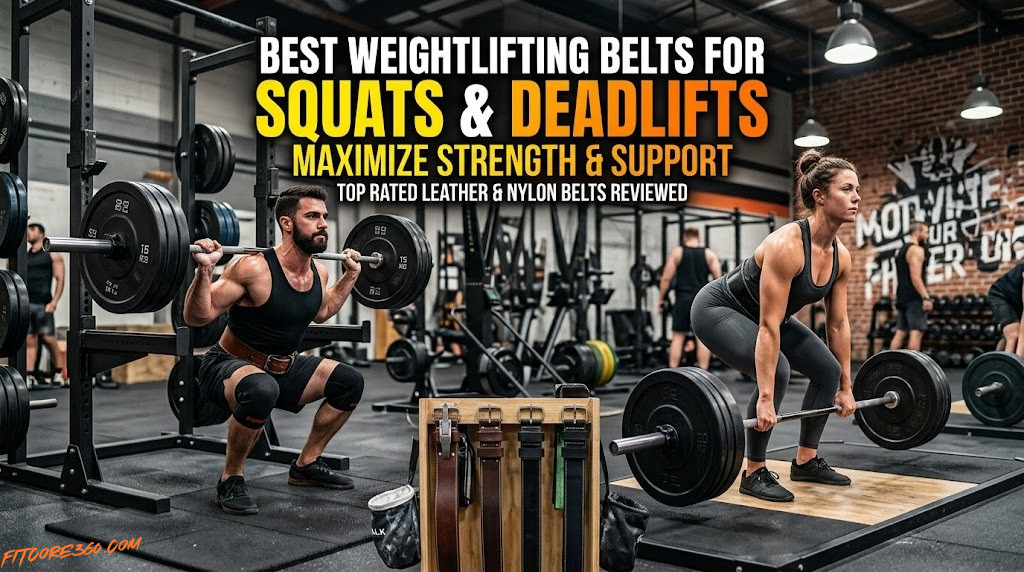
-
Best Overall
Iron Bull Strength Powerlifting Belt — Genuine leather, uniform 4″ width, perfect for competitive lifters
-
Best Value
RitFit Weight Lifting Belt — Contoured neoprene comfort at a budget-friendly price point
-
Best Premium
Gymreapers Weight Lifting Belt — Competition-grade lever buckle, premium leather build
-
Best for CrossFit
Element 26 Self-Locking Belt — Innovative self-locking mechanism for fast transitions
-
Best Lever Belt
IBRO Powerlifting Lever Gym Belt — Quick-release lever, 10mm thick, serious powerlifting
-
Most Versatile
DMoose Fitness Lifting Belt — Ergonomic design suits both deadlifts and squats equally well
-
Best Budget
Steel Sweat Weight Lifting Belt — No-frills nylon, good for beginners and daily training
Why Your Squat and Deadlift Demand a Quality Belt
When it comes to building serious strength under the barbell, few pieces of equipment carry more weight — literally and figuratively — than a quality weightlifting belt. Whether you’re grinding through heavy back squats or pulling a personal record off the floor, a properly fitted belt can mean the difference between a clean lift and a career-altering injury. Yet for all their importance, belts remain one of the most misunderstood and poorly selected pieces of gear in the gym bag.
In this comprehensive guide, we’ve done the hard work for you. We’ve tested, compared, and ranked the 7 best weightlifting belts for squats and deadlifts available in 2026, covering everything from budget-friendly neoprene options to competition-grade leather powerlifting belts. Whether you’re a weekend warrior just getting into heavy lifting or a seasoned powerlifter competing on the national stage, there’s a perfect belt on this list for your goals, budget, and lifting style.
Before we dive into specific product reviews, let’s establish the foundation — what a lifting belt actually does, why the science supports its use, and exactly what to look for when you’re shopping. This context will help you make an informed decision rather than simply grabbing the flashiest option off the shelf.
A weightlifting belt works in tandem with other grip and stability accessories. If you also struggle with grip during heavy pulls, check out our guide on when you should start using lifting straps to pair with your new belt for maximum performance.
Throughout this guide, we’ll also address the most common questions athletes have — from whether belts cause long-term dependency to how to correctly brace and breathe when wearing one. By the end, you’ll be armed with everything you need to shop confidently and lift more safely.
Why Serious Lifters Use a Weightlifting Belt
Let’s dispel the most common myth upfront: a weightlifting belt is not a crutch, nor is it a band-aid for poor technique. Used correctly, it’s a performance tool that allows your body to generate greater intra-abdominal pressure — and that pressure is the cornerstone of a safe, powerful lift.
When you brace properly and wear a supportive belt, the rigid surface around your torso gives your core something to push against. This dramatically increases the stability of your lumbar spine during maximum-effort squats and deadlifts, reducing the compressive forces on intervertebral discs and protecting the smaller stabilizer muscles that surround your vertebrae.
The Core Benefits at a Glance
Spinal Protection
By increasing intra-abdominal pressure, a belt creates a natural “air cushion” that stabilizes the lumbar spine during heavy loading, reducing disc compression by as much as 30–50% in research settings.
Stronger Lifts
Studies consistently show that athletes squat and deadlift heavier loads — often 5–15% more — when properly belted versus unbelted. Better intra-abdominal pressure equals more force transfer.
Faster Recovery
Reducing excessive spinal stress means your CNS and supporting musculature recover faster between sessions, allowing higher training frequency and volume over time.
Proprioceptive Feedback
A belt provides tactile feedback about your torso position. Athletes often report improved bracing cues and better technique awareness simply from wearing a belt during heavy sets.
Confidence Under Load
Psychological readiness is a real performance factor. Many lifters report breaking mental barriers and hitting new PRs with the added security that a quality belt provides.
Long-Term Safety
For athletes training at high percentages of their maximum regularly, belts reduce cumulative spinal stress — a critical factor for staying healthy and lifting for decades.
It’s equally important to understand what a belt does not do. It won’t automatically fix a broken hip hinge, compensate for a rounded upper back, or protect you if your core bracing fundamentals are absent. The belt is a tool that amplifies good technique — not a substitute for it.
If you’re also working on improving your raw grip strength alongside your belt training, our guide to grip strength exercises for beginners vs. advanced athletes provides an excellent complement to your belt-focused training approach.
The Science Behind Intra-Abdominal Pressure and Belt Support
To truly understand why the best weightlifting belts work so effectively, we need to talk about intra-abdominal pressure (IAP). This is the pressure generated inside the abdominal cavity when your core muscles — including the diaphragm, pelvic floor, transverse abdominis, and obliques — contract simultaneously. Think of your torso as a pressurized cylinder: the more pressure inside, the more rigid and stable the entire structure becomes.
When you take a deep breath (the Valsalva maneuver) before initiating a heavy squat or deadlift, you’re deliberately spiking IAP to create maximum spinal stiffness. A rigid leather or thick nylon belt provides a solid external surface for your abdominal muscles to push against, amplifying this pressure beyond what the body can generate alone.
Research published in exercise science and sports medicine literature has demonstrated several key findings:
- Erector spinae activation: Belt use modestly increases lumbar extensor muscle activity, suggesting the belt doesn’t “switch off” your back muscles but rather supports them in a higher-output position.
- Spinal compression reduction: Rigid belts have been shown to reduce the net compressive load on lumbar vertebrae during maximum-effort lifts, largely through the mechanical action of increased IAP.
- Performance enhancement: Multiple studies confirm statistically significant improvements in 1-rep max performance when proper belts are used on the squat and deadlift versus beltless conditions.
- No long-term core weakening: Contrary to popular gym folklore, research does not support the claim that regular belt use weakens the core. Athletes who train beltless on lighter sets and use belts for maximum efforts maintain strong functional core strength.
Important note on Valsalva bracing: To get the full benefit of a weightlifting belt, you must learn to brace properly — 360-degree expansion into the belt, not just forward. Breathing into your chest or only bracing forward dramatically reduces the belt’s effectiveness and can create a false sense of security.
Understanding the mechanics also helps clarify why belt width and rigidity matter so much. A wider, stiffer belt creates a larger surface area for IAP to work against, which is why serious powerlifters prefer 4″ uniform-width leather belts over the tapered neoprene designs often marketed to beginners. We’ll cover these nuances in depth in the buying guide section below.
The interplay between grip, core stability, and lower back support is also worth noting. When your grip fails on a heavy deadlift, compensation patterns ripple up the kinetic chain. That’s why serious lifters often pair their belt investment with accessories like the best lifting straps for heavy pulls, ensuring that grip never becomes the limiting factor when the belt is doing its job on the back.
Types of Weightlifting Belts: Which Style Suits You?
Walk into any serious gym or browse Amazon for five minutes and you’ll find an overwhelming variety of belt styles. Understanding the core categories will immediately narrow down your search and ensure you don’t waste money on the wrong type for your training goals.
Powerlifting Belts
Uniform 4″ width (front and back), 10–13mm thick genuine leather, single or double prong buckle. The gold standard for maximum squat and deadlift support. Rigid, stiff, and competition-legal. Best for serious powerlifters and anyone regularly lifting above 85% of their max.
Olympic Lifting Belts
Tapered design — wider at the back (4″) and narrower at the front (2–3″). This allows greater hip flexion needed in the clean and snatch. Less appropriate for raw squats and deadlifts but ideal for Olympic weightlifters.
Neoprene / Nylon Belts
Soft, flexible, and comfortable from day one. Tapered or straight designs, typically 4–6″ wide at the back. Great for general strength training, CrossFit, and newer lifters. Less rigid than leather but more forgiving on the hips and ribs during dynamic movements.
Lever Belts
Feature a quick-release lever mechanism instead of a prong buckle. Extremely popular in powerlifting for consistent, tight fit every rep. Can’t be adjusted mid-session, but the instant lock-and-release is unmatched for competition use.
Velcro / Self-Locking
Ultra-fast adjustment system, popular in CrossFit and functional fitness circles. Allows athletes to quickly tighten or remove the belt between exercises. Less maximum support than prong/lever systems but highly convenient.
Contoured Belts
Anatomically shaped to follow the lumbar curve, wider at the back and tapering toward the front. Excellent comfort-to-support ratio, especially for athletes with shorter torsos or those who find straight belts digging into the hip bones.
For most athletes focused specifically on squats and deadlifts, the powerlifting belt (leather, 4″ uniform width) offers the best support-to-performance ratio. However, if you’re doing a blend of strength work and metabolic conditioning, a quality nylon or neoprene option will serve you better without penalizing your speed and mobility on accessory movements.
How to Choose the Best Weightlifting Belt: 8 Key Factors
With dozens of options on the market ranging from $25 to over $150, making an informed choice requires understanding exactly what the specs mean and how they translate to real-world performance. Here are the eight factors that matter most.
1. Material: Leather vs Nylon vs Neoprene
Leather is the benchmark material for serious lifting. Genuine leather belts — especially vegetable-tanned or full-grain options — offer unmatched rigidity, durability, and IAP amplification. The tradeoff is a significant break-in period (often 2–4 weeks of regular use before the belt molds to your body). Nylon and neoprene belts require no break-in, are comfortable immediately, and are more affordable — but they flex slightly under maximum load, reducing their IAP amplification versus rigid leather.
2. Width: 4-Inch vs 6-Inch Back Support
The most common debate is 4″ uniform (powerlifting style) versus 6″ wide back with 2–3″ front taper (bodybuilding style). A 4″ uniform belt provides identical support front and back and is the standard for powerlifting federations. The 6″ back design provides more back coverage but restricts hip flexion on the bottom of a deep squat for many athletes. For pure squats and deadlifts, 4″ uniform is almost universally preferred by strength athletes.
3. Thickness: 10mm vs 13mm
For leather belts specifically, thickness matters enormously. 10mm belts are IPF-legal, stiffer than any nylon option, but have a shorter break-in period than 13mm belts. 13mm belts are the thickest legal competition option (in most federations) and provide maximum rigidity — but require several weeks to fully break in and may feel uncomfortable for longer training sessions. 10mm is ideal for most athletes; 13mm is preferred by elite powerlifters and larger athletes.
4. Buckle System: Prong vs Lever vs Self-Locking
A single prong buckle is the most popular competition and training option — easy to adjust between training days, secure, and low maintenance. Double prong buckles are more secure but take longer to fasten and are harder to tighten to the same position consistently. Lever buckles provide instant on/off and the most consistent fit — popular in competition. Self-locking/velcro systems excel in CrossFit environments where rapid belt removal is needed.
5. Sizing and Fit
Always measure your waist at the navel (not your pant size) for proper belt sizing. Most quality belts come in XS through XXL and use a 5-hole adjustment system. You want the belt to fasten in the middle hole, giving you two holes of adjustment in either direction. A belt that’s too tight will impede breathing; too loose and it provides minimal support.
6. Intended Use and Training Style
If your program centers on raw powerlifting and competition prep, invest in a quality leather belt. If you’re doing general strength training with Olympic accessory work or CrossFit, a quality neoprene or nylon option will be more versatile. Consider the range of movements you perform — athletes doing power cleans and snatches alongside deadlifts may prefer a tapered Olympic-style cut.
7. Break-In Period and Long-Term Durability
Quality leather belts improve with use — they mold to your specific torso shape over weeks of training, eventually becoming more comfortable and supportive than any neoprene option. Neoprene and nylon belts are comfortable from day one but may show wear (stretching, Velcro degradation) after 1–2 years of heavy use. If you’re buying for the long term, leather is almost always the better investment.
8. Budget and Brand Reputation
Entry-level nylon belts run $25–$45 and are perfectly adequate for beginners. Mid-range options ($50–$90) include quality neoprene and entry-level leather. Premium belts ($90–$160+) include competition-grade leather from brands like Gymreapers, Iron Bull, and Rogue. For casual gym-goers, mid-range is the sweet spot. Competitive powerlifters should invest in premium leather.
When you’re outfitting your training arsenal for heavy pulling, pairing your belt with the right lifting accessories makes a huge difference. Check out our detailed breakdown of the best lifting straps for deadlifts vs. Olympic lifts to complete your setup for heavy days.
The 7 Best Weightlifting Belts for Squats and Deadlifts (2026)
After extensive testing, community feedback analysis, and cross-referencing with competitive powerlifters and strength coaches, we’ve identified the seven best weightlifting belts across every category and price point. Here’s our comprehensive breakdown of each one.

The Element 26 Self-Locking Weightlifting Belt has built a cult following in the CrossFit community for one primary reason: its patented self-locking buckle mechanism. This innovative closure system allows athletes to cinch the belt tight, lock it in place, and release it in seconds — no fumbling with prongs, no wrestling with a lever mechanism. For workouts that demand rapid transitions between barbell lifts and gymnastics or conditioning work, this belt has no equal.
Construction-wise, the Element 26 uses a heavy-duty nylon shell with reinforced stitching throughout. The 4-inch uniform width provides solid abdominal support during squats and deadlifts without restricting hip mobility on pulling movements. The interior is padded with a moisture-wicking lining that keeps the belt comfortable even through high-rep, high-sweat training sessions.
The self-locking system isn’t just a gimmick — it also provides extremely consistent tightness between sets, something that can be surprisingly hard to achieve with traditional prong buckles when you’re fatigued. Simply feed the strap through, pull to your desired tightness, and the locking mechanism holds it in place. A single thumb press releases the belt entirely.
- Industry-leading self-locking buckle system
- Consistent tightness every single set
- Excellent for high-rep CrossFit workouts
- Comfortable moisture-wicking inner lining
- Multiple color options available
- No break-in period required
- Less rigid than leather for pure max-effort lifts
- Self-lock mechanism requires care over time
- Not competition-legal in IPF powerlifting
- Premium price point for nylon construction
Bottom line: If you’re a CrossFitter, functional fitness enthusiast, or strength athlete who hates fumbling with belts between exercises, the Element 26 is the most practical option on this entire list. It won’t replace a rigid leather belt for maximum-effort powerlifting singles, but for everything else, it’s close to perfect.

The RitFit Weight Lifting Belt earns its “Best Value” distinction by delivering a level of comfort and build quality that routinely surprises athletes who purchase it at its modest price point. The contoured neoprene construction — wider across the lower back (6″) and tapering toward the front — makes it one of the most immediately comfortable belts you can buy, requiring zero break-in period.
The neoprene material is dense enough to provide meaningful lumbar support during working sets of squats and deadlifts, yet flexible enough not to restrict breathing or hip mobility during warm-ups and accessory work. The belt also features a dual adjustable velcro closure supplemented by a metal prong buckle — a hybrid system that provides both quick adjustment and secure locking.
For recreational lifters, athletes in their first 1–2 years of strength training, or those who lift primarily for health and aesthetics rather than competition, the RitFit delivers 80% of the protection of a premium leather belt at roughly 40% of the cost. The contoured 6″ back design also tends to work better for individuals with longer torsos who find 4″ uniform belts riding up onto the lower ribs.
- Exceptional comfort from first use — no break-in
- Outstanding value per dollar spent
- Wide 6″ back excellent for lumbar coverage
- Hybrid velcro + prong closure is versatile
- Suits a wide range of training styles
- 5,000+ positive reviews validate reliability
- Neoprene flex reduces IAP vs rigid leather
- Not ideal for competition powerlifting
- Velcro may wear after 1–2 years of heavy use
- Tapered front may restrict squat depth for some

The Iron Bull Strength Powerlifting Belt earns our top overall recommendation because it represents the genuine article — no synthetic shortcuts, no gimmicky mechanisms, just a meticulously crafted piece of genuine leather engineered to maximize intra-abdominal pressure and protect your spine through thousands of heavy reps.
The construction starts with premium full-grain cowhide leather, cut to a uniform 4-inch width and built to 10mm thickness. This is the configuration preferred by the majority of competitive powerlifters for one simple reason: it works. The uniform width ensures equal support front and back, the leather rigidity amplifies IAP more effectively than any synthetic alternative, and the single-prong buckle system provides consistent, reliable closure rep after rep and year after year.
Yes, there’s a break-in period — expect 2–3 weeks of daily use before the belt fully conforms to the contours of your specific torso. Some athletes accelerate this process by working the belt around a door frame or using leather conditioner. Once broken in, however, the Iron Bull feels genuinely custom — and its performance on maximum-effort squats and deadlifts is measurably superior to any neoprene option at any price point.
The belt is also IPF-approved in design, making it competition-legal for the vast majority of powerlifting federations worldwide. For athletes with eyes on the platform, there’s significant value in training with the same equipment you’ll use on meet day. If you want to understand how your belt choice connects to other gear decisions in competition environments, our resource on whether straps are allowed in powerlifting competitions provides helpful context on accessory equipment rules.
- Premium genuine leather construction
- Maximum IAP support on heavy squats & deadlifts
- IPF-approved design for competition use
- 10mm thickness — stiff but not brutal
- Improves with use as it molds to your body
- Single-prong buckle — adjustable mid-session
- Exceptional long-term durability (5–10 year lifespan)
- Requires 2–3 week break-in period
- Higher price than neoprene alternatives
- Not ideal for Olympic lifting or WOD-style training
- Heavier and less packable than nylon options

Gymreapers has grown from a social media phenomenon into one of the most respected names in strength training accessories, and their weightlifting belt is a primary reason why. Available in both single-prong and lever buckle configurations, the Gymreapers belt offers genuine leather construction, 4″ uniform width, and a 10mm thickness profile that checks every box for competitive and serious recreational powerlifters.
What sets Gymreapers apart from the Iron Bull above is partly brand cachet — their social proof among competitive lifters is enormous — and partly the lever buckle option, which provides the fastest and most consistent closure mechanism available. The lever system can be adjusted with a simple screwdriver to find your exact fit, after which each use takes under three seconds to fully secure and release. For athletes who appreciate the precision of a lever belt but want to save the cost of a Rogue or Inzer option, Gymreapers delivers exceptional value at its price point.
The leather quality is legitimately impressive for its cost tier. The belt arrives noticeably stiffer than the Iron Bull and requires a slightly longer break-in, but the finished product is exceptionally robust. Multiple lifters in our review panel reported using their Gymreapers belt for 3+ years of regular training with no signs of structural wear.
If you’re building out a comprehensive home gym setup alongside your belt purchase, we’ve covered the full picture in our complete 2026 home gym setup guide — which pairs perfectly with a quality belt investment for serious training at home.
- Premium leather construction with great aesthetics
- Lever buckle option for rapid, consistent closure
- Available in multiple colors — rare for leather belts
- Strong brand support and community following
- Comparable to Rogue/Inzer at lower price
- Excellent customer service reputation
- Longer break-in than Iron Bull
- Lever belt cannot be quickly adjusted mid-session
- Higher cost than Iron Bull for lever version
- Some variation in leather quality between units

The Steel Sweat Weight Lifting Belt occupies an interesting and important niche: it’s the best genuine leather belt available at a mid-tier price point. For athletes who understand the performance advantages of leather over neoprene but can’t justify spending $100+ on a Gymreapers or Iron Bull, this belt represents the most accessible entry point into real leather lifting.
Available in multiple width profiles — including a straight 4″ competition-style and a 6″ wide-back option for broader lumbar coverage — the Steel Sweat offers meaningful versatility in a single product line. The leather quality is noticeably below the Iron Bull and Gymreapers tiers, and the break-in period reflects this — expect 3–4 weeks before the belt truly molds to your torso. However, once broken in, it performs admirably for working sets in the 70–90% range on squats and deadlifts.
The double-tongue steel roller buckle provides a secure, classic closure with a satisfying positive lock feel. The 4″ version in particular makes an excellent “first leather belt” for athletes transitioning from neoprene, giving them an authentic feel for how rigid leather changes the lifting experience without committing to premium price territory.
Grip security during heavy deadlifts remains crucial alongside belt support. If chalk is part of your chalk-and-belt setup, our breakdown of liquid chalk versus block chalk pros and cons will help you make the right call there too.
- Genuine leather at accessible price point
- Multiple width options for different needs
- Solid steel roller buckle — proven reliability
- Available in multiple colors and styles
- 7,000+ reviews confirm mainstream reliability
- Good stepping stone toward premium leather belts
- Thinner leather than Iron Bull/Gymreapers
- Longer break-in than premium options
- Not competition-grade for elite powerlifting
- Edges may irritate skin during break-in

The IBRO Powerlifting Lever Gym Belt makes a compelling case for itself among athletes who want the ultimate in closure convenience without the Gymreapers or premium brand price tag. Its 10mm genuine leather construction is competitive with the best on this list, and the lever buckle mechanism delivers the snap-and-go experience that serious powerlifters demand during competition warm-ups and heavy training blocks.
One of the IBRO’s distinguishing features is the quality of its lever mechanism itself. Cheaper lever belts often use flimsy metal hardware that wobbles or loses tension over time. The IBRO’s lever is constructed from solid steel with a positive-lock action that feels as secure on your 500th use as it does on your first. The chrome-plated finish resists corrosion even under consistent sweat exposure.
The belt comes in 4″ uniform width and the 10mm leather is stiff enough to provide genuine powerlifting-level support right out of the box. The break-in is present but shorter than comparable brands — most athletes find the leather conforming to their torso within 10–14 days of regular use. For a lever belt at this price point, the IBRO offers remarkable bang for buck and has developed a loyal following among intermediate-to-advanced powerlifters who don’t want to overpay for brand prestige.
- Quick-release lever for instant on/off
- Solid steel lever hardware — no wobble
- 10mm leather excellent for powerlifting support
- Shorter break-in than comparable leather belts
- Competitive price vs Gymreapers lever
- Great for competition-oriented training blocks
- Lever can’t be adjusted without a screwdriver
- Fewer size options than leading competitors
- Less brand recognition = less resale value
- Some users report inconsistent initial stitching

DMoose has carved out a reputation for producing thoughtfully engineered gym accessories, and their lifting belt is a prime example of that philosophy applied to support equipment. The DMoose belt stands out for its ergonomic contouring — a slight curve designed to follow the natural lumbar lordosis — which makes it unusually comfortable for longer training sessions and multiple-lift programs where the belt stays on for extended periods.
Available in both a traditional leather variant and a reinforced nylon version, the DMoose suits athletes who do a blend of squat, deadlift, and overhead pressing work in the same session. The ergonomic shape accommodates the hip crease position required for a competition-depth squat without the hard-edge pressure that straight belts can create on hip-area anatomy during the hole.
For deadlift specialists specifically, the DMoose performs particularly well on sumo stance pulls, where the wider stance and more upright torso angle can make standard belts feel restrictive or improperly positioned. The ergonomic curve keeps the belt seated firmly against the lower back regardless of stance width. This makes it an excellent pick for strength athletes who pull sumo or mix sumo and conventional pulling within the same training block.
The DMoose also serves lifters who supplement their barbell work with accessory equipment. If you’re using resistance bands alongside your belt training for warm-up or injury prevention work, our comparison of loop vs. tube vs. fabric resistance bands will help you choose the right band type for your supplementary program.
- Ergonomic curve reduces hip crease pressure
- Excellent for sumo deadlift stance
- Comfortable for longer training sessions
- Suits athletes doing multiple compound lifts
- Thoughtful DMoose brand engineering
- Available in leather and nylon variants
- Ergonomic curve doesn’t suit every anatomy
- Not competition-spec for strict powerlifting
- Newer brand — less long-term durability data
- Slightly higher cost vs straight nylon belts
Complete Comparison Table: All 7 Belts Ranked
Use this table to quickly compare the key specifications, intended use cases, and value ratings of all seven belts reviewed above. We’ve highlighted our top overall pick for easy identification.
| Belt Name | Material | Width | Buckle | Competition Legal | Break-In | Best For | Price Tier |
|---|---|---|---|---|---|---|---|
| Element 26 Self-Locking | Nylon | 4″ Uniform | Self-Lock | ✗ | None | CrossFit / WODs | Mid-High |
| RitFit Belt | Neoprene | 6″ Back / 3″ Front | Prong + Velcro | ✗ | None | General Training | Budget-Mid |
| Iron Bull Powerlifting ⭐ | Genuine Leather | 4″ Uniform | Single Prong | ✓ | 2–3 Weeks | Squat / Deadlift / Competition | Mid-High |
| Gymreapers Belt | Genuine Leather | 4″ Uniform | Lever / Prong | ✓ | 3–4 Weeks | Powerlifting / Aesthetics | High |
| Steel Sweat Belt | Leather | 4″ or 6″ Back | Roller Prong | ✗ | 3–4 Weeks | General / Budget Leather | Budget-Mid |
| IBRO Lever Belt | Genuine Leather | 4″ Uniform | Lever | ✓ | 10–14 Days | Powerlifting / Competition Prep | Mid |
| DMoose Fitness Belt | Leather / Nylon | 4″ Ergonomic | Prong | ✗ | Varies | Multi-Lift / Sumo Deadlift | Mid |
Feature Comparison: What Matters Most by Athlete Type
| Athlete Type | Recommended Belt | Key Feature Needed | Material | Priority |
|---|---|---|---|---|
| Beginner / Recreational | RitFit | Comfort, No Break-In | Neoprene | Ease of Use |
| CrossFitter / WOD Athlete | Element 26 | Fast On/Off | Nylon | Transition Speed |
| Serious Strength Athlete ⭐ | Iron Bull | Maximum IAP Support | Leather | Performance |
| Competitive Powerlifter | Gymreapers (Lever) | Consistent Competition Fit | Leather | Precision + Legality |
| Budget-Conscious Lifter | Steel Sweat | Genuine Leather Affordable | Leather | Value |
| Sumo Deadlifter | DMoose | Hip Crease Clearance | Ergonomic | Comfort Under Load |
| Competition Prep Block | IBRO Lever | Lever Consistency, 10mm | Leather | Speed + Support |
Leather vs Nylon vs Neoprene: The Definitive Material Breakdown
No aspect of belt selection generates more debate in strength training communities than material choice. Every major material has legitimate advantages and genuine limitations — the “best” material depends almost entirely on how you train, how often you compete, and what you prioritize in your equipment. Here’s a comprehensive analysis of each.
Genuine Leather — The Performance Standard
Full-grain and top-grain cowhide leather has been the material of choice for competitive powerlifters for decades, and the reasons are grounded in physics. Leather at 10–13mm thickness is extraordinarily rigid under compression — it barely flexes even under the forces generated during a 500lb+ deadlift. This rigidity creates an optimal surface for the abdominal wall to brace against during the Valsalva maneuver, maximizing IAP amplification beyond what any synthetic material can achieve.
The break-in process is a feature, not a bug. As leather molds to your specific anatomy, it transitions from a stiff, slightly uncomfortable piece of equipment to what many long-term users describe as “part of my body” — perfectly conformed to their torso’s unique dimensions. A well broken-in leather belt doesn’t just fit; it provides a level of proprioceptive feedback that synthetic options simply cannot replicate.
The downsides are real but manageable: leather requires conditioning to prevent cracking and drying, it’s heavier and less packable, it costs more, and it’s not appropriate for fast-transition WOD-style training. But for dedicated squat and deadlift work at serious weights, nothing beats it.
Nylon — The Practical All-Rounder
High-quality nylon belts — particularly reinforced, multi-layer constructions — have improved dramatically in recent years. While they’ll never achieve the rigidity of premium leather, modern nylon belts from brands like Element 26 provide meaningful IAP support for working weights in the 60–85% range while offering superior flexibility, washability, and transition speed. The lack of any break-in period is genuinely appealing, and the self-locking and velcro closure systems available in nylon designs have no equivalent in the leather world.
For recreational lifters, CrossFitters, and athletes who integrate barbell training into broader conditioning programs, nylon often represents the optimal choice. It’s also significantly more durable in sweat-heavy environments than leather, which benefits athletes training in humid climates or doing high-rep GPP work.
Neoprene — The Comfort-First Option
Neoprene belts prioritize comfort above all else, and they deliver that comfort without compromise. The inherent flexibility of neoprene makes these belts ideal for beginners learning movement patterns, athletes rehabbing lower back issues who need support without restriction, and recreational gym-goers who lift primarily for health rather than maximum strength output.
The limitation is straightforward: neoprene compresses under load. At maximum-effort weights, a neoprene belt’s flexibility reduces its ability to amplify IAP to the degree that rigid leather achieves. This doesn’t make neoprene useless — it provides genuine support and feedback — but it establishes a performance ceiling that leather transcends. If your training regularly exceeds 80–85% of your 1RM on squats and deadlifts, stepping up to leather will yield measurable performance returns.
Just as material choice matters for your belt, material choice matters for your grip accessories. If you use gym chalk alongside your belt for maximum-effort pulls, see our breakdown of the best gym chalk for sweaty hands to find what works best in your training environment.
Belt Width and Thickness: Finding Your Optimal Configuration
Among the most practically impactful decisions in belt selection — yet one most buyers overlook — is the combination of width and thickness. These two measurements directly determine how much spinal surface area receives support and how rigid that support is. Getting them right for your anatomy and sport can mean the difference between a belt that transforms your training and one that collects dust after three sessions.
Width Options Explained
4-inch uniform width is the powerlifting standard and the configuration we recommend for squats and deadlifts specifically. Equal width front and back means equal support from abdominals and erectors simultaneously. This symmetrical bracing is optimal for the compressive spinal loads generated during these bilateral lower-body strength movements.
6-inch wide back with tapered front (typically 2–3″ at the front) offers greater lumbar coverage but creates an uneven bracing surface. The narrower front may feel more comfortable for athletes with shorter torsos or prominent hip anatomy, but the tapering also reduces the front abdominal contact area, subtly reducing the quality of 360-degree Valsalva bracing. Best for general strength training and bodybuilding-style programs rather than competitive powerlifting specificity.
Width and body proportions: Shorter athletes with compact torsos (less than 17–18″ between hips and lower ribs when seated) often find 4″ belts more comfortable than 6″ options, which can dig into the lower ribs during a deep squat. Taller athletes with longer torsos often appreciate the additional lumbar coverage that a 6″ back belt provides.
Thickness: 6.5mm vs 10mm vs 13mm
6.5mm leather belts are the thinnest performance option and are often used by Olympic weightlifters who need leather’s rigidity without the bulk that impedes hip crease clearance during cleans and snatches. Not ideal for maximum squat/deadlift support.
10mm is the sweet spot for the vast majority of powerlifters and strength athletes. It’s the IPF-legal maximum thickness, provides excellent rigidity for heavy lifting, and reaches a fully broken-in state faster than 13mm options. If you’re buying your first leather belt, 10mm is almost certainly the right choice.
13mm is the thickest commonly available option and provides maximum rigidity — but comes at the cost of a significantly longer break-in (sometimes 4–6 weeks) and greater stiffness that can feel restrictive during training. Most appropriate for elite-level powerlifters who regularly lift 90%+ of their maximum and need every advantage available.
Competition Thickness Rules
Most major federations (IPF, USAPL, USPA, etc.) permit belts up to 10mm in thickness and 4″ in width. Always verify the specific rules for your federation before purchasing a competition belt — rules vary slightly between organizations and can be updated annually.
How to Size and Fit Your Weightlifting Belt Correctly
Even the best belt on this list will underperform if it’s sized incorrectly. Poor fit is one of the primary reasons athletes report that belts “don’t work” — when in reality, the belt is doing exactly what it was designed to do, just on a torso it doesn’t properly fit. Here’s a step-by-step sizing guide that eliminates guesswork.
Step 1: Measure Your True Waist
Measure your waist circumference at the navel — not your pant waist measurement, which is typically taken lower and will produce an incorrect belt size. Stand relaxed (don’t suck in), wrap a soft tape measure around your waist at belly button height, and note the measurement. Add 2–3 inches to this number to account for the way a rigid belt sits slightly away from the skin. This is your target belt size range.
Step 2: Match to Manufacturer Size Charts
Every brand has slightly different size charts, and some lean toward sizing generously while others run tighter. Always check the specific brand’s size chart rather than assuming your typical shirt or trouser size translates directly. When in doubt between two sizes, size up for neoprene and nylon belts; for leather belts, note that they don’t stretch and may feel slightly different before and after break-in.
Step 3: The Middle-Hole Rule
A properly fitting belt should fasten comfortably in the middle hole of a 5-hole adjustment system, leaving 2 holes in either direction for adjustment. If you find yourself using the tightest or loosest hole regularly, you’re in the wrong size. Most quality belts are sized such that a properly fitted belt sits in holes 3–4 during a training session braced firmly against the abdominal wall.
Step 4: Optimal Tightness for Lifting
This is where most beginners err. You should be able to take a full diaphragmatic breath while wearing the belt — just barely. If the belt prevents you from fully expanding your abdomen, it’s too tight and will restrict your ability to generate maximum IAP. If you can easily fit two fingers under the belt while braced, it’s too loose and providing minimal support. The “one finger of clearance while taking a deep breath” test is a useful calibration benchmark.
Step 5: Belt Position — High vs Low Placement
For squats: position the belt just above the hip crests, covering the iliac crest and extending upward to just below the lower ribs. This typically places the belt higher than many beginners initially try, but this position maximizes coverage of the lumbar vertebrae most stressed during the squat movement.
For deadlifts: some athletes prefer to position the belt 1–2cm lower than for squats, as the hip crease clearance requirements differ between the two movements. Experiment with position during warm-up sets to find what feels most natural and supportive in the bottom position of each lift.
⚠️ Common Mistake: Never wear your belt tight enough that you can’t breathe into it. The belt’s function is to amplify the pressure you create, not replace your ability to create pressure. A belt worn so tightly that it restricts full diaphragmatic expansion is counterproductive and can increase blood pressure to dangerous levels during heavy exertion.
For athletes who use lifting straps in addition to belts on heavy pull days, the question of how these accessories interact with long-term strength development is one we’ve addressed directly in our guide on whether lifting straps hurt your grip strength long term.
When to Wear a Belt — and When to Leave It in the Bag
One of the most important questions for any strength athlete is when to use a belt within a training session, training block, and athletic career. Belt use is not an all-or-nothing proposition — the most sophisticated approach uses belts strategically to maximize performance where it matters while preserving raw core strength and body awareness in other contexts.
Use a Belt When:
- Working above 80% of your 1RM: This is the threshold where spinal compression forces become significant enough that the belt’s IAP amplification provides genuine protective benefit. Below this intensity, your core can handle the load without external support.
- Testing or approaching a personal record: Maximum effort attempts benefit most from the full toolkit. A belt on PR day is not cheating — it’s smart performance optimization.
- High-volume strength sessions (5×5, 4×6, etc.): Accumulated fatigue across multiple heavy sets increases injury risk on later sets. Belting for sets 3–5 while going beltless on warm-up sets is a practical and scientifically sensible approach.
- Returning from lower back injury: Used correctly under medical guidance, a belt can allow return to training at reduced risk during the rehabilitation process. Always coordinate with a qualified healthcare professional.
- Competition and competition simulation: Always train in the equipment you’ll compete in during the final 4–6 weeks before a meet.
Leave the Belt Off When:
- Warm-up sets below 60%: These lighter loads don’t require external support and provide valuable practice in brace-only stability.
- Technique-focused sessions: Learning or regroving movement patterns benefits from raw proprioceptive feedback without the belt as a crutch.
- Accessory and hypertrophy work: Romanian deadlifts, good mornings, lunges, and similar movements at moderate loads develop functional strength that complements rather than competes with belt training on primary lifts.
- Active recovery and mobility work: Light movement sessions, stretching, and recovery protocols are never belt situations.
The Beltless Training Principle: Most strength coaches recommend spending at least 20–30% of your weekly training volume beltless to ensure the core musculature continues to develop. Periodization plans often include “beltless cycles” early in a training block that transition to belted work as intensity ramps up toward a peaking phase.
Belt Care and Maintenance: Protecting Your Investment
A quality leather powerlifting belt is not just a piece of gym equipment — it’s an investment that, properly maintained, can serve you for 10–15 years or more. Neoprene and nylon belts have their own maintenance requirements that, when observed, significantly extend their service life. Here’s what you need to know.
Leather Belt Care
Conditioning: Leather is a natural material that dries out over time, especially under the heat and salt of sweat exposure. Apply a quality leather conditioner (Obenauf’s Heavy Duty LP and Sno-Seal are gym community favorites) 2–4 times per year to prevent the leather from drying and cracking. New belts benefit from conditioning before first use to begin the break-in process more quickly.
Cleaning: Wipe down your belt with a slightly damp cloth after sweat-heavy sessions. Never fully submerge a leather belt in water or machine wash it — water damages the leather’s structural integrity and can cause permanent deformation. For stubborn odor, a light application of leather cleaner followed by conditioning handles most situations.
Storage: Store leather belts flat or hung on a sturdy hook. Never fold or tightly roll a leather belt for extended storage periods — this can create permanent creases that alter the belt’s shape and reduce its uniform support characteristics. Allow belts to air-dry fully between sessions before storing in closed bags or lockers.
Buckle maintenance: Apply a small amount of machine oil to the prong pivot point once or twice per year to prevent squeaking and ensure smooth operation. Check buckle stitching annually — if you notice fraying at the buckle attachment points, have the belt repaired by a leather worker before it becomes a safety issue.
Nylon and Neoprene Belt Care
These materials are more forgiving — hand wash with mild soap and warm water periodically, rinse thoroughly, and air-dry flat away from direct sunlight. UV exposure degrades neoprene elasticity over time. For velcro-closure belts, remove debris from the hook-and-loop material regularly to maintain closure strength. Inspect velcro panels every 6 months; worn-out velcro can be replaced at most craft stores with minimal sewing skill.
For athletes maintaining a comprehensive home gym setup where belt care fits into a broader equipment maintenance routine, our guide to the best all-in-one home gyms covers how to organize and care for your full equipment collection efficiently.
Frequently Asked Questions About Weightlifting Belts
Most strength coaches recommend that beginners spend their first 6–12 months of training without a belt, focusing on developing proper technique and raw core bracing ability before introducing external support. This period builds the foundational movement patterns and core strength that make belt use effective and safe. Once an athlete can comfortably lift 1.5× bodyweight on the deadlift and 1.25× on the squat with consistent technique, introducing a belt for heavy working sets becomes appropriate and beneficial. Using a belt too early can mask technique deficiencies and create artificial confidence at loads the athlete’s movement quality doesn’t yet support.
This is one of the most persistent myths in strength training, and the research does not support it. Studies comparing belted and unbelted lifters over time show no significant difference in core strength development. The key is strategic belt use — wearing the belt for maximum-effort sets and competition simulation while doing accessory work, warm-ups, and technique sessions beltless. Athletes who train beltless at lower intensities and use belts only for heavy sets maintain and develop strong functional core strength. The belt doesn’t replace your core; it amplifies what your core can produce.
A powerlifting belt is uniform width (typically 4″) front to back, made from rigid leather at 10–13mm thickness, and designed to maximize intra-abdominal pressure for static compression-dominant movements like squats and deadlifts. An Olympic lifting belt tapers from a wider back (4″) to a narrower front (2–3″), allowing greater hip flexion mobility needed for the catch position in the clean and jerk and the bottom of the snatch. For athletes focused exclusively on squats and deadlifts, a powerlifting-style uniform belt provides superior support. For athletes doing Olympic lifts alongside barbell strength work, a tapered Olympic belt or a quality nylon belt offers better compromise mobility.
The belt should be tight enough that it provides resistance when you fully inhale into your abdomen (the “belly breath” or Valsalva maneuver), but loose enough that you can still take that full breath comfortably. A commonly used benchmark is the “two-finger test” — you should be able to slide two fingers under the belt with some effort when relaxed, but when you take a full diaphragmatic breath and brace, the belt should feel firm against your entire abdominal circumference. Too loose and the belt rattles and provides minimal support; too tight and you can’t expand your abdomen for proper bracing, which actually reduces the belt’s effectiveness and can spike blood pressure dangerously.
Both are equally effective for the actual task of supporting the lift — the difference lies entirely in convenience and use pattern. A prong belt can be adjusted between exercises and during a session with a simple re-buckling, making it more versatile for varied training. A lever belt provides instant on/off functionality and locks to an exact, consistent tightness every time — highly valued for competition where you want identical setup every attempt. The downside of a lever belt is that adjusting the tightness requires removing and resetting the lever mechanism with a small screwdriver. For most athletes, a quality single-prong belt is the practical choice; for competition-focused powerlifters, the lever’s consistency and speed are worth the trade-off.
Break-in time varies significantly by leather thickness and quality. A 10mm belt from brands like Iron Bull or Gymreapers typically requires 2–3 weeks of regular training (3–5 sessions per week) before the leather becomes noticeably more pliable and conformed to your torso. A 13mm belt may take 4–6 weeks. You can accelerate the process by: applying a generous coat of leather conditioner before first use; manually working the leather by bending it over a door frame or foam roller; wearing it during lighter training days before your heavy sessions; and using it consistently rather than sporadically. Some athletes submerge new leather belts briefly in warm water, wear them to complete sessions, and allow them to dry on the body — this controversial but popular method dramatically accelerates the break-in.
Yes, and many athletes do. A belt can be beneficial for any movement that places significant compressive load on the lumbar spine: barbell overhead press, barbell rows, rack pulls, Romanian deadlifts, and heavy carries like farmer’s walks and yoke carries all benefit from belt use when performed at high intensities. However, for exercises that require significant spinal rotation or lateral flexion (cable rotations, side bends, most core isolation exercises), removing the belt preserves the range of motion and proprioceptive feedback that makes those movements effective. The guiding principle is the same: use a belt when the load is high enough to meaningfully stress the lumbar spine, and leave it off when unrestricted movement is more important than maximum support.
Always measure your waist circumference at the navel (not your pants size) and match it to the specific brand’s size chart. The ideal fit allows the belt to close in the middle hole of the 5-hole adjustment system, giving you two holes of adjustment in either direction. Different brands size differently — some run generous, others tight — so comparing your measurement to the manufacturer’s chart is essential. If you’re between sizes, size down for neoprene (which has some give) and size up for leather (which doesn’t stretch). For athletes who are actively gaining mass or changing weight significantly, a mid-size that fits your goal bodyweight rather than current bodyweight is often the smart long-term choice.
Yes — belts are not only allowed but standard in virtually all powerlifting competitions, including raw divisions. The IPF (International Powerlifting Federation) and most national federations permit belts up to 10mm in thickness and 10cm (approximately 4″) in width. Lever belts are legal. Some federation-specific rules exist around buckle placement, belt material, and logo restrictions, so always review your specific federation’s technical rules before competing. For equipped (gear) competitions, a wider range of belt configurations may be permitted. The key practical rule is that you should train with the same belt you plan to compete with to ensure your setup, bracing technique, and position are consistent on meet day.
For athletes managing lower back issues, the comfort-first priority makes a quality neoprene belt like the RitFit the most appropriate starting point. The contoured neoprene design provides meaningful support without the rigid edges of a leather belt that can exacerbate certain injury presentations. That said, any athlete with a diagnosed or chronic back condition should work with a physiotherapist or sports medicine physician before resuming heavy barbell training with or without a belt. The belt addresses spinal compression mechanics but cannot fix structural issues like disc herniation or stenosis — professional guidance is essential. Once cleared to train, progressively loaded beltless work combined with selective belted sets at higher intensities is typically the most evidence-based rehabilitation approach.
Conclusion: Choose the Right Belt and Lift Without Limits
A great weightlifting belt is one of the most impactful single investments you can make in your strength training career. It doesn’t replace technical excellence, programming intelligence, or recovery discipline — but at the right intensity and used correctly, it provides measurable, science-backed performance and safety advantages that compound over thousands of training sessions.
If you’re walking away from this guide with one clear recommendation, it’s this: for serious squatters and deadlifters, the Iron Bull Strength Powerlifting Belt is the best overall choice — genuine leather, 10mm thickness, 4″ uniform width, and a single-prong buckle that will outlast your PR records. For CrossFit athletes and functional fitness devotees, the Element 26’s self-locking mechanism is genuinely ingenious. For value-conscious lifters wanting immediate comfort, RitFit delivers more than its price suggests. And for athletes who want competition-ready lever functionality, the Gymreapers and IBRO options serve exceptionally well.
Remember that a belt is one piece of a comprehensive performance ecosystem. Pairing your belt with intelligent programming, quality grip accessories, proper nutrition, and recovery protocols creates the conditions for truly exceptional strength development. If you’re expanding your training toolkit further, our leather lifting straps ranked and reviewed guide covers the ideal pulling accessory to pair with your new belt for maximum-effort deadlift days.
Whatever belt you choose from this list, invest in understanding how to use it properly — learn the Valsalva brace, find your optimal tightness, position it correctly for each lift, and allow it to become a seamless part of your lifting practice. The athletes who get the most out of their belts aren’t the ones with the most expensive leather; they’re the ones who’ve put in the work to understand the tool and use it with intention.
Now go hit a new PR. Your back will thank you.
🏆 Shop Our #1 Pick — Iron Bull Powerlifting Belt →