Best Leather Lifting Straps — Ranked & Reviewed
Everything you need to pull heavier, train longer, and protect your grip — without babying your hands.
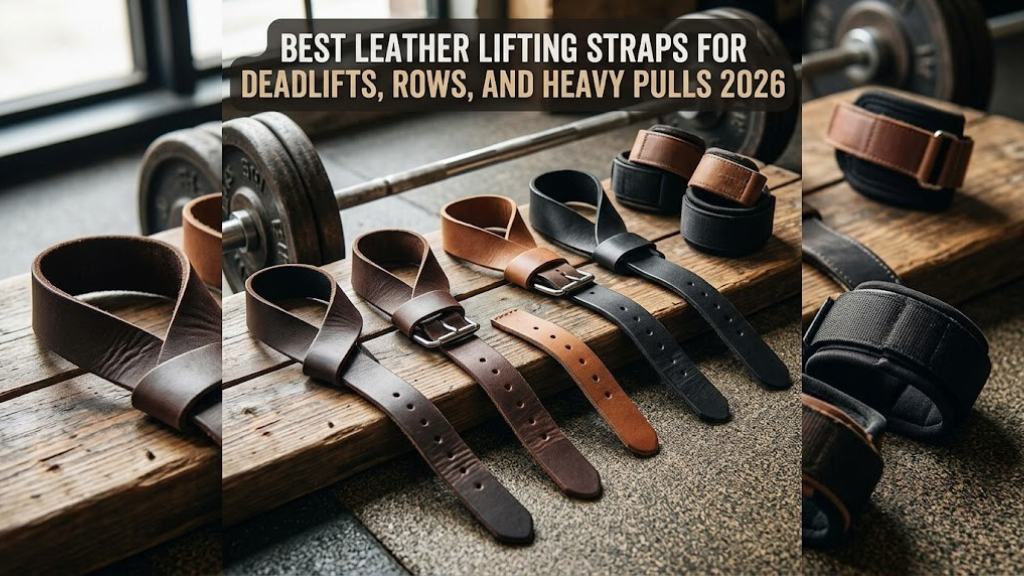
There is a particular satisfaction that comes with wrapping a thick cut of vegetable-tanned leather around a knurled bar and knowing — with complete certainty — that your grip is no longer the limiting factor in the lift. Your legs and your back will give out long before those straps do. That is the promise of a good leather lifting strap, and when it is fulfilled, it changes how you train.
Leather lifting straps occupy a specific, well-earned niche in the strength training world. They are not the most affordable option — nylon or cotton straps cost less than half the price. They are not the lightest or most packable. What they offer instead is a combination of durability, rigidity, and grip texture that most serious lifters come to prefer for heavy pulling work: deadlifts, Romanian deadlifts, barbell rows, shrugs, rack pulls, and high-rep back work where you simply cannot afford grip failure.
This guide covers every meaningful aspect of leather lifting straps — how they work, how they differ from alternatives, what separates good leather craftsmanship from bad, and which specific products are worth your money in 2026. We have evaluated stitching quality, leather thickness, loop geometry, break-in behavior, and real-world performance under heavy loads to give you the most complete buyer’s resource available.
Why Choose Leather Lifting Straps?
If you walk into any serious powerlifting gym, weightlifting facility, or high-level CrossFit box, the majority of lifters using straps for accessory work will be using leather. This is not brand loyalty or nostalgia — it reflects a genuine functional preference that becomes clear after you have trained with both leather and synthetic straps under real load.
The Structural Case for Leather
Full-grain vegetable-tanned leather has a fiber structure that is simultaneously strong and slightly compliant. This means it wraps around a bar without creating the pressure points that stiff synthetic materials sometimes produce, while still being rigid enough to prevent the strap from rolling or shifting during the lift. A well-made leather strap grips the bar in a fundamentally different way than a nylon strap — it molds slightly to the knurling over time, developing a surface texture that increases friction with use rather than degrading it.
The thickness of quality leather straps (typically 4–8mm for premium options) provides a meaningful amount of wrist padding under heavy load. When you are pulling 400+ lbs in a deadlift, the strap experiences enormous force and that force is transmitted directly to your wrist. A substantial leather strap distributes that force across a broader area and with less bite than thin synthetic alternatives.
Durability That Actually Matters
This is perhaps the most compelling practical argument for leather. A quality nylon strap will typically last 1–3 years of regular heavy use before the fibers begin to fray, the stitching degrades, or the material softens to a point where security decreases. A quality leather strap — one made from genuine thick-cut hide and double-stitched with waxed thread — can last a decade or more. The leather actually improves through a break-in period, and its degradation is gradual and visible rather than sudden. You will see leather straps cracking or drying out before they fail catastrophically. Nylon straps, by contrast, can degrade internally while appearing externally intact.
The Feel Under Load
This is harder to quantify but consistently described by experienced lifters: leather straps feel more secure under heavy load. Part of this is psychological — the heft and rigidity of thick leather creates confidence. But there is also a physical basis. The coefficient of friction between leather and steel increases as the strap gets slightly warm and slightly damp — the opposite of many synthetic materials, which become more slippery under the same conditions. For maximum-effort deadlifts and rack pulls, this matters.
Important context: Lifting straps are an assistance tool, not a replacement for grip development. Using them exclusively for all lifting will limit your grip strength development over time. Our full analysis of whether lifting straps hurt your grip long-term covers exactly when to use them and when to leave them off for maximum long-term benefit.
When Are Leather Straps NOT the Right Choice?
Leather straps are not the universal answer for every lifting situation. They are heavier and bulkier than cotton or nylon, making them less convenient to carry in a gym bag. They take longer to wrap correctly, making them unsuitable for Olympic lifts where you need to drop the bar quickly and safely. And their higher price means beginners experimenting with straps for the first time might reasonably start with an inexpensive nylon pair before committing to leather.
They are also not ideal for lifts where a quick strap release is essential for safety — namely Olympic snatches and clean and jerks. For those movements, lasso nylon straps or no straps at all are the correct choice. Leather straps shine specifically in the realm of heavy pulling: deadlifts, Romanian deadlifts, barbell rows, shrugs, high-pull variations, and rack pulls. This targeted excellence makes them worth every penny for lifters who train these movements seriously.
Types of Lifting Straps: Where Leather Fits
Understanding the full landscape of lifting strap types will help you appreciate precisely what leather straps do well — and clarify whether they match your training style.
Single Loop (Closed Loop) Straps
The simplest design: a single loop of material that you thread your wrist through and wrap around the bar. Most leather straps use this design. It is the most secure configuration for heavy pulling because the wrap multiplies holding force. The downside is that releasing from the bar requires deliberate unwrapping — which is why this design is unsuitable for Olympic lifts.
Lasso Straps
A lasso strap has a loop at one end that you thread the strap through to create a cinching wrist loop, with the remaining length wrapping around the bar. More adjustable than fixed loop straps and faster to release. The most common design in nylon and cotton straps, but less common in leather because leather’s rigidity makes the cinching mechanism less fluid.
Figure-8 Straps
A figure-8 strap creates two interlocking loops — one for your wrist, one around the bar — that lock under load in a self-reinforcing configuration. They are almost impossible to drop accidentally, making them popular for strongman events and maximum-weight record attempts. Leather figure-8 straps are uncommon but exist; Cerberus and a few specialist manufacturers offer them.
Hook Straps
Not leather and technically not “straps” in the traditional sense — hook straps attach a metal hook to your wrist that grips the bar. Fast to use, no wrapping required, but they transfer force very differently and many lifters find them uncomfortable. The grip is less natural and the risk of the hook slipping or marking a bar makes them unpopular in most gym settings.
Which type for deadlifts? Single-loop leather straps remain the gold standard for conventional and sumo deadlifts, Romanian deadlifts, and rack pulls. For an in-depth comparison by lift, see our guide: Best Lifting Straps for Deadlifts vs. Olympic Lifts.
What to Look For: The Complete Leather Strap Buyer’s Guide
Not all “leather” straps are created equal. The difference between a $15 pair that will crack in six months and a $45 pair that will outlast multiple gym memberships comes down to a handful of specific, identifiable construction factors.
Leather Type and Grade
The single most important variable is the type and grade of leather used. Full-grain vegetable-tanned leather is the gold standard — it is the outermost layer of the hide, has not had its natural surface sanded or corrected, and is tanned using plant-based tannins that produce a denser, more durable structure than chrome-tanned alternatives. Over time, full-grain leather develops a patina that actually strengthens the surface.
Top-grain leather has had the uppermost surface sanded to remove imperfections. It is still good leather, more uniform in appearance, but slightly less durable over the long term. Genuine leather in the marketing sense typically means lower-grade corrected or split leather with a surface coating — it will not hold up to heavy use the way the top two grades will. If a product just says “genuine leather” without specifying the grade, treat this as a yellow flag.
Thickness
Leather thickness is measured in millimeters and is directly correlated with both durability and break-in time. Straps in the 3–4mm range break in quickly and feel comfortable from the start but offer less rigidity under maximum load. Straps in the 5–8mm range — common in premium powerlifting-oriented products — are very stiff initially, require a genuine 2–4 week break-in period to soften, but ultimately provide superior support and longevity. Match thickness to your use case: if you are using straps for moderate-weight accessory work, 3–4mm is perfectly adequate. For maximal pulls and strongman work, 6–8mm is worth the break-in investment.
Length and Width
Standard lifting strap length is approximately 18–24 inches (46–61cm). Longer straps allow more wraps around the bar, increasing mechanical security. For a standard 28–29mm barbell, two full wraps is typically sufficient; for thicker axle bars (50mm) in strongman training, extra length is helpful. Width typically ranges from 1.5 to 2.5 inches — wider straps distribute wrist pressure over a larger area, which matters under very heavy loads.
Stitching and Edge Finishing
Examine the stitching at the loop end — this is where failure begins. Quality straps use a double or triple stitch pattern with waxed polyester or linen thread, positioned 3–5mm from the leather edge. The edge should be beveled and burnished rather than raw-cut, which prevents delamination and fraying from repeated bar contact. Saddle stitching (hand-stitched with two needles simultaneously) is more durable than machine stitching because a break in one stitch does not propagate the way it does in machine-lock-stitched seams.
Hardware and Reinforcement
Some premium leather straps include a metal D-ring or rivet reinforcement at the loop junction. This is genuinely useful on thinner leather straps but largely redundant on thick full-grain options where the leather itself provides the strength. Pay more attention to the quality of the stitching than the presence or absence of hardware.
- Look for full-grain or top-grain vegetable-tanned leather — not just “genuine leather”
- Choose 5–8mm thickness for heavy deadlifts; 3–4mm for moderate accessory work
- Check stitching quality: double/triple stitch, waxed thread, minimum 3mm from edge
- Ensure edges are beveled and burnished, not raw-cut
- Consider length: 20–22 inches for standard barbells, longer for axle bars
- Width of 1.75–2.5 inches provides better wrist support under heavy loads
- Budget for a 2–4 week break-in period on thicker premium straps
- Factor in the 5–10 year lifespan when evaluating cost vs. nylon alternatives
Understanding your grip development goals alongside your strap use is also important. Straps should supplement, not replace, intentional grip training. Our deep-dive on how grip strength directly improves your deadlifts and pull-ups explains why the two work best in combination rather than as alternatives.
Best Leather Lifting Straps at a Glance
| Award | Product | Leather Grade | Thickness | Length | Price Range | Best For |
|---|---|---|---|---|---|---|
| 🏆 Best Overall | Pioneer Cut Competition | Full-grain vegetable | 8mm | 22″ | $45–55 | Powerlifting, heavy pulls |
| 💰 Best Budget | Harbinger Leather | Top-grain | 4mm | 21.5″ | $18–25 | Beginners, general lifting |
| 👑 Best Premium | Cerberus Leather Figure-8 | Full-grain veg-tan | 7mm | 24″ | $55–70 | Strongman, maximal deadlifts |
| 🎯 Best for Deadlifts | Dmoose Leather Straps | Top-grain | 5mm | 23″ | $22–30 | Deadlifts, mid-level training |
| ⚡ Best Handmade | Red Bear Lifting | Full-grain veg-tan | 6–7mm | 20–22″ | $40–60 | Premium feel, custom options |
| 🔰 Best Mid-Range | Schiek Model 1000-LS | Top-grain | 5mm | 20″ | $28–38 | Versatile training, bodybuilding |
Pioneer Cut Competition Leather Straps
Pioneer Cut Competition Lifting Straps
Thick-cut American leather, powerlifting-tested construction, and a track record that speaks for itself in competitive venues around the world.
Pioneer Cut has built a reputation in the powerlifting community that is difficult to overstate. Their straps are cut from the same quality of leather used in their competition-grade belts — 8mm full-grain vegetable-tanned hide sourced and finished in the United States. The result is a strap that feels almost preposterously stiff when new, and absolutely bomber under any realistic training load after break-in.
The triple saddle stitch at the loop junction deserves specific mention. Each stitch passes through the full 8mm of leather, and the waxed linen thread used is the same weight used in high-end leather goods. The stitching pattern creates a reinforcement zone, not just a seam — this is the part of a strap that fails on cheaper products, and Pioneer Cut’s construction makes failure here essentially a non-issue.
Break-in is real and worth acknowledging. Fresh out of the packaging, these straps will feel like you are wrapping a strip of hardwood around your wrist. After 2–3 weeks of regular use, they soften to a point where they conform to the bar naturally while retaining full structural integrity. Apply a leather conditioner (neatsfoot oil, leather balm, or mink oil) during this break-in period to accelerate the process and protect the leather from the moisture it will encounter in training.
Pros
- Exceptional 8mm full-grain construction
- Triple saddle stitch — virtually indestructible seam
- Made in the USA from domestic leather
- Will last 10+ years with basic care
- Develops outstanding grip texture over time
- Wide 2.25″ profile distributes wrist load well
Cons
- Significant break-in period (2–4 weeks)
- Most expensive option on this list
- Heavy compared to nylon alternatives
- Not suitable for Olympic lifting
Our verdict: If you are serious about strength training and plan to use lifting straps for years, the Pioneer Cut is the last pair you will ever need to buy. The price premium is justified by the construction quality and expected lifespan. Buy once, buy right.
Check Price on Amazon →Harbinger Leather Lifting Straps
Harbinger Padded Cotton / Leather Lifting Straps
The most accessible quality leather strap on the market — a trusted starting point for lifters exploring the benefits of leather for the first time.
Harbinger has been a reliable name in lifting accessories for decades, and their leather strap offering represents exactly what you want from an entry-level leather product: real leather construction at an accessible price, with a short break-in period thanks to the thinner 4mm hide. The neoprene wrist lining is a thoughtful addition that immediately reduces the raw-edge discomfort that catches beginners off guard with pure leather straps.
The top-grain leather used here is not as dense or durable as the full-grain vegetable-tanned options in premium products, but it is genuine leather — not a coated split leather — and will hold up well for several years of regular training at moderate to heavy loads. For someone lifting in the 200–350 lb range for deadlifts and rows, these straps are entirely adequate and will not compromise performance.
The 21.5-inch length is appropriate for standard barbells and most users. Very tall lifters or those using thick specialty bars may wish for a bit more length. The stitching is machine-sewn rather than saddle-stitched, which is the main durability distinction from premium options. Inspect the seam periodically and replace if you see early fraying — at this price point, replacement is a reasonable strategy when the time comes.
Pros
- Genuine leather at budget price
- Short break-in period (4mm thickness)
- Neoprene lining protects wrists
- Widely available and well-reviewed
- Great introduction to leather straps
Cons
- Top-grain not as durable as full-grain
- Machine stitched — less durable seam
- 1.5″ width can pinch under very heavy loads
- May feel flimsy to advanced powerlifters
Dmoose Leather Lifting Straps
Dmoose Leather Lifting Straps
A mid-range leather strap that hits the sweet spot between price, quality, and immediate usability — the smart buy for most recreational and intermediate lifters.
Dmoose has positioned their leather strap at exactly the right market position: more leather quality than Harbinger, significantly less expensive than Pioneer Cut or Cerberus, with a 5mm thickness that breaks in reasonably quickly (typically 1–2 weeks) while still providing genuine rigidity for heavy deadlift work.
The 23-inch length is the most versatile standard size — long enough for 2.5 wraps on a regular barbell (excellent security) and sufficient for most specialty bars except the largest strongman implements. The 1.75-inch width is a sweet spot for most hand sizes, providing a good balance of wrist coverage and bar contact area.
The double-stitch seam is machine-sewn but well-executed, with consistent stitch spacing and a backstitch pattern at both ends of the seam. For loads up to approximately 400–450 lbs, these straps have proven reliable in extended use. At that upper limit, the seam begins to experience meaningful stress — users regularly pulling more than 400 lbs might prefer to step up to Pioneer Cut or Cerberus for additional confidence margin.
Pros
- Excellent value at mid-range price
- 5mm thickness — good balance of rigidity and break-in time
- 23″ length works for most bars
- Better stitching than entry-level options
- Good for deadlifts up to ~400 lbs
Cons
- Machine stitched rather than hand saddle-stitched
- Top-grain not as dense as full-grain
- May not satisfy very heavy lifters (450+ lbs)
Other Excellent Leather Lifting Straps Worth Considering
Schiek Sports Model 1000-LS
Schiek is a well-established name in gym accessories, and their leather strap is a consistent performer in the mid-range category. The 5mm top-grain leather is well-finished with clean edge work, and the 20-inch length keeps them compact for bodybuilding-style back work where you are wrapping and unwrapping frequently. The slightly narrower profile suits smaller-handed lifters better than the wide-cut options. Available in multiple colors. Price: approximately $28–38.
Red Bear Lifting Handmade Straps
A small-batch US manufacturer producing full-grain vegetable-tanned leather straps with a level of craftsmanship that rivals Pioneer Cut at a comparable price point. Red Bear offers custom length options and several leather finish choices. Their 6mm standard strap is particularly well-regarded for the quality of the edge burnishing and the consistency of the stitch work. Slightly harder to find than mass-market options but worth seeking out for serious lifters who appreciate artisan craftsmanship. Price: approximately $40–60.
Dark Iron Fitness Leather Wrist Straps
A solid mid-range option that has been on the market for years and earned a genuine following in the bodybuilding community. The leather quality is consistent, the wrist loop is padded with neoprene similar to Harbinger’s approach, and the price point is competitive. Less impressive for maximum-weight powerlifting work but entirely adequate for high-volume accessory work at moderate loads. Price: approximately $20–28.
Spud Inc. Lifting Straps
Spud Inc. makes equipment for the serious powerlifting and strongman market and their leather straps reflect this pedigree. Thick, no-frills construction designed for people who care about one thing: will these hold under maximum load? The answer is yes. Less refined in appearance than some competitors but exceptional in functional durability. Popular in powerlifting gyms where the equipment gets genuinely abused. Price: approximately $30–40.
2026 Leather Lifting Strap Comparison Table
| Product | Leather Grade | Thickness | Length | Width | Stitching | Break-In | Price | Rating | Best For |
|---|---|---|---|---|---|---|---|---|---|
| Pioneer Cut Competition | Full-grain veg-tan | 8mm | 22″ | 2.25″ | Triple saddle | 3–4 weeks | $45–55 | ★★★★★ | Powerlifting, elite training |
| Cerberus Strength | Full-grain veg-tan | 7mm | 24″ | 2.5″ | Double rivet + saddle | 4–5 weeks | $55–70 | ★★★★★ | Strongman, max deadlifts |
| Red Bear Lifting | Full-grain veg-tan | 6–7mm | 20–22″ | 2″ | Saddle stitch | 2–3 weeks | $40–60 | ★★★★★ | Artisan quality, powerlifting |
| Dmoose Leather | Top-grain | 5mm | 23″ | 1.75″ | Double machine | 1–2 weeks | $22–30 | ★★★★ | Mid-range, general deadlifts |
| Schiek 1000-LS | Top-grain | 5mm | 20″ | 1.5″ | Machine stitch | 1 week | $28–38 | ★★★★ | Bodybuilding, accessory work |
| Harbinger Leather | Top-grain | 4mm | 21.5″ | 1.5″ | Machine stitch | 3–5 days | $18–25 | ★★★★ | Beginners, light/moderate loads |
| Dark Iron Fitness | Top-grain | 4mm | 20″ | 1.5″ | Machine stitch | 3–5 days | $20–28 | ★★★★ | Bodybuilding, general use |
| Spud Inc. Leather | Full-grain | 6mm | 22″ | 2″ | Double saddle | 2–3 weeks | $30–40 | ★★★★½ | Powerlifting, serious training |
How to Use Leather Lifting Straps Correctly
Wrapping lifting straps correctly takes perhaps 30 seconds once you have practiced it, but that technique genuinely affects both security and comfort under load. Many lifters who report discomfort with leather straps are simply wrapping them incorrectly.
The Correct Wrapping Technique
Start by threading your wrist through the loop so the tail of the strap hangs on the dorsal (back-of-hand) side of your wrist. The loop should sit across the ulnar bone — not on the soft tissue in the center of the wrist, and not above the wrist joint. This positioning ensures the force from the bar travels through the most structurally supported part of your wrist.
With the tail hanging from the back of your wrist, drape it over the top of the bar, then rotate your hand underneath the bar — wrapping the strap around the bar with your hand rotating in the direction that tightens the wrap (away from you for a standard overhand grip). Make one full wrap around the bar, then use your free hand to pull the remaining tail tightly against the bar. Squeeze your hand around the bar to lock everything in place.
The key is that the strap should be routed so that lifting force pulls the strap tighter around the bar — not looser. If the strap feels like it might unwind when you apply upward force, you have it wrapped in the wrong direction. One or two practice reps at light weight will make this intuitive.
Number of Wraps
For standard deadlifts and rows, one to one-and-a-half wraps around the bar provides excellent security. Two full wraps is appropriate for maximum-weight attempts or when using straps on very heavy rack pulls where any security margin matters. More than two wraps is generally unnecessary and can make the position feel cramped. With a 22–23 inch strap, you typically have enough length for approximately two wraps on a 28mm barbell with length remaining to secure under your grip.
Which Lifts to Use Straps On
Leather straps are ideal for: conventional deadlifts (working sets above 80% 1RM where grip is a genuine limiter), Romanian deadlifts, barbell rows, seated cable rows, lat pulldowns, dumbbell rows, shrugs, rack pulls, and any high-volume pulling work where your grip would otherwise give out before your target muscle groups. For a complete breakdown by lift type, our resource on best lifting straps for heavy pulls covers every scenario in detail.
When Not to Use Straps
Do not use leather straps for: Olympic snatches or clean and jerks (you need to drop the bar safely), bench press or overhead press, any movement where wrist flexibility is essential for proper positioning, or any lift where you are actively training grip strength. Treating straps as an every-lift crutch prevents the grip adaptation that makes you stronger without them over time.
The Grip Development Rule of Thumb
A useful guideline used by many strength coaches: use straps only for your working sets on heavy primary pulls where grip is the bottleneck, and leave them off for everything else — including warm-ups. This approach gets you the performance benefit of straps on the movements that matter most while preserving the natural grip training that comes from all other work. Over a training cycle, your raw grip capacity grows steadily while your strapped performance is never compromised.
For a structured approach to building grip strength alongside your strap use, our guide on grip strength exercises for beginners through advanced provides a complete progression.
Leather vs. Nylon vs. Cotton: Which Strap Material Is Right for You?
Each strap material has genuine strengths that make it the right choice in specific contexts. Understanding these trade-offs clearly will help you decide whether leather is the correct investment for your training style.
| Factor | Leather | Nylon | Cotton |
|---|---|---|---|
| Durability | ★★★★★ (5–10+ years) | ★★★ (1–3 years) | ★★ (6–18 months) |
| Grip under sweat | ★★★★★ (improves) | ★★★ (decreases) | ★★★★ (absorbs) |
| Initial comfort | ★★★ (stiff, needs break-in) | ★★★★★ (soft immediately) | ★★★★★ (soft immediately) |
| Post-break-in comfort | ★★★★★ (molds to you) | ★★★★ | ★★★★ |
| Weight / packability | ★★ (heavy, rigid) | ★★★★★ (light, compact) | ★★★★★ (light, compact) |
| Cost | $ $–$ $ $ (higher) | $ (lowest) | $ (low) |
| Suitable for Olympic lifts? | ✗ | ✓ (lasso type) | ✓ |
| Maximum load security | ★★★★★ | ★★★★ | ★★★ |
| Improves with age? | ✓ (develops grip texture) | ✗ (degrades) | ✗ (degrades) |
The Practical Decision Framework
Choose leather if: You regularly pull heavy (300+ lbs), you want straps that will last for many years, you primarily do strength training with no Olympic lifting, and you are willing to invest a modest premium for a significantly better product.
Choose nylon if: You do Olympic lifting or need quick release capability, you want a lighter, more portable option for travel or varied workouts, or you are exploring whether straps help you before committing to leather.
Choose cotton if: You prefer a soft, skin-friendly material, you do moderate pulling work without heavy loads, and you want very inexpensive straps that still perform adequately for recreational lifting.
Caring for Leather Lifting Straps: A Simple Maintenance Guide
Leather is a natural material that requires modest maintenance to perform at its best and last for years. The good news is that caring for leather straps is simple and takes very little time — perhaps 10–15 minutes twice a year for conditioning, plus basic post-use hygiene.
Post-Use Care
After each training session, wipe your straps down with a dry cloth or towel to remove sweat and any chalk residue. Sweat contains salt and lactic acid, both of which will degrade leather over time if allowed to accumulate. If your straps become wet from perspiration during a session, allow them to air dry at room temperature — never use direct heat sources like radiators or hair dryers, which will cause the leather to crack and stiffen permanently.
Speaking of chalk — if you use gym chalk alongside your straps, the chalk can absorb into the leather and create a dry, powdery surface that accelerates cracking. Not a reason to avoid chalk (which is genuinely helpful alongside straps for maximum-weight work), but a reason to wipe straps clean after chalk-heavy sessions. Our guide to the best gym chalk for sweaty hands covers the different chalk types and their interaction with grip equipment.
Conditioning
Every 3–6 months (or more frequently during the break-in period), apply a quality leather conditioner to your straps. Appropriate products include:
- Neatsfoot oil: Traditional leather conditioner, excellent for gym straps. Softens stiff leather effectively and provides excellent moisture resistance. Apply sparingly — a little goes a long way.
- Leather balm / cream: Less oily than neatsfoot oil, good for finished surfaces. Brands like Saphir, Bickmore, and Leather Honey are well-regarded.
- Mink oil: Another traditional option, softens leather well but can darken some tans. Effective for pure veg-tan straps.
Avoid petroleum-based products, silicone sprays, and WD-40 — these may temporarily soften leather but ultimately degrade the fiber structure and compromise the stitching material.
Storage
Store leather straps in a cool, dry location away from direct sunlight and heat. UV exposure will cause fading and surface cracking over time. A simple gym bag compartment or a hook in your home gym is perfectly adequate. Do not store straps compressed under heavy weight — this can permanently crease thick leather. Hanging them flat or rolled loosely is ideal for long-term shape retention.
When to Replace Your Straps
Quality leather straps degrade visibly and gradually, giving you clear warning signs well before any actual failure. Replace your straps if you see: deep surface cracking that runs through the full leather thickness, seam separation of more than a few millimeters, delamination of the leather layers, or any sign that the loop junction is pulling apart. Surface patina, minor surface cracks, and general wear appearance are normal and cosmetic — they do not indicate functional decline.
Frequently Asked Questions About Leather Lifting Straps
-
Are leather lifting straps better than nylon?
For maximum-weight pulling work (deadlifts, rack pulls, heavy rows), leather straps are generally superior to nylon in terms of durability, grip security under sweat, long-term lifespan, and the feeling of rigidity under load. They also improve with age rather than degrading. However, nylon straps are lighter, more packable, softer immediately, and suitable for Olympic lifting where a quick strap release is needed. The right choice depends on your training style — leather is best for serious strength training; nylon works well for general and Olympic lifting contexts.
-
How long does it take to break in leather lifting straps?
Break-in time depends heavily on leather thickness. Thin leather straps (3–4mm) may soften within a few sessions to a week of regular use. Medium thickness (5mm) typically takes 1–2 weeks. Premium thick-cut straps (7–8mm full-grain) usually require 2–4 weeks of consistent use to soften to a comfortable and fully functional state. Applying leather conditioner (neatsfoot oil, leather balm) during the break-in period significantly accelerates the process. Do not be discouraged by initial stiffness — it is a sign of quality leather density, and the strap will transform into something that feels custom-made to your hands over time.
-
Do leather lifting straps hurt your grip strength development?
Using lifting straps exclusively for all training will limit grip strength development, because you are removing the stimulus that drives grip adaptation. The solution is selective use: use straps for your working sets on heavy primary pulls where grip is the limiting factor, but train without straps for everything else — warm-up sets, lighter accessory work, and movements where your grip is not the bottleneck. This approach maximizes both your strapped performance and your raw grip development simultaneously. Our full analysis of this topic is available in our guide on whether lifting straps hurt your grip long-term.
-
What thickness leather strap should I buy?
For beginners and intermediate lifters, 4–5mm top-grain leather offers a good balance of durability, break-in speed, and performance. For advanced lifters regularly pulling above 350–400 lbs, 6–8mm full-grain vegetable-tanned leather provides superior rigidity, wrist support, and longevity. For strongman training with specialty implements, 7–8mm is the standard. In general: the heavier you lift and the more seriously you train, the more the premium construction of thicker full-grain leather justifies its cost and break-in investment.
-
Are leather lifting straps allowed in powerlifting competitions?
Lifting strap rules vary by federation. In raw powerlifting competitions under most major federations (USAPL, IPF), lifting straps are NOT permitted during competition — you must complete the deadlift with a raw grip. In some equipped and push/pull federations, straps may be allowed. The key distinction is that straps are primarily a training tool in competitive powerlifting — used in the gym to allow more volume and heavier training loads, but not used on the competition platform in most raw divisions. Always check your specific federation’s rulebook before competing.
-
How do I clean leather lifting straps?
Wipe them down after each use with a dry cloth to remove sweat and chalk. For a deeper clean when straps become noticeably dirty or sweat-saturated, use a slightly damp cloth with a small amount of saddle soap, working it gently into the leather surface, then wipe away with a clean damp cloth and allow to air dry completely. After cleaning, always follow up with a leather conditioner to restore the oils removed by cleaning. Never machine wash leather straps and never submerge them in water.
-
What is the best leather strap for deadlifts specifically?
For most deadlift training, the Pioneer Cut Competition Strap (8mm full-grain, 22 inches) is the best available option — it provides the rigidity and security that maximal deadlifts demand, and the 22-inch length allows two full wraps on a standard barbell. If budget is a factor, the Dmoose Leather Strap (5mm, 23 inches) is the best value option for deadlifts and handles loads up to approximately 400–450 lbs with confidence. For strongman-style axle bar deadlifts, the Cerberus 24-inch strap is specifically designed for these demands.
-
How do I condition leather lifting straps?
Apply a small amount of neatsfoot oil, leather balm, or mink oil to the strap surface using a clean cloth or your fingers, working it into the leather in circular motions. Allow it to absorb for 15–30 minutes, then buff off any excess. Do not over-condition — applying too much oil can over-soften the leather and actually reduce its structural rigidity. A light application every 3–6 months is sufficient for regularly used straps, with more frequent conditioning during the initial break-in period.
-
Can I use leather straps for Olympic weightlifting?
No — leather lifting straps are not appropriate for Olympic snatches or clean and jerks. In these movements, you must be able to release the barbell quickly and safely, particularly when missing a lift forward. Leather straps wrapped around a bar are designed to maintain grip, not release it — using them for Olympic lifts creates a genuine safety risk. For Olympic weightlifting, use quick-release lasso nylon straps, or more commonly, no straps at all, since Olympic lifting also develops significant grip and wrist strength.
-
How long do leather lifting straps last?
Quality leather lifting straps — full-grain vegetable-tanned, properly maintained — can last 5–10 years or longer with regular use. This is dramatically longer than nylon straps (1–3 years) or cotton straps (6–18 months). The leather improves through a break-in period and degrades gradually and visibly, giving you clear warning before any structural failure occurs. Even premium priced leather straps ($45–70) represent excellent value when their expected lifespan is factored into the cost calculation.
-
What width leather strap should I choose?
Strap width directly affects how load is distributed across your wrist. Narrower straps (1.5 inches) are more compact and work well for moderate loads and smaller hands. Medium width (1.75–2 inches) is appropriate for most lifters pulling heavy loads. Wide straps (2.25–2.5 inches) are specifically beneficial for maximum-weight pulling and strongman work where wrist stress is extreme. As a general rule: the heavier your working loads, the more you benefit from wider straps that spread the force over a larger wrist surface area.
Our Final Recommendations
After evaluating the construction quality, real-world performance, and long-term value of every notable leather lifting strap currently available, our guidance is clear.
For serious powerlifters and anyone who pulls heavy regularly: The Pioneer Cut Competition Strap is the definitive choice. The 8mm full-grain vegetable-tanned construction, triple saddle stitch, and American manufacturing represent a level of quality that simply cannot be matched at this or similar price points. Factor in the 10+ year expected lifespan and the cost per year is remarkable.
For strongman athletes and those using specialty bars: Cerberus Strength is the purpose-built answer. The 24-inch length and 2.5-inch width address the specific demands of axle bars, circus implements, and maximum-weight deadlifts that no standard strap is designed for.
For intermediate lifters seeking the best value: The Dmoose Leather Strap hits an excellent sweet spot — real leather quality, appropriate thickness for most training loads, and a price point that does not require a major commitment to justify the purchase.
For beginners or budget-conscious buyers: Start with the Harbinger Leather Strap. It will introduce you to genuine leather quality without the break-in challenge of thicker options, and it will serve you well until you are ready to step up to a premium option.
Whichever you choose, pair your straps intelligently with ongoing grip training rather than using them as a complete replacement. The lifters who get the most from leather straps are those who understand them as a performance tool, not a crutch — and who invest in both their equipped and unequipped performance simultaneously.
Ready to Pull Heavier?
Find the perfect leather strap for your training level, then build the rest of your grip toolkit with our related guides below.