The Best Rowing Machines You Can Buy Right Now
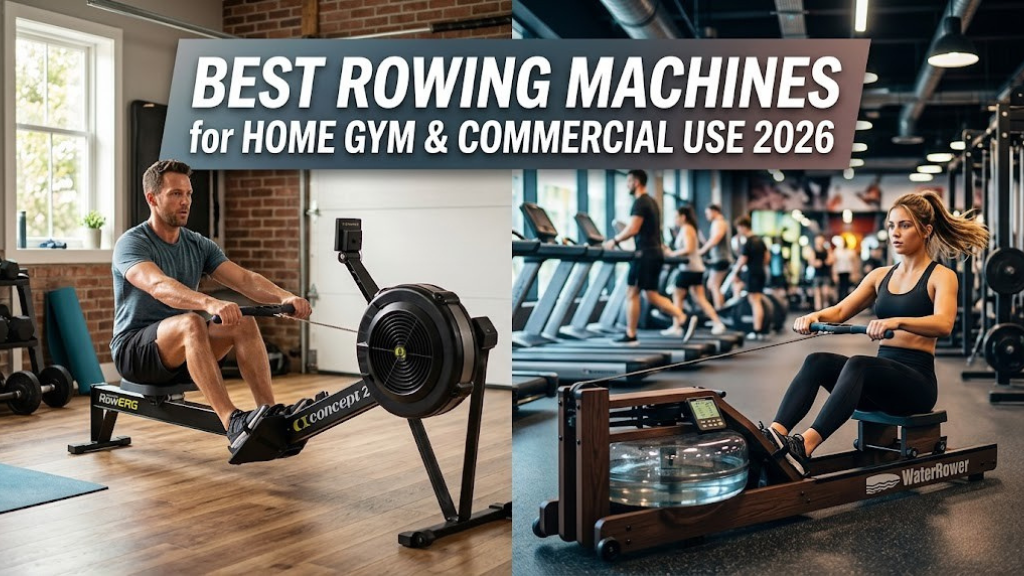
Rowing is one of the most efficient exercises ever devised. In a single continuous motion, it engages approximately 86% of your body’s muscle groups — driving through your legs, stabilizing through your core, and pulling through your back and arms. Unlike running, it is remarkably low-impact. Unlike cycling, it builds meaningful upper-body strength simultaneously. And unlike most cardio machines, it scales seamlessly from a gentle recovery session to a lung-searing interval workout.
The problem? Rowing machines are an investment — financially, spatially, and in terms of research effort. There are four distinct resistance types, a dozen credible brands, prices ranging from under $300 to well above $3,000, and a sea of marketing claims that rarely tell you what actually matters for performance, durability, and daily usability.
This guide cuts through all of that. We have dug into the technical specifications, real user feedback, biomechanics research, and long-term durability data to give you the most honest, comprehensive rowing machine resource on the internet. Whether you are an absolute beginner who just wants to get fitter, an experienced athlete chasing personal bests, or someone rebuilding fitness after injury, you will find the right machine here.
FoundationWhy Rowing Deserves a Place in Your Fitness Life
Before you spend a single dollar on a rowing machine, you deserve to understand exactly why this particular piece of equipment has earned such a passionate following among elite athletes, physical therapists, and everyday fitness enthusiasts alike.
The Full-Body Advantage
The rowing stroke is a compound movement performed in a specific sequence: leg drive (about 60% of the power), then core engagement as the body leans back, and finally the arm pull. This sequencing means you are never isolating a single muscle group — you are constantly integrating your entire kinetic chain. In a single workout, you will meaningfully load your quadriceps, hamstrings, glutes, calves, core stabilizers, erector spinae, rhomboids, trapezius, rear deltoids, and biceps. This is rare for a cardio machine.
Low Impact, High Output
Unlike running, where each footfall sends a force equal to two to three times your body weight through your knees and hips, rowing is almost entirely non-impact. Your feet remain in contact with the footrests throughout the stroke, and the sliding seat distributes force smoothly over time rather than delivering sudden shocks. This makes rowing ideal for people with knee issues, recovering from injury, or who simply want to train hard without grinding down their joints over years of training.
The Cardiovascular Case
Rowing produces exceptional cardiovascular adaptation. A moderately intense 20-minute rowing session elevates your heart rate sustainably into the aerobic zone while simultaneously creating a muscular endurance stimulus. Research consistently shows that rowing recruits more oxygen per unit of time than cycling at equivalent perceived exertion — largely because of the larger muscle mass involved. This translates to more mitochondrial adaptation, better VO2max improvements, and superior calorie burn for the time invested.
Mental Focus and Technique
There is a meditative quality to proper rowing that many users describe as uniquely satisfying. The rhythmic drive-recover cycle, combined with the technical challenge of maintaining good form, requires just enough conscious attention to quiet the mental chatter that often plagues other forms of steady-state cardio. Many rowers describe achieving a flow state more readily than on a treadmill or stationary bike.
Important note for beginners: Rowing technique matters more than on most cardio machines. Poor form — particularly rounding the lower back on the drive or shooting the hips back before the arms are clear — can cause strain. Take 2–3 weeks to learn proper technique before pushing intensity. Most major rowing machine brands include tutorial videos for exactly this reason.
How Rowing Compares to Other Cardio Equipment
Scroll the table sideways to see every column.
| Machine | Muscles Worked | Joint Impact | Calories/Hour | Learning Curve | Space Needed |
|---|---|---|---|---|---|
| Rowing Machine | Full body (86%) | Very Low | 500–800 | Moderate | High (9ft+ rail) |
| Treadmill | Lower body dominant | High | 400–700 | Low | Moderate |
| Stationary Bike | Lower body only | Very Low | 300–600 | Very Low | Low |
| Elliptical | Lower + some upper | Low | 350–600 | Low | Moderate |
| Ski Erg | Upper body + core | Very Low | 400–650 | Moderate | Small footprint |
Resistance TypesThe Four Types of Rowing Machine Resistance Explained
The single most important decision in choosing a rowing machine is the type of resistance mechanism. Each creates a fundamentally different rowing feel, noise profile, maintenance requirement, and price point. Understanding these differences deeply will save you from a very expensive mistake.
Air Resistance (Flywheel)
Air rowers use a fan flywheel that spins as you pull the handle. The harder you pull, the faster the flywheel spins, and the more air resistance it creates. This creates a beautifully natural relationship between effort and resistance — the machine essentially auto-adjusts to your power output in real time. The Concept2 RowErg, which is used in virtually every competitive rowing venue in the world, is an air rower.
The downside is noise. The fan creates a noticeable whooshing sound. If you live in an apartment with thin walls or plan to row while others are sleeping, this matters. Resistance is adjusted via a damper dial that changes airflow, typically numbered 1–10 (most competitive rowers prefer a damper setting of 3–5, which feels harder without sacrificing stroke efficiency).
Magnetic Resistance
Magnetic rowers use electromagnetic or permanent magnets positioned near a flywheel to create resistance through eddy currents. The result is almost completely silent operation and precise, repeatable resistance levels. Unlike air rowers, the resistance is set at a specific level regardless of how hard you pull — so if you want more resistance, you must manually increase the setting rather than just pulling harder.
This characteristic makes magnetic rowers ideal for people in noise-sensitive environments and for structured interval workouts where you want a known, fixed resistance. The downside is that they can feel slightly less dynamic and natural compared to air or water rowers.
Water Resistance
Water rowers house paddles inside a water-filled tank. As you pull, the paddles move through the water, and resistance increases naturally with stroke speed — similar in concept to air resistance but producing a distinctly different sensation. Many rowers describe the feel as the closest indoor approximation to actual on-water rowing, with a fluid deceleration at the end of each stroke rather than an abrupt stop.
Water rowers are also visually beautiful, often crafted from solid hardwood, and the gentle sloshing sound is pleasant and rhythmic rather than intrusive. They require periodic water changes (roughly every 6 months) and a stabilizing tablet to prevent algae growth. The WaterRower and the Ergatta are the category leaders.
Hydraulic Piston Resistance
Hydraulic rowers use pistons filled with fluid to create resistance. They are by far the most compact and affordable, often folding to a small footprint and costing under $300. However, the motion is more restricted and less natural than the other types — your arms and legs often move on separate planes rather than in the coordinated full-body sequence of a true rowing stroke.
For users with very limited space or a tight budget who are primarily interested in the cardiovascular benefit rather than technique refinement, hydraulic rowers can be entirely adequate. They are not recommended for anyone training seriously or who values the meditative quality of real rowing movement.
The quick verdict: Air for performance and versatility. Water for feel and aesthetics. Magnetic for silence and structured training. Hydraulic for tight budgets and tiny spaces. Most buyers in the $400–$1,500 range will be happiest with magnetic or water.
Buyer’s GuideEverything You Need to Know Before Buying
A rowing machine is a significant purchase — not just financially, but in terms of the space it will occupy and the role it will play in your fitness routine. Here is every factor you should weigh before committing.
Space Requirements: The Often-Overlooked Factor
Full-size rowing machines typically occupy a space of approximately 8–9 feet long by 2 feet wide when in use. That is larger than most people expect. Measure your intended space before purchasing, and factor in that you need clearance at both ends — roughly 2 feet behind the seat at maximum extension and similar clearance in front.
Many models offer upright storage, folding vertically to a footprint of roughly 2 by 3 feet. If space is a genuine constraint, look for models that specifically advertise upright storage — the Concept2 RowErg, for instance, separates into two pieces for this purpose, while the Hydrow folds at a hinge.
Weight Capacity
Most residential rowing machines support 250–300 lbs, with commercial models often reaching 375–500 lbs. Always check the stated weight limit and buy slightly above your current weight to ensure the machine handles the dynamic forces of vigorous rowing without stress to the frame over time.
Monitor and Connectivity
The performance monitor is your interface with the machine. Entry-level monitors display time, stroke rate, and calories. Mid-range monitors add split time (pace per 500 meters), distance, and sometimes heart rate. Premium connected monitors offer live classes, leaderboards, video coaching, and integration with fitness apps like Garmin, Apple Health, and Strava.
If connected workouts are important to you, check both the quality of the platform (content library size, quality of coaches, variety of workouts) and the ongoing subscription cost. Some platforms like Hydrow charge $38/month — over three years, that adds $1,368 to your purchase price.
Rail Length and User Height
Taller users (over 6 feet) should specifically check the rail length. Most standard models accommodate users up to 6’2″–6’4″, but very tall rowers may find their knees hitting the handle at full compression on shorter machines. The Concept2 RowErg has an exceptionally long rail and accommodates nearly all heights comfortably.
Noise Level
On a rough scale: hydraulic rowers are near-silent; magnetic rowers are very quiet; water rowers produce a pleasant, moderate sloshing; air rowers are the loudest, producing a noticeable fan whoosh that increases with effort. Apartment dwellers and early-morning trainers should strongly consider magnetic or water resistance.
Build Quality and Warranty
Look for a welded steel or aircraft-grade aluminum rail with a smooth, consistent slide. The seat rollers should feel buttery — rough or bumpy seat slides are a sign of poor manufacturing tolerance. Check the strap or chain mechanism: chains last nearly indefinitely but require occasional lubrication; nylon straps can wear and need replacement after several years.
For warranty, a minimum of 2 years on parts and 1 year on labor is acceptable. Concept2 offers 5 years on the frame. Premium brands typically offer better warranties but it varies — always read the fine print before purchase.
- Measure your available space (minimum 9ft × 4ft recommended, including clearance)
- Confirm weight capacity exceeds your body weight by at least 50 lbs
- Decide whether you want connected workouts (and budget for subscription)
- Consider noise sensitivity for your living situation
- Check rail length if you are taller than 6’1″
- Look for upright or folding storage if space is limited
- Confirm warranty coverage — minimum 2 years parts, 1 year labor
- Read real user reviews specifically mentioning long-term durability
If you are building out a complete training space alongside your rower, the FitCore360 Complete 2026 Home Gym Setup Guide provides a full blueprint for equipping your space at every budget level — from minimal setups to serious athlete configurations.
Quick PicksBest Rowing Machines at a Glance
Scroll the table sideways to see every column.
| Award | Model | Resistance | Price Range | Best For |
|---|---|---|---|---|
| Best Overall | Concept2 RowErg | Air | $900–$1,000 | All levels, performance tracking |
| Best Magnetic | Hydrow Wave | Magnetic | $1,495 | Silent use, connected classes |
| Best Water Rower | WaterRower Club | Water | $1,200–$1,400 | Aesthetics, natural feel |
| Best Budget | Sunny Health SF-RW5515 | Magnetic | $280–$380 | Beginners, tight budgets |
| Best Compact | NordicTrack RW500 | Magnetic/Air | $799–$999 | Smaller spaces, mid-range users |
| Best Smart | Ergatta Rower | Water | $1,999 | Game-based training, motivation |
| Best Commercial | Concept2 RowErg (commercial use) | Air | $1,000+ | Gyms, serious athletes |
| Best for Apartments | Echelon Row-S | Magnetic | $899–$999 | Apartments, noise-sensitive |
Top PickBest Overall: Concept2 RowErg
- Best Overall 2026
- Editor’s Choice
Concept2 RowErg
The gold standard of indoor rowing — trusted by Olympic athletes, CrossFit boxes, and serious home gym owners worldwide.
The Concept2 RowErg is not the newest or flashiest rowing machine on the market. It has no touchscreen, no streaming classes, and no Instagram-worthy wood finish. What it has is something more valuable: 40+ years of iterative refinement, an industry-standard performance monitor, a global community of users on the Concept2 online logbook, and a durability record that is essentially unmatched in the category.
The PM5 monitor — included on all current models — is a masterpiece of focused design. It displays split time (pace per 500m), stroke rate, heart rate (with chest strap or compatible monitor), calories, and wattage in real time. It connects via Bluetooth and ANT+ to third-party apps including Garmin Connect, Apple Health, ErgData, and Kinomap. The data is honest and repeatable, which is why every major rowing benchmark — the Crash-B sprints, the British Rowing standards — is conducted on a Concept2.
The air resistance mechanism means the machine has virtually no resistance ceiling. As you become stronger and row harder, the flywheel spins faster, creating more air resistance automatically. You will never outgrow a Concept2 in the way you might outgrow the maximum resistance level of a cheap magnetic machine. Professional athletes at peak fitness can still get a brutal workout on the same machine a beginner uses for gentle recovery rows.
Pros
- Industry-standard performance data
- Unlimited resistance ceiling
- Exceptional 500 lb weight capacity
- 5-year frame warranty
- Global online community & logbook
- Separates for upright storage
- Replacement parts widely available
- Holds resale value exceptionally well
Cons
- Loud fan noise
- No touchscreen or live classes
- Industrial, utilitarian aesthetic
- Seat can be uncomfortable without a cushion
- Not ideal for apartments
Our Take: If you are serious about rowing — for fitness, competition, or cross-training — the Concept2 RowErg is the correct answer almost regardless of budget. It is more expensive than entry-level options, but its durability means it will outlast two or three cheaper machines, and its resale value is extraordinary. Used Concept2s sell for $500–$700 routinely. It is genuinely a lifetime purchase for most users.
Check price on AmazonBest MagneticHydrow Wave: Silent, Connected and Beautifully Made
- Best Magnetic Rower
- Best for Apartments
Hydrow Wave
Live and on-demand rowing workouts from real waterways, wrapped in a whisper-quiet electromagnetic resistance system.
Hydrow has carved out a distinctive position in the rowing machine market by marrying professional-grade outdoor rowing footage with a polished connected platform. The Wave is their more affordable model compared to the original Hydrow, featuring the same electromagnetic resistance (which is nearly silent in operation) and a 16-inch touchscreen that streams live and on-demand classes from real water locations — the Charles River in Boston, Lake Bled in Slovenia, and dozens more.
The electromagnetic resistance system deserves particular praise. Unlike air rowers, the Hydrow’s resistance is automatically adjusted by the machine’s computer during workouts to match the instructor’s prescribed effort — a drag adjustment that makes guided classes feel genuinely immersive. The silence is also remarkable: you will hear the seat gliding on the rail and your own breathing far more than any mechanical noise from the resistance mechanism.
Pros
- Near-silent electromagnetic resistance
- Stunning outdoor rowing footage
- Automatically adjusts resistance in class
- Folds upright for storage
- 5-year frame warranty
- 375 lb weight capacity
Cons
- $38/month subscription for full features
- Limited functionality without subscription
- Higher upfront cost than Concept2
- Platform quality depends on ongoing investment
Water RowersBest Water Rower: WaterRower Club
- Best Water Rower
WaterRower Club Series
Handcrafted from solid ash or cherry wood, with a water resistance mechanism so natural it feels like the real thing.
WaterRower has been crafting water resistance rowing machines since 1988, and the Club Series represents the pinnacle of their craft — literally. Built from solid ash or American black walnut, WaterRower machines are handcrafted in Warren, Rhode Island, and are among the few pieces of fitness equipment that genuinely deserve to be called furniture-grade. They stand upright for storage, looking like a piece of sculpture rather than exercise equipment.
The rowing sensation is genuinely different from air or magnetic resistance. As you pull, water in the tank’s toroidal (donut-shaped) flywheel swirls in both directions, creating a smooth drag that increases with your effort and decelerates naturally as you slow. Many rowers who have tried both describe the water resistance feel as distinctly superior to air for technique work — the deceleration at the end of the recovery phase more closely mirrors on-water rowing dynamics.
The S4 monitor is functional rather than flashy — it displays all key metrics (distance, calories, stroke rate, split time) and connects to the WaterRower app via Bluetooth for more detailed tracking. It is not a connected platform in the Hydrow or Peloton sense, but it integrates with third-party apps and does everything a serious trainer needs from a performance standpoint.
Maintenance note: WaterRower machines require water changes every 6–12 months and a WaterRower stabilizing tablet to prevent algae and mineral buildup. The process takes about 30 minutes and is straightforward. Budget a few dollars annually for tablets.
Pros
- Extraordinarily natural rowing feel
- Beautiful hardwood construction
- Stands upright — minimal floor footprint
- Exceptional 700 lb weight capacity
- Very low noise (pleasant water sound)
- Iconic design — doubles as furniture
Cons
- Requires periodic water changes
- No connected workout platform
- Heavy and difficult to move
- S4 monitor less capable than PM5
- High price for features offered
Budget PickBest Budget Rowing Machine: Sunny Health & Fitness SF-RW5515
- Best Under $400
Sunny Health & Fitness SF-RW5515
Eight levels of magnetic resistance, a surprisingly smooth slide, and a price tag that makes rowing accessible to everyone.
At around $300–$380, the Sunny Health SF-RW5515 represents genuinely impressive value. This is not a beginner machine that you will outgrow in three months — many fitness-focused users report using it consistently for 2+ years as their primary cardio equipment. The magnetic resistance is smooth and the eight levels provide enough range for both light recovery sessions and genuinely hard interval work at mid-fitness levels.
The main engineering win is the slide mechanism: the aluminum rail is smooth, and the seat rollers glide without the jerkiness that plagues some competitors in this price bracket. The nylon pull strap is functional, though it will need replacement after a few years of heavy use. The basic LCD monitor tracks time, stroke count, calories, and scan mode — enough for most casual users.
The limitations are real. The 250 lb weight limit is lower than premium options. The monitor does not calculate split time or wattage, limiting its usefulness for performance-focused training. And the maximum resistance level, while adequate for recreational fitness, will feel insufficient for seriously strong or athletic users. It also does not fold as compactly as its marketing implies — it requires about 6.5 feet of floor space when extended.
Pros
- Exceptional value for price
- Smooth aluminum rail
- Near-silent operation
- Folds for storage
- 8 resistance levels
- Widely available and easy to service
Cons
- 250 lb weight limit
- No split time or wattage on monitor
- Maximum resistance insufficient for athletes
- Nylon strap wears over time
- Limited warranty (1 year)
Pairing your rower with grip training? Rowing places significant demands on grip strength, especially at higher intensities. If you find your grip fatiguing before your cardiovascular or muscular endurance, read our guide to grip strength exercises for beginners vs. advanced athletes — many of these translate directly to rowing performance.
Compact PickBest for Smaller Spaces: NordicTrack RW500
- Best Compact
NordicTrack RW500
A competent mid-range rower with a foldable frame, 26 resistance levels, and entry-level iFIT integration.
The NordicTrack RW500 occupies a middle ground between budget options and premium connected machines. Its combined magnetic and air resistance creates a more dynamic feel than pure magnetic models, while remaining significantly quieter than a full air rower. The 26 resistance levels give you granular control over workout intensity, and the upright folding storage is genuinely practical — folded dimensions are approximately 25 by 47 inches, making it manageable in most bedrooms or living rooms.
iFIT compatibility (NordicTrack’s connected workout platform, which requires a separate subscription) adds a meaningful layer of functionality. Trainers can automatically adjust the machine’s resistance during guided workouts — a feature typically reserved for higher-end connected machines. The onboard monitor is basic without iFIT, but the integration potential adds long-term value for users who commit to the platform.
Pros
- 26 resistance levels
- Combined air + magnetic feel
- Compact upright storage
- iFIT auto-resistance compatible
- Good mid-range price point
Cons
- 250 lb weight limit
- iFIT subscription adds ongoing cost
- 5″ monitor is small without a tablet
- Air component adds some noise
Smart RowerBest Smart / Connected Rower: Ergatta
- Best Connected Rower
Ergatta Rower
Game-based rowing workouts meet water resistance engineering — the most motivating connected rowing experience available.
Ergatta took the WaterRower chassis — widely respected for its natural resistance feel and premium craftsmanship — and paired it with a 17.3-inch touchscreen running a game-based fitness platform. The result is genuinely unique: instead of following an instructor, you are competing in racing games, pace challenges, and interval programming that adapts dynamically to your fitness level.
The platform’s personalization engine is impressive. It monitors your power output across sessions, builds a performance profile, and adjusts all workout targets to be optimally challenging for you specifically. Users who find instructor-led classes motivating but also crave the data-driven feedback of competitive rowing will find this machine hits a sweet spot no competitor currently matches.
Who is the Ergatta for?
If you are the type of person who responds to games, races, and leaderboards far more than following an instructor, the Ergatta may be the rowing machine that finally makes you consistent. The gamification is not superficial — the adaptive training engine is genuinely sophisticated, and the community racing feature creates meaningful social accountability.
It is not the right choice for users who want instructor-led classes in the Hydrow or Peloton style, or for those who are indifferent to connected platforms and simply want the best rowing feel.
Full Comparison2026 Rowing Machine Comparison Table
Use this table to compare all major contenders across the specs that matter most for purchasing decisions.
Scroll the table sideways to see every column.
| Model | Resistance | Price | Weight Cap. | Monitor | Connected? | Foldable? | Noise | Warranty | Best For |
|---|---|---|---|---|---|---|---|---|---|
| Concept2 RowErg | Air | ~$900 | 500 lbs | PM5 (excellent) | Yes (3rd party) | Yes (2 pieces) | Loud | 5yr frame | Performance |
| Hydrow Wave | Magnetic | $1,495 | 375 lbs | 16″ touchscreen | Yes (native) | Yes (upright) | Very quiet | 5yr frame | Classes |
| WaterRower Club | Water | ~$1,300 | 700 lbs | S4 monitor | Limited | Yes (upright) | Low/pleasant | 5yr frame | Aesthetics |
| Ergatta | Water | $1,999 | 500 lbs | 17.3″ touchscreen | Yes (game-based) | Yes (upright) | Low/pleasant | 5yr frame | Gamified |
| Sunny SF-RW5515 | Magnetic | ~$320 | 250 lbs | Basic LCD | No | Yes (flat fold) | Very quiet | 1yr parts | Budget |
| NordicTrack RW500 | Air + Mag | ~$899 | 250 lbs | 5″ LCD + iFIT | Yes (iFIT) | Yes (upright) | Moderate | 2yr parts | Mid-range |
| Echelon Row-S | Magnetic | ~$999 | 300 lbs | Tablet mount | Yes (Echelon app) | Yes (folding) | Very quiet | 1yr | Classes |
| Aviron Impact Series | Air + Mag | $2,199 | 397 lbs | 22″ touchscreen | Yes (games + classes) | No | Moderate | 2yr | Premium |
Resistance band pairing tip: Rowing primarily develops pulling muscles (back, biceps, rear delts). Adding a resistance band routine targeting pushing muscles creates a balanced training program. Our guide to resistance band systems covers the best options for complementing your rowing workouts.
Training GuideRowing for Fitness: Building Your First Program
Owning a rowing machine is only half the equation. Knowing how to use it effectively — with proper technique, progressive programming, and smart recovery — is what transforms the purchase from an expensive clothes hanger into a genuine fitness asset.
The Four Phases of the Rowing Stroke
Rowing technique can be broken into four distinct phases, and understanding them intellectually helps you execute them physically:
- The catch: The starting position. Arms extended, shins vertical, body leaning slightly forward from the hips (not the back). The handle is positioned just over the “water.” This is where many beginners make their first mistake — collapsing the lower back here creates the injury risk that rowing’s critics cite.
- The drive: The power phase. It begins with the legs pushing the footrests away — the legs are the primary power source, providing roughly 60% of the total force. As the legs straighten, the back swings from its forward lean to a slight backward lean. Only when the body is perpendicular to the floor do the arms draw in, pulling the handle to just below the chest.
- The finish: The end of the drive. Legs flat, body leaning slightly back (about 10–15 degrees past vertical), handle pulled to the lower ribcage with elbows high and back. This is not a resting position — maintain core tension throughout.
- The recovery: The return journey, performed at about half the speed of the drive. Arms extend first, body tips forward, then legs compress to return to the catch. The sequence is always arms away, body forward, knees bend. Reversing this order is the most common technical error.
Sample 8-Week Beginner Rowing Program
Scroll the table sideways to see every column.
| Weeks | Frequency | Duration | Intensity | Focus |
|---|---|---|---|---|
| 1–2 | 3x/week | 10–15 min | Easy (18–20 spm) | Technique — slow, deliberate strokes |
| 3–4 | 3x/week | 15–20 min | Light (20–22 spm) | Establish rhythm, steady state |
| 5–6 | 4x/week | 20–25 min | Moderate (22–24 spm) | Extend aerobic base |
| 7–8 | 4x/week | 25–30 min | Mix: 2 easy + 2 intervals | First intervals: 10 × 1 min hard / 1 min easy |
Stroke Rate vs. Power: What Actually Drives Results
Many beginners assume rowing faster (higher strokes per minute) equals a better workout. This is largely incorrect. The most important variable in rowing output is power per stroke, not stroke rate. An athlete rowing at 18 strokes per minute with maximal power will outperform the same athlete scrambling at 28 spm with weak strokes on virtually every metric — split time, calorie burn, and cardiovascular adaptation.
Think of it like rowing a boat: short, frantic half-strokes barely move the hull. Long, powerful strokes that fully load the blade and leverage the entire body send the boat flying. Train at lower rates (18–22 spm) with high power output, and your fitness will develop faster than if you focus on spinning the stroke rate up prematurely.
Cross-Training Synergies
Rowing pairs exceptionally well with strength training. The major muscle groups involved in rowing — back, legs, biceps — benefit from targeted strength work, and stronger muscles translate directly to higher power output on the water. If deadlifts and pull-ups are part of your routine, you will notice the carryover almost immediately. Our resource on how grip strength improves deadlifts and pull-ups is particularly relevant here, as grip fatigue is a common limiter in hard rowing sets.
Heart Rate Zones for Rowing
Scroll the table sideways to see every column.
| Zone | % Max HR | Feel | Rowing Application |
|---|---|---|---|
| Zone 1 (Recovery) | 50–60% | Very easy, could sing | Active recovery, technique work |
| Zone 2 (Aerobic) | 60–70% | Easy, full sentences | Long steady-state rows, base building |
| Zone 3 (Tempo) | 70–80% | Moderate, short sentences | Threshold rows, sustained effort |
| Zone 4 (Threshold) | 80–90% | Hard, 1–2 words only | Race pace intervals, 2k pieces |
| Zone 5 (Anaerobic) | 90–100% | Max effort, no talking | Sprint intervals, 500m pieces |
A well-designed weekly program for most fitness goals should spend approximately 80% of training time in Zones 1–2, with 20% in Zones 3–5. This polarized training approach is well-supported by sports science research and tends to produce better results than spending most time at moderate intensity.
MaintenanceKeeping Your Rowing Machine in Peak Condition
A well-maintained rowing machine will outlast a poorly maintained one by many years. The good news is that maintenance is simple and takes very little time — perhaps 20 minutes over an entire year for most machines.
Air Rowers (Concept2 and similar)
Air rowers require minimal maintenance. The primary task is keeping the chain lubricated — Concept2 recommends using their chain oil or a light machine oil approximately every 50 hours of use, or whenever the chain sounds dry. The fan cage accumulates dust and should be vacuumed every few months. The monorail benefits from a light wipe-down with a dry cloth regularly, and the seat rollers should be inspected annually for wear. The PM5 monitor runs on D-size batteries that typically last 6–12 months with regular use.
Magnetic Rowers
Magnetic rowers are among the easiest to maintain. The resistance mechanism is completely sealed and requires no user maintenance. The primary tasks are keeping the rail clean and dry (sweat is corrosive — wipe it down after every use), checking that all bolts remain tight (vibration can loosen them over time), and inspecting the pull strap or cord annually for fraying. A fraying strap should be replaced before it breaks — replacements are inexpensive and readily available.
Water Rowers
Water rowers require the most user maintenance, though “most” is still quite modest. The water in the tank should be changed every 6–12 months, and a WaterRower-brand stabilizing tablet (or compatible alternative) added to prevent algae and mineral scaling. The hardwood frame benefits from occasional polishing with a quality wood oil. The wooden rails — if your model uses them — should be kept dry and occasionally sanded lightly if the seat begins to catch.
General Best Practices for All Types
- Wipe down the seat, handle, and rail after every use — sweat is more damaging than any other factor
- Keep the machine in a climate-controlled environment — extreme cold makes plastics brittle; extreme humidity damages wood and promotes corrosion
- Never leave a wet towel draped over the machine after use
- Inspect foot straps and their attachment points annually
- Store the machine away from direct sunlight, which degrades plastic components and fades upholstery
- If the machine sits unused for a long period, store it properly and run a short test session before your first workout back
Resale value tip: Proper maintenance dramatically improves resale value. Concept2 machines maintained correctly can sell used for 60–70% of retail price even after years of regular use — this is exceptional for exercise equipment and makes the original investment more rational.
If you are thinking about building a complete training environment around your rower, you may also want to explore options like all-in-one home gym systems that can complement your rowing with resistance training in the same space.
When to Replace Key Components
Scroll the table sideways to see every column.
| Component | Signs It Needs Replacing | Approximate Lifespan | DIY? |
|---|---|---|---|
| Pull strap/cord | Fraying, visible wear, catching | 3–5 years (heavy use) | Yes |
| Chain (air rowers) | Rust, stiffness, clicking | 10+ years with oiling | Yes |
| Seat rollers | Rough ride, visible flat spots | 5–10 years | Yes |
| Foot straps | Velcro fails, tears visible | 2–4 years | Yes |
| Monitor batteries | Display dims, erratic readings | 6–12 months | Yes |
| Frame/rail | Cracks, bends, wobble | Decades if maintained | Contact manufacturer |
Recovery TrainingRowing as Rehabilitation and Active Recovery
One of the most underappreciated aspects of rowing is its value as a rehabilitation and active recovery tool. Physical therapists increasingly prescribe rowing as a rehab modality for lower body injuries, knee replacements, and hip surgeries — precisely because of the controlled, non-impact nature of the movement.
Post-Injury Considerations
The rowing stroke requires full range of motion at the knees and hips, which means it can actually be therapeutic for maintaining mobility in recovering joints when performed at low intensity. The absence of impact loading removes the primary risk factor that makes running and jumping problematic during recovery. For upper-body injuries, partial rowing (legs-only or arms-only drills) can maintain cardiovascular fitness without stressing the injured structures.
That said, lower back issues are the one exception that demands caution. The rowing stroke places the lumbar spine in repeated flexion-extension cycles, and poor technique under fatigue can exacerbate disc issues. Anyone with an existing lower back condition should have their technique evaluated by a qualified coach and consider starting with shorter rows at low intensity, with a physician’s guidance.
Active Recovery Rowing Protocols
Active recovery rows are performed at very low intensity — typically Zone 1 or low Zone 2 heart rate, with a stroke rate of 18–20 spm and minimal effort. The purpose is to promote blood flow to muscles recovering from previous training, clear metabolic waste products, and maintain neuromuscular patterns without creating additional fatigue. A 15–20 minute easy row the day after a hard strength session or interval workout is one of the most evidence-supported recovery protocols in endurance sports.
Recovery training pairs well with other low-impact modalities. Tools like adjustable slant boards for home use can address ankle and knee mobility that often limits rowing posture quality, while resistance bands are invaluable for the shoulder and hip warm-up work that makes high-volume rowing sustainable long-term.
FAQsFrequently Asked Questions About Rowing Machines
-
What is the best rowing machine for home use in 2026?
For most home users, the Concept2 RowErg remains the gold standard — it has industry-leading durability, the best performance monitor available, a 500 lb weight capacity, and virtually unlimited resistance range. If silence is a priority (apartment, early mornings), the Hydrow Wave or WaterRower are excellent alternatives. Budget-conscious buyers should look at the Sunny Health SF-RW5515, which offers surprisingly good value under $380.
-
Is rowing good for weight loss?
Yes — rowing is exceptionally effective for weight loss when combined with appropriate nutrition. A 160 lb person burns approximately 500–700 calories per hour at moderate intensity, and because rowing recruits such a large proportion of total muscle mass, it produces a higher metabolic rate both during and after exercise compared to many other cardio modalities. Consistent rowing builds lean muscle simultaneously, which increases your resting metabolic rate over time — a compounding benefit most cardio-only equipment cannot provide.
-
How long should I row each day as a beginner?
Beginners should start with 10–15 minute sessions three times per week for the first two weeks, with the primary focus on learning correct technique rather than cardiovascular intensity. After two to three weeks of consistent practice, gradually extend sessions to 20–25 minutes. After 6–8 weeks, most beginners are ready for 30-minute sessions and can begin introducing interval training. The most common beginner mistake is rowing too hard, too soon — prioritize form over intensity until the movement pattern is automatic.
-
What is a good 500m split time for a beginner?
For untrained beginners, a 500m split time (pace per 500 meters) of 2:20–2:45 is completely normal and nothing to be embarrassed about. After 3–6 months of consistent training, most people see this improve to the 2:00–2:20 range. Competitive recreational rowers typically target sub-2:00. Elite male rowers can sustain paces under 1:30 per 500m. Track your personal progress rather than comparing to others — improvement over your own baseline is what matters.
-
Are rowing machines bad for your back?
Rowing machines are not inherently bad for your back — in fact, rowing with correct technique actively strengthens the posterior chain (erector spinae, rhomboids, rear deltoids) that supports spinal health. The risk arises specifically from poor technique: rounding the lower back on the drive, shooting the hips back before the arms clear, or over-compressing the body at the catch. Take time to learn proper form, keep sessions short initially, and stop if you feel any lower back discomfort. Individuals with existing disc herniation or acute lower back conditions should consult a physician before beginning a rowing program.
-
What is the difference between a Concept2 and a water rower?
The primary differences are resistance mechanism, feel, and aesthetics. The Concept2 uses an air-resistance fan flywheel — loud, unlimited resistance ceiling, exceptional performance data, utilitarian appearance. Water rowers use a water-filled tank — quieter (pleasant sloshing), very natural rowing feel, beautiful hardwood construction, lower maximum resistance ceiling for very powerful athletes. For performance training and competition preparation, the Concept2 is preferred. For home aesthetics, natural rowing sensation, and quieter operation, many users prefer water rowers. Both are excellent; the right choice depends on your priorities.
-
How much space does a rowing machine need?
A full-size rowing machine in use typically requires approximately 8–9 feet of length and 2–3 feet of width. Beyond the machine itself, allow 2 feet of clearance at the front and rear for safe operation — this means a total floor area of around 10–12 feet by 4–5 feet is ideal. Many models offer upright or folding storage that dramatically reduces the stored footprint to roughly 2 by 3 feet. If space is a genuine constraint, prioritize models specifically marketed for compact storage, and measure your space carefully before purchasing.
-
Do rowing machines build muscle?
Yes, rowing builds meaningful functional muscle, particularly in the back (latissimus dorsi, rhomboids, trapezius), legs (quadriceps, hamstrings, glutes), and arms (biceps, forearms). However, rowing is primarily a cardiovascular and muscular endurance modality — it will not produce the hypertrophy that dedicated resistance training does. Think of rowing as building strong, lean, functional muscle rather than large muscle mass. For maximum muscle development, pair your rowing program with a structured resistance training routine.
-
What damper setting should I use on a Concept2?
Contrary to popular belief, a higher damper setting does not mean a harder workout — it means more air flows into the flywheel, making each stroke feel heavier, like a larger oar blade. Most competitive rowers and coaches recommend damper settings between 3 and 5 for most training. At these settings, the fan spins freely enough to maintain momentum between strokes, making the rhythm feel natural. Higher settings (7–10) can be used for specific strength-focused training but are not appropriate for most cardio work. Set your damper and focus on rowing powerfully rather than chasing a high number on the dial.
-
Can I use a rowing machine every day?
Yes — daily rowing is achievable and practiced by many competitive rowers, but it requires programming balance. Daily rowing at high intensity will lead to overtraining and injury over time. The key is polarization: most sessions should be genuinely easy (Zone 1–2), with only 1–2 sessions per week at higher intensities. If every session leaves you significantly fatigued, you are rowing too hard too frequently. Beginners should start with 3–4 sessions per week and build from there, ensuring adequate recovery between harder efforts.
-
What is a good rowing machine under $500?
The Sunny Health & Fitness SF-RW5515 is the standout option under $500, offering 8 levels of smooth magnetic resistance, a foldable frame, and a surprisingly decent seat slide for its price point. Other options worth considering in this bracket include the Fitness Reality 1000 Plus and the Merax Magnetic Rowing Machine. All of these will be perfectly adequate for recreational fitness goals; none will satisfy serious performance-oriented users or those over 250 lbs. Investing more at purchase often saves money long-term due to better durability and larger weight capacities.
-
Should I buy a rowing machine or a stationary bike?
This depends primarily on your goals and any physical limitations. A rowing machine provides a full-body workout engaging both upper and lower body, builds more total muscle, and burns more calories at equivalent effort — but requires learning proper technique and is harder on the back if form is poor. A stationary bike is lower-barrier to entry, completely back-friendly, and appropriate for people with shoulder or wrist issues that might limit rowing. If you are physically healthy and want maximum cardiovascular and muscular stimulus from a single machine, rowing is generally the superior choice. If you have existing lower back issues or prioritize lower-body cycling fitness, a bike may be more appropriate.
Final VerdictOur Final Recommendations
After evaluating dozens of machines across every price point, resistance type, and use case, here is our honest, practical guidance:
Buy the Concept2 RowErg if performance data, durability, and long-term value matter most. It is loud, it is not pretty, and it does not stream Netflix. But it will still be rowing perfectly in 20 years when every “smart” connected competitor is an orphaned machine with a dead platform.
Buy the Hydrow Wave if you are motivated by connected classes and live in an apartment. The silence is genuinely impressive, the content quality is excellent, and the auto-resistance adjustment during workouts creates a feel that competitors in this price range cannot match.
Buy the WaterRower if aesthetics matter to you and you want the most natural rowing feel available at home. This is the machine for people who want their training space to look intentional rather than utilitarian.
Buy the Sunny Health SF-RW5515 if you are on a tight budget or testing whether you will actually use a rower before committing more. It is a genuinely solid starter machine that will serve you well for years of regular use without demanding a premium price.
Ready to start rowing?
Whether you are building your first home gym or upgrading your current setup, the right rowing machine can transform your fitness trajectory. Find your match using this guide, set up your space properly, and commit to the technique work that makes rowing genuinely rewarding.