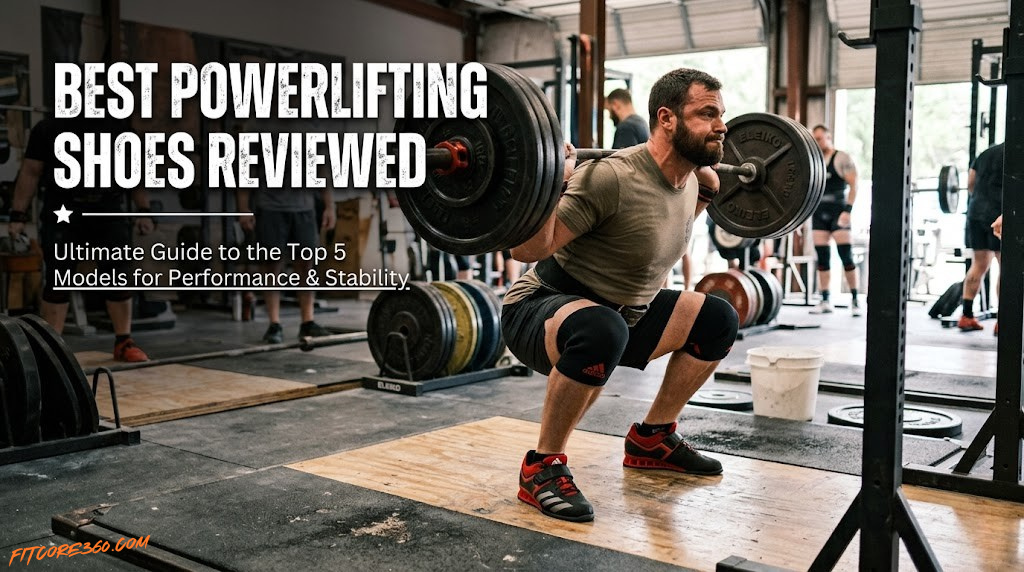
The Best Powerlifting Shoes
Reviewed & Ranked
Stability, force transfer, and platform feel — we tested the top footwear options for squats, deadlifts, and competition lifting in 2026.
-
Best Overall
Nike Romaleos 4 — The gold standard for squat-focused powerlifting. Rigid heel, competition-approved, unmatched brand support.
-
Best Value
Nordic Lifting Powerlifting Shoes — Premium-feel at mid-range price, excellent stability for beginners and intermediates.
-
Best Premium
Adidas Adipower Weightlifting — Elite competition-grade heel height, pristine lockdown, top-tier construction quality.
-
Best for Deadlifts
Manueklear Deadlift Shoe (V1) — Minimal heel drop maximizes floor feel for conventional and sumo deadlifts.
-
Best Budget
Manueklear Deadlift V2 — No-frills flat sole training shoe for lifters starting their powerlifting journey.
-
Most Versatile
Osterland Weightlifting Shoe — Bridges the gap between Olympic lifting and powerlifting across multiple movement patterns.
Why Your Footwear is as Important as Your Program
Walk into any serious powerlifting gym and you’ll notice something: the lifters moving the heaviest iron are not wearing running shoes. They’re wearing purpose-built footwear designed around one primary engineering goal — absolute stability under maximum compressive load. This isn’t a fashion statement or brand loyalty. It’s biomechanics.
The footwear you wear during squats and deadlifts directly affects your force transfer pathway from the floor through your lower limbs to the barbell. A soft, cushioned running shoe absorbs energy that should be going into the bar. A shoe with an unstable sole causes micro-adjustments in your ankle and knee tracking that compound over thousands of reps into form breakdown, plateaued strength, and eventually injury. Conversely, the right powerlifting shoe becomes a functional extension of the floor itself — creating a rigid, immovable platform from which maximum force can be expressed.
In this comprehensive 2026 guide, we’ve reviewed and ranked the six best powerlifting shoes currently available at every price point — from accessible budget options to elite competition footwear worn on the international stage. We’ll cover the science of heel rise, the difference between squat shoes and deadlift shoes, how to size correctly, and what separates a shoe that transforms your lifting from one that’s merely expensive.
Powerlifting shoes are one piece of a complete performance toolkit. If you’re also building out your grip and support accessories, check out our guide to the best weightlifting belts for squats and deadlifts to pair with your new shoes for maximum stability at heavy loads.
Whether you’re a first-time buyer trying to understand what “heel rise” means or an experienced competitive lifter looking to upgrade your current setup, this guide provides the depth of information to make a genuinely informed choice. Let’s start with the foundational question most new lifters ask first.
Why Powerlifting Shoes Transform Your Performance
Most recreational gym-goers never question their footwear choice. They lace up whatever cross-trainers or running shoes they own and head to the rack. This is understandable — for lighter loads and general fitness, it makes minimal practical difference. But as training loads increase toward meaningful percentages of maximum and technique becomes the limiting factor in progress, footwear stops being a minor variable and starts being a critical performance component.
Here’s the physics: when you apply force into the ground during a squat, the ground pushes back with equal force. A soft-soled training shoe compresses under this load — effectively shortening your force application and introducing lateral instability that your stabilizer muscles must constantly correct. A rigid-soled powerlifting shoe transmits essentially 100% of your ground reaction force directly into movement, with zero energy lost to sole compression. Over the course of a heavy set, this efficiency difference is measurable in both kilograms lifted and muscle fatigue accumulated.
The Core Performance Benefits
Force Transfer
Rigid outsoles transmit force without compression losses. Athletes often report feeling immediate improvements in “floor connection” on their first session in proper powerlifting shoes.
Ankle Position
The elevated heel in squat shoes creates improved dorsiflexion range — allowing deeper, more upright squats without compensatory forward lean or heel rise off the platform.
Knee Tracking
Consistent, stable sole geometry improves knee-over-toe tracking during squat descent, reducing valgus collapse risk and protecting the knee joint under heavy loads.
Proprioception
Thin, rigid soles provide superior tactile feedback about foot position and weight distribution — critical information for technical refinement in competition lifts.
Consistency
Unlike soft shoes that change shape under load, rigid powerlifting shoes provide the same geometry every rep — essential for repeatable technique in competition environments.
Load Capacity
Decreased lateral instability and improved ankle positioning allow athletes to handle greater loads safely — many lifters see immediate PR improvements after switching to proper footwear.
The benefits extend beyond the squat rack. Understanding how foot position, ankle mobility, and force transfer interact with your lifting technique is a deep rabbit hole — one that explains why coaches at the elite level treat footwear selection with the same seriousness as programming. Just as grip strength directly influences your deadlift and pull performance, the foundation you stand on determines the ceiling for everything built above it.
Types of Powerlifting and Weightlifting Shoes Explained
The term “powerlifting shoe” is often used loosely to cover several distinct footwear categories that serve meaningfully different purposes. Understanding these distinctions will immediately clarify which type of shoe is right for your training goals and competition requirements.
Olympic Weightlifting Shoes
High heel rise (0.75″–1.0″), rigid outsole, strap closure. Designed for maximum ankle dorsiflexion in the clean catch and snatch. Excellent for high-bar squats and front squats. The benchmark for squat-focused powerlifters.
Powerlifting Squat Shoes
Moderate to high heel rise (0.5″–0.75″), extremely stiff sole, wide toe box. Optimized for the specific hip-hinge and squat mechanics of powerlifting competition. Competition-legal in most federations.
Deadlift Slippers / Flat Shoes
Zero heel rise, minimal sole thickness (sometimes under 4mm), maximizes floor proximity. Lower bar path = shorter pulling distance. Essential for competitive deadlifters pulling conventional or sumo.
Cross-Training Hybrids
Minimal heel rise (0–0.25″), semi-rigid sole, designed for diverse movement patterns. Good compromise for athletes who squat, deadlift, and do conditioning work in the same session.
Chuck Taylor Style / Court Shoes
Flat, rigid gum sole borrowed from basketball heritage. Long used as an affordable deadlift shoe. No heel rise, minimal cushion, excellent floor feel. Still popular in raw powerlifting for deadlifts and some low-bar squat styles.
Barefoot / Minimalist Shoes
Zero drop, thin flexible sole, wide toe box. Maximizes proprioception but lacks the rigid structure of true powerlifting shoes. Suitable for some sumo deadlifters but not optimal for squat-focused work at high loads.
For most powerlifters competing in a tested federation, the practical choice is two pairs: a squat shoe (elevated heel, rigid sole) for the squat and potentially the bench press, and a flat shoe or deadlift slipper for the deadlift. This two-shoe setup allows optimization of each lift independently, which is exactly how elite competitors approach footwear at the national and international level.
Competition Note: Most powerlifting federations (IPF, USAPL, USPA) have specific footwear rules. Generally, shoes must cover the ankle or sit below it, must have a clearly defined sole, and cannot include wheels or spring mechanisms. Always verify current rules with your specific federation before competing — rules are updated annually.
If you’re a sumo deadlifter specifically, the interaction between your foot position and your chosen footwear becomes even more nuanced. This is analogous to how choosing the right belt configuration depends on your specific pulling style — something we explored in depth in our review of the best lifting straps for deadlifts vs. Olympic lifts.
How to Choose the Right Powerlifting Shoe: 8 Critical Factors
With options ranging from $35 deadlift flats to $200+ competition squat shoes, navigating the market without a framework leads to poor decisions. These eight factors give you a complete evaluation framework for any shoe you consider.
1. Heel Rise Height
This is the single most impactful specification in a squat shoe. Heel rise — the elevation difference between the heel and the toe — typically ranges from 0 (flat) to 1.0″ (25mm) in competitive lifting footwear. Higher heel rise provides more ankle dorsiflexion assistance, allowing more upright torso position and deeper squat depth without compensatory technique. The standard for Olympic weightlifting and competition powerlifting squat shoes is typically 0.75″ (19mm). Lower heel rise (0.5″ or less) suits lifters with already good ankle mobility or those who prefer a more forward shin angle. Zero heel rise is optimal for deadlifts.
2. Sole Rigidity
A powerlifting shoe sole should be completely non-compressible under maximal loads. Test any potential shoe by pressing hard on the sole — it should resist deformation entirely. Materials that achieve this include wood composite, hard rubber, and dense polymer. Avoid any shoe whose sole compresses visibly under thumb pressure. Sole rigidity is non-negotiable for heavy squat and deadlift work where energy transfer efficiency directly affects how much you can lift.
3. Upper Material and Lockdown
The upper must hold your foot in a fixed, anatomically neutral position under heavy loads. Leather and synthetic leather uppers are the standard for competition shoes — they don’t stretch under load the way fabric uppers do. Straps (metatarsal straps) provide additional lockdown across the midfoot and are a common feature on high-end squat shoes. Lacing systems should be secure and not loosen mid-set. If your foot can shift even slightly inside the shoe during a max-effort lift, the shoe isn’t providing adequate support.
4. Toe Box Width
Powerlifting shoes that are too narrow force the toes into an unnatural compressed position that impairs balance and creates discomfort over long training sessions. A wide toe box allows the toes to spread naturally, improving balance and weight distribution over the forefoot. This is particularly important for athletes with wide feet or those who train in longer sessions. Most serious powerlifting shoes offer wider toe boxes than standard athletic footwear — always check width specs alongside length when sizing.
5. Outsole Traction and Material
The outsole must grip the platform without any slipping, regardless of whether the surface is rubberized, wood, or treated flooring. Most quality powerlifting shoes use non-marking rubber outsoles that provide excellent grip across all common lifting surfaces. Avoid outsoles with deep treads or knobby patterns — these create uneven pressure distribution and actually reduce stability on flat surfaces. A smooth, wide-contact rubber outsole is the ideal for any lifting shoe.
6. Heel Construction
In squat shoes, the heel itself must be structurally solid and completely non-compressible — this is where the heel rise is built in, and any compression here defeats the purpose entirely. High-quality squat shoes use solid polymer or wood composite heel blocks. Cheaper options sometimes use dense foam, which compresses slightly under load. This difference is often impossible to detect by simply looking at the shoe — it only becomes apparent during heavy lifts, which is why purchasing from reputable brands with verified heel construction is important.
7. Competition Legality
If you plan to compete, verify that your chosen shoe is legal in your federation before purchasing. The IPF has a specific approved equipment list. USPA and other federations may have different (often more permissive) rules. Key parameters to check: maximum heel rise, closure type restrictions, and whether the shoe must be footwear-type versus slipper-type for different lifts. Deadlift slippers specifically are banned in some federations — know your rules before meet day.
8. Budget and Long-Term Value
Powerlifting shoes are considerably more durable than running shoes when used correctly (i.e., only for training and competition, not for walking to and from the gym). A $150 pair of Nike Romaleos will outlast three or four pairs of $50 trainers. Budget accordingly — if you’re training seriously 3+ days per week, investing in quality footwear pays dividends over 5–8 years of use. For beginners still developing technique, a quality mid-range option ($60–90) is perfectly appropriate before committing to premium footwear.
Your shoes complete a performance kit that includes grip and support accessories. Understanding when to introduce each accessory into your training is key — our guide on when you should start using lifting straps applies the same strategic thinking to your pulling accessory choices.
The 6 Best Powerlifting Shoes of 2026 — Expert Reviews
After extensive testing, community research, and consultation with competitive powerlifters and strength coaches across multiple federations, we’ve identified the six best powerlifting and weightlifting shoes available in 2026. Each serves a distinct purpose and athlete profile — here’s our full breakdown.

The Manueklear V1 deadlift shoe makes an immediate impression with its deliberately minimal construction. Designed first and foremost for the deadlift, this shoe prioritizes what matters most for pulling: proximity to the floor, rigid sole, and a secure upper that keeps the foot in a fixed position through the entire pull from setup to lockout.
The sole thickness sits around 4mm — significantly thinner than most training shoes and meaningfully lower than even many designated “flat” lifting shoes. In practical terms, this means your barbell starts approximately 8–12mm closer to the floor than it would in standard training footwear, which translates to a shorter pull distance and reduced mechanical disadvantage, particularly for conventional pullers where shin angle is mechanically critical.
The upper uses a reinforced synthetic material with a lacing system that creates good midfoot lockdown. While it lacks the metatarsal strap of premium Olympic lifting shoes, the lacing is tight and doesn’t loosen during heavy sets — a critical practical requirement that cheaper flat shoes often fail at. The wide toe box accommodates natural toe splay during sumo setups, which matters for athletes who pull wide.
For beginners and intermediate lifters who want a dedicated deadlift shoe without committing to premium pricing, the Manueklear V1 delivers the essentials that matter. Pair it with the right gym chalk on heavy pull days and you have a functional, affordable deadlift-optimized setup.
- Minimal sole for max floor proximity
- Zero heel drop — ideal for deadlift mechanics
- Wide toe box suits sumo stance
- Secure lacing holds through heavy sets
- Accessible price point for beginners
- Not suitable for squat-focused work
- No metatarsal strap for extra lockdown
- Durability moderate vs premium brands
- Limited color options

The Osterland shoe attempts something genuinely ambitious: a single piece of footwear that serves powerlifters, Olympic weightlifters, and CrossFit athletes without meaningful compromise in any direction. The results are impressive for a shoe at this price point, making it the standout versatility pick on our entire list.
The heel rise sits at approximately 15mm — higher than a pure powerlifting squat shoe but below the 19mm+ standard for Olympic weightlifting. This compromise heel height works excellently for front squats, high-bar back squats, and clean-grip pulls, while still providing enough elevation for most powerlifting squat styles. The single metatarsal strap provides midfoot lockdown that’s noticeably superior to lace-only alternatives at this price tier.
Construction quality exceeds expectations at this price point. The upper material is a synthetic leather blend that maintains its shape across sessions without the stretching or softening that degrades cheaper materials quickly. The outsole is a dense rubber compound that grips training floors and competition platforms equally well. For athletes whose training encompasses squats, cleans, deadlifts, and conditioning work within the same sessions, the Osterland eliminates the need for multiple shoe changes mid-workout.
For athletes building out a comprehensive home gym with equipment that matches this shoe’s versatility, our best all-in-one home gym guide covers equipment that similarly bridges multiple training modalities.
- Genuine multi-discipline performance
- Metatarsal strap for extra lockdown
- Solid construction for price point
- Good ankle support height
- Works for CrossFit training sessions
- Compromise heel not optimal for pure squat
- Less rigid than dedicated squat shoes
- Newer brand — limited long-term data
- Not competition-legal in all federations

Nordic Lifting has built a strong reputation in the strength training accessory space for producing gear that genuinely over-delivers at its price point, and their powerlifting shoe is a prime example. With a heel rise that approaches the 19mm competition standard and a sole rigidity that holds up remarkably well under heavy squats, this shoe outperforms its mid-range pricing in the areas that matter most for performance.
The construction centers on a reinforced polymer heel block — far superior to the foam-core heels found in many shoes at this price tier. Under heavy squat loads, the heel maintains its geometry without any perceptible compression, which is the most critical structural feature for a squat shoe to possess. The outsole is a wide, flat rubber compound that provides excellent grip on rubberized gym flooring and smooth competition platforms.
The upper is synthetic leather with a lacing system and a single strap across the metatarsal region. The strap provides meaningful additional lockdown beyond laces alone — important during the bottom position of a heavy squat where the foot tends to try to shift outward under load. The toe box is adequately wide for natural toe spread without being excessively roomy, which can create dead space that undermines precision.
For intermediate powerlifters who’ve moved beyond beginner weights (typically 1.5× bodyweight squat and above) and want a genuine performance shoe without the Romaleos price tag, the Nordic Lifting delivers an authentic squat-shoe experience at roughly 40–50% of the cost. If you’re building out your complete powerlifting kit alongside this shoe, our guide to the best weightlifting belts for squats and deadlifts covers the perfect complementary purchase.
- Near-competition heel height at mid price
- Polymer heel block — no compression under load
- Metatarsal strap for enhanced lockdown
- 2,800+ reviews validate reliability
- Good mid-foot and ankle support
- Suitable for competition with most federations
- Upper not as rigid as Nike/Adidas tier
- Slightly narrower toe box than optimal
- Break-in period of 3–5 sessions expected
- Limited width options for wide-footed athletes

The Manueklear V2 represents the brand’s second iteration of their cross-training lifting shoe, with a slightly updated upper design and improved sole compound versus the V1. It occupies the budget end of the market while still addressing the core requirements of a functional lifting shoe — flat profile, reasonable sole rigidity, and a secure closure system that doesn’t loosen mid-set.
This shoe is best understood as a general-purpose strength training shoe rather than a specialized powerlifting competition shoe. It suits the lifter who is new to strength training, doesn’t yet need competition-specific gear, and wants meaningful improvement over running shoes without the financial commitment of a Romaleos or Adipower. The flat sole makes it serviceable for deadlifts, and the moderate rigidity holds up adequately for squats at weights below approximately 1.25× bodyweight.
The V2’s construction is honest about what it is: an entry-level product built to a price point. The upper material is lighter synthetic than the V1, and long-term durability for high-volume training programs is uncertain beyond 12–18 months of regular use. That said, for beginners spending more time on technique development than maximum effort training, this limitation rarely becomes a practical issue before the athlete is ready to upgrade.
Think of the Manueklear V2 as the powerlifting shoe equivalent of a beginner barbell — functional enough to develop the skill, affordable enough to be a low-risk first purchase, and temporary enough that upgrading later is expected and appropriate. The same philosophy applies to other entry-level training accessories; understanding when to start using straps follows a similar progression logic.
- Excellent entry price point
- Good improvement over running shoes
- Flat profile suitable for deadlift work
- Adequate for beginner training loads
- Updated upper vs V1 model
- Not suitable for serious competition lifting
- Limited longevity under high-volume use
- Moderate sole rigidity — softens at heavy loads
- No metatarsal strap

The Nike Romaleos has been the gold standard for competitive Olympic weightlifting and powerlifting squat footwear for over a decade, and the fourth generation refines what was already an exceptional platform into something that feels genuinely complete. The Romaleos 4 ships with dual metatarsal straps, a 20mm reinforced plastic heel, and an upper that locks down with a completeness no shoe at a lower price tier can replicate.
The 20mm heel rise — slightly above the 19mm IWF standard — provides the most dramatic ankle dorsiflexion assistance of any shoe in common use, making it particularly valuable for athletes with limited ankle mobility, athletes with proportionally longer tibias, or those who squat high-bar with a very upright torso. The moment you experience a deep high-bar squat in the Romaleos 4, the impact of those extra millimeters becomes immediately, viscerally apparent.
The outsole is a wide, flat, textured rubber that grips competition platforms with authority. The dual strap system — adjustable independently — allows athletes to set exact midfoot pressure that remains consistent through warm-up to maximum attempt. The heel itself is a rigid plastic composite that shows zero compression even under 300kg+ squat loads. This isn’t marketing copy; it’s the result of engineering specifically for the demands of elite weightlifting, where sole compression at any load is simply not acceptable.
The Romaleos is also IPF-approved, making it competition-legal in the vast majority of powerlifting federations worldwide. For athletes competing at national or international level, training in the shoes you’ll compete in — and vice versa — creates consistency that genuinely matters when every kilogram counts. Combined with the right powerlifting belt and the right chalk setup, the Romaleos completes a competition-ready kit.
- 20mm rigid plastic heel — zero compression
- Dual metatarsal straps for elite lockdown
- IPF-approved for competition use
- Best-in-class squat performance
- Excellent long-term durability (5–8 years)
- Strongest brand support and community validation
- Premium price point — significant investment
- Not suitable for deadlifts (too much heel rise)
- Heavier than budget alternatives
- Narrow fit may not suit wide-footed athletes

The Adidas Adipower sits at the absolute pinnacle of the weightlifting shoe market — and its 22mm heel rise, the highest we’ve tested, makes it the most extreme ankle-correction platform available. This specification alone sets it apart from every other shoe in this review, including the Romaleos, and positions it as the specialized choice for athletes with specific anatomical requirements or those who’ve maxed out the performance ceiling of a 19–20mm shoe.
The construction quality is exceptional throughout. The upper is a full-grain synthetic leather that maintains rigid structure under load with no lateral flex whatsoever. The single metatarsal strap is wide, grippy, and Velcro-secured — less adjustable than the Nike’s dual-strap system but more than adequate for competition-level lockdown. The outsole is a proprietary rubber compound with a distinctive crosshatch texture that grips competition platforms aggressively without marking or slipping.
The heel itself is a high-density TPU composite — marginally more resilient than the Romaleos’ plastic composite and with a slightly larger footprint that distributes heel pressure more evenly. Athletes who’ve experienced discomfort in the Romaleos due to the narrower heel geometry often find the Adipower’s wider heel block immediately more comfortable without any sacrifice in rigidity. Both shoes are equally legal and respected at the competition level, making the final choice often one of fit preference over technical performance differences.
For the complete competition-day toolkit that starts from the ground up, the Adipower pairs beautifully with our top-rated powerlifting belts and the appropriate lifting straps for heavy pulls on deadlift days when the Adipower stays in the bag.
- Maximum 22mm heel rise available
- Flawless construction and materials
- IWF and IPF competition legal
- Wider heel block than Romaleos
- Exceptional 5–10 year durability
- Excellent lateral stability under maximum load
- Highest price point on this list
- Single strap vs Romaleos’ dual strap
- 22mm may be excessive for some squat styles
- Not appropriate for deadlifts
Complete Comparison Table — All 6 Shoes Ranked
| Shoe | Heel Rise | Sole Type | Strap | Competition Legal | Best For | Price Tier |
|---|---|---|---|---|---|---|
| Manueklear V1 | ~4mm (flat) | Rubber flat | ✗ | Deadlift only | Deadlift specialists | Budget |
| Osterland | ~15mm | Semi-rigid | ✓ | ✗ (varies) | CrossFit / Multi-use | Mid |
| Nordic Lifting | ~19mm | Polymer heel | ✓ | ✓ | Squat / Value | Mid |
| Manueklear V2 | Minimal | Light flat | ✗ | ✗ | Beginners | Budget |
| Nike Romaleos 4 ⭐ | 20mm | Rigid plastic | Dual | ✓ IPF | Competition Squat | Premium |
| Adidas Adipower | 22mm | TPU composite | Single | ✓ IWF/IPF | Elite OLY/PL | Premium+ |
By Athlete Type — What to Buy
| Athlete Profile | Recommended Shoe | Key Reason |
|---|---|---|
| Beginner / General Gym | Manueklear V2 | Affordable entry, better than running shoes |
| Deadlift Specialist | Manueklear V1 | Minimal sole, best floor feel for pulls |
| CrossFitter / Multi-Discipline | Osterland | Genuine versatility across movement types |
| Intermediate Squatter ⭐ | Nordic Lifting | Best value-to-performance ratio |
| Competitive Powerlifter | Nike Romaleos 4 | IPF-legal, best squat performance available |
| Elite Olympic/PL Athlete | Adidas Adipower | Maximum heel rise, flawless construction |
Heel Rise Explained: How Elevation Changes Your Squat Mechanics
No specification in powerlifting footwear generates more confusion than heel rise height. Athletes know it matters but often can’t articulate exactly why, or how to determine what height is right for their individual anatomy and training style. This section provides a complete, practical explanation.
The Ankle Dorsiflexion Problem
Dorsiflexion — the range of motion that brings the top of your foot toward your shin — is the limiting factor for most athletes’ squat depth and torso position. The ankle joint’s dorsiflexion range varies significantly between individuals based on bone structure, soft tissue mobility, and prior injury history. When an athlete reaches the end of their ankle dorsiflexion range during a squat descent, one of three compensations occurs: the heel rises off the platform, the torso pitches excessively forward, or the knees collapse inward. All three represent technique breakdown under load.
A heeled squat shoe addresses this problem mechanically rather than through flexibility training. By elevating the heel, the shoe effectively “pre-dorsiflexes” the ankle — placing it in a position where the joint has more of its range remaining at the bottom of the squat. The result is better depth, more upright torso, and improved knee tracking, all without requiring any improvement in actual ankle mobility.
Heel Rise and Squat Style
High-bar back squat and front squat: These upright squat styles place the greatest demand on ankle dorsiflexion and benefit most from maximum heel elevation. Athletes doing these movements exclusively typically benefit from 19–22mm heel rise.
Low-bar back squat: The forward lean mechanics of a low-bar squat reduce the dorsiflexion demand relative to high-bar. Many competitive powerlifters who squat low-bar prefer 19mm heel shoes but some find 13–15mm provides adequate elevation without the exaggerated forward-lean compensation that very high heels can encourage in this style.
Sumo and wide-stance squats: Wider stances reduce individual ankle dorsiflexion demands but introduce hip external rotation requirements that some heeled shoes’ toe boxes impair. Athletes squatting wide benefit from evaluating toe box width alongside heel rise height.
The Mobility Trade-Off
A common debate in strength coaching is whether relying on heel elevation inhibits long-term ankle mobility development. The evidence-based answer is nuanced: using heel elevation exclusively, without dedicated ankle mobility work, may allow mobility deficits to persist longer than necessary. However, for competitive athletes maximizing performance at current mobility levels, using heel elevation during heavy training is not only acceptable but strategically sound. The two approaches — heel elevation for training performance and dedicated mobility work for long-term development — are complementary rather than mutually exclusive.
Athletes who want to improve squat depth while working on ankle mobility often benefit from slant board squats versus heel-elevated squats as mobility work between strength sessions — a pairing that complements their heeled shoe use during main lifts.
Squat Shoes vs Deadlift Shoes: Do You Need Both?
This is the question every powerlifter faces as they develop: is one pair of shoes enough, or should you invest in specialized footwear for each primary lift? The honest answer is that if you’re training seriously for powerlifting competition, two pairs optimize your performance in a way that one pair cannot. Here’s why.
Why You Want Different Shoes for Each Lift
The squat and deadlift make opposing demands on footwear. The squat benefits from heel elevation, which improves ankle positioning and enables more upright torso mechanics. The deadlift actively suffers from heel elevation, because every millimeter of heel rise means a longer bar path to travel during the pull — an additional distance your muscles must work to cover while under maximum tension. For a conventional deadlifter, pulling in a 20mm heeled squat shoe versus a 4mm flat shoe represents a meaningful mechanical disadvantage.
The math is simple: a 16mm difference in shoe sole height translates to approximately 16mm more bar travel distance on every deadlift rep. At maximum weights where every millimeter matters, this is a genuine competitive disadvantage. Elite powerlifters treat this asymmetry seriously — at any national or international meet, you’ll observe competitors changing shoes between the squat and deadlift.
Practical One-Shoe Compromises
For athletes who train in casual gym settings, travel frequently, or simply don’t want to manage two pairs of shoes, a few compromise options exist. A flat, rigid cross-trainer (like the Osterland or Manueklear V1) performs reasonably well for both lifts — you sacrifice some squat depth potential by lacking heel elevation, but you avoid the deadlift mechanical disadvantage. This is the footwear equivalent of a quality hybrid car — not optimal for either mode, but a sensible single compromise.
For athletes who prefer to prioritize the squat (more technically demanding and historically more dependent on footwear), wearing a squat shoe for both lifts is a valid choice — the performance penalty on the deadlift is real but quantifiable, and for recreational lifters not competing, the optimization matters less than consistency.
The Two-Shoe Setup for Serious Competitors
The standard competition setup: squat shoes (Nike Romaleos 4 or Adidas Adipower) for the squat and potentially the bench press if it improves your hip positioning; flat shoes or deadlift slippers for the deadlift. This setup is used by virtually all elite-level competitors and fully justifies the two-pair investment once you’re lifting at percentages where every kilogram of performance matters.
Your shoes are just one element of a competition-day kit. For a complete understanding of what accessories are and aren’t permitted in competition, our article on whether straps are allowed in powerlifting competitions covers the rules governing your entire gear setup beyond footwear.
How to Size Powerlifting Shoes Correctly
Incorrect sizing is the most common reason athletes are disappointed with their first pair of powerlifting shoes. The rigid construction that makes these shoes exceptional for heavy lifting also means they don’t break in or stretch the way running shoes do — if you size incorrectly, the shoe doesn’t adapt to your foot over time. Your foot adapts to the shoe, often uncomfortably. Here’s how to get it right from the start.
Step 1: Measure Your Feet Accurately
Measure both feet in the afternoon or evening when feet are at their largest (due to natural swelling throughout the day). Stand on a piece of paper, trace the outline of each foot, and measure length from the back of the heel to the tip of the longest toe. Record both feet — most people have one foot slightly larger than the other. Use the larger foot as your sizing reference. Your true foot length in centimeters maps directly to shoe sizes across all major brand sizing charts.
Step 2: Check Brand-Specific Size Charts
Nike, Adidas, and budget brands all size differently, and powerlifting shoes often differ from the same brand’s running shoes. Always consult the specific shoe’s size chart rather than assuming your general shoe size translates. Nike Romaleos in particular often fit narrow — athletes with wide feet frequently need to size up half a size or consider alternative brands.
Step 3: Account for Sock Thickness
Most powerlifters wear thin athletic socks or no-show socks during training. Measure with the type of sock you’ll actually train in. If you compete with specific socks (many federations require socks), measure with those. The difference between thick wool socks and thin nylon athletic socks can be half a size — significant in a rigid shoe.
Step 4: Test the Fit Before Committing
With the shoe on, you should be able to wiggle your toes slightly — the toe box should not compress or force the toes into an unnatural position. The heel should feel secure with zero lift when you walk (heel lift during movement indicates the shoe is too large). When laced and strapped securely, your midfoot should feel compressed but not painfully so — think “firm handshake,” not “vice grip.” Walk around and do a bodyweight squat — the heel should never lift from the shoe’s heel cup.
Step 5: Break-In Expectations
Unlike leather lifting belts, quality powerlifting shoes require minimal break-in for the primary structure. The sole and heel are rigid from day one. What may improve slightly over 3–5 sessions is the upper conforming to your foot’s specific shape — mild pressure points from synthetic leather uppers typically resolve within a week of regular use. If a shoe is painful beyond mild upper pressure after 5 sessions, it’s either the wrong size or the wrong model for your foot shape.
Materials and Construction: What Separates Premium from Budget Shoes
The performance gap between a $40 flat trainer and a $200 Nike Romaleos isn’t just brand premium — it reflects genuine engineering and material differences that translate directly to lifting performance and long-term durability. Understanding what these differences are helps you evaluate any shoe at any price point.
Heel Block Materials
This is where the most critical material differences exist. Budget shoes often use high-density foam heel blocks — they feel rigid initially but compress measurably under maximum squat loads (100kg+ on the bar). Mid-range shoes use polymer composite heels that maintain structure under most recreational training loads. Premium shoes (Romaleos, Adipower) use engineered plastic or TPU composites specifically designed to show zero compression under international competition loads — which means they perform identically under 60kg warm-ups and 300kg+ competition squats. This consistency is what makes them competition-ready.
Upper Materials
Genuine leather uppers (rare at non-premium price points for lifting shoes) offer unmatched rigidity and longevity. Synthetic leather uppers in mid and premium tiers (Romaleos, Adipower, Osterland) provide comparable initial structure at lower cost and weight. Budget synthetic uppers tend to soften and stretch with use — acceptable for training but progressively less supportive over time. The practical test: after 50 sessions in a shoe, does the upper still hold your foot as rigidly as it did on day one? Premium shoes do. Budget shoes typically don’t.
Outsole Materials
All quality powerlifting shoes use rubber outsoles — non-marking, grippy, and with a flat contact surface that maximizes platform contact area. The differences are in rubber compound hardness and tread pattern. High-end shoes use proprietary rubber blends engineered for exactly the right balance of grip and durability on competition platforms. Budget shoes use standard rubber compounds that work adequately but may wear faster or lose grip on certain surface types.
Stitching and Assembly
Premium shoes use double or triple reinforced stitching at high-stress points — particularly where the upper meets the sole and at the strap attachment points. Budget shoes use standard single-pass stitching that may fail at these stress points after heavy use. Inspect the stitching quality at key points before purchasing any shoe at the budget tier — it’s the most reliable indicator of overall construction quality at the price points where brand guidelines are less strict.
Construction Tip: When evaluating any powerlifting shoe in person, perform these two tests: (1) Press firmly on the heel block with your thumb — it should show zero compression. (2) Twist the sole along its length axis — it should show no torsional flex whatsoever. Any give in either test indicates insufficient rigidity for heavy lifting.
When to Wear Powerlifting Shoes — And When to Train Barefoot
Just as the most sophisticated belt use strategy involves selective application rather than wearing a belt for every set, powerlifting shoe use is most effective when applied strategically within a training session and training block.
Wear Your Squat Shoes When:
- Working sets on the squat above 70% 1RM: The mechanical benefits of heel elevation compound with load — at heavier weights, consistent geometry matters more. Reserve shoe changes for significant working weight, not warm-up mobility.
- Front squats and overhead squats: The upright torso demand of these movements makes heel elevation non-negotiable for most athletes beyond beginner loads.
- Competition and competition simulation: Always train in exactly the footwear you’ll compete in for the final 4–6 weeks before a meet.
- Technique refinement sessions: Consistent footwear eliminates a variable when working on movement quality. Changing shoes between sessions makes it harder to isolate technique issues from footwear-induced positional changes.
Consider Barefoot or Flat Shoes When:
- Deadlift training in all configurations: Unless you’re pulling in slippers or designated flat deadlift shoes, consider socks-only or flat cross-trainers for maximum floor proximity.
- Warm-up mobility work: Barefoot mobility drills and ankle circles provide better proprioceptive feedback without the artificial position that heeled shoes create.
- Accessory work for the lower body: Romanian deadlifts, lunges, step-ups, and hip hinge accessory movements often feel more natural and biomechanically correct without elevated heels.
- Deliberate ankle mobility development: Programming some squat volume in flat or minimal footwear builds the actual ankle dorsiflexion range that heeled shoes compensate around. This long-term investment maintains structural ankle health.
Athletes who supplement their training with recovery and mobility tools alongside their strength work will find the physical therapist-approved slant board exercises particularly relevant for the ankle and calf mobility work that complements powerlifting shoe use.
Powerlifting Shoe Care: Protecting a Serious Investment
A quality pair of powerlifting shoes, properly maintained, should last 5–8 years of regular training — significantly longer than running shoes that see similar session frequency. The rigid construction that makes them exceptional for lifting also makes them less susceptible to most forms of athletic shoe wear, provided you avoid the key failure modes.
The Most Important Rule: Don’t Walk in Them
The single most effective thing you can do to extend the life of your powerlifting shoes is to wear them only when actually lifting. Walking from the locker room to the platform in heeled shoes compresses the heel block in undesirable ways, wears the outsole in patterns not aligned with lifting mechanics, and risks the flat rigid sole on stairs or uneven surfaces where its rigidity becomes a genuine safety hazard. Bring your shoes in a bag, change into them at the rack or platform, and change out immediately after your sets. This habit alone can double the effective lifespan of premium footwear.
Cleaning and Storage
Wipe down the uppers with a slightly damp cloth after training sessions where sweat exposure has been significant. For synthetic leather uppers, a small amount of mild soap handles most cleaning needs. Never machine wash powerlifting shoes — the structural elements (heel block, sole bonding, upper stiffeners) are not designed to survive immersion and tumbling. Air dry completely before storing. Store on a shoe tree or stuffed with newspaper to maintain their shape — allowing rigid shoes to sit collapsed in a gym bag between sessions can permanently distort the upper material over time.
Sole and Strap Inspection
Check the sole-to-upper bonding at the perimeter of the sole every 3–6 months. Any separation — even minor — should be addressed with shoe repair adhesive immediately before it propagates further. Velcro straps lose grip strength over time as the hook-and-loop material accumulates debris — clean straps regularly with a firm brush to remove lint and debris from the hook-side of the closure. Replace straps if grip strength noticeably deteriorates; most manufacturers sell replacement strap kits.
Heel Block Longevity
The heel block should be inspected periodically by pressing firmly on it with your thumb. Any detectable give that wasn’t present when new indicates the heel is beginning to degrade — time to start evaluating replacement. For plastic composite heels like the Romaleos, this failure mode is rare within 5 years of normal training use. For polymer heels in mid-range shoes under high volume use, expect 2–4 years before potential softening becomes performance-relevant.
Frequently Asked Questions About Powerlifting Shoes
Technically you can lift in any shoes, and many beginners develop reasonable technique in standard trainers. However, once you’re training at serious loads (above 1.0–1.25× bodyweight on the squat) and developing competition intentions, the performance gap between specialized lifting footwear and running shoes becomes genuinely significant. Running shoes compress under load, create lateral instability, and their heel cushioning absorbs force that should be going into the bar. A quality flat shoe is a meaningful immediate upgrade over running shoes. A dedicated squat shoe with proper heel elevation and sole rigidity represents the ultimate performance footwear for heavy squatting.
For most powerlifters doing high-bar squats, 19–20mm heel rise is the standard that most competition shoes target. This elevation provides significant ankle dorsiflexion assistance without creating such extreme forward-leaning compensation that it creates problems at the bottom of the lift. For low-bar squatters who use a more forward-lean style, 13–16mm may feel more natural and mechanically appropriate. Athletes with genuinely good ankle dorsiflexion mobility (can touch shin to wall with foot 12+ cm away) may find they perform equally well with 13–16mm elevation, while those with limited ankle mobility typically benefit most from the full 19–22mm.
Proper powerlifting and weightlifting shoes are not only legal but expected in competition. Most federations (IPF, USAPL, USPA, WRPF, etc.) require athletes to wear footwear that fully encloses the foot for the squat and bench, and permit specialized weightlifting shoes with elevated heels. Deadlift slippers — thin sock-like coverings common in raw powerlifting — are permitted in some federations but banned in others. Always check your specific federation’s current technical rules, as they are updated annually and specifics vary between organizations.
Yes, but it’s not optimal for performance. The heel elevation in a squat shoe increases the distance the bar must travel during a conventional deadlift — a mechanical disadvantage that becomes more significant as loads increase. For casual training, squatting and deadlifting in the same shoe is a reasonable compromise. For serious competition preparation, most powerlifters use a flat shoe or deadlift slipper for pulling and reserve squat shoes for the squat only. The performance difference at elite loads is real and measurable, which is why all serious powerlifters change shoes between the squat and deadlift at competition.
Premium powerlifting shoes (Nike Romaleos, Adidas Adipower) typically last 5–8 years for athletes who follow proper care practices — most importantly, only wearing them during actual lifting sessions rather than walking around in them. Mid-range shoes with quality heel blocks (Nordic Lifting) typically last 3–5 years under regular training. Budget flat shoes have the shortest lifespan, particularly the upper materials, which may soften and lose lockdown quality within 1–2 years of high-volume training. The rigid sole and heel components generally outlast the uppers on all quality shoes.
Powerlifting shoes should fit snugly but not painfully. The heel should sit securely in the heel cup with no lift during normal movement. The toe box should allow slight toe wiggle without the toes being compressed against the front of the shoe. The midfoot should feel firmly held by the lacing and strap system when cinched properly. Unlike running shoes where some “thumb’s width” of space at the toe is advised for toe box expansion during running, powerlifting shoes can fit slightly more precisely because your foot is in a relatively static position during lifts — toe compression from impact is not a concern.
Many athletes report immediate improvements in squat depth and feel on their first session in proper squat shoes, and PR improvements within the first 2–4 training sessions as their technique adapts to the new positioning. The magnitude of improvement depends heavily on the athlete’s baseline ankle mobility — those with the most restricted dorsiflexion see the most dramatic positional improvements. Athletes with already excellent ankle mobility see smaller positional changes but still benefit from the force transfer efficiency of a rigid sole. Both effects are real, and for athletes at serious training loads, combining both is genuinely performance-enhancing.
Both are elite-tier competition shoes that perform equally at the highest level — choosing between them ultimately comes down to fit and preference rather than objective performance superiority. The Romaleos 4 offers 2mm less heel rise (20mm vs 22mm), dual metatarsal straps versus single, and tends to fit slightly narrower. The Adipower provides a wider heel block geometry that some athletes find more comfortable, and the 22mm heel rise benefits athletes with the most restricted ankle mobility. Try both on if possible — fit is genuinely the most important factor at this quality tier where both shoes are technically excellent.
Powerlifting shoes compensate for limited ankle mobility rather than improving it. They allow you to squat with better mechanics than your current dorsiflexion range would normally permit by elevating the heel and pre-positioning the ankle joint. Actual ankle mobility improvement requires dedicated soft tissue work, stretching, and progressive dorsiflexion loading — typically done in flat shoes or barefoot. For athletes with genuine ankle mobility restrictions, the best approach is to use heeled shoes for primary training lifts while dedicating specific time in flat shoes or barefoot to mobility exercises that address the underlying limitation.
At the elite level, the most common footwear choices are the Nike Romaleos (various generations, with the 4 being current), Adidas Adipower, and custom or specialty shoes from brands like Weightlifting House and Rehband for squat-focused lifting. For deadlifts, most elite powerlifters use thin deadlift slippers (brands like Titan, Inzer, or generic options) or compete in socks where federation rules permit. The Romaleos and Adipower dominate at the international level for squats; for deadlifts, maximal floor proximity typically matters more than brand — hence the prevalence of simple, thin flat options at the elite level.
Conclusion: Build Your Foundation From the Ground Up
Powerlifting shoes are not a luxury accessory — they’re functional performance equipment that directly influences every squat and deadlift you will ever attempt. The floor is the first point of contact in the force chain that ends at the barbell, and the quality of that contact determines the ceiling for everything above it.
Our recommendation hierarchy is straightforward: for serious competitive powerlifters, the Nike Romaleos 4 represents the optimal squat shoe — nothing available on the current market provides a more refined competition-ready platform for the squat. For the deadlift, pair it with a flat shoe such as the Manueklear V1 for maximum floor proximity. For athletes seeking the best value-to-performance ratio at the intermediate level, the Nordic Lifting Powerlifting Shoe delivers genuine performance at a price that makes the investment accessible. And for athletes who train across multiple disciplines without the luxury of swapping shoes mid-session, the Osterland is the most honest and capable versatile option currently available.
Whatever your training level, resist the temptation to defer the footwear investment indefinitely. The structural damage that accumulates from heavy training on inadequate footwear is both real and cumulative — and the improvement in training quality that follows switching to proper lifting shoes is one of the most immediate and tangible upgrades any powerlifter can make. Build a complete setup by pairing your new shoes with a quality powerlifting belt, appropriate lifting straps for heavy pulls, and the right chalk for your training environment. When every element of your kit is dialed in, all that’s left is the work.
🏆 Shop Our #1 Pick — Nike Romaleos 4 →