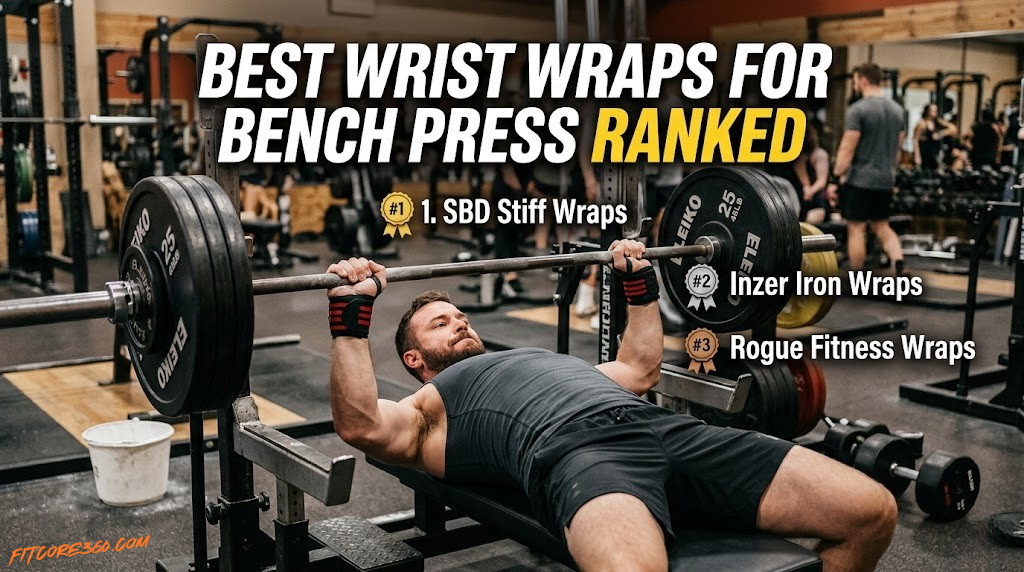
Best Wrist Wraps for Bench Press — Ranked by Lifters Who Actually Push Heavy
Why Wrist Wraps Matter for Bench Press
The bench press is often celebrated as a chest movement, but your wrists and forearms are doing more work than most lifters realize. When you unrack a loaded barbell, your wrists act as the transfer point between your hands, the bar, and the force you are trying to generate. If the wrist buckles backward — even slightly — you lose power, risk injury, and often compensate with a compromised bar path that shifts load away from your target muscles.
Wrist hyperextension under load is extremely common, particularly among lifters who place the bar high in the palm rather than directly over the wrist joint. Over time, repeated stress in this position can lead to wrist tendinitis, ligament strain, and chronic pain that sidelines training entirely. Wrist wraps exist to solve exactly this problem.
Joint Protection
Prevents hyperextension under heavy loads
Force Transfer
Locks wrist neutral so pressing power isn’t lost
PR Potential
Confidence at max loads translates to heavier lifts
Injury Prevention
Reduces tendinitis and ligament stress over time
A well-fitted pair of wrist wraps essentially acts as an external wrist stabilizer. They compress the joint, limit unwanted movement, and allow the lifter to maintain a strong, stacked wrist position from the moment they unrack the bar to lockout. The result? More muscle activation where it belongs, less compensatory strain on the wrist, and the ability to push past previous performance plateaus.
Beyond pure mechanics, there is a significant psychological component. Knowing your wrists are locked and supported allows you to approach a heavy set with a different kind of confidence. That reduced hesitation often translates directly into better technique, faster bar speed, and ultimately, heavier lifts. If you are curious about how grip strength tools complement bench performance, check out our guide on the best grip strength trainers reviewed.
Wrist wraps are not a crutch — they are specialized equipment, just like powerlifting shoes or a lifting belt. Used correctly, they extend your lifting career rather than shortening it. For a deeper look at when to add supportive gear to your training, see our breakdown of when you should start using lifting straps.
How to Choose the Right Wrist Wraps
Walking into the wrist wrap market without a framework is a fast way to end up with gear that doesn’t match your training. There are five core factors that separate the right wrap from the wrong one for your specific bench press goals.
1. Stiffness Level
Wraps range from soft and elastic to competition-grade rigid. Stiff wraps lock the wrist hard and are ideal for max-effort pressing. Flexible wraps allow more natural movement and work better for higher-rep hypertrophy work, incline variations, and warm-up sets. Most intermediate lifters benefit from a medium-stiff wrap that handles both scenarios.
2. Length
Standard lengths are 12″, 18″, 24″, and 36″. For bench press specifically, 18″ is the most versatile. It gives solid support on working sets without the overkill stiffness of a 24″ competition wrap. Beginners can start with 12″. Advanced powerlifters often prefer 24″+ for heavy singles.
3. Material and Build Quality
The best wraps combine a cotton-elastic blend (for structure and breathability) with reinforced thumb loops and strong Velcro closures. Cheap wraps lose elasticity within weeks. Look for double-stitched edges and Velcro that does not degrade after repeated washing.
4. Width
Wider wraps (3″–3.5″) offer broader wrist coverage and generally feel more stable. Narrower wraps allow a bit more natural movement. Most bench-focused wraps fall in the 3″ range, which is the sweet spot for most lifters.
5. Competition Compliance
If you compete, check federation rules carefully. IPF, USAPL, and USPA each have different rules about wrap length and placement. Our article on whether straps are allowed in powerlifting competitions covers what is generally legal in sanctioned meets — similar rules apply to wraps.
| Wrap Length | Best For | Stiffness | Lifter Level |
|---|---|---|---|
| 12 inch | Light support, warm-up sets | Low–Medium | Beginner |
| 18 inch | Working sets, all-around use | Medium–High | Intermediate–Advanced |
| 24 inch | Heavy singles, competition | High | Advanced–Elite |
| 36 inch | Competition powerlifting (IPF max) | Very High | Elite / Competitive |
Quick Top Picks


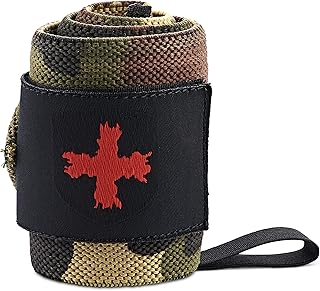

#1 — Fitgriff® Weightlifting Wrist Wraps
If you could only buy one pair of wrist wraps for bench press, the Fitgriff® set is the answer most experienced lifters would land on. These wraps have earned a fanatical following in lifting communities for a simple reason: they deliver exactly the right balance of rigidity and comfort without the break-in period that plagues many premium wraps.
✔ Pros
- Exceptional wrist lock at heavy loads
- Heavy-duty Velcro holds all session long
- Available in multiple lengths (18″ & 24″)
- Machine washable and durable
- Works for push-ups and overhead too
✗ Cons
- Stiffer than average — not ideal for warm-ups
- Can feel hot in summer
The Fitgriff® wraps use a premium cotton-elastic blend that tightens progressively as you apply more wraps. This means you get a customized level of support based on how tight you choose to apply them — a feature that sounds simple but makes a massive practical difference when moving between warm-up and working sets in the same session.
The thumb loop is reinforced with double stitching, which addresses one of the most common failure points in cheaper wraps where the loop tears away from the main body after a few months of heavy use. The Velcro closure is wide and aggressive, giving a secure hold even through multiple sets of sweaty pressing.
One aspect that sets Fitgriff apart is their attention to the wrist lock position. When applied correctly, these wraps guide the wrist into a slightly extended-neutral position — exactly where you want it for maximum force transmission during bench press. Many cheaper wraps are so soft that they merely compress the skin without actually stabilizing the joint. Fitgriff does both.
#2 — Gymreapers Competition Wrist Wraps
Gymreapers has built one of the most respected strength equipment brands in the game, and their competition wrist wraps are a core reason why. Designed specifically for the demands of competitive powerlifting, these wraps bring professional-grade rigidity to the training floor.
✔ Pros
- Competition-level stiffness and rigidity
- Extremely durable construction
- Multiple length options available
- Strong brand support and quality control
- Loved by competitive powerlifters
✗ Cons
- Requires longer break-in period
- Overkill for casual gym-goers
- Premium price point
Gymreapers competition wraps are engineered for one purpose: maximum wrist lockout under maximal load. The stiffness level here is noticeably higher than general-purpose wraps, which can feel excessive if you are benching at moderate weights, but becomes a genuine advantage when you are working near your one-rep max or preparing for a sanctioned meet.
The material composition uses a tightly woven cotton and poly blend with minimal elastic content. This is intentional — the reduced elasticity means the wrap maintains its position throughout a long competition day without stretching out or requiring constant readjustment. For powerlifters who rely on consistency above all else, this is a significant practical benefit.
These wraps also pair well with a high-quality weightlifting belt for a full powerlifting equipment setup. If you’re serious about the bench and want gear that won’t limit you at the highest levels, Gymreapers is the go-to.
#3 — 18″ Powerlifting Wrist Wraps (B0FP6HJJRB)

The 18-inch length is widely considered the ideal for bench press — long enough to create genuine wrist stability, short enough to allow a full range of motion. This particular set delivers exceptional value for that sweet spot length, with construction quality that belies the price.
✔ Pros
- Perfect 18″ length for bench press
- Good balance of support and flexibility
- Quality build for the price
- Versatile for multiple pressing movements
✗ Cons
- Less brand recognition
- Medium stiffness may not suit elite powerlifters
The 18″ wrap format is the standard that most coaches recommend for intermediate bench pressers because it provides full wrist coverage from the base of the thumb to mid-forearm while still being manageable to apply quickly between sets. These wraps deliver on that promise with a well-calibrated medium-stiffness build that suits most training scenarios.
Where these wraps particularly shine is in variety of use. Beyond flat bench, they work seamlessly for incline pressing, dumbbell pressing, overhead work, and even push-up variations — making them the most adaptable single purchase in this list for the lifter who presses in multiple planes. Understanding how grip impacts all your pressing movements is worth exploring — our guide on grip strength exercises for beginners vs advanced lifters digs into exactly that.
#4 — Heavy Duty Black Wrist Wraps (B0BTPFS86N)

Designed for lifters who push maximum loads on a regular basis, these heavy-duty wraps are built to withstand the punishment that high-frequency, high-intensity bench press training demands. The construction is noticeably denser and more robust than standard wraps.
✔ Pros
- Exceptional durability for heavy use
- Dense material for strong wrist lock
- Aggressive Velcro for secure fit
- Clean aesthetic, great for competition
✗ Cons
- Less breathable than thinner options
- Heavier than average wrap
These wraps target the lifter who trains with real weight, multiple times per week. The reinforced construction handles repeated heavy sessions without developing the saggy, stretched-out feel that affects lesser wraps after a few months of serious use. The Velcro system is particularly impressive — it maintains grip even when the fabric is damp from sweat, a real-world scenario that exposes the weakness of many budget options.
For those who combine heavy bench with heavy pulling sessions, understanding the relationship between grip work and overall strength is important. Our article on how grip strength improves deadlifts and pull-ups provides complementary reading on building total hand and wrist resilience.
#5 — DMoose Fitness Wrist Wraps

DMoose has quietly become a go-to brand for bodybuilders who want solid accessory gear without the premium powerlifting price tag. Their wrist wraps sit in a functional middle ground — stiff enough to assist on working sets, flexible enough to accommodate the variety of pressing angles that bodybuilding programs demand.
✔ Pros
- Great for high-volume bodybuilding programs
- Comfortable for extended wear
- Good variety of color options
- Solid mid-stiffness for hypertrophy work
- Strong brand reliability
✗ Cons
- Not stiff enough for max-effort powerlifting
- Thumb loop can loosen with time
The DMoose wraps are particularly well-suited for lifters running push-pull-legs splits or upper-lower programs where the bench press shares a session with overhead pressing, flyes, cable work, and incline variations. The moderate stiffness means you can keep the wraps on between sets of different exercises without the discomfort that very rigid competition wraps can cause during longer-duration accessory work.
DMoose also does well in the durability department for the price. The stitching holds up well after repeated machine washing, which is more than can be said for some of the cheaper options that show fraying within the first month of regular use.
#6 — PR Personal Record Wrist Wraps

The PR Personal Record wraps take a slightly different engineering approach, emphasizing progressive elasticity rather than pure stiffness. The result is a wrap that moves with your wrist during lighter sets but firms up noticeably under heavier loads — an intelligent design that mirrors how actual joint support should function.
✔ Pros
- Progressive tension — gets stiffer under load
- Very comfortable break-in period
- Good for warm-up through working sets
- Excellent breathability
✗ Cons
- Not ideal for ultra-heavy singles
- Elastic memory can degrade over time
The progressive elasticity approach is especially useful for lifters who do not want to unwrap and rewrap between warm-up and working sets. Many rigid wraps require removal during rest periods to maintain circulation, while the PR wraps’ more elastic build allows them to stay on comfortably for longer without the circulation restriction that very tight competition wraps can cause.
The breathability of these wraps is a genuine differentiator. The looser weave allows air circulation during longer sessions, reducing the discomfort of trapped heat and sweat that can make rigid wraps feel punishing by the end of a long bench day.
#7 — VINSGUIR Elastic Wrist Wraps
VINSGUIR punches well above its price point with a comfortable, breathable elastic construction that works particularly well for intermediate lifters who want solid wrist support without committing to a stiff competition-style wrap. These are the wraps we recommend as a first pair for most people.
✔ Pros
- Excellent value for the price
- Highly breathable — comfortable for long sessions
- Easy to apply and adjust
- Works well for multiple exercises
- Beginner-friendly
✗ Cons
- Not suitable for heavy powerlifting
- Limited length options
The VINSGUIR wraps are genuinely breathable in a way that thicker, denser wraps simply cannot match. If you train in a warm gym, hate the feeling of sweaty fabric against your skin, or simply value comfort on higher-rep sets, these wraps deliver an experience that more expensive competitors sometimes do not.
For anyone just getting into heavier pressing and curious about what supportive gear makes sense to start with, the VINSGUIR wraps represent an ideal entry point. Pair them with good gym chalk for the bar and you have a solid foundation — our guide on the best gym chalk for sweaty hands covers that side of your equipment setup.
#8 — Hustle Wrist Wraps

Hustle has built a brand identity around the daily-grinder mindset, and their wrist wraps reflect that ethos. These are designed to be used every session, on every pressing movement, by lifters who treat the gym as a second home and need gear that simply doesn’t quit.
✔ Pros
- Extremely durable daily-use construction
- Wide wrist coverage
- Bold aesthetic design
- Multiple firmness options
✗ Cons
- Slightly stiffer than ideal for beginners
- Can crease with repeated rolling
The Hustle wraps are notably good for lifters who train 4–6 days per week and subject their gear to the kind of repeated use that would destroy lower-quality alternatives within a few months. The fabric density and stitching quality here suggests a product made to outlast casual training schedules, which makes the price-per-session ratio genuinely impressive over a full year of use.
#9 — Harbinger 18″ Pro Wrist Wraps
Harbinger has been in the lifting gear business for over 40 years, and their wrist wraps remain a benchmark product that newer brands continue to measure themselves against. The 18-inch pro wraps embody decades of refinement — nothing flashy, nothing unnecessary, just reliable support session after session.
✔ Pros
- 40+ years of brand trust and refinement
- Consistent quality across production runs
- Excellent 18″ length for bench press
- Proven in commercial and home gym settings
- Great for injured wrists recovering
✗ Cons
- Conservative design — not for max powerlifting
- Available in limited colorways
Harbinger’s longevity in the market is not accidental. Their quality control is notably consistent across production batches — an issue that has plagued newer brands where one order delivers great wraps and the next produces something clearly inferior. If reliability and predictability matter as much as cutting-edge performance, Harbinger is the brand you can trust blindly.
The 18-inch Harbinger wraps are also a common recommendation from physical therapists for lifters recovering from wrist injuries who are returning to bench pressing. The moderate stiffness provides meaningful protection without being so rigid that it interferes with therapeutic movement patterns during the recovery process.
#10 — Jaffick CarbonWeave Double-Layer Wraps

The Jaffick CarbonWeave wraps take a genuinely different approach to construction with a double-layer design that incorporates carbon fiber-inspired woven material into the outer layer. The result is a wrap that feels structurally stiffer than its actual elasticity would suggest — an interesting engineering trick that produces real-world benefits.
✔ Pros
- Unique double-layer CarbonWeave construction
- Standout aesthetic — looks and feels premium
- Good structural rigidity despite elastic core
- Durable outer layer resists fraying
✗ Cons
- Newer brand with less proven track record
- Double-layer can feel bulky for smaller wrists
- Price point higher than equivalent competitors
The CarbonWeave branding is partly marketing language, but the actual double-layer construction is a legitimate engineering choice that produces a noticeably different feel compared to single-layer alternatives. The outer shell creates resistance to deformation that helps the wrap maintain its shape and support level more consistently across a long session compared to wraps that stretch and lose tension over time.
For lifters who value gear that looks as good as it performs and are willing to pay a slight premium for something different, the Jaffick wraps satisfy that desire. They are conversation-starters in the gym for the right reasons, and the performance backs up the aesthetic.
Full Comparison Table
| Wrap | Best For | Stiffness | Length | Wash | Rating |
|---|---|---|---|---|---|
| Fitgriff® Heavy Duty | All-around bench | High | 18″ / 24″ | Machine | ★★★★★ |
| Gymreapers Competition | Powerlifting | Very High | 18″ / 24″ | Machine | ★★★★★ |
| 18″ Powerlifting Wrap | 18″ Standard Use | Medium-High | 18″ | Machine | ★★★★½ |
| Heavy Duty Black | Heavy sessions | High | 18″ | Hand wash | ★★★★½ |
| DMoose Fitness | Bodybuilding volume | Medium | 18″ | Machine | ★★★★ |
| PR Personal Record | Warm-up to working sets | Progressive | 18″ | Machine | ★★★★ |
| VINSGUIR Elastic | Beginners / budget | Low-Medium | 18″ | Machine | ★★★★ |
| Hustle Wraps | Daily training grind | Medium-High | 18″ | Machine | ★★★★ |
| Harbinger 18″ | Trust & reliability | Medium | 18″ | Machine | ★★★★ |
| Jaffick CarbonWeave | Innovation seekers | Medium-High | 18″ | Hand wash | ★★★★ |
How to Wrap Your Wrists Correctly for Bench Press
Owning a great pair of wrist wraps is only half the equation. Applying them incorrectly — too low, too high, too loose, or over the thumb — undermines their entire purpose. Here is the step-by-step process that every serious bench presser should follow.
Thread the Thumb Loop
Place the thumb loop over your thumb before you begin wrapping. This anchors the wrap and ensures consistent positioning every time. The loop sets your starting point — without it, wraps tend to drift downward or shift mid-set.
Position Over the Wrist Joint
Center the starting point of the wrap directly over the wrist joint — not on the forearm, not across the hand. The wrist crease should bisect the wrap. This ensures the structural support lands exactly where it is needed.
Wrap Clockwise (or Counter-Clockwise) Consistently
Begin wrapping in a consistent direction — most lifters find clockwise on the right wrist feels most natural. Overlap each pass by about 50%, maintaining even tension as you go. Consistent tension prevents pressure hotspots that can cause discomfort under heavy load.
Remove Thumb from Loop After Wrapping
Once wrapped, slide your thumb out of the loop before gripping the bar. The loop’s only job is positioning — having it on during the lift restricts thumb movement and can actually compromise your grip mechanics. Remove it every time.
Secure the Velcro Firmly
Fasten the Velcro at the end of your wrap tightly enough to prevent unwinding, but without adding extra compression beyond what the wrap itself provides. The Velcro is a closure, not an extra tightener.
Remove Between Sets for Long Sessions
For sets longer than 2–3 minutes apart, remove the wraps to restore full circulation. Sustained compression without movement can cause numbness and actually reduce performance on subsequent sets by compromising blood flow to the forearms and hands.
Stiff vs Flexible Wrist Wraps — Which Do You Need?
The stiff-versus-flexible debate is one of the most practical questions in wrist wrap selection, and the answer depends almost entirely on how you train and what your specific bench press goals look like.
| Factor | Stiff Wraps | Flexible / Elastic Wraps |
|---|---|---|
| Best Load Range | 90–100% 1RM | 50–80% 1RM |
| Best Training Type | Powerlifting, max effort | Bodybuilding, hypertrophy |
| Range of Motion | Restricted (intentional) | Near-natural |
| Break-In Required | Yes (2–4 weeks) | Minimal |
| Longevity | High | Moderate |
| Competition Legal | Yes (check federation) | Usually (check limits) |
| Comfort During Accessory Work | Low | High |
The most common mistake here is buying competition-grade stiff wraps as a first pair. Unless you are already training near your maximum, the rigidity of stiff wraps can feel restrictive and uncomfortable, leading to improper application and ultimately discouraging consistent use. Start with a medium-stiffness wrap, learn proper application, and graduate to stiffer options as your loads increase.
For the physique-focused lifter running a push-pull-legs program with 4×12 bench sets, flexible or medium wraps are almost always the right call. You need just enough support to manage the cumulative wrist fatigue across a high-volume session, not the joint lockdown that competition powerlifters require for singles. If you’re building a complete home gym setup around your bench work, our complete 2026 home gym setup guide is worth bookmarking.
Many experienced lifters own two pairs: a stiffer 24″ wrap for max-effort days and a more elastic 18″ wrap for volume days. This is not overkill — it is the same logic behind having multiple pairs of shoes for different activities. Each wrap is optimized for its specific use case, and switching between them adds no meaningful cost once you understand what each one does.
Wrap Length Guide for Bench Press
Length is the single most misunderstood variable when buying wrist wraps. Most people default to whatever length is cheapest or most prominently advertised, without considering how length directly affects the type of support they receive.
12-Inch Wraps
Twelve-inch wraps provide light compression and minimal joint restriction. They are suitable for beginners, rehabilitation after wrist injury, and light-to-moderate pressing where the primary goal is proprioceptive feedback (the sensation of having your wrist covered) rather than structural stabilization. For bench press specifically, most intermediate lifters will quickly outgrow 12-inch wraps as their loads increase.
18-Inch Wraps
Eighteen inches is the consensus sweet spot for bench press across most strength communities, and the data from lifters bears this out. At 18 inches, you have enough wrap to complete three to four overlapping passes around the wrist with sufficient tension to lock the joint while still being short enough to allow the natural wrist positioning that bench press mechanics require. This is the default recommendation for the majority of lifters in this guide.
24-Inch Wraps
Twenty-four-inch wraps begin to approach the rigidity level of competition equipment. They are appropriate for lifters regularly training at 85%+ of their one-rep max, competitive powerlifters, and anyone with a documented history of wrist injury who needs maximum protection. The additional length allows more passes and a higher total tension, creating a more rigid joint environment at the cost of some natural movement.
36-Inch and Beyond
Wraps at 36 inches and longer are pure competition equipment, and the IPF is the most notable federation that allows wraps up to one meter in length. These wraps require specific application knowledge and are not recommended for general training use. They are included here for completeness — if you are competing at the level where these wraps make sense, you already know your federation’s rulebook. For a complete view of powerlifting equipment rules, see our article on whether straps and supports are allowed in powerlifting competitions.
Common Mistakes with Wrist Wraps
Even experienced lifters make these errors regularly. Identifying and correcting them can immediately improve both the protection and performance benefit you get from your wraps.
Mistake 1: Wrapping Too Low
This is the most prevalent error. When the wrap sits below the wrist joint rather than centered over it, the compression lands on the lower forearm — an area that does not need external support. The wrist joint itself receives almost no benefit. Check your positioning every session until centering becomes automatic.
Mistake 2: Leaving the Thumb Loop On During the Lift
The thumb loop is a positioning aid, not a structural element. Lifting with the loop around your thumb actively restricts thumb extension, which can compromise the “full grip” on the bar and introduce mechanical problems into your bench press technique. Always slide it off before setting up.
Mistake 3: Using Wraps for Every Set, Every Session
Wrist wraps that are worn for every set, including light warm-up weights, deprive the wrist’s stabilizing muscles of the training stimulus they need to develop. The result over time is wrists that feel chronically dependent on wraps for even moderate loads. Use wraps strategically — on working sets at high percentage loads, not for everything.
Mistake 4: Buying the Cheapest Option
Budget wraps are often false economy. When a cheap wrap’s Velcro fails mid-set or the elastic loses integrity within three months, the wrap provides no support — and the perception of support when there is none may actually be worse than training without wraps at all. Invest in something from this list and it will serve you for years.
Mistake 5: Ignoring Wrist Warm-Up
Wraps are not a substitute for warming up the wrist joint. Before your heaviest sets, spend two minutes rotating the wrists, performing light push-ups or planks, and doing a few empty-bar sets to raise tissue temperature. Wraps applied over a cold, tight wrist joint are far less effective than wraps applied over a warm, mobile one. This connects directly to improving your raw joint strength and mobility — our guide on grip strength exercises for beginners vs advanced includes wrist mobility components worth integrating into your warm-up.
Mistake 6: Mismatched Tightness Between Left and Right
Bilateral asymmetry in wrap tightness creates a subtle but measurable difference in wrist angle between the left and right hand. This small asymmetry can contribute to uneven bar path and bilateral strength imbalances over time. Apply wraps to the same tightness on both sides — preferably with a training partner’s help when approaching max loads.
Wrist wraps are just one piece of the complete bench press setup. Pair them with proper footwear — our roundup of the best powerlifting shoes covers what to look for under your feet — and a quality belt when going heavy for a complete performance setup.
Who Should Use Which Wrap
Not every lifter needs the same wrist wrap. Here is a quick matching guide based on training profile:
| Lifter Profile | Recommended Wrap | Reason |
|---|---|---|
| Beginner (<6 months lifting) | VINSGUIR Elastic | Comfortable, beginner-friendly, affordable first pair |
| Intermediate (6mo–3yr) | Fitgriff® or Harbinger 18″ | All-around performance with proven reliability |
| Competitive Powerlifter | Gymreapers Competition | Competition-level stiffness, built for max singles |
| Bodybuilder / Physique | DMoose or PR Personal Record | Flexible enough for volume work across multiple pressing angles |
| Injured / Recovering | Harbinger 18″ or Fitgriff® | Consistent, proven support; trusted by physio community |
| Home Gym Lifter | Hustle or 18″ Standard | Durable for solo training, easy application without spotters |
| Advanced Enthusiast | Heavy Duty Black or Jaffick CarbonWeave | Heavy-session durability with higher stiffness for PR days |
The gym equipment landscape has never been better for home lifters, and if you are building out a full training space, pairing quality accessories like wrist wraps with major equipment investments makes sense. Our best all-in-one home gyms guide is a useful complement to this article if you are in equipment-acquisition mode.
Caring for Your Wrist Wraps
The lifespan of a quality wrist wrap is directly proportional to how well you care for it. The construction materials — cotton, elastic fibers, Velcro — all respond to how they are cleaned, dried, and stored. A well-maintained set of premium wraps can last 3–5 years of regular training. Poorly maintained budget wraps might last 3–5 months.
Washing
Most wraps can be machine washed on a gentle cold cycle. Place them inside a mesh laundry bag to protect the Velcro from snagging on other fabrics. Wash them every 2–3 weeks if you train frequently, or whenever they begin to hold odor. Avoid hot water, which degrades elastic fibers significantly faster than cold washing.
Drying
Air drying is non-negotiable. Tumble drying — even on a low heat setting — accelerates elastic degradation and can cause shrinkage that permanently alters the fit and tension profile of the wrap. Hang them unrolled in a well-ventilated area and allow them to dry completely before rolling and storing.
Storage
Store wraps rolled loosely — not compressed tightly — in a gym bag pocket or drawer. Tight compression during storage can create permanent creases in stiffer wraps that cause uneven tension distribution when applied. Rolling them at moderate tension maintains their shape without over-stressing the elastic core.
Velcro Care
The Velcro closure is the most vulnerable part of any wrap. Always close the Velcro before washing to prevent it from picking up lint and fabric fibers that reduce grip strength. Remove trapped debris with a fine-tooth comb or specialized Velcro cleaning brush periodically. Velcro that no longer grips firmly is a safety issue — at that point, the wrap should be replaced regardless of the condition of the rest of the material.
Frequently Asked Questions
Final Verdict
The best wrist wraps for bench press are the ones that match your training style, load range, and consistency of use. For the majority of lifters, the Fitgriff® Heavy-Duty Wraps represent the best all-around investment — they perform across a wide range of loads and training styles, hold up to heavy use, and deliver genuine wrist protection without the overkill rigidity of competition equipment.
Powerlifters chasing platform PRs should look hard at the Gymreapers Competition Wraps. Budget-conscious lifters and beginners who want to test the waters get excellent value from the VINSGUIR Elastic Wraps. And anyone who values decades of proven reliability alongside consistent quality will never go wrong with Harbinger.
Whatever you choose, apply them correctly, use them strategically, and treat them as the precision equipment they are — and your wrists will thank you for years of heavy, injury-free pressing.
Shop Our #1 Pick — Fitgriff® Wraps on Amazon