Lever Belt vs Prong Belt: Which Lifting Belt Actually Wins?
The Lifting Belt Dilemma Every Serious Lifter Faces
The moment a lifter graduates from using a cheap nylon belt to considering a genuine leather powerlifting belt, they collide with a choice that sparks heated debate on every lifting forum, subreddit, and gym floor: lever belt or prong belt?
On the surface, both accomplish the same goal — they wrap around your midsection, brace your core against intra-abdominal pressure, and help you move heavier weight more safely during compound lifts like squats, deadlifts, and overhead presses. But beneath that shared purpose are real, meaningful differences in how they buckle, how they fit, how they’re used in competition, and what they demand from your wallet.
This guide is not going to give you a vague “it depends” non-answer and call it a day. We’re going to tear into every dimension of this comparison — mechanics, ergonomics, competitive rules, durability, price, and training context — so that by the time you reach the end, you’ll know exactly which belt belongs on your next Amazon order.
Whether you’re a powerlifter chasing a total PR, a general strength athlete building a solid foundation, or someone who just learned that the best weightlifting belts for squats and deadlifts are not the same cheap $20 thing hanging in the corner of your commercial gym — this breakdown is for you.
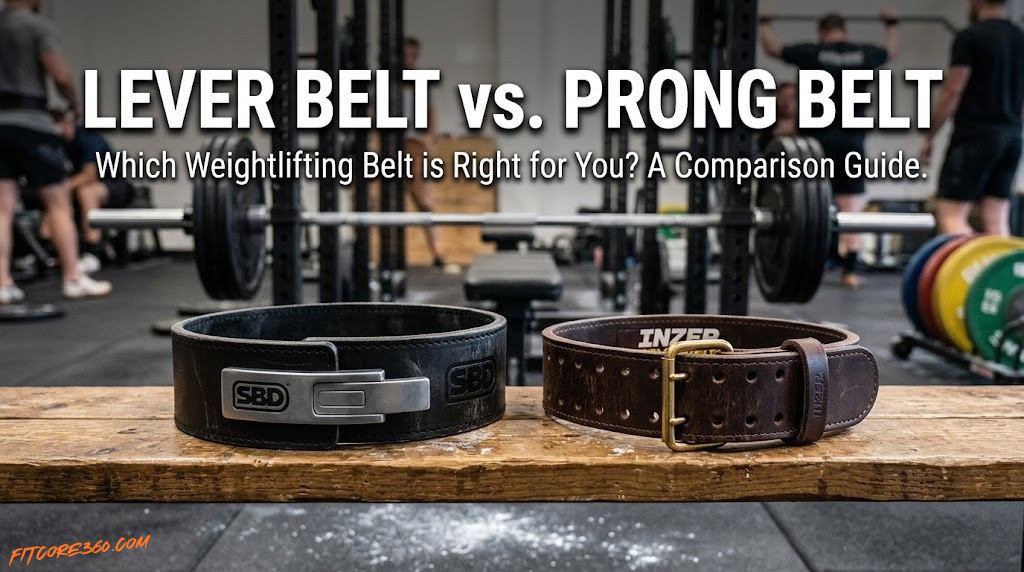
A steel lever mechanism clamps the belt shut. Maximum tightness, no mid-session adjustments without a screwdriver.
A traditional buckle with one or two prongs through holes. Infinitely adjustable, familiar, slower to put on and take off.
Both create spinal support by increasing intra-abdominal pressure. Material thickness and width matter more than buckle type for raw support.
What Is a Lever Belt? Mechanics & Design Explained
A lever belt — sometimes called a powerlifting lever belt — uses a metal hinged lever mechanism mounted to one end of the belt. To fasten it, you thread the belt around your waist, slot the hook into a catch, and then flip the lever down to lock it. The action takes about two seconds. The belt locks in with a satisfying, audible click.
The lever is mounted to the belt at a fixed point, which means the tightness of the belt is determined entirely by which hole or screw position you’ve used during setup. This is the critical point most beginners miss: the lever does not self-adjust between lifts. If you need to size up or down mid-session — say, between a squat and a deadlift where you might want slightly different tightness — you’ll need a screwdriver (usually a Phillips head) to reposition the lever plate.
How the Lever Mechanism Works
The lever plate is attached to the belt via two small screws. On the opposite end of the belt, there’s a hook or series of holes into which the lever catch engages. When the lever is pressed down, it shortens the effective length of the belt slightly, cinching it tight. When flipped open, the belt releases instantly — you can drop it in one smooth motion between sets.
This fast-release quality is the lever belt’s most celebrated advantage. Competitive powerlifters who need their belt extremely tight for a max effort lift but need to breathe freely between attempts love that they can snap the belt on and off in seconds.
Lever Belt Construction Details
Quality lever belts are typically constructed from 10–13mm thick vegetable-tanned leather with a suede inner lining. The lever hardware itself is usually solid steel — either chrome-plated or raw steel — mounted with machine screws. IPF-approved lever belts will have specific lever dimensions that conform to their equipment standards.
A good lever belt, like the IBRO Powerlifting Lever Belt, feels almost rigid when buckled — there’s very little give because the lever locks at a single, predetermined circumference. This is both the feature and the tradeoff. You get maximum, consistent compression every single set. But you also need the belt to fit your waist exactly at its most comfortable, most productive tightness.


- Fastest on/off of any belt system
- Consistent, repeatable tightness every set
- No fiddling between sets — just flip
- Extremely secure lock — zero slippage
- Preferred by most competitive powerlifters
- Clean, modern aesthetic
- Needs a screwdriver to resize mid-session
- Does not accommodate body fluctuation well
- Slightly higher upfront cost
- Lever can loosen screws over time if not maintained
- Not ideal if weight fluctuates frequently
- Learning curve to find ideal lever position
What Is a Prong Belt? The Traditional Powerhouse
The prong belt is the original heavy-duty lifting belt, and it’s been around in essentially the same form since powerlifting emerged as a sport decades ago. Its buckle system is the same one you’ll recognize from a leather dress belt or a work belt — one or two metal prongs that slot through pre-punched holes in the leather. You thread the tongue of the belt through the roller buckle, align a prong with the desired hole, and push the prong down into the leather.
That’s it. Simple, proven, effective. There’s a reason this design has endured without fundamental change — it works.
Single Prong vs Double Prong
Prong belts come in two variants: single prong and double prong. Single prong belts have one center prong and are faster to buckle and unbuckle. Double prong belts have two parallel prongs, theoretically distributing load more evenly and being slightly more secure, but they’re noticeably more cumbersome to use — you have to align both prongs simultaneously, which can be frustrating under fatigue or chalk-covered hands.
Most experienced lifters who use prong belts gravitate toward the single prong for training and sometimes the double prong for competition, though this is far from universal. The performance difference between single and double prong in actual lifting is marginal at best. We’ll look at this more closely in its own section below.
The Adjustment Advantage
The core practical advantage of a prong belt over a lever belt is hole-by-hole adjustability during training. Belt holes are typically spaced about 1 inch apart, which means you can make micro-adjustments between sets, exercises, or even between training days when your body composition or bloat level changes slightly. Had a bigger meal before training? Go one hole looser. Deadlift needs to breathe a little more freely than your squat? Move a hole.
This flexibility sounds minor until you experience the frustration of having a lever belt set two millimeters too tight on a day when your stomach is slightly more inflated than usual. Prong belt users never have that problem.

- Infinitely adjustable between sessions
- No tools needed to resize
- Accommodates body fluctuations easily
- Traditional, proven design — virtually indestructible
- Usually slightly less expensive
- More versatile for varied training styles
- Slower to put on and take off
- Under max fatigue, threading can be frustrating
- Prongs can damage leather holes over years
- Tightness may vary slightly between sets
- Double prong especially cumbersome
- Holes limit adjustment to 1-inch increments
Fit & Intra-Abdominal Support: Which Belt Actually Braces Better?
Let’s get one thing straight before diving into the technical comparison: the buckle type does not determine the support quality of a lifting belt. That is controlled by the belt’s material, thickness, width, and how tightly it is worn. A 13mm lever belt and a 13mm prong belt of the same brand, worn at the same tightness, will produce virtually identical intra-abdominal pressure and spinal support.
What differs is how consistently and conveniently each belt achieves that tightness — and that’s where the real-world performance gap emerges.
The Lever Belt’s Consistency Advantage
Because the lever locks the belt at exactly the same circumference every single time, every set gets the same level of bracing support. There’s no risk of threading the belt one hole too loose because you were distracted, tired, or in a rush. For athletes doing heavy, repeated max-effort training, this repeatability is genuinely valuable. Your warm-up sets get the same bracing as your working sets. Your body learns exactly what the belt feels like, and you can program your brace accordingly.
Competitive powerlifters who are chasing PRs often report that the lever belt lets them get the belt tighter than humanly possible with a prong system. The lever mechanism allows you to pre-set the belt at a circumference that would be agonizing to thread by hand, and then simply click it shut. Over a one-rep max, that extra compression matters.
The Prong Belt’s Flexible Bracing
Prong belts allow you to fine-tune tightness on the fly. During a volume training day with multiple exercises and multiple sets, this matters. Between your squat sets and your Romanian deadlifts, you might want slightly different belt placement or tightness. With a prong belt, you do this in seconds by changing holes. It also allows you to back off the tightness between sets to breathe and recover more fully — something lever belt users either skip (leaving it locked) or have to fully unclip to achieve.
If you’re training with lifting accessories beyond the belt — using wrist wraps for bench press or powerlifting shoes that affect how your body positions differently on different movements — the prong belt’s in-session adjustability is a genuine quality-of-life improvement.
| Support Factor | Lever Belt | Prong Belt |
|---|---|---|
| Peak tightness achievable | ⭐⭐⭐⭐⭐ Highest | ⭐⭐⭐⭐ Very High |
| Consistency set-to-set | ⭐⭐⭐⭐⭐ Perfect | ⭐⭐⭐⭐ Near-perfect |
| In-session adjustability | ⭐⭐ Requires screwdriver | ⭐⭐⭐⭐⭐ Change holes freely |
| Between-set breathability | ⭐⭐⭐ Leave locked or fully open | ⭐⭐⭐⭐ Adjust easily |
| Day-to-day body accommodation | ⭐⭐ Set once, rarely change | ⭐⭐⭐⭐⭐ Perfect daily flexibility |
| Overall bracing quality | Equal — determined by material & thickness, not buckle type | |
Ease of Use & Daily Practicality: The Gym-Floor Reality
Ask anyone who has trained with both belt types for an extended period, and you’ll hear consistent patterns in how each affects day-to-day training experience.
The Lever Belt Training Experience
Getting the lever belt on: two seconds. Getting it off: one second. Between sets where you want to keep the belt on but relax slightly — you’re stuck. The lever belt is binary: it’s either fully locked or fully open. Most lifters who use lever belts in training sessions leave it locked the entire time they’re under heavy load, even between sets. This creates a slightly different training stimulus — your core is braced for longer, your breathing adapts, and you get more efficient at bracing within the constraint of constant compression.
The critical setup step that catches new lever belt users off guard is the initial positioning. You need to figure out the exact hole, notch, or screw position that gives you perfect tightness — the kind of tightness where you can just barely force a big breath into your belly against the resistance of the belt. Once you’ve found that position, mark it, remember it, and don’t change it. Changing the lever position requires removing the belt, flipping it over, unscrewing two Phillips screws with a small screwdriver, repositioning the plate, and screwing it back together. This is not a big deal — it takes about 3–5 minutes — but it’s not something you want to do mid-session.
The Prong Belt Training Experience
The prong belt’s day-to-day experience is slower but more forgiving. Buckle it, pull the tongue through, slot the prong, done — maybe 15 to 30 seconds depending on how tight you want it and how precise you are about centering the prong. On heavy training days, that extra 20 seconds per set is genuinely noticeable when you’re trying to stay focused between attempts.
The hole system also introduces a small but real inconsistency: it’s easy to absent-mindedly grab the wrong hole and find yourself training one notch too loose without noticing for several sets. Experienced prong belt users develop habits — always counting from the tightest end, always using the same hole number — to eliminate this. But it requires more conscious attention than the lever belt does.
Prong belts are also easier to share in a gym environment. If you’re working in with a training partner who has a different waist size, adjusting a prong belt to fit them takes seconds. A lever belt would need repositioning between users.
Competition Rules: What the Federations Actually Allow
This is where the lever vs prong debate gets legitimately important in a way that affects equipment decisions. Different powerlifting federations have different rules about which belt types are allowed, and the specifications are more specific than most beginners realize.
IPF (International Powerlifting Federation)
The IPF — the largest and most internationally recognized raw powerlifting federation — permits both lever belts and single-prong belts. However, double-prong belts are NOT allowed in IPF competition. Additionally, the IPF has strict specifications: belts must be no wider than 10cm (approximately 4 inches), no thicker than 13mm, and the lever or prong mechanism must conform to specific dimensional requirements.
If you’re competing in IPF-sanctioned events or any of its national affiliates (like USA Powerlifting), make sure your lever or single-prong belt is explicitly listed on the IPF’s approved equipment list before competition day. Not all lever belts on the market meet IPF specs.
USPA, RPS, and Multi-Ply Federations
Most other federations are more permissive. The USPA (United States Powerlifting Association) allows lever belts, single prong, and double prong belts. Regional and smaller federations like RPS, WRPF, and many others are similarly flexible. Multi-ply equipped powerlifting federations are typically the most permissive of all when it comes to belt design.
If you compete in strongman or wonder what other accessories are permitted in competition, the rules vary significantly by organization — always check current rulebooks for your specific federation, as they update periodically.
| Federation | Lever Belt | Single Prong | Double Prong |
|---|---|---|---|
| IPF / USAPL | ✓ Allowed (approved list) | ✓ Allowed | ✗ NOT Allowed |
| USPA | ✓ Allowed | ✓ Allowed | ✓ Allowed |
| RPS / WRPF | ✓ Allowed | ✓ Allowed | ✓ Allowed |
| Strongman Organizations | ✓ Generally allowed | ✓ Allowed | ✓ Allowed |
| CrossFit / Functional | — Not regulated | — Not regulated | — Not regulated |

Durability & Price: Long-Term Value Compared
A quality powerlifting belt — whether lever or prong — is a long-term investment. Serious lifters have belts they’ve used for 10, 15, even 20 years. When you’re spending $80–$200 on a belt, knowing what you’re getting in terms of longevity matters.
Lever Belt Durability
The leather body of a lever belt is as durable as any prong belt of the same quality. What’s unique to the lever system is the hardware durability. The lever mechanism — the hinged metal plate, the catch, and especially the mounting screws — is subject to wear over time. The mounting screws that hold the lever plate to the belt can loosen with repeated use. This is a known issue with lever belts and has an easy fix (periodic screw tightening, using threadlocker on the screws), but it’s a maintenance consideration that prong belt users simply don’t have.
The catch mechanism on the belt’s opposite end can also show wear over years of heavy use. High-quality lever belts from established brands use reinforced catches that last for thousands of uses without issue. Budget lever belts may show wear faster.
Prong Belt Durability
Prong belts are mechanically simpler and therefore generally more durable in a holistic sense. There are fewer moving parts to fail. The prongs themselves can bend or weaken if you’re repeatedly forcing them through extremely tight holes for years, but quality steel prongs on good belts stand up to this for a very long time.
The leather holes on prong belts will gradually elongate over years of use, especially if you consistently use the same 2–3 holes at maximum tightness. This is manageable — the belt remains functional even with slightly enlarged holes — but it can eventually make the belt feel less precise. Double-prong belts are slightly harder on holes due to the dual point stress.
Price Comparison
| Price Tier | Lever Belt | Prong Belt (Single) | Prong Belt (Double) |
|---|---|---|---|
| Budget ($40–$70) | Available, quality varies | Good options available | Widely available |
| Mid-Range ($70–$130) | Excellent quality Best Value | Very solid options | Good quality |
| Premium ($130–$250) | Competition-grade | Competition-grade Best Value | Competition-grade |
| Top-Tier ($250+) | Elite brands (Inzer, etc.) | Elite brands (SBD, etc.) | Available in this tier |
In general, lever belts tend to be slightly more expensive at each quality tier due to the added hardware cost. The price difference is typically $10–$30 between comparable lever and prong models from the same brand. This is not a significant factor over the 5–10+ year lifespan of a quality belt, but it’s worth noting at the lower end of the budget range.
For gear-conscious athletes who also invest in lifting straps for heavy pulls or chalk for sweaty hands, the belt is typically your biggest single accessory investment — and it’s one where buying quality once beats buying cheap twice.
Which Training Styles Suit Each Belt Type?
The lever vs prong choice isn’t just about mechanical preference — it’s about how you actually train. Different training methodologies favor different belt systems in meaningful ways.
Powerlifting (Competition Focus)
If your training centers around the squat, bench press, and deadlift with the explicit goal of competing, the lever belt is the dominant choice at the elite level. The ability to get the belt as tight as humanly (or mechanically) possible for max-effort singles, combined with the fast-release quality, makes it the go-to for most serious competitive powerlifters. That said, many successful competitors use single-prong belts throughout their careers without any disadvantage.
Olympic Weightlifting
Olympic lifters rarely use 13mm powerlifting-style belts, but when they do use any belt, the prong system is more common. The explosive, dynamic nature of the snatch and clean & jerk requires more freedom of movement, and the ability to adjust tightness between snatch work and heavier back squat work is valuable. Learn more about the distinctions between lifting straps for deadlifts vs Olympic lifts — a similar conversation about tool specificity applies to belts.
Bodybuilding & Hypertrophy Training
Bodybuilders who belt up for heavy compound sets typically prefer prong belts for the flexibility to use different tightness levels across a wide variety of exercises in the same session. When you’re going from squats to Romanian deadlifts to barbell rows across a single back day, the ability to adjust quickly is practical.
Functional Fitness & CrossFit
Athletes in functional fitness contexts — where you might go from heavy deadlifts to overhead squats to wall balls in a single workout — generally prefer prong belts for their flexibility, or skip belts entirely for the gymnastic and cardio portions. If you’re also using lifting straps for your heavy pulls in a metcon context, a prong belt that adjusts quickly makes more sense than a lever.
General Strength Training
For the majority of gym-goers doing general strength training — not competing, not specializing, just getting strong — either belt works fine. The prong belt’s flexibility and slightly lower cost make it a natural first powerlifting belt purchase. If you love it and get more serious about maximizing your heavy lifts, a lever belt becomes a logical second purchase.
Single Prong vs Double Prong: The Other Belt Decision
Once you’ve decided on a prong belt, there’s still a sub-decision to make: single prong or double prong? This is worth addressing because it’s a genuine fork in the road with real practical consequences.
Why Double Prong Belts Exist
Double prong belts were designed with the idea that two contact points distributes the mechanical load more evenly across the belt, reducing stress on any single point and theoretically improving longevity and stability. In practice, this reasoning holds up to some degree — a double prong belt can feel slightly more “locked in” when fully buckled because neither prong can rotate independently.
However, the performance difference in actual lifting — the amount of bracing support provided, the intra-abdominal pressure generated — is negligible between single and double prong belts of equal quality. You will not lift more weight because you switched from a single to double prong belt.
The Practical Downsides of Double Prong
The double prong system’s disadvantages are practical and significant:
Alignment difficulty: Getting two prongs to align with two holes simultaneously under fatigue, with chalk on your hands, mid-heavy training session, is genuinely frustrating. Ask any experienced double prong belt user and most will admit they’ve spent 30–60 seconds wrestling with their belt between heavy sets.
IPF illegality: As noted in the competition section, double prong belts are not permitted in IPF and USAPL competition. If there’s any chance you’ll compete in these federations, you’ll need a different belt anyway.
Leather wear: The double hole punching system and the dual prong stress can wear out the leather holes faster, though this is a very long-term concern on quality leather.
The Verdict on Single vs Double Prong
For virtually all lifters — including those who specifically want a prong belt — the single prong is the superior daily training tool. It’s faster, easier, and competition-legal across all major federations. The double prong has a niche following and some genuine fans, but the rational case for a double prong over a single prong or a lever belt is thin. Unless you specifically love the feel of a double prong after extensive testing, default to single prong.
Faster, more practical, competition-legal everywhere. Double prong’s marginal stability advantage is outweighed by its day-to-day inconvenience for most lifters.
Head-to-Head: Complete Lever Belt vs Prong Belt Comparison
Let’s put every dimension of this comparison in one place. This is the comprehensive table that lets you see where each belt wins, loses, or ties across every meaningful variable.
| Category | Lever Belt | Prong Belt | Winner |
|---|---|---|---|
| Speed to put on/take off | 1–2 seconds | 15–30 seconds | Lever |
| In-session adjustability | Requires screwdriver | Hole-by-hole, no tools | Prong |
| Max tightness achievable | Slightly higher | Very high | Lever |
| Set-to-set consistency | Perfect every time | Near-perfect | Lever |
| Day-to-day body accommodation | Poor (fixed circumference) | Excellent (holes) | Prong |
| IPF competition legal | Yes (if approved) | Single prong: Yes / Double: No | Depends |
| Other federations legal | Yes | Yes | Tie |
| Typical price (mid-range) | $90–$150 | $70–$130 | Prong |
| Mechanical durability | Screws need monitoring | Fewer moving parts | Prong |
| Training partner sharing | Requires screwdriver | Instant adjustment | Prong |
| Learning curve | Initial setup only | Minimal | Prong |
| Bracing quality | Equal (same material) | Equal (same material) | Tie |
| Between-set comfort | Remove or stay on | Loosen one hole | Prong |
| Preferred by elite powerlifters | Majority preference | Significant minority | Lever |
Tallying the wins: Prong belt wins 7 categories, Lever belt wins 5, Tie in 2. But raw category wins don’t tell the whole story — the categories the lever belt wins tend to matter more to competitive powerlifters, while the categories the prong belt wins tend to matter more to general strength athletes and those who value flexibility.
For a deeper dive into the broader ecosystem of strength training accessories and how they interact — including how your belt choice complements tools like chalk and leather lifting straps — the context of your overall training setup matters.
Which Belt Should You Actually Buy? The Decision Framework
Enough comparison. Let’s get prescriptive. Based on everything covered above, here’s a clear, actionable decision framework based on your situation.
Buy a Lever Belt If…
- You compete in powerlifting or plan to compete within the next year
- Your training is primarily squat, bench, deadlift — the classic powerlifting movements
- You train at consistent bodyweight and don’t need to adjust the belt sizing frequently
- You prioritize getting the belt on and off as fast as possible between heavy sets
- You’ve already owned a prong belt and want to upgrade your heaviest session performance
- You’re a strongman competitor performing max-effort events like the log press or deadlift
Buy a Prong Belt If…
- You’re buying your first serious lifting belt and want maximum flexibility
- You train multiple disciplines (squat, DL, OHP, rows) in the same session and want to fine-tune tightness per exercise
- Your body weight fluctuates significantly week-to-week (dieting, bulking, water retention)
- You share equipment with training partners of different sizes
- You compete in a federation that prohibits lever belts (rare, but exists in some local organizations)
- You want the simplest, most proven belt mechanism with the fewest potential failure points
The “Both” Strategy (Serious Lifters)
Many serious lifters eventually end up owning both. A prong belt for general training — warm-ups, accessory work, varied exercises — and a lever belt reserved for heavy working sets and competition. This is not overkill if you’re training seriously; it’s just pragmatic tool selection. The total cost of owning both is still less than most quality powerlifting shoes or a set of premium wrist wraps.
Our Specific Picks from Amazon
Based on value, construction quality, and customer satisfaction, here are the belts we recommend checking out:
Frequently Asked Questions
For competitive powerlifting, most elite lifters prefer lever belts for their ability to get the belt extremely tight and release it instantly between attempts. However, a single-prong belt is equally effective and used successfully by many top competitors. The choice comes down to personal preference and training style more than a clear performance advantage for one type.
Yes, lever belts are allowed in IPF competition, but only if the specific model is on the IPF’s approved equipment list. The belt must meet IPF width (max 10cm) and thickness (max 13mm) requirements. Always verify approval before competition day — don’t discover the problem at weigh-ins.
Double prong belts are NOT allowed in IPF and USAPL competition. They are permitted in most other federations including the USPA, RPS, and WRPF. If there’s any chance you’ll compete in IPF-affiliated meets, choose a lever belt or single-prong belt instead.
A powerlifting belt should be tight enough that you can barely slide two fingers underneath it when buckled. You should be able to breathe into your belly against the belt’s resistance. If you cannot take a full breath, it’s too tight. If the belt feels loose during a lift, it’s too loose. The goal is to create maximum resistance for your bracing to push against — not to constrict breathing.
To resize a lever belt, unscrew the two screws holding the lever plate to the belt using a Phillips head screwdriver, slide the plate to a new position (a different hole in the belt), and screw it back down. This takes about 3–5 minutes. Most lifters carry a small screwdriver in their gym bag when they’re finding their ideal setting. Once set, most never change it.
For beginners, a single-prong belt is generally the better starting choice. It lets you experiment with different tightness levels as you learn how belt bracing should feel, accommodates body composition changes common in early training, and costs slightly less. You can always upgrade to a lever belt once you know your ideal fit.
No — when properly functioning, the lever mechanism locks the belt at a fixed circumference that does not change during a lift. This is one of its key advantages over prong systems. Over time, the mounting screws can loosen slightly with repeated use, which may cause minor play. This is preventable with periodic screw tightening.
Most coaches recommend using a lifting belt only for heavy compound lifts where spinal loading is significant — typically 80% of your one-rep max or higher. Wearing a belt on lighter accessory movements reduces the training stimulus on your core musculature. Save it for working sets on squats, deadlifts, overhead presses, and heavy rows. This applies equally to both lever and prong belts.
For competitive powerlifters and serious strength athletes training heavy compound movements multiple times per week, the lever belt’s convenience and consistency justify the extra $10–$30 premium over comparable prong belts. For recreational lifters or those who train varied exercise styles, the extra cost may not deliver proportional benefit.
A quality leather lifting belt typically takes 4–8 weeks of regular use to break in fully. The leather softens and conforms to your body shape. Lever belts may feel particularly rigid initially because the locking mechanism prevents any flexibility. You can accelerate break-in by bending the belt around a post or leaving it curved overnight between sessions.
The Final Verdict: Lever Belt vs Prong Belt
After everything we’ve covered — mechanics, competition rules, durability, training specificity, and day-to-day practicality — the conclusion isn’t that one belt is objectively superior. It’s that each belt is superior for the right person in the right context.
The lever belt is the elite competitor’s weapon of choice. If you are chasing meet-day PRs, need the tightest possible bracing for max-effort singles, and want to flip a belt on and off in seconds between heavy attempts, the lever belt is your belt. Buy it, dial in the fit, and never look back.
The prong belt is the general strength athlete’s daily driver. If you train varied movements, your body weight fluctuates, you value the simplicity of a proven design, or you’re buying your first serious belt, the single-prong wins on flexibility, practicality, and value. There is no shame in a prong belt — legends have been built with them.
For the grip-to-gear ecosystem that serious lifters build over time — from grip strength work that improves your deadlifts and pull-ups to choosing between straps and grip training long-term — the belt is just one piece of a thoughtful equipment strategy. Choose the piece that fits your training, not the one with the most forum endorsements.
Whatever you decide, buy leather, buy quality, and buy once. A good belt outlasts most gym memberships and should be one of the last pieces of gear you ever need to replace.