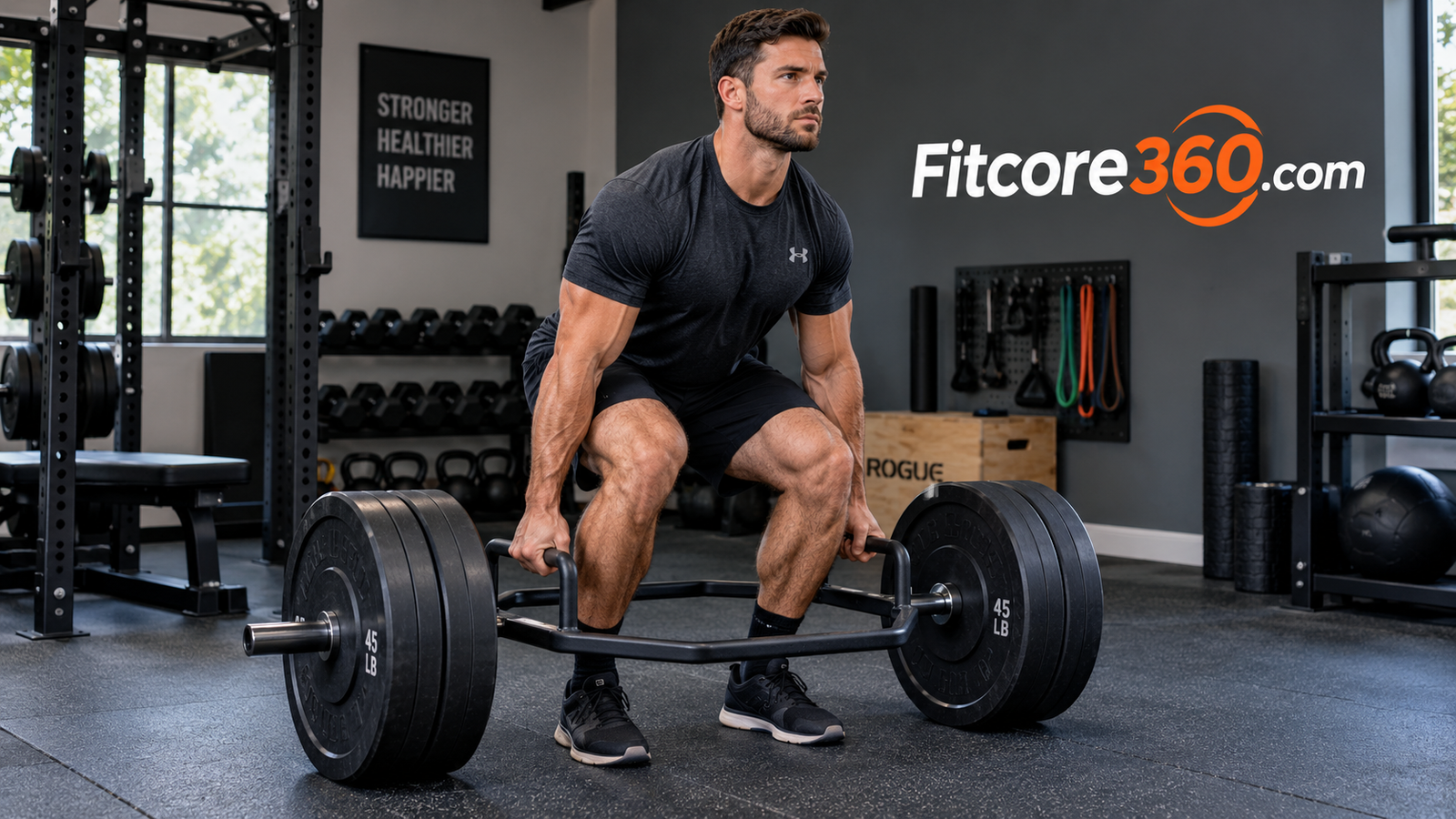
Best Trap Bars: The 7 Top Hex Bars Ranked and Reviewed for Deadlifts, Shrugs, and Carries
A trap bar (also called a hex bar) changes the geometry of the deadlift, moves the load closer to your center of mass, and takes a lot of the lower-back stress out of pulling heavy weight off the floor. But not every trap bar on the market is built the same way, and the differences in handle height, sleeve length, steel gauge, and knurling can make or break your training experience. We tested, compared, and ranked the seven most searched-for trap bars available right now so you can buy the right one the first time.
Why a Trap Bar Belongs in Your Gym
If you’ve ever pulled a heavy straight-bar deadlift and felt your lower back doing more work than it should, you already understand the appeal of a trap bar. Because you stand inside the frame of the bar rather than behind it, the load lines up much closer to your hips, which shortens the moment arm on your spine and lets your legs and glutes take on more of the work. That single geometric change is why so many coaches recommend trap bar deadlifts for beginners, for athletes coming back from a back tweak, and for anyone who simply wants to pull heavy without turning the lift into a lower-back grinder.
It isn’t only about safety, either. The neutral, hammer-style grip that a hex bar allows is far friendlier to the shoulders and wrists than a pronated straight-bar grip, and it tends to let lifters move more total weight because grip and upper-back positioning stop being the limiting factor. Trap bars are also genuinely multi-purpose: the same bar that you use for deadlifts on Monday can be used for farmer’s carries, shrugs, high pulls, and even overhead presses on a unit with the right handle design. For a home gym especially, that versatility matters, since floor space and budget are both limited.
What follows is a plain-language breakdown of the seven trap bars that come up again and again in search results and gym-equipment forums, reviewed on the things that actually matter once the bar is sitting on your garage floor: build quality, handle geometry, plate capacity, knurling, and value for money.

Check Price on Amazon
What to Look For Before You Buy a Trap Bar
Every hex bar looks roughly the same in a thumbnail photo, but the details separate the bars people love from the ones that end up sold on a local marketplace after six months. Here is what actually matters.
Handle Height and Elevated Options
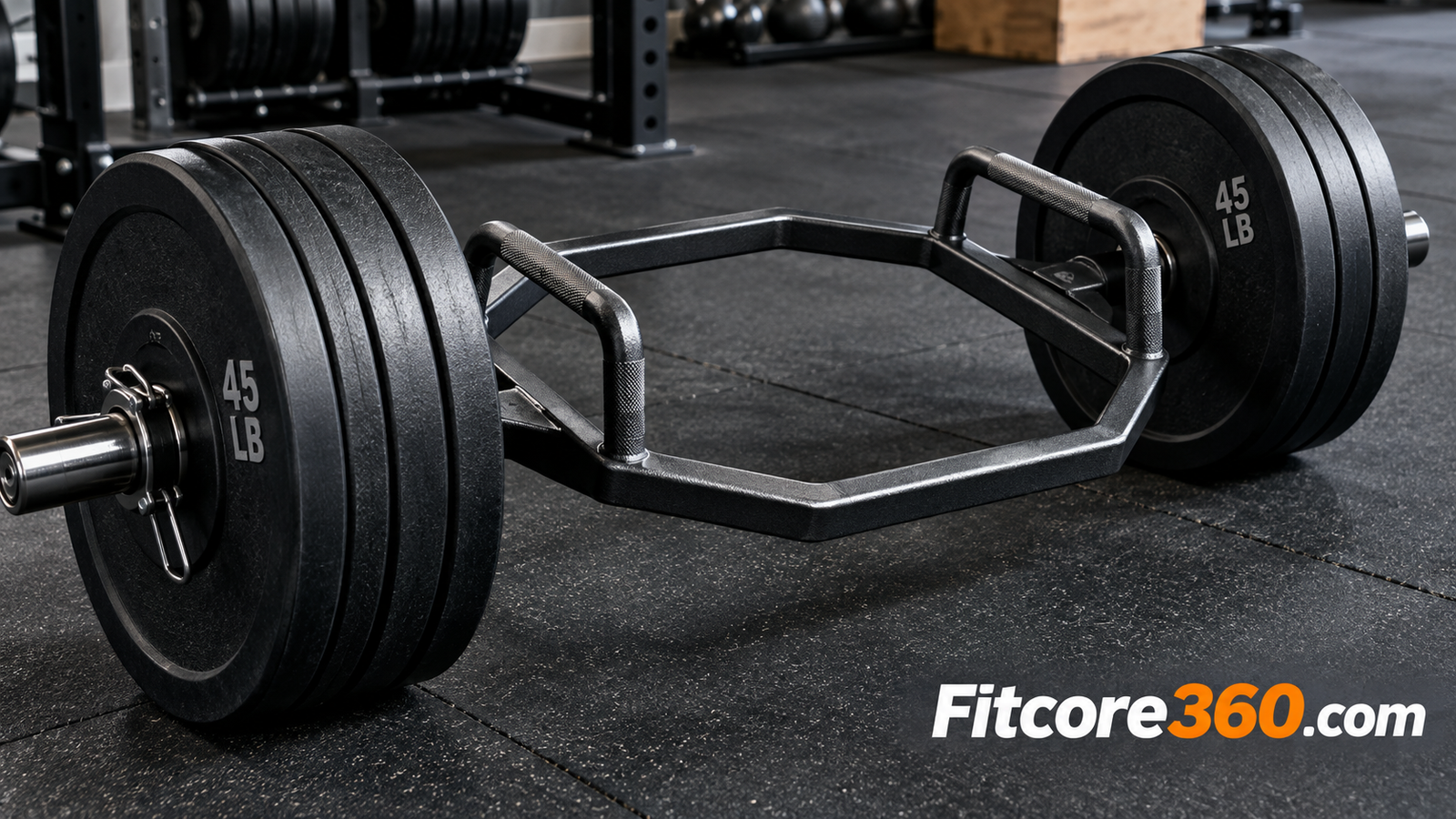
Standard trap bars put the handles at roughly the same height as a loaded Olympic barbell resting on the floor with standard 45-pound plates. Elevated-handle versions raise the grip by an inch or two, which shortens the range of motion. That makes the lift more shrug-and-carry friendly and easier on taller lifters, but it also reduces the training stimulus for anyone specifically chasing deadlift strength off the floor. If your main goal is raw pulling strength, a standard-height bar is usually the better long-term tool; if your priority is shrugs, farmer’s walks, or you simply have a long torso, elevated handles are worth paying attention to.
Sleeve Length and Plate Capacity
Sleeve length determines how many plates you can physically load, and it’s one of the most commonly overlooked specs. A bar with short sleeves might list a high weight capacity on paper but physically run out of room once you’re stacking bumper plates or thicker steel plates. If you plan to eventually pull anywhere close to a four-plate deadlift, check the actual sleeve length in inches, not just the advertised capacity number.
Steel Gauge and Weight Capacity
Weight capacity is a function of steel thickness and the quality of the welds at the handle junctions, which are the highest-stress points on any hex bar. A bar rated for 500 pounds from a reputable brand with visible weld quality is generally trustworthy; a bar rated well beyond that from an unknown brand deserves a closer look at the actual gauge of steel used.
Knurling and Grip
Neutral-grip handles vary a surprising amount in diameter and knurl depth. A too-smooth handle becomes a real problem on heavy, sweaty pulls, while overly aggressive knurling can tear up your hands on high-rep shrug or carry work. Mid-depth, moderately aggressive knurling is the sweet spot for most lifters.
Coating and Corrosion Resistance
Black oxide, powder coat, and chrome are the three finishes you’ll typically see. Powder coat looks great initially but can chip with heavy use; black oxide is a durable budget option that will develop a light patina over time; chrome resists corrosion best but commands a price premium. For a garage gym that sees temperature swings and humidity, corrosion resistance is worth prioritizing over aesthetics.
Footprint and Storage
Hex bars are bulkier than straight bars and don’t fit standard barbell storage racks. Measure your available wall or floor space before ordering, and consider how you’ll store it alongside other home gym equipment if space is tight.
1. CAP Barbell Olympic Trap & Shrug Bar
The CAP Barbell trap bar has been a staple recommendation for lifters shopping in the budget-to-mid-range bracket for years, and it earns that reputation by doing the fundamentals well without overcomplicating the design. It uses elevated handles, which puts it firmly in the camp of bars designed for shrugs, carries, and lifters who want a shorter range of motion on their pulls rather than a full dead-stop deadlift replacement. The 500-pound weight capacity covers the needs of the overwhelming majority of home-gym users, from beginners working through a linear progression to intermediate lifters who aren’t chasing elite powerlifting numbers.
What stands out about the CAP is how approachable it is for someone who has never used a hex bar before. The neutral handles are set at a height that most lifters find intuitive on their first rep, there’s no awkward crouch required to find the grips, and the open hex design makes stepping in and out of the bar simple even in a cramped garage gym. It’s a genuinely good entry point if you’re trying a trap bar for the first time and don’t want to commit serious money before you know whether the movement pattern works for your body.
Who It’s Best For
Beginners, general fitness lifters, and anyone prioritizing shrugs and carries over max-effort deadlifts. If you’re coming from a background of straight-bar deadlifts and want to test whether the reduced spinal stress of a trap bar actually helps you, this is a low-risk way to find out.
Pros
- Budget-friendly entry point into trap bar training
- Elevated handles are comfortable for shrugs and carries
- Simple, beginner-friendly design
- Reasonable weight capacity for most home users
Cons
- Elevated-only handle limits full range-of-motion deadlifting
- 500-lb capacity may be limiting for advanced lifters
- Finish is more basic than premium-tier bars

Check Price on Amazon
2. Titan Fitness Olympic Hex Weight Bar
Titan Fitness has built a loyal following among home-gym owners by consistently offering commercial-adjacent build quality at prices that undercut the big-box strength brands, and the Titan hex bar continues that pattern. This is a heavy-duty, conventional trap-bar design without the elevated-handle gimmick, meaning it’s built to replicate a true deadlift range of motion rather than a shortened shrug-focused pull. For lifters who specifically want their trap bar training to carry over to strength and performance goals, that distinction matters.
The steel gauge on this bar feels noticeably heavier in hand than entry-level competitors, and the welds at the handle junctions, which are the first place cheap trap bars fail, are clean and consistent. It’s the kind of bar that garage-gym forums point to when someone asks “what’s the best trap bar that isn’t going to flex or creak under load.” If you’ve already read our dedicated in-depth Titan trap bar review, you’ll know this bar consistently ranks near the top of most home-gym recommendation lists for a reason.
Who It’s Best For
Intermediate to advanced lifters who want a true standard-height pulling range of motion, and anyone building a semi-serious home gym who wants a bar that will hold up for a decade of heavy use rather than a season.
Pros
- Heavy-duty steel with commercial-feel construction
- Standard-height handles for full deadlift range of motion
- Consistently praised weld quality at stress points
- Strong reputation across home-gym communities
Cons
- Pricier than entry-level competitors
- Bulkier footprint due to heavier frame
- No elevated-handle version for shrug-focused training

Check Price on Amazon
3. Yes4All Olympic Hex Trap Bar
Yes4All has carved out a reputation as one of the more reliable value brands in the strength-equipment space, and their hex trap bar is a good example of why. It’s priced aggressively against the rest of this list while still covering the core requirements most home-gym lifters actually need: standard 2-inch Olympic sleeves, a workable weight capacity, and a hex frame wide enough to comfortably step into without clipping your shins on the rails.
Where the Yes4All differentiates itself is the multiple grip positions offered on some versions of the bar, giving lifters a choice between a slightly wider and slightly narrower neutral grip. That flexibility is a nice touch for taller or shorter lifters who find a single fixed grip width uncomfortable, and it’s not something every budget-tier trap bar bothers to include.
Who It’s Best For
Cost-conscious buyers who still want grip-width flexibility, and lifters who fall outside the “average” height range and need a bit more customization from their equipment.
Pros
- Aggressively priced relative to feature set
- Multiple grip positions on select versions
- Standard Olympic sleeve compatibility
- Reasonably wide stepping frame
Cons
- Build quality is a step below Titan or Body-Solid
- Coating can wear faster under heavy daily use
- Not ideal for max-effort powerlifting-style loading

Check Price on Amazon
4. HulkFit Olympic 2-Inch Hex/Trap Bar
HulkFit’s hex bar is purpose-built with standard 2-inch Olympic plates in mind, which sounds obvious but is worth double-checking before you buy any trap bar, since some budget models use slightly undersized sleeves that cause plates to spin loosely or sit unevenly. This bar’s sleeves are dialed in for a snug, standard fit, which matters if you’re loading and unloading plates frequently during a session.
It’s designed with the home-gym user specifically in mind rather than a commercial facility, which shows up in details like the manageable overall weight of the frame (easier to move and store solo) and a price point that sits comfortably in the middle of this list. It won’t win any awards for premium finish, but for a garage gym doing straightforward deadlift, shrug, and carry work, it does the job without unnecessary extras.
Who It’s Best For
Home-gym owners who want a straightforward, no-frills trap bar that fits standard Olympic plates precisely and doesn’t require a second person to move around the garage.
Pros
- Precise fit for standard 2-inch Olympic plates
- Manageable weight for solo setup and storage
- Mid-range pricing with solid core functionality
Cons
- Fewer handle-height options than some competitors
- Basic finish compared to premium-tier bars
- Less brand recognition than Titan or CAP

Check Price on Amazon
5. Body-Solid Olympic Trap Bar
Body-Solid has a long history supplying equipment to commercial gyms and physical therapy clinics, and their trap bar reflects that lineage. It leans more traditional and commercial-gym-style in its construction: thicker gauge steel, a more robust finish, and a general feel of being built to survive years of rotating daily users rather than a single household’s twice-a-week training sessions.
That commercial pedigree comes at a price, and this bar typically costs more than the CAP, Yes4All, or HulkFit options on this list. But for buyers who specifically want a trap bar that will hold up in a small studio gym, a shared garage gym with multiple lifters, or a setting where equipment gets more wear than the average home user, the extra investment is easy to justify.
Who It’s Best For
Small gym owners, physical therapy or training studios, and home-gym users who want commercial-grade durability and don’t mind paying a premium for it.
Pros
- Commercial-gym-grade construction and finish
- Built to withstand high-frequency, multi-user settings
- Trusted brand with a long equipment track record
Cons
- Higher price point than most home-use alternatives
- Overkill for casual, low-frequency home training
- Heavier frame may complicate solo storage

Check Price on Amazon
6. Valor Fitness OB-60 Olympic Trap Bar
The Valor Fitness OB-60 sticks to a conventional hex-bar layout without chasing gimmicks, and that consistency is exactly why it shows up so often in “best trap bar” comparisons. It handles the two movements most lifters actually buy a trap bar for — deadlifts and loaded carries — competently, with a stable, well-balanced frame that doesn’t tip or wobble awkwardly when you’re stepping in with a heavy farmer’s-carry load.
Valor as a brand tends to sit in the reliable-but-unflashy category of strength equipment, and the OB-60 fits that mold. It’s not going to be the bar that impresses anyone scrolling through gym-equipment photos on social media, but it’s also unlikely to be the bar you’re complaining about a year from now.
Who It’s Best For
Lifters who want dependable, no-surprises performance for deadlifts and carries without paying a premium for brand prestige.
Pros
- Stable, well-balanced frame for carries and pulls
- Conventional layout suits most training goals
- Consistent mid-range pricing
Cons
- No standout features beyond solid fundamentals
- Limited handle-height variation
- Less widely reviewed than Titan or CAP

Check Price on Amazon
7. Fitness Reality Olympic 2-Inch Hex Trap Bar
Fitness Reality’s hex bar rounds out this list as the most explicitly home-gym-oriented option, with a simple design that prioritizes affordability and ease of assembly over premium materials. It’s a sensible pick for someone testing the waters with trap bar training before deciding whether to invest in a higher-end unit later, or for a household gym where the bar will see moderate rather than heavy daily use.
Assembly and first-use reports consistently describe it as straightforward, with clear instructions and no unusual tools required, which matters more than it sounds for a first-time buyer who just wants to get training rather than troubleshoot hardware.
Who It’s Best For
First-time trap bar buyers, light-to-moderate home use, and anyone prioritizing simplicity and price over premium build quality.
Pros
- Simple, home-gym-friendly design
- Easy assembly with clear instructions
- Competitive entry-level pricing
Cons
- Not designed for max-effort or high-frequency loading
- Basic finish and hardware compared to premium bars
- Smaller reputation in serious strength-training circles

Check Price on Amazon
Side-by-Side Comparison Table
Here’s how all seven bars stack up when you line their core specs and use cases next to each other.
| Bar | Handle Style | Best For | Build Quality | Price Tier |
|---|---|---|---|---|
| CAP Barbell Trap & Shrug Bar | Elevated | Beginners, shrugs, carries | Good | Budget |
| Titan Fitness Hex Weight Bar | Standard | Serious deadlifters | Excellent | Mid-High |
| Yes4All Hex Trap Bar | Multiple positions | Value + flexibility | Good | Budget |
| HulkFit Hex/Trap Bar | Standard | Precise plate fit, home use | Good | Mid |
| Body-Solid Trap Bar | Standard | Commercial/studio use | Excellent | High |
| Valor Fitness OB-60 | Standard | Stable pulls and carries | Good | Mid |
| Fitness Reality Hex Trap Bar | Standard | First-time buyers | Fair-Good | Budget |
Elevated Handles vs. Standard Handles: Which Should You Choose?
This is the single most important decision point across every bar on this list, and it’s worth slowing down on. Standard-height handles sit level with a loaded 45-pound plate, replicating the same starting position as a conventional barbell deadlift. That full range of motion is what you want if your goal is building raw pulling strength, training for a strongman or general strength event, or simply getting the most complete stimulus out of every rep.
Elevated handles, typically raised one to two inches, shorten that range of motion. This isn’t a downgrade so much as a different tool: a shorter pull is easier on lifters with mobility restrictions, it’s more appropriate for high-rep shrug and carry work where a full range of motion adds fatigue without adding much benefit, and it’s often more comfortable for taller lifters who find a standard-height hex bar awkwardly low. If you’re unsure which to choose, ask yourself whether you’re training the deadlift as a strength movement or using the trap bar mainly as a loading tool for shrugs and carries — that answer points you to the right handle height.
Understanding Bar Weight and Loading Capacity
Trap bars themselves typically weigh more than a standard 45-pound Olympic barbell, often in the 40 to 70-pound range depending on steel gauge and frame size, which matters when you’re calculating your actual working weight. If you’re new to hex bars and want the exact breakdown of how bar weight is calculated across different models, our guide on how much a trap bar weighs covers the topic in detail.
Loading capacity is a separate consideration from bar weight. A 500-pound rated capacity means the bar itself plus your loaded plates shouldn’t exceed that combined figure under normal use. For most home-gym lifters this ceiling is rarely a practical concern, but if you’re an advanced lifter working toward a four-plate-or-higher deadlift, prioritize the higher-capacity options on this list — Titan Fitness and Body-Solid in particular — over the budget-tier bars.
How to Program Trap Bar Deadlifts Into Your Training
A trap bar fits naturally into almost any strength program as either a direct substitute for the conventional deadlift or as a complementary accessory movement. For lifters managing lower-back sensitivity, swapping straight-bar deadlifts for trap bar deadlifts on primary training days, while keeping straight-bar work as lighter accessory volume, is a common and effective approach. For athletes, the trap bar’s carryover to jumping and sprinting performance is well documented, since the more upright torso position mimics athletic positions more closely than a conventional deadlift.
A simple starting template: two to three trap bar deadlift sessions per week at moderate-to-heavy loads for three to six reps, supplemented with farmer’s carries or shrugs on a separate day using the same bar. If grip becomes a limiting factor before your legs and back are fatigued, that’s a common experience with heavier carries, and pairing your training with a grip strength trainer or a set of lifting straps for heavy pulls can help you keep pushing the weight on the movement itself while grip catches up separately.
Storage, Space, and Setup Tips for a Home Gym
Because hex bars don’t fit standard vertical barbell racks, most home-gym owners end up either leaning them against a wall in the hex frame’s natural resting position or laying them flat under a rack or bench. Neither approach is wrong, but leaning a loaded frame against drywall repeatedly will eventually damage the wall, so a rubber mat or dedicated corner spot is worth setting up from day one.
If your trap bar is going to share space with other strength tools, think about your full setup holistically. A weightlifting belt for heavier pulling sessions, a pair of stable, flat-soled powerlifting shoes, and a bit of chalk for grip round out a trap bar setup far more cheaply than most lifters expect, and they meaningfully improve how heavy pulls actually feel.
Frequently Asked Questions
Is a trap bar better than a straight barbell for deadlifts?
Neither is universally “better” — they train the movement pattern differently. A trap bar generally allows a more upright torso and reduces lower-back strain, making it a strong choice for beginners or anyone managing back sensitivity, while a straight bar remains the standard for competitive powerlifting.
Do I need elevated handles or standard handles?
Choose standard handles if your main goal is a full-range-of-motion deadlift for strength. Choose elevated handles if you’re prioritizing shrugs, carries, or need a shorter range of motion due to height or mobility.
How much does a trap bar typically weigh?
Most hex bars weigh somewhere between 40 and 70 pounds depending on steel gauge and frame design, noticeably heavier than a standard 45-pound Olympic barbell.
Can beginners use a trap bar safely?
Yes — in fact, many coaches recommend trap bar deadlifts as the first pulling movement beginners learn, since the more upright position is generally more forgiving than a conventional barbell deadlift.
What weight capacity do I actually need?
Most home-gym lifters never approach a 500-pound combined load. Unless you’re an advanced lifter targeting elite numbers, a 500-pound-rated bar from a reputable brand is more than sufficient.
Do trap bars fit standard Olympic plates?
Yes, all seven bars on this list use standard 2-inch Olympic sleeves, so your existing plate collection should fit without modification.
Can I use a trap bar for exercises besides deadlifts?
Absolutely. Shrugs, farmer’s carries, high pulls, and even some overhead pressing variations (on bars with the right handle design) are common accessory uses.
What’s the difference between build quality tiers on this list?
Budget bars use lighter steel gauges and simpler finishes but are perfectly functional for moderate home use. Premium bars like Titan Fitness and Body-Solid use thicker steel and stronger welds, built to withstand years of heavy or high-frequency use.
Do lifting straps help with trap bar deadlifts?
They can, especially on heavier carry or high-rep shrug work where grip fatigues before your legs and back do. See our guide on the best lifting straps for heavy pulls for options.
Is chalk necessary for trap bar training?
It’s not required, but it noticeably improves grip security on heavy pulls, particularly if you have naturally sweaty hands. Our gym chalk guide breaks down the best options.
Will a trap bar fit in a small home gym?
Most hex bars have a similar overall footprint to a standard barbell but are bulkier to store since they don’t fit vertical wall-mounted barbell racks. Leaning it in a corner or storing it flat under a rack are the two most common solutions.
Which trap bar on this list is the best all-around pick?
For most home-gym lifters who want a genuine full-range deadlift tool with commercial-grade durability, the Titan Fitness Olympic Hex Weight Bar offers the strongest balance of build quality and performance. Budget-focused buyers looking for a lighter-use, beginner-friendly option will likely be happiest with the CAP Barbell Trap & Shrug Bar.
Pingback: Titan Trap Bar Review: Is This Hex Bar Worth Adding to Your Home Gym?