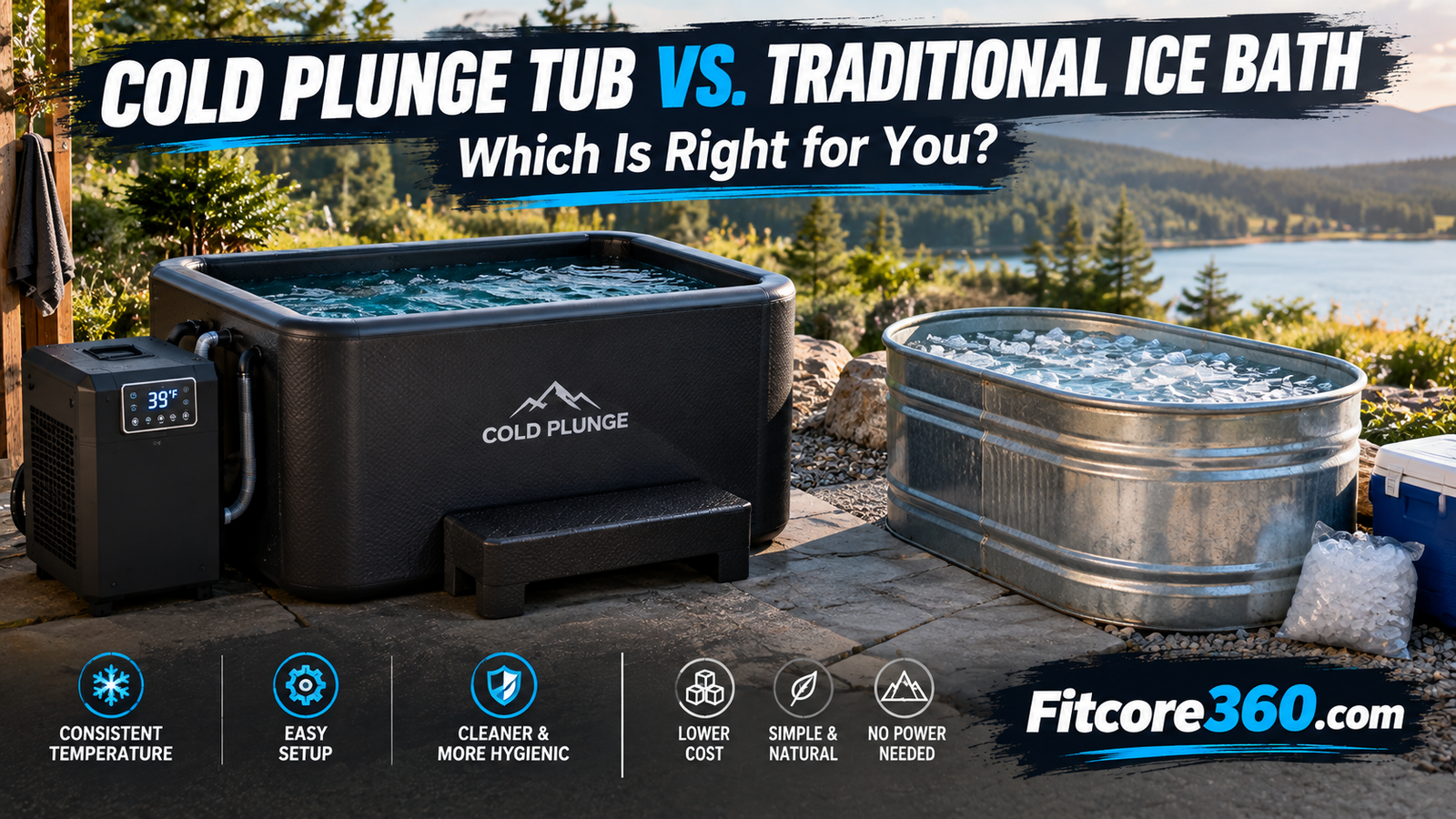
Cold Plunge vs Ice Bath: Which Cold Therapy Actually Wins?
A practical, no-fluff comparison of cold plunge tubs and DIY ice baths — cost, cooling power, recovery benefits, and which one actually fits your routine.
1. What Is a Cold Plunge?
A cold plunge is a dedicated, purpose-built tub designed to hold cold water at a consistent temperature for repeated use. Most modern units use a chiller unit, filtration system, and insulated shell so you’re not refilling the tub with bags of ice every session. Think of it as the “set it and forget it” version of cold exposure — you dial in a temperature, usually somewhere between 39°F and 55°F, and the unit maintains it automatically.
These tubs range from simple, unheated barrel-style plunges that rely on ambient cold and occasional ice, up to full chiller-and-filter systems that keep water clean and cold indefinitely without you lifting a finger. For anyone doing cold exposure more than once or twice a week, this consistency is the whole appeal.
It helps to think of cold plunges as falling into three tiers rather than one product category. The first tier is passive: insulated barrels, cedar tubs, and rigid shells with a lid and a drain, but no refrigeration at all. They hold cold well once you get the water down, but you still bring the cold yourself. The second tier is chiller-ready — a tub sold on its own with fittings for a chiller you buy separately, which is how a lot of people upgrade gradually without replacing the whole setup. The third tier is the all-in-one: shell, chiller, pump, and filter engineered together, often with an app or control panel, ozone or UV sanitation, and a temperature range that runs from near-freezing up into hot-tub territory for contrast work.
The distinction matters because a huge share of the “cold plunge vs ice bath” confusion online comes from comparing tier one against a proper ice bath, which is nearly the same thing, and then quoting tier three prices. If you are shopping, decide which tier you’re actually pricing before you decide whether a plunge is worth it.

2. What Is an Ice Bath?
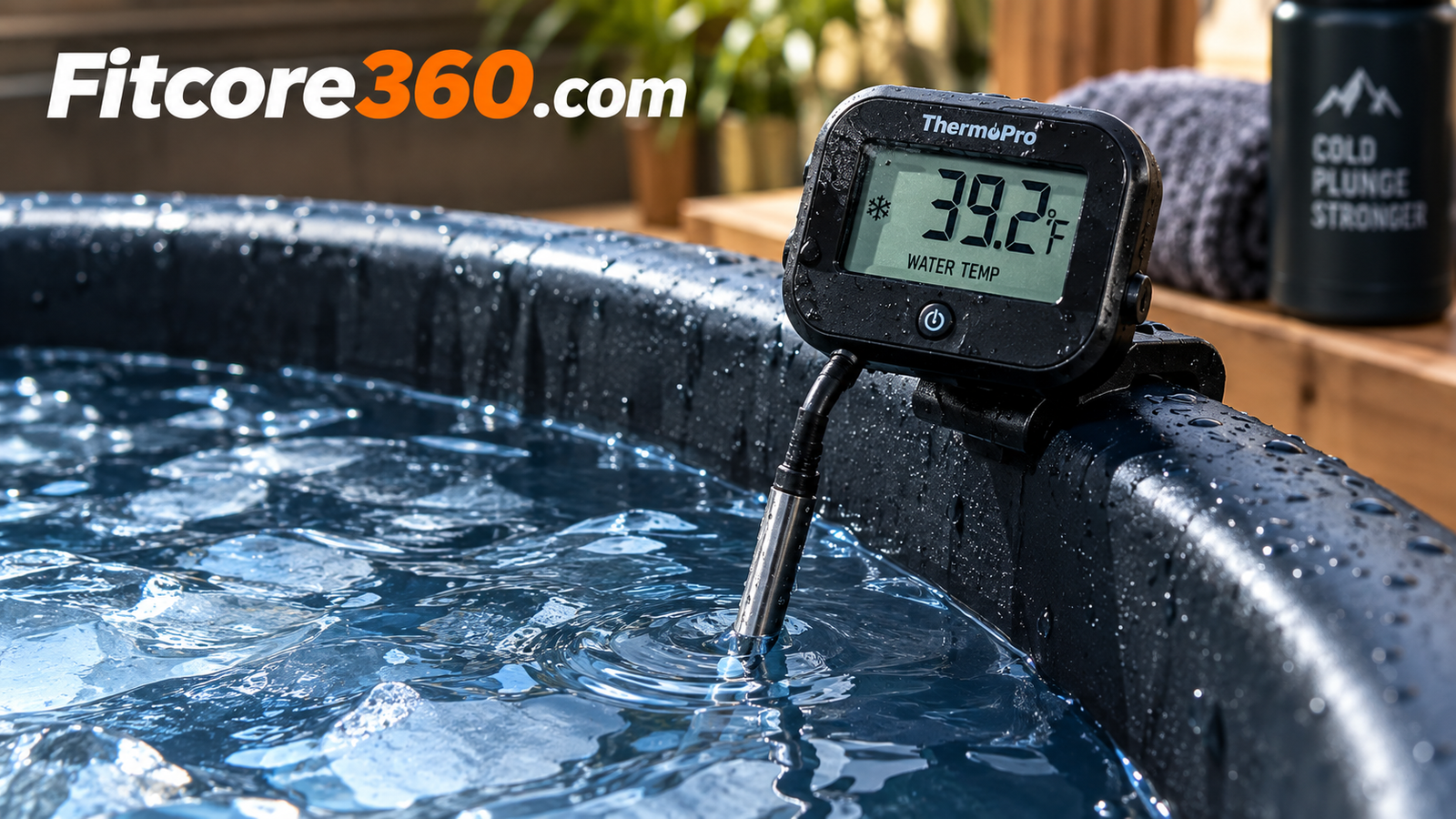
An ice bath is the low-tech original: any tub, trough, stock container, or even a bathtub, filled with cold water and manually lowered in temperature using bagged or block ice. There’s no chiller, no filtration loop, and no automation — just water, ice, and a thermometer if you’re being precise about it.
This is the version most people picture when they think of cold therapy, largely thanks to viral videos of athletes climbing into a livestock trough full of ice. It’s cheap to start, requires almost no setup knowledge, and can be done anywhere you can source ice and a container.
The containers people actually use fall into a few predictable buckets. Galvanized stock tanks are the classic — durable, roomy, and available at any farm supply store, though they conduct heat quickly and lose cold fast without insulation. Inflatable barrel tubs have taken over the budget end because they pack down to the size of a backpack and include a lid and a cover. Then there’s the humble bathtub, which costs nothing extra but ties up your bathroom and makes drainage trivially easy. Chest freezers converted into plunges sit in their own awkward category: cheap to run, genuinely cold, and an electrical safety problem unless the conversion is done properly.
Ice Bath Pros
- Very low upfront cost
- No electricity or plumbing needed
- Simple to understand and start today
- Easy to abandon if you decide it isn’t for you
Ice Bath Cons
- Ongoing ice cost adds up fast
- Temperature drifts as ice melts
- More manual labor per session
- Freezer space becomes a bottleneck
3. Temperature & Cooling Power
This is where the two methods diverge most. A chiller-based cold plunge holds a set temperature within a degree or two for the entire session, and every session after that, because the unit is actively refrigerating the water. An ice bath’s temperature is a moving target — cold at the start, warmer by the end, and dependent entirely on how much ice you dumped in and the ambient room or outdoor temperature.
| Factor | Cold Plunge (Chiller) | Ice Bath (Manual) |
|---|---|---|
| Temperature stability | Consistent, ±1–2°F | Drifts as ice melts |
| Typical range | 39°F–55°F, dialed in | 34°F–50°F, decreasing over time |
| Repeatability session to session | Identical every time | Varies with ice amount |
| Time to reach target temp | Instant (already chilled) | 10–20 minutes of prep |
There’s a subtlety worth understanding here: an ice bath is often colder than a cold plunge, not warmer. Water sitting in direct contact with melting ice hovers just above freezing, and if you climb in immediately after loading the tub you can be in water in the mid-30s — colder than most chillers are even rated to reach. That’s not automatically a good thing. The colder the water, the shorter your safe exposure window, and the more likely a beginner is to hyperventilate on entry.
The other variable nobody accounts for is water movement. Still water forms a thin warmer boundary layer against your skin, which noticeably softens the sensation. Moving water strips that layer away, so a plunge with a circulation pump running feels harsher than an ice bath at the identical reading. If you compare two setups and one feels dramatically colder at the same temperature, circulation is usually the reason.
4. Setup Time & Convenience
With a cold plunge, the work happens once — filling the tub and letting the chiller bring it to temperature. After that, it’s ready whenever you are, morning or night, with zero prep. An ice bath means a shopping trip or a freezer stockpile every single time, plus dumping and hauling ice, checking temperature, and topping off as needed.
If your routine is a daily 3-minute plunge before work, the convenience gap becomes the deciding factor fast. If you’re doing this once a month after a hard event, the extra 15 minutes of ice-bath prep barely registers.
Friction is the single best predictor of whether anyone sticks with cold exposure past month two. A three-minute plunge that requires twenty minutes of setup is a twenty-three-minute commitment, and on a cold rainy Tuesday morning that math is what makes people skip. This is the quiet argument for the chiller that has nothing to do with performance science: it removes the decision. You walk out, lift the lid, and get in before the part of your brain that negotiates has time to start.

5. Cost Comparison
Upfront, ice baths win easily — a sturdy stock tank or inflatable tub costs a fraction of a chiller-equipped cold plunge. But the ongoing ice bill for regular use quietly adds up, especially if you’re plunging multiple times a week. A cold plunge has a higher entry price but a flat, predictable cost afterward — mostly just electricity.
| Cost Type | Cold Plunge | Ice Bath |
|---|---|---|
| Upfront cost | Higher (tub + chiller) | Low (tub or container only) |
| Recurring cost | Electricity only | Ice, every session |
| Break-even point | Roughly 6–18 months of frequent use | Never fully “pays off” — costs continue |
Run the arithmetic for your own frequency rather than trusting a generic break-even claim. Take the number of bags of ice a session needs, multiply by your local bag price, multiply by sessions per week, and multiply by 52. Someone plunging five times a week with three bags per session is spending real money annually — often enough to cover a mid-range chiller inside a year. Someone plunging twice a month with one bag will never approach that threshold, and buying a chiller is simply paying for convenience they don’t need.
Two costs get left out of most comparisons. First, the freezer: many committed ice-bath users end up buying a small chest freezer to make their own ice in reusable containers, which is a real capital expense that quietly turns the “cheap” option into a mid-priced one. Second, resale. Cold plunges hold secondhand value reasonably well because the chiller is the expensive part and it is easy to test. A stock tank does not.
6. Recovery & Performance Benefits
Physiologically, cold water is cold water — your body responds to the temperature it’s submerged in, not the branding on the tub. Both a well-chilled ice bath and a cold plunge trigger vasoconstriction, reduced inflammation, and the same downstream recovery signaling, provided the water is cold enough and you stay in long enough.
The practical difference is consistency of dosage. Because a cold plunge holds a stable temperature, it’s easier to standardize your protocol — same temp, same duration, every time — which matters if you’re tracking recovery over weeks or months rather than doing it once as a novelty.
What cold exposure appears to do best is blunt the subjective side of hard training: soreness, heaviness, and the sense that your legs aren’t yours the day after a race or a brutal session. That’s genuinely useful in a congested competition schedule, where feeling ready to perform tomorrow matters more than squeezing out maximum adaptation from yesterday. Combat sports, tournament play, multi-day stage events, and two-a-day camps are the classic fits.
What it does less reliably is speed up the actual repair of damaged tissue. If your goal is long-term adaptation rather than next-day readiness, the calculus changes — which is exactly the tension covered further down in the section on muscle growth.
7. Mental Health & Stress Benefits
Cold exposure is one of the more reliable non-drug ways to spike alertness and mood via norepinephrine release, and this benefit shows up whether you’re in a $3,000 chiller tub or a $40 stock tank full of bagged ice. What changes the mental-health payoff more than the equipment is whether you actually do it consistently — and for many people, the lower-friction option (whichever one that is for their setup) is the one that sticks.
There’s a second mechanism that gets less attention and might matter more: deliberate exposure to a controllable stressor. Getting into cold water is unpleasant, entirely voluntary, and over in a few minutes. Practicing calm in that window — slow exhale, relaxed shoulders, no thrashing — is essentially interoceptive exposure training, and people frequently report that the skill transfers. The tub becomes a rehearsal space for staying composed when your body is screaming.
That framing also explains why the mood lift often outlasts the session by hours. It isn’t only the chemistry; it’s the small daily proof that you did a hard thing on purpose before most people were awake.
8. Maintenance & Hygiene
A cold plunge with a filtration and sanitation system stays clean across many uses with minimal effort — similar to a small spa. An ice bath, especially one you drain and refill regularly, needs more manual attention: draining, wiping down, and refilling with fresh water and ice each time to avoid buildup.
Cold Plunge Maintenance
- Built-in filtration keeps water usable for weeks
- Sanitizing systems reduce manual cleaning
- Fewer refill cycles overall
Ice Bath Maintenance
- Manual draining and refilling required
- No filtration means water quality drops fast
- More frequent cleaning needed
The honest caveat on “filtration keeps water clean for weeks” is that it only holds if you do your part. Cold water slows microbial growth but does not stop it, and the things that foul a plunge fastest are the things you carry in: sweat, sunscreen, body lotion, hair product, and dead skin. Showering before you get in does more for water clarity than any single piece of equipment, and it’s free.
9. Space & Portability
Ice baths generally win on portability — many fold flat or pack down small, and you can set one up in a backyard, garage, or even a hotel room with enough ice. Cold plunges with chillers are heavier, need a power outlet, and are usually meant to live in one spot, whether that’s a patio, garage, or dedicated recovery room.
Weight is the specification people underestimate. Water is roughly eight pounds per gallon, so a modest 100-gallon tub is around 800 pounds of water alone before you add the shell and a person. That’s fine on a concrete slab or compacted ground and a genuine structural question on a wooden deck, an apartment balcony, or an upstairs room. Check what’s underneath before you fill anything, not after.
10. Safety Considerations
Both methods carry the same core risks: cold shock response, and overexposure in very cold water. Never plunge alone in extremely cold water, ease in gradually rather than jumping, and keep sessions to a few minutes rather than pushing endurance records. People with cardiovascular conditions should get medical clearance before starting either method.
Cold shock response is the first and most dangerous phase. In the opening thirty to sixty seconds, sudden immersion triggers an involuntary gasp followed by rapid, uncontrollable breathing and a sharp rise in heart rate and blood pressure. If your face goes under during that gasp, water goes in. This is why you enter slowly, keep your head above the surface until your breathing settles, and never treat a plunge as a place to hold your breath.
After the shock phase comes the part people ignore: progressive loss of manual dexterity and muscle function in the cold. Long before hypothermia is a concern, your hands stop gripping well and your legs get clumsy, which matters when climbing out of a slippery tub. Plan your exit while you still have coordination.
Two hard rules deserve emphasis. Never combine cold plunging with alcohol, cannabis, or sedatives — they impair judgment and the body’s thermal response at exactly the wrong moment. And never use hyperventilation breathing techniques immediately before or during immersion; the combination of breath-holding practices and cold water is associated with shallow-water blackout, and it is a leading contributor to serious cold-water incidents.

11. Who Should Choose Which
Choose a Cold Plunge If…
- You plunge 3+ times per week
- You want zero prep time per session
- You have a permanent spot and power access
- Consistent temperature matters to your training
Choose an Ice Bath If…
- You’re testing cold therapy before investing
- You plunge occasionally, not daily
- Budget or portability is the priority
- You don’t have a dedicated setup space
A middle path suits more people than either extreme: start with an insulated tub and bagged ice for a season, keep an honest log of how often you actually use it, and add a chiller only if the number holds up. Chillers are sold separately for exactly this reason, and buying the shell first means your trial run isn’t wasted money if you upgrade — or if you don’t.
12. Pairing With Sauna & Recovery Tools
Many people alternate cold exposure with heat — sauna, hot tub, or infrared panels — as a contrast therapy routine. If you’re building a full recovery setup, worth checking out our guide on the best infrared saunas for home use, and if you’re still deciding whether cold plunging is worth it at all, our breakdown of what the science actually says about cold plunge benefits is a good next read. Beginners should also see our beginner cold plunge protocol before jumping into either option.
A Simple Contrast Protocol
A widely used structure is three rounds of roughly ten to fifteen minutes of heat followed by one to three minutes of cold, with a few minutes of neutral rest between rounds. Finish on heat if you want to end relaxed and sleep soon after; finish on cold if you want to end alert and get on with your day. The ordering matters more than the exact minutes.
Contrast work is also where the equipment question resolves itself in favor of a stable-temperature plunge. Cycling in and out repeatedly dumps a lot of body heat into the water, and an ice bath that started at 45°F can be meaningfully warmer by round three. A chiller simply pulls it back down between rounds.
Beyond heat, the tools that pair best are the low-tech ones: compression, elevation, a foam roller, and sleep. Cold exposure is a small lever compared with sleeping eight hours, and it works best as the last ten percent of a recovery plan rather than the first ninety.
13. How Much Ice Do You Actually Need?
“How much ice for an ice bath” is one of the most searched questions in this whole category, and most answers dodge it. The honest answer is that it depends on three things: how much water you’re cooling, how warm that water starts, and how cold you want to end up. Tap water in July might come out of the hose at 75°F; the same tap in January might be closer to 50°F. That difference alone can halve or double your ice bill.
As a working rule of thumb, cooling a tub of roughly 80 to 100 gallons from summer tap temperature down into the low 50s tends to take somewhere in the range of 30 to 50 pounds of ice — call it two to four standard bags. Getting the same tub into the 40s can easily double that. In winter, when your starting water is already cool and the ambient air is helping rather than fighting you, one bag might be enough.
| Scenario | Starting water | Target | Rough ice needed |
|---|---|---|---|
| Summer, uninsulated stock tank | ~75°F | Low 50s | Heavy — several bags |
| Summer, insulated tub with lid | ~72°F | Low 50s | Moderate |
| Spring/fall, insulated tub | ~60°F | Upper 40s | Light to moderate |
| Winter, outdoor tub | ~45°F | Upper 30s–40s | Minimal or none |
Ways to Use Dramatically Less Ice
- Insulate the tub. A closed-cell foam wrap, a rigid lid, and something between the tub and the ground will cut ice consumption more than any other single change.
- Pre-chill overnight. Fill the tub the night before and cover it. Overnight air does free cooling work, especially outside of summer.
- Reuse the cold water. Don’t dump a tub that’s still at 55°F. Top it with a little ice next session instead of starting from tap temperature again.
- Freeze your own blocks. Large frozen blocks in sealed jugs melt slower than cubed ice and cost nothing but freezer space. Keep them sealed so you’re not diluting the tub.
- Use less water. A tub sized so water covers you to the collarbone while seated uses far less volume — and therefore far less ice — than one you could lie down in.
One caution on frozen jugs: sealed containers of ice float and can knock against you, and you want the water to be genuinely mixed before you get in. Stir the tub after loading, check the temperature at mid-depth rather than at the surface, and give it a minute to equalize. The reading right next to a melting block is not the temperature your body will experience.
14. Chiller Types Explained
If you go the cold plunge route, the chiller is the component that determines whether you’re happy for five years or annoyed within five months. It’s also where spec sheets get deliberately vague, so here’s what actually matters.
Horsepower and Cooling Capacity
Chillers are usually advertised in horsepower — quarter, third, half, one — but horsepower alone tells you little without knowing the tub volume, insulation quality, and ambient temperature it has to fight. A half-horsepower unit on a well-insulated 80-gallon tub in a garage is comfortable. The same unit on an uninsulated stock tank on a sunny patio in Texas will run constantly and still struggle. Undersized chillers don’t fail dramatically; they just never quite reach the temperature on the dial, which is worse because you keep wondering whether it’s you.
Pull-Down Rate vs Hold
Two different jobs. Pull-down is how fast the unit cools the tub from ambient to target on first fill; hold is how easily it maintains that target afterward. Holding is easy, pulling down is hard — which is why a modestly sized chiller is fine if you leave it running continuously, and painful if you drain and refill weekly.
Integrated vs Standalone
Integrated systems bundle chiller, pump, and filter into one enclosure with one plug and one control panel. They’re tidier and simpler, but a failure often means the whole unit goes back to the manufacturer. Standalone chillers plumbed to a separate pump are less elegant and more serviceable — you can replace a failed pump for a small fraction of the cost of a whole system.
Noise
An underrated spec. A chiller is a refrigeration compressor with a fan, and it makes roughly the noise you’d expect from a window air conditioner. Outdoors that’s a non-issue. Under a bedroom window or in an attached garage that shares a wall with a nursery, it very much is. If the listing doesn’t state a decibel figure, assume it’s loud enough to notice.
Heating Function
Many mid-range and premium units both chill and heat. If contrast therapy interests you, or if you want a warm soak in winter without a second appliance, this feature is worth the premium. If you only ever plan to go cold, it’s a spec you’ll pay for and never use.
15. Water Treatment & Sanitation
Water quality is where the ice bath’s simplicity becomes a genuine liability and where cold plunges justify part of their price. Every session you deposit sweat, skin oils, hair, sunscreen, and whatever bacteria you brought with you into a container of standing water. Cold slows that down considerably, but “slow” is not “stopped,” and cloudy, slimy, or sour-smelling water is the most common complaint from people a few months into either setup.
The Main Approaches
- Mechanical filtration. A pump pushing water through a cartridge filter removes particulates — skin, hair, debris. It does nothing to kill microbes, but it keeps the water visually clear and stops the filter-clogging gunk from building up.
- Ozone. An ozone generator injects O₃ into the circulation loop, oxidizing contaminants. It’s effective, leaves no residue, and is common on mid- and upper-tier plunges. It works while circulating, so it needs the pump running on a schedule.
- UV-C. Water passes a UV lamp that disables microorganisms in the flow. Like ozone, it’s residual-free and only treats water that actually passes through it.
- Chemical sanitizer. Small amounts of chlorine or bromine, or hydrogen peroxide in some setups, maintain a residual level of protection throughout the whole tub rather than only in the loop. It’s cheap and reliable, but requires testing and can be harsh on skin at higher concentrations.
- Drain and refill. The ice bath default. Effective, wasteful, and the reason a lot of people quietly stop testing anything at all.
Multiply your caution by the number of users. A single-person plunge is a manageable problem. A tub shared by a household or a training group is closer to a small spa and needs a real sanitation plan, not good intentions. And if anyone using it has an open wound, a skin infection, or a recent tattoo, they stay out until it’s healed — cold water does nothing to protect either them or the next person in.
16. How to Build a DIY Cold Plunge
A DIY plunge is the honest middle ground between a stock tank and a five-figure spa, and it’s a project most people can complete in a weekend. There are two main builds.
Build A: Insulated Tub Plus Chiller
Start with a rigid container — a stock tank, a large rigid tote, or a cedar or composite tub. Wrap the exterior and underside with closed-cell foam board or reflective insulation, taped at the seams. Set it on a foam base so cold isn’t wicking straight into the ground or slab. Add a drain valve at the lowest point if it doesn’t have one. Then plumb a pond or aquarium-grade chiller in a loop: pump out one side, through a filter and the chiller, back in the other. Cover with an insulated lid.
Insulation is the step people skip and shouldn’t. An uninsulated tub forces the chiller to run near-continuously, which is both the electricity bill and the lifespan of the compressor. Insulating a cheap tub well will outperform an expensive tub left bare.
Build B: Chest Freezer Conversion
The chest-freezer plunge is popular because freezers are cheap, well insulated, and get colder than most chillers. It is also the build with real hazards, because you are combining mains electricity, a compressor, and a container full of water and a person.
For most people, the honest recommendation is Build A. The cost gap has narrowed a lot as entry-level chillers have come down in price, and you end up with a system designed for the job rather than one improvised around it.
DIY Materials Checklist
- Rigid tub sized so seated water hits your collarbone
- Closed-cell foam insulation and foil tape
- Insulated lid or cover
- Drain valve and hose fitting
- Circulation pump rated for continuous duty
- Inline cartridge filter
- Chiller sized to your volume and climate
- Floating or probe thermometer
- Non-slip mat for entry and exit
17. Electricity Use & Running Costs
The most common objection to a chiller is the power bill, and it’s usually overstated. A chiller’s compressor doesn’t run constantly once the tub is at temperature — it cycles on when the water drifts above the setpoint and off when it’s back. In a well-insulated, covered tub, that duty cycle can be surprisingly low.
The variables that actually drive consumption are insulation quality, lid discipline, ambient temperature, setpoint, and tub volume. A covered, insulated 80-gallon tub held at 50°F in a temperate garage is inexpensive to run. The same tub held at 38°F, uncovered, on a sunny patio in August, is a different appliance entirely.
| Factor | Raises running cost | Lowers running cost |
|---|---|---|
| Insulation | Bare shell, no base insulation | Foam-wrapped shell and base |
| Lid use | Left open between sessions | Closed whenever not in use |
| Setpoint | Very cold (upper 30s) | Moderate (48–55°F) |
| Location | Direct sun, hot garage | Shade, cool basement |
| Volume | Large soaking tub | Compact seated tub |
A useful comparison: for most households the chiller lands somewhere between a second refrigerator and a dehumidifier in monthly cost — noticeable on a bill if you look for it, not transformative. Set against several bags of ice a week, it usually comes out ahead for frequent users and behind for occasional ones, which is the same conclusion the upfront-cost math reached.
If you want to know your real number rather than an estimate, a plug-in energy meter costs very little and will tell you exactly what your unit draws in your climate, at your setpoint, in your routine. That’s worth more than any published figure.
18. Cold Plunge vs Cold Shower vs Cryotherapy
Full immersion isn’t the only form of deliberate cold exposure, and the alternatives differ enough that they aren’t interchangeable.
| Cold shower | Ice bath / cold plunge | Whole-body cryotherapy | |
|---|---|---|---|
| Medium | Running water on skin | Full water immersion | Very cold dry air/vapor |
| Heat transfer | Partial, uneven | High, whole-body | Rapid but surface-limited |
| Typical duration | 1–5 minutes | 1–5 minutes | 2–3 minutes |
| Cost | Free | Low to high, one-time or ongoing | Per-session fee, ongoing |
| Convenience | Highest | Moderate | Requires a facility |
| Best for | Daily habit, alertness | Recovery dosing, full immersion | Quick sessions without getting wet |
Water conducts heat away from the body far more efficiently than air does, which is why 40°F water feels punishing while 40°F air is a jacket. That’s the core reason a cryotherapy chamber can run at wildly colder air temperatures than any plunge and still be tolerable for a couple of minutes: it’s chilling the skin hard without cooling deeper tissue nearly as much.
For a beginner, cold showers are the correct starting point and the most underrated tool on the list. They cost nothing, require no equipment, and let you practice the breathing and the mental side before you commit to a tub. Many people find the shower alone delivers most of the alertness and mood benefit they were after, and never need to buy anything.
19. Cold Exposure and Muscle Growth
This is the most important nuance in the entire topic, and it’s routinely left out of equipment comparisons because it complicates the sales pitch. There is a reasonable body of evidence suggesting that immersing yourself in cold water soon after resistance training may blunt some of the signaling that drives muscle growth and strength adaptation over time. The inflammatory response you’re suppressing is partly the same response that tells the muscle to rebuild bigger.
This does not mean cold plunging is bad. It means timing and goals interact.
Cold Right After Lifting Makes Sense When…
- You compete again within 24–48 hours
- You’re in a dense tournament or stage-race schedule
- Feeling fresh tomorrow matters more than long-term gains
- You’re managing overall training load in a heavy block
Separate Them When…
- Hypertrophy or strength is your primary goal
- You’re in a building phase, not a competition phase
- You lift hard 3–5 times a week year-round
- You mainly plunge for mood and alertness anyway
The practical fix is simple: if you lift for size or strength, don’t plunge immediately after lifting. Move the plunge to the morning, to a rest day, or to several hours after training. You keep essentially all of the mood, alertness, and habit benefits and sidestep the interference question entirely.
Endurance athletes appear to be less affected by this concern, since the adaptations that matter most to them are less dependent on the same local inflammatory pathway. Cold after a hard run or ride is a much less controversial choice than cold after a heavy squat session.
20. Timing: When to Plunge
Once you accept that timing changes the outcome, the schedule question becomes worth thinking about rather than defaulting to “whenever.”
Morning
The most popular slot, and for good reason. A cold plunge early produces a sharp, durable lift in alertness that many people prefer to a second coffee, and doing it first thing removes the chance for the day to eat the plan. It also puts maximum distance between the cold and an evening training session.
Post-Workout
Best reserved for competition periods, conditioning work, or endurance sessions. If you lift for size, see the previous section and shift it.
Evening
More divisive. Cold exposure is stimulating, and for some people a late plunge makes falling asleep harder. Others find the rebound — the gradual rewarming afterward — relaxing enough that it helps. If you want to try evenings, finish at least ninety minutes before bed and pay attention to how the first week goes.
Frequency
There’s no magic number. A commonly cited target is a total of roughly eleven minutes of cold exposure per week, spread over two to four sessions, which conveniently maps to three or four sessions of about three minutes each. That’s a reasonable starting structure, not a rule. More is not automatically better; cold is a stressor, and stacking it on top of heavy training, poor sleep, and a calorie deficit is how people end up feeling worse rather than better.
21. Metabolism, Brown Fat & Weight
Cold exposure gets marketed as a weight-loss tool, and this is where expectations need managing. The mechanism is real: cold activates brown adipose tissue, which burns energy to generate heat, and repeated exposure appears to increase brown fat activity over time. Shivering itself also burns energy.
The problem is magnitude. The number of calories a few minutes of cold immersion burns is small — comparable to a short walk — and the body is good at compensating, often through increased appetite afterward. Anyone who has climbed out of a cold tub and immediately wanted a large hot meal has experienced this firsthand.
The fair framing: cold exposure is a plausible small contributor to metabolic health, particularly around insulin sensitivity and glucose handling in some research, but it is not a fat-loss strategy. If weight is the goal, the plunge belongs in the same category as standing desks — mildly helpful, entirely secondary to diet, sleep, and training volume.
One related habit worth knowing: rewarming passively rather than jumping into a hot shower is thought to extend the metabolic response, since your body does the heat generation instead of the plumbing. It also reduces the dizziness some people get from rapid rewarming. Get out, dry off, put on warm clothes, and move around gently.
22. Immune Function & Sickness
A frequently cited finding is that people who finish their daily shower with a cold rinse report fewer sick days — not necessarily fewer infections, but fewer days where illness kept them from working. That’s an interesting result, and a more modest claim than “cold plunging boosts your immune system,” which is the version that ends up in marketing copy.
What can be said with more confidence is that acute cold exposure produces a short-term mobilization of immune cells and a temporary inflammatory and hormonal response. Whether repeated doses of that translate into meaningfully better resistance to illness in a typical adult is not settled.
Two practical points matter more than the mechanism debate:
- Don’t plunge while actively ill. If you have a fever, a chest infection, or anything that already has your cardiovascular system working harder, adding a cold stressor is a bad trade. Wait until you’re recovered.
- Don’t plunge when badly under-recovered. After a night of terrible sleep, in a steep calorie deficit, or in the middle of a brutal training block, the additional stress can push you the wrong way. Cold works best on top of a reasonably stable baseline.
For anyone with an autoimmune condition, Raynaud’s phenomenon, cold urticaria, a cardiovascular diagnosis, uncontrolled blood pressure, a seizure disorder, or who is pregnant, this is a conversation to have with a doctor rather than a forum. The equipment choice is trivial next to whether cold immersion is appropriate for you at all.
23. Sleep Quality & Cold Exposure
Sleep is where cold therapy’s effects are the most individual. Core body temperature naturally falls in the hours before sleep, and anything that helps that drop tends to help sleep onset. The complication is that a cold plunge doesn’t simply cool you — it triggers vasoconstriction, a stress-hormone spike, and then a rewarming rebound that can leave you warmer and more alert an hour later than when you started.
In practice, people split into two camps. Some find an evening plunge followed by slow, passive rewarming to be deeply relaxing and a reliable path into deep sleep. Others find the alertness spike lingers and lie awake. Neither group is wrong; they’re describing different responses to the same stimulus.
If sleep is your main reason for trying cold exposure, run a two-week experiment rather than following anyone’s protocol. Keep everything else constant, plunge in the evening for a week, and log sleep onset time and how you feel in the morning. Then move the plunge to the morning for a week and compare. You’ll have a better answer for your own body than any general recommendation can give you.
A gentler alternative worth knowing: a warm bath or sauna ninety minutes before bed produces a rebound cooling effect as blood returns from the skin, which many people find more sleep-friendly than cold. If contrast is part of your routine, finishing on heat in the evening and on cold in the morning is a sensible default.
24. Breathing Technique in the Water
Almost everything that separates a miserable first plunge from a manageable one is breathing. The gasp reflex on entry is involuntary, but what happens in the sixty seconds afterward is trainable, and it’s the single highest-leverage skill in cold exposure.
Before You Get In
Breathe normally. Do not hyperventilate, do not do rounds of power breathing, and do not practice breath-holds. These techniques are genuinely dangerous around water. A few slow, unforced breaths to settle is all you want.
Entry
Go in deliberately and slowly, feet first, then seat, then chest. Exhale as you lower yourself — a long, slow exhale competes directly with the gasp reflex and takes a surprising amount of the edge off. Keep your hands out of the water for the first thirty seconds if the cold in your fingers is what tips you into panic; a lot of people find hands and feet are the hardest part.
The First Minute
Aim for long exhales and shorter inhales — something like a three-count in and a six-count out. Unclench your jaw, drop your shoulders, and let your face relax. Your body will tell you that you need to breathe faster; you almost certainly don’t. If you cannot get your breathing under control within about a minute, that’s your signal to get out, not to tough it out.
The Rest of the Session
Once breathing settles, the session becomes mostly boring, which is the goal. Stay still — thrashing strips the boundary layer and makes the water feel colder for no benefit. Watch a clock or set a timer rather than counting, because time perception in cold water is unreliable in both directions.
Getting Out and Rewarming
Move slowly, use both hands, and expect your legs to be less coordinated than you think. Dry off properly, dress warm, and let yourself rewarm gradually. Mild shivering afterward is normal and part of the response. Violent shivering, confusion, or slurred speech is not — that’s an overexposure signal and warrants warming up properly and shortening future sessions.
25. Building Cold Tolerance Week by Week
Cold adaptation is real and it happens faster than most people expect. Within a couple of weeks of regular exposure, the initial shock response measurably blunts — the gasp is smaller, the breathing settles faster, and the same temperature feels less overwhelming. That’s adaptation, not toughness, and it’s the same for everyone who does it consistently.
| Phase | Temperature | Duration | Focus |
|---|---|---|---|
| Weeks 1–2 | Cold shower, or 58–60°F water | 30–60 seconds | Controlling the breath on entry |
| Weeks 3–4 | 54–58°F | 1–2 minutes | Staying still and relaxed |
| Weeks 5–8 | 50–54°F | 2–3 minutes | Consistency, 3–4 sessions weekly |
| Month 3+ | 45–50°F if desired | 2–4 minutes | Maintaining, not escalating |
Change one variable at a time. Going colder and longer in the same week is how people scare themselves and quit. Get comfortable at a temperature first, then either drop the temperature or add time — not both.
The other thing to internalize is that there is no prize at the bottom of the thermometer. Beyond a certain point, colder water buys you shorter safe exposure and more risk, not more benefit. Plenty of experienced users settle permanently in the upper 40s or low 50s because it’s sustainable, and sustainable beats impressive every time.
26. Outdoor & Winter Use
Winter flips the entire cost equation. From roughly late autumn through early spring in a cold climate, an outdoor tub may need little or no ice at all — ambient air does the work, and your main problem becomes preventing the water from freezing solid rather than getting it cold.
Freeze Protection
Standing water in pipes, pumps, and filters is what breaks in a hard freeze, not usually the tub itself. If you run a chiller-equipped plunge outdoors in a freezing climate, you have two options: keep the circulation running so water is always moving, or drain the plumbing completely for the season. Intermittent operation in sub-freezing temperatures is how equipment cracks.
Ice on the Surface
A thin skin of ice on an uncirculated tub is common and mostly cosmetic — break it and check the water temperature underneath. What you don’t want is a thick layer that hides how cold the water really is, or sharp edges near your entry point.
Exit Conditions Matter More Than Entry
In summer, climbing out into warm air is pleasant. In winter, climbing out wet into freezing air with reduced hand coordination is genuinely the riskiest part of the session. Set up so your towel, robe, and warm layers are within arm’s reach and protected from wind, and have a non-slip surface between the tub and wherever you’re heading. Ice on a deck near a plunge is an obvious hazard and a routinely ignored one.
Shorten the Sessions
Colder water means shorter exposure. The three minutes that felt fine in 52°F water in September is not the same dose in 38°F water in January, even though the number on your timer hasn’t changed. Cut duration as temperature drops.
27. Traveling With Cold Therapy
Portability is where ice baths win decisively and where a lot of frequent travelers end up keeping both setups. An inflatable tub packs into a duffel, and ice is available everywhere.
- Hotel bathtub. The simplest option. Fill with cold water, add ice from the machine down the hall in batches, and check the temperature. It’s slow and it’s a lot of trips, but it costs nothing.
- Packable inflatable tub. Sets up on a balcony or in a bathroom, drains into the shower, and packs down small. Bring a pump or choose a foot-pump model.
- Cold showers. The realistic fallback. Not identical, but enough to maintain the habit and most of the alertness benefit for a week or two.
- Hotel and gym facilities. Increasingly common at fitness-forward hotels and recovery studios. A quick check before booking can save you the whole logistics problem.
- Natural cold water. Lakes, rivers, and the sea are free and excellent — and carry their own risks. Never enter alone, know the depth and current, and understand that natural water temperature can drop sharply below the surface.
If travel is a big part of your life, this is a legitimate argument for starting with a portable tub even if you eventually want a chiller at home. The portable one never becomes useless; it just becomes the travel unit.
28. Buying Checklist & Specs That Matter
Whether you’re buying a full plunge or a tub for manual ice, these are the specifications that predict satisfaction — and the ones that don’t.
| Spec | Why it matters | What to look for |
|---|---|---|
| Interior dimensions | Determines whether you fit comfortably seated | Water to collarbone when seated; check your own height |
| Water volume | Drives ice needs, chiller sizing, and fill time | Smallest volume that still covers you |
| Insulation | Biggest lever on ice and electricity cost | Insulated walls, base, and a rigid lid |
| Chiller capacity | Whether it actually hits the dialed temperature | Sized for your volume and your climate |
| Filtration/sanitation | How often you drain and refill | Cartridge filter plus ozone or UV |
| Drain design | How annoying emptying is | Low drain with hose fitting, not tipping the tub |
| Entry and exit | Safety, especially in winter | Non-slip surfaces, handles, a step if it’s tall |
| Warranty and support | Chillers are the failure point | Separate warranty terms for shell vs chiller |
| Noise rating | Whether you can run it near living space | Published decibel figure; assume loud if absent |
Specs That Matter Less Than the Marketing Suggests
- Minimum temperature below the upper 30s. You almost certainly won’t use it, and if you do, not for long.
- App connectivity. Pleasant, rarely decisive. A physical dial that works is better than an app that needs a firmware update.
- Premium shell materials. They look great. The chiller and the insulation determine the experience.
- Extra-large capacity. More water is more ice, more electricity, and longer pull-down for no added benefit unless you genuinely want to lie flat.
29. Installation, Placement & Drainage
Where you put the tub shapes how often you use it more than any feature on the spec sheet. The best plunge is the one you walk past every morning.
Surface and Load
Concrete slab, compacted gravel, or a pad rated for the load. A filled tub plus an occupant can exceed a thousand pounds concentrated in a small footprint, which is more than a lot of wooden decks and balconies are designed for. If you’re not certain, ask someone who is.
Power
A chiller needs a dedicated, GFCI-protected outlet within reach of its cord. Running a plunge on a long extension cord is a genuinely bad idea — voltage drop, cord heating, and a water-adjacent connection are a combination worth paying an electrician to avoid.
Drainage
Plan where 80 to 100 gallons goes when you empty the tub. A hose to a lawn or a floor drain is ideal; a garage with no slope toward a drain is not. If you use chemical sanitizer, check what’s appropriate for your landscaping before emptying repeatedly onto the same patch of grass.
Shelter and Shade
Direct sun is the enemy of a cold tub. Shade, an awning, or even a reflective cover meaningfully reduces how hard the chiller works and how fast ice melts. Shelter from wind also makes the exit far more pleasant in cold months.
Indoor Considerations
Indoors, add ventilation and humidity to the list. A chiller rejects heat into the room, so a small enclosed space will get warmer and damper than you expect. Garages and basements usually work; small interior rooms without airflow often don’t.
30. 10 Common Mistakes
- Going too cold, too soon. Starting at 38°F because that’s what you saw online is how first sessions become last sessions. Start warmer than you think you need to.
- Skipping insulation. The cheapest possible upgrade and the one that saves the most money over time, ignored constantly.
- Plunging straight after heavy lifting when the goal is size. Move it a few hours and keep both benefits.
- Using breath-hold or hyperventilation techniques before immersion. Dangerous around water. Breathe normally.
- Leaving the lid off. Ice melts, chillers run, bills climb, debris falls in.
- Not showering first. The single biggest driver of cloudy, short-lived water.
- Measuring temperature at the surface. Stir, then measure at mid-depth, and give it a minute to equalize.
- Chasing duration records. Beyond a few minutes you’re accumulating risk, not benefit.
- Jumping straight into a hot shower afterward. Increases dizziness risk and cuts short the rewarming response. Warm up gradually instead.
- Plunging alone in very cold water. The one mistake with the worst worst-case. Tell someone, or have someone nearby.
31. Myths vs Reality
| Claim | Reality |
|---|---|
| “A chiller tub works better than ice” | The water doesn’t know its source. Same temperature, same physiological effect — the difference is consistency and convenience. |
| “Colder is always better” | Colder shortens your safe window and raises risk. Benefits appear well before extreme temperatures. |
| “Cold plunging burns serious calories” | The direct energy cost is modest and often offset by appetite. Not a weight-loss strategy. |
| “You should push through panic breathing” | No. Uncontrolled breathing after the first minute is an exit signal. |
| “Cold therapy replaces rest days” | It’s a small lever. Sleep and training load are the big ones. |
| “Everyone should plunge daily” | Cold is a stressor. Frequency should fit your overall load, not a social media schedule. |
| “Shivering means it’s working” | Shivering means you’re cooling faster than you’re producing heat. Mild is normal; violent is a stop sign. |
| “Cold plunges cure inflammation” | They temporarily modulate an inflammatory response. That’s not the same as treating a condition. |
32. Tracking Results
Cold exposure is easy to do and hard to evaluate, because the immediate feeling is so strong that it convinces you something big is happening regardless of whether it is. If you want to know whether this is worth the money and the minutes, track something.
What’s Worth Logging
- Temperature and duration for every session — without these, nothing else is interpretable.
- Subjective soreness the morning after training, on a simple 1–10 scale.
- Sleep onset and quality, especially if you’re experimenting with evening sessions.
- Mood and alertness a couple of hours after the session, not immediately — the immediate spike tells you little.
- Training performance on your key lifts or sessions across the block.
- Resting heart rate and HRV if you already wear something that measures them. Watch the trend over weeks, not day to day.
How to Actually Test It
Run blocks, not vibes. Four weeks of consistent plunging followed by four weeks without, holding training and sleep roughly constant, will tell you more than six months of ad hoc sessions. Most people who do this discover one of two things: either the effect on how they feel is large enough that they don’t care what the mechanism is, or it’s small enough that the honest answer is they enjoy it, which is also a completely valid reason to keep a plunge.
33. Cost of Ownership Over 5 Years
Single-purchase price comparisons flatter ice baths and running-cost comparisons flatter plunges. A five-year view is fairer, and it shows why frequency is the variable that decides everything.
| Cost line | Occasional user (2×/month) | Regular user (4×/week) |
|---|---|---|
| Ice bath — equipment | One-time, low | One-time, low; possible tub replacement |
| Ice bath — consumables | Small and infrequent | Large and relentless; often the dominant cost |
| Ice bath — your time | Negligible overall | Hundreds of hours of prep across five years |
| Cold plunge — equipment | High, poorly amortized | High, well amortized |
| Cold plunge — electricity | Ongoing whether used or not | Ongoing, predictable, modest |
| Cold plunge — upkeep | Filters, sanitizer, occasional service | Filters, sanitizer, occasional service |
| Best value verdict | Ice bath, clearly | Cold plunge, usually |
Time is the line item nobody prices and everybody pays. Fifteen minutes of prep, four times a week, is roughly fifty hours a year. Whether that’s a cost or a non-issue depends entirely on what your mornings look like — but it belongs in the comparison, and it’s the reason people who plunge daily almost always end up with a chiller eventually.
34. Glossary of Terms
| Term | What it means |
|---|---|
| Cold shock response | The involuntary gasp and rapid breathing in the first 30–60 seconds of cold immersion. |
| Vasoconstriction | Narrowing of blood vessels near the skin, shunting blood toward the core in the cold. |
| Brown adipose tissue | A type of fat that generates heat by burning energy; activated by cold exposure. |
| Afterdrop | Continued fall in core temperature after you exit, as cooled blood from the limbs returns to the core. |
| Pull-down | How fast a chiller cools a tub from ambient to its target temperature on first fill. |
| Duty cycle | The proportion of time a chiller’s compressor actually runs to hold temperature. |
| Contrast therapy | Alternating heat and cold exposure in rounds within one session. |
| CWI | Cold water immersion — the general term for both ice baths and cold plunges. |
| Setpoint | The target water temperature you dial into a chiller-equipped plunge. |
| Boundary layer | The thin film of slightly warmer water against your skin in still water, stripped away by circulation. |
Frequently Asked Questions
Is a cold plunge actually better than an ice bath?
Not physiologically — cold water triggers the same response either way. A cold plunge is better for consistency and convenience if you use it often; an ice bath is better if you’re just starting out or plunge rarely.
How cold does the water need to be to work?
Most protocols target roughly 50°F to 59°F for beginners and colder for experienced users, though benefits start well before extreme temperatures.
How long should I stay in a cold plunge or ice bath?
Most people start with 1–3 minutes and build up gradually, rather than chasing long durations early on.
Can I build a DIY cold plunge instead of buying one?
Yes — a stock tank or large container with ice can function as a DIY plunge, though it lacks the chiller’s consistent temperature.
Do I need a filter for an ice bath?
Not strictly, but water quality degrades faster without one, so more frequent draining and refilling is recommended.
Is it safe to cold plunge every day?
Many people do it daily without issue, but anyone with heart conditions should consult a doctor first.
How much ice does an ice bath need?
It varies by container size and starting water temperature, but large tubs often need multiple bags to reach a meaningfully cold temperature.
Do cold plunges use a lot of electricity?
Chillers are generally efficient once at target temperature, though usage depends on ambient conditions and how often the lid is left open.
Can I use a regular bathtub as an ice bath?
Yes, filling a bathtub with cold water and ice is one of the simplest ways to try cold therapy without new equipment.
Which option is better for athletes?
Athletes who recover often tend to prefer cold plunges for the time savings and repeatable dosage across a training week.
Does water need to be replaced in a cold plunge?
With proper filtration and sanitation, water can last weeks between full changes; without it, more frequent changes are needed.
Should I plunge before or after lifting weights?
If muscle size or strength is your main goal, separate cold exposure from lifting by several hours or move it to a rest day. If you compete again within a day or two, plunging soon after can help you feel fresher.
Is a chest freezer conversion safe?
It can be done, but it combines mains electricity with water and a person, so it requires GFCI protection, a properly sealed liner, and ideally a qualified inspection. Most people are better served by an insulated tub and a purpose-built chiller.
Will cold plunging help me lose weight?
The direct calorie cost is small and often offset by increased appetite afterward. Treat it as a minor contributor to metabolic health, not a fat-loss tool.
What size chiller do I need?
It depends on tub volume, insulation quality, your climate, and your target temperature — not horsepower alone. Undersized chillers on uninsulated tubs in hot climates are the most common disappointment.
Can I leave a cold plunge outside in winter?
Yes, and it costs less to run in cold months, but plumbing must either keep circulating or be fully drained to avoid freeze damage. Exiting onto icy ground is the bigger practical hazard.
How do I stop the water from getting cloudy?
Shower before entering, keep a lid on, run circulation and filtration daily, and drain and wipe down on a schedule. Pre-entry showering makes the largest difference.
Should I plunge in the morning or the evening?
Morning suits most people because of the alertness effect and because it keeps cold away from evening training. Evening works for some but can delay sleep onset — test it for a week before committing.
Is cold plunging safe during pregnancy?
This is a question for your doctor, not a general guide. The same applies to cardiovascular conditions, uncontrolled blood pressure, Raynaud’s, cold urticaria, and seizure disorders.
What’s the difference between a cold plunge and cryotherapy?
Cryotherapy uses very cold dry air for two to three minutes and chills the skin rapidly without cooling deeper tissue as much. Water immersion transfers heat far more efficiently at a much warmer temperature.
Why does the same temperature feel colder in some tubs?
Usually water movement. Circulation strips away the slightly warmer boundary layer against your skin, so a plunge with the pump running feels harsher than still water at an identical reading.
Should I take a hot shower right after getting out?
Gradual passive rewarming is generally preferable — it reduces dizziness risk and lets your body do the heat generation. Dry off, dress warm, and move gently instead.
How long until I stop dreading it?
Most people notice the shock response blunting within about two weeks of regular sessions. It rarely becomes pleasant on entry, but it does become predictable and manageable.
Can two people share the same tub water?
Yes, with proper filtration and sanitation — but the more users, the faster water quality degrades and the more seriously you need to treat sanitation. Anyone with an open wound or skin infection should stay out.
Bottom Line: Which Should You Get?
If cold therapy is going to be a regular part of your week, a cold plunge pays for itself in convenience and consistency. If you’re still testing the waters — literally — an ice bath is the cheapest, lowest-risk way to find out before committing to bigger gear.
Shop Cold Plunge Tubs on AmazonRelated Posts
Start Here
Trap Bar
Grip Strength & Climbing
- Best Grip Trainers for Rock Climbers
- Grip Strength Exercises: Beginners vs Advanced
- How Grip Strength Improves Deadlifts & Pull-Ups
- Grip Trainer vs Finger Board: Which Is Better?
- Top 5 Grip Trainers Under $30
- Best Grip Strength Trainers Reviewed
- Crusher vs Spring vs Coil: What to Buy
- Best Portable Finger Boards for Travel Climbers
- Best Hangboards for a Home Wall Setup
Lifting Straps
- When Should You Start Using Lifting Straps?
- Do Lifting Straps Hurt Your Grip Long Term?
- Best Lifting Straps: Deadlifts vs Olympic Lifts
- Are Straps Allowed in Powerlifting Competitions?
- Best Lifting Straps for Heavy Pulls
- Best Leather Lifting Straps, Ranked & Reviewed
Chalk
Parallettes
- Low vs High Parallettes: Which Should You Buy?
- Parallette Bars vs Dip Bars: Key Differences
- Best Parallette Bars: Wood vs Steel
Battle Ropes
- Best Battle Ropes for Home Gyms
- Battle Rope vs Jump Rope: Calorie Burn Compared
- 20-Minute Battle Rope HIIT Workout
Slant Boards
- Physical Therapist-Approved Slant Board Exercises
- Slant Board Squat vs Heel-Elevated Squat
- Best Slant Boards for Home Use
- Adjustable vs Fixed Slant Boards
Balance & Wobble Boards
- Roller Board vs Wobble Board vs Rocker Board
- Best Balance Boards for Surf Training
- Balance Board vs Bosu Ball for Surfers
Inversion Tables
- Best Inversion Tables for Back Pain
- Who Should Not Use an Inversion Table
- How Long Should You Hang on an Inversion Table?
- Does Inversion Therapy Actually Work?
Resistance Bands
- Best Resistance Band Systems: Sets vs Singles
- Loop vs Tube vs Fabric Bands: Full Comparison
- Resistance Bands for Physical Therapy & Rehab
Cardio Machines
- Best Rowing Machines 2026
- 10 Best Treadmills of 2026
- Best Ellipticals for Home
- Rogue Echo Bike vs Assault AirBike
Home Gym Setup
Recovery & Muscle Stim
Rucking
Weightlifting Belts & Wraps
- Should You Wear a Belt for Every Lift?
- Lever Belt vs Prong Belt
- Best Wrist Wraps for Bench Press
- Best Weightlifting Belts for Squats & Deadlifts