How Old Do You Have to Be to Go to the Gym? The Complete Age-by-Age Guide
Gym age rules vary more than most people expect. Here is exactly what to expect at big-box chains, community centers, and school gyms, plus how younger lifters can train safely and what parents should know first.
Maybe you are fourteen and tired of watching your older cousin brag about his bench press. Maybe you are a parent whose twelve-year-old keeps asking for a membership. Either way, the same question comes up: how old do you actually have to be to go to the gym?
The honest answer is that there is no single national rule. Most gyms in the United States set their own policy, and those policies depend on insurance, equipment, staffing, and local law. Many commercial gyms let adults join at eighteen, some allow teens with a parent’s signature, and a few welcome kids as young as thirteen under supervision. Community centers and youth programs often start even earlier.
This guide walks through every age bracket, explains the reasoning behind the rules, clears up some stubborn myths, and gives practical starter advice for young lifters and their parents. If you want to keep exploring afterward, the rest of the library at FitCore360 covers everything from equipment to recovery. Always confirm the current policy with your local gym before you show up, because rules change and individual locations can differ.
The Short Answer: What Age Can You Join a Gym?
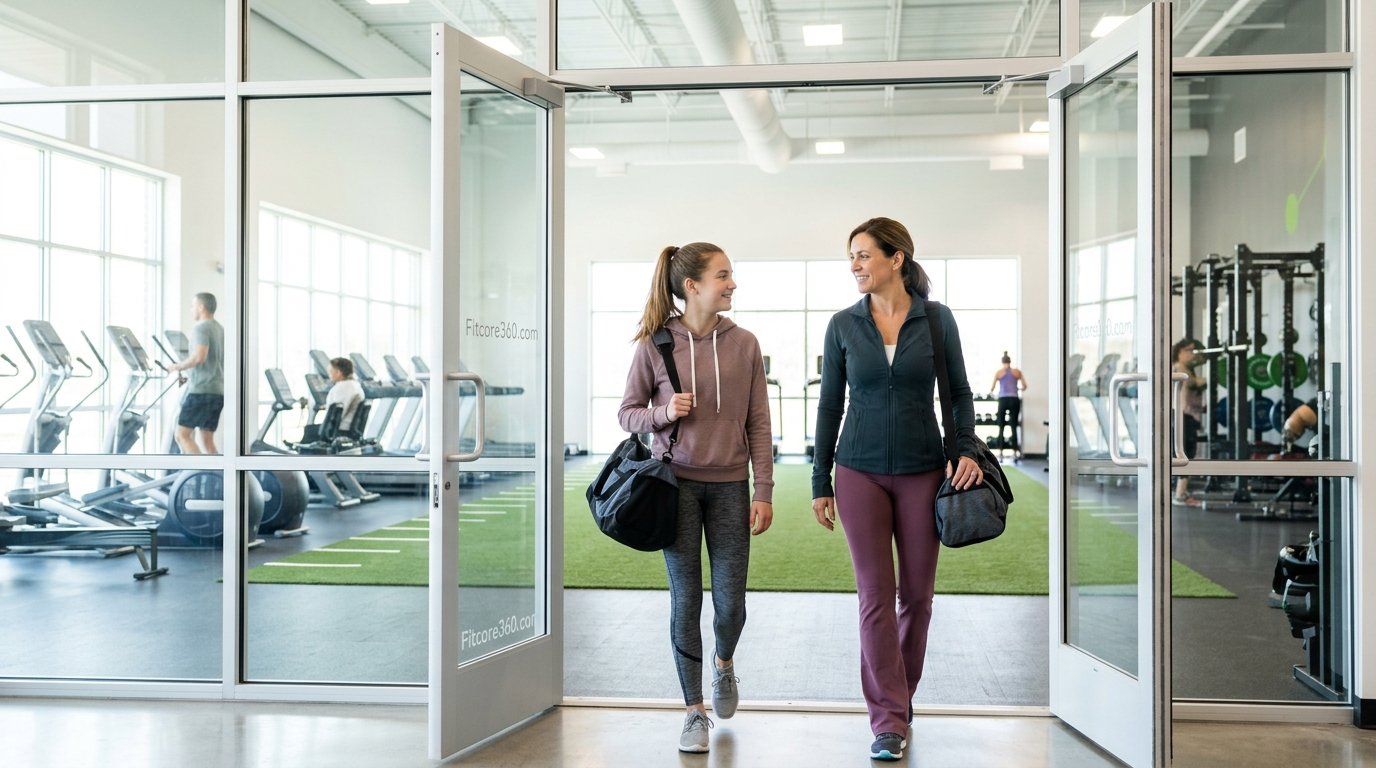
If you only have thirty seconds, here is the practical summary. Eighteen is the age at which you can sign your own membership contract nearly everywhere, so it is the most common minimum for joining without a parent. Between roughly thirteen and seventeen, many gyms will let you join with a parent or guardian’s consent, and some require that adult to be on the gym floor with you, at least for younger teens. Below thirteen, most commercial gyms say no, although youth fitness programs, YMCAs, and recreation centers often have kid-friendly options.
| Age Bracket | Typical Access | What Usually Applies |
|---|---|---|
| Under 13 | Rarely allowed at commercial gyms | Youth classes, recreation centers, sports programs |
| 13 to 15 | Sometimes allowed | Parent or guardian present, signed waiver, limited equipment |
| 16 to 17 | Often allowed | Parental consent form, sometimes a parent must co-sign the membership |
| 18 and up | Almost always allowed | Standard membership, no restrictions by age |
Notice that none of this says kids cannot exercise or build strength. The age limit is about gym policy, not about whether a young person’s body can benefit from resistance training. Plenty of children lift safely every day through school sports, coaches, and home routines. The gym is simply one possible venue.
Starting a routine at any age? A basic starter kit makes the first weeks easier.
Shop Beginner Workout Gear on AmazonWhy Gyms Set Age Limits in the First Place
People often assume age limits exist because lifting weights is dangerous for young people. In reality, the reasons are mostly legal and practical. Understanding them helps you see why one gym says fourteen while another insists on eighteen.
Liability and Insurance
Gyms carry insurance, and insurers set conditions. A minor cannot legally sign a binding contract in most places, so a waiver signed by a fifteen-year-old may not protect the business the way an adult’s would. Requiring a parent’s signature or presence shifts responsibility to someone legally able to accept it. Many gyms simply decide the cleanest solution is a firm minimum age.
Equipment Designed for Adult Bodies
Selectorized machines are built around adult limb lengths. A shorter teen or child may not fit the seat, pad, or handle positions properly, which can create awkward joint angles. Free-weight areas also have heavy plates, loaded barbells, and racks with safety pins set for adult heights. A gym may reasonably worry that a small lifter is more likely to be trapped under a bar or struggle to set up safely.
Supervision and Staffing
Many big gyms are lightly staffed. Front-desk employees are not personal trainers, and nobody is watching every rep. Younger members tend to need more guidance, and a gym that cannot provide it may choose not to admit them at all.
Culture and Comfort
Some facilities want to keep a certain atmosphere. Late-night clubs, adult-focused studios, and 24-hour locations often skip younger members entirely. Others lean the opposite way and build teen programs because they see a long-term customer in every kid who has a good first experience.
Local Laws
Some states and countries have rules about minors using certain equipment, tanning beds, saunas, or being on premises unaccompanied. A national chain may therefore have different policies at different locations. That is why you may hear conflicting answers from two friends who both attend “the same” gym brand.
Pros of Age Limits
- Clearer legal protection for the gym
- Equipment is matched to its intended users
- Fewer unsupervised injuries
- Predictable environment for adult members
Cons of Age Limits
- Motivated teens lose a safe place to learn
- Rules can feel arbitrary and inconsistent
- Families may be pushed toward unsupervised home training
- Missed chance to teach good habits early
Not ready for the gym floor? Resistance bands are friendly to nearly every age and body size.
Browse Resistance Bands on AmazonAge Rules by Type of Gym
Not all gyms are alike, and the minimum age usually follows the business model. Here is a general picture of what families tend to encounter. Treat the table as a guide for what to ask about rather than a promise, because every location sets its own rules.
| Gym Type | Common Minimum Age | Notes |
|---|---|---|
| Large commercial chains | Often 18, with teen exceptions from about 13 to 16 | Teen access usually needs a parent’s signature or presence |
| Budget or low-cost chains | Often 18; some offer teen programs | Policies differ widely by location and season |
| YMCA and community recreation centers | Often 12 to 14 for fitness floors, younger for youth programs | Teen orientations and supervised hours are common |
| Boutique studios (CrossFit, group classes) | Varies; many run teen or kids classes | Coach-led structure suits younger athletes well |
| Powerlifting or weightlifting clubs | Frequently open to youth lifters with coaching | Often more supportive of young lifters than commercial gyms |
| School and college facilities | Tied to enrollment or team membership | Strength coaches often run age-appropriate sessions |
| Hotel and apartment gyms | Often 14 to 16 unaccompanied, younger with an adult | Usually posted on a sign near the door |
Large Commercial Chains
The big names are the most common reason people ask this question. Their membership agreements are designed for adults, so the default is eighteen. Many do carve out options for teens, often requiring a guardian to sign and sometimes to accompany the teen. Policies can shift with promotions, so ask the front desk directly.
Community Centers and the YMCA
Community-based facilities usually have the most welcoming policies for young people. They often require a short orientation class before a teen can use the weight room, which is a genuinely good idea. You learn how machines work, how to move around free weights, and what the rules are.
Specialty Clubs and Coached Programs
If your goal is to learn proper lifting technique, a coached environment is often better than a general-purpose gym anyway. Many weightlifting, powerlifting, and strength-and-conditioning programs actively teach teenagers. You get supervision, progressive programming, and training partners of similar ages.
Heading to a gym orientation? Pack a quality bag, towel, and water bottle.
Find Gym Essentials on AmazonKids Under 13: Is the Gym Even the Right Place?
Most commercial gyms will not take children under thirteen on their own, and that is fine, because a typical gym floor is not designed for them. That does not mean younger children cannot build strength, coordination, and healthy habits. It simply means the best settings look different.
Play-Based Movement First
For kids in elementary school, the priority is variety. Climbing, swinging, running, jumping, crawling, tumbling, swimming, and playing sports all develop the movement skills that make later strength training easier and safer. Pediatric guidance generally favors fun and skill over heavy loading at this stage.
When Structured Strength Training Can Start
Organizations that study youth fitness generally agree that children can begin supervised strength training once they are mature enough to follow instructions and take coaching, which often falls around seven or eight years old. The emphasis at that stage is on bodyweight exercises such as squats, lunges, push-ups on a bench, planks, and light resistance band work. The goal is learning proper technique rather than lifting as much as possible.
Where to Look Instead of a Commercial Gym
- Youth sports teams: Many include strength and conditioning components led by qualified coaches.
- Gymnastics and climbing programs: Excellent for body control and relative strength.
- Recreation center classes: Kid-specific fitness, swimming, and martial arts.
- Family workouts: A parent-led routine at home or in a park can be both safe and bonding.
Light, safe tools work well here. Bands and bodyweight movements let kids build confidence without the pressure of loaded barbells. If you want to explore bands, our breakdown of loop vs tube vs fabric bands explains which style suits which exercises, and the guide to resistance band systems, sets versus singles helps you decide how much to buy.
Looking for kid-friendly gear that grows with them?
See Kids Resistance Bands on AmazonAges 13 to 15: Early Teens and Supervised Access
Thirteen is a common threshold for gyms that allow younger teens at all, and when they do, the conditions are usually tighter. A parent or guardian may need to stay with the teen throughout the visit, or the teen may be limited to certain areas of the facility. Always check, because the rule that applies to a fifteen-year-old at one location may not apply at another.
What Early Teens Can Realistically Do
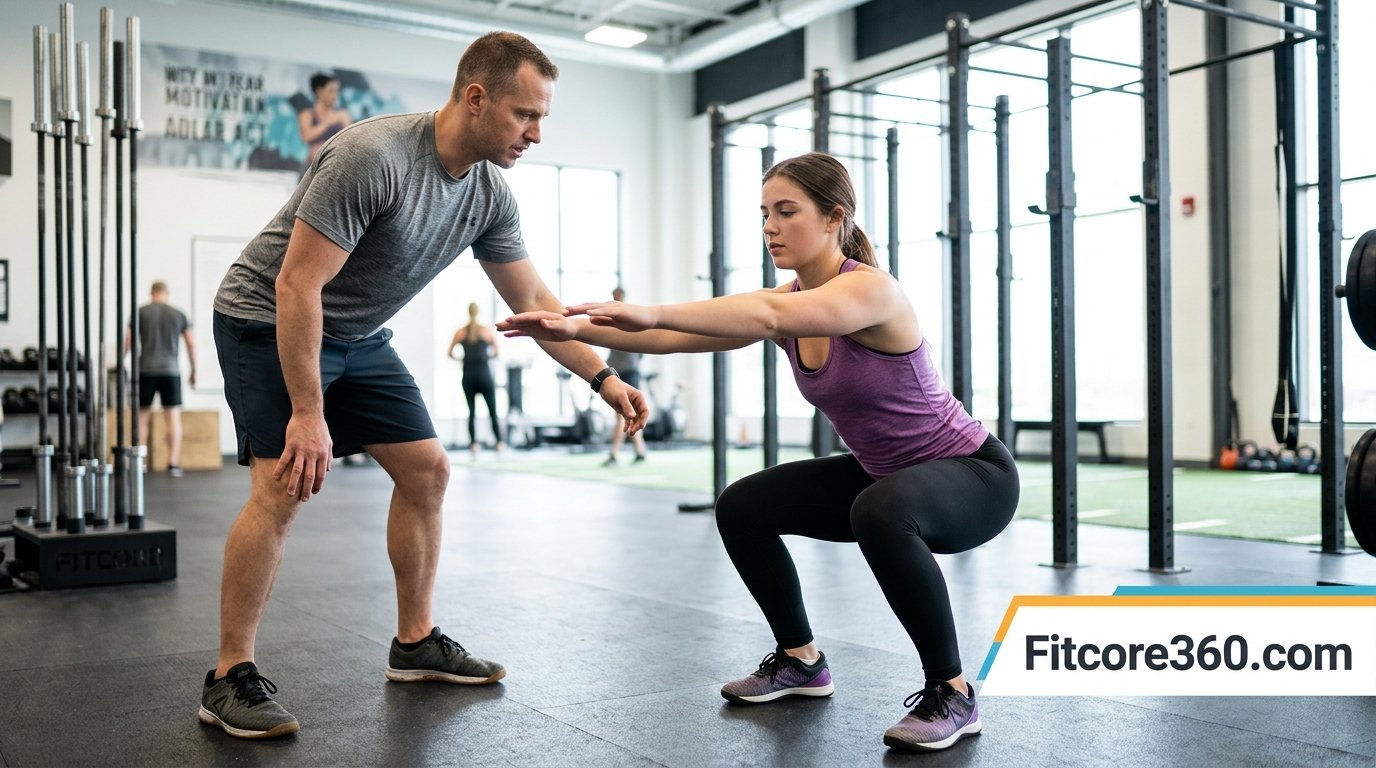
Most young teens have not finished growing, and their coordination can change quickly during growth spurts. Training works best when it focuses on movement quality. Think bodyweight exercises, light dumbbells, cable machines at modest weights, and gentle introductions to compound movements. Many coaches love starting teens on goblet squats, push-ups, rows, and hip hinges with very light loads because those patterns carry over to everything else.
Building Skills Before Chasing Numbers
The temptation at this age is to compare yourself with older lifters or social media clips. Resist it. A teen who spends a year learning clean technique and consistent habits will usually outperform a teen who rushes into heavy weights and gets injured in three months.
- Learn the basic patterns: squat, hinge, push, pull, carry.
- Use light loads that allow clean repetitions every time.
- Train two or three days a week with rest days in between.
- Warm up properly and cool down afterward.
- Track progress through technique and consistency, not maximum lifts.
Equipment to Treat Carefully
At this stage, skip maximal attempts, aggressive equipment such as heavy lifting belts used to move big loads, and anything that encourages ego lifting. Curious about belts? Our primer on whether you should wear a weightlifting belt for every lift explains why most beginners should learn without one first. The same logic applies to straps, and the article on when you should start using lifting straps makes it clear that building natural grip strength comes first.
Pros for Early Teens
- Builds confidence and body awareness
- Teaches discipline and routine
- Supports sports performance
- Creates lifelong healthy habits
Cons or Cautions
- Limited gym access and extra paperwork
- Risk of copying adult routines that are too heavy
- Machines may not fit smaller frames
- Needs reliable adult supervision
Light adjustable dumbbells are a safe, space-saving way to practice technique.
Compare Light Dumbbells on AmazonAges 16 and 17: The Sweet Spot for Many Gyms
For many commercial gyms, sixteen is where the door starts opening wider. Teens in this range are often allowed to train without a parent in the room as long as a guardian has signed the paperwork. At seventeen, plenty of facilities treat members almost like adults for day-to-day use, even though the contract may still require a parent’s name.
What You Will Probably Need to Join
- A government or school-issued photo ID, or proof of age such as a birth certificate
- A parent or guardian present at sign-up, with their own ID
- A signed consent and liability waiver
- Possibly a co-signed membership agreement and payment method from the adult
- Attendance at a short orientation, if the gym offers one
Common Restrictions
Some gyms limit minors in saunas, steam rooms, tanning areas, or certain off-peak hours. Others may restrict personal training sessions to those with a parent’s written approval. These rules are not meant to be punishing. They simply reflect legal caution.
Training Priorities at This Age
Older teens have more room to progress, but patience still pays off. A solid program mixes compound lifts, accessory work, mobility, and some conditioning. If you play a sport, your training should support it rather than compete with it. Teens heading toward powerlifting or competitive lifting might also benefit from properly fitting footwear. Our review of the best powerlifting shoes covers options that improve stability under load.
Grip, Chalk, and Pulling Work
As deadlifts and pulling movements enter the plan, grip often becomes the limiting factor. Resist the urge to rely on gear too early. Our guide to grip strength exercises for beginners vs advanced lifters shows how to build real hand strength, while the roundup of the best gym chalk for sweaty hands helps if slippery palms are the issue. Note that many gyms restrict chalk, so ask before you bring any.
Gripping better is one of the fastest ways to feel stronger on pulls.
Shop Gym Chalk on AmazonMyths About Young People and Weight Training
Few topics in fitness are surrounded by as many stubborn myths. Many of them keep parents nervous and teens confused. Let’s go through the most common ones.
Myth 1: Lifting Weights Stunts Your Growth
This idea has been repeated for decades, yet research and major pediatric organizations have not found that properly supervised resistance training harms growth in healthy children and teens. Injuries that affect growth plates are linked mostly to accidents, poor supervision, or maximal loads handled badly, not to well-designed training. Sports such as gymnastics, soccer, and football also carry injury risk, and nobody tells kids to avoid them.
Myth 2: Kids Will Get Huge Muscles
Before puberty, children do not have the hormonal environment that produces large muscle gains. They get stronger mostly through improved coordination and nervous-system efficiency. Teens can build more muscle as hormones change, but that takes time and consistent effort.
Myth 3: Machines Are Safer Than Free Weights
Machines can be useful, but they are not automatically safer. A machine that does not fit a smaller body can strain joints, while free-weight exercises with light loads and good coaching are perfectly safe. Variety usually works best.
Myth 4: You Need Heavy Weights to Get Results
Not true. Bodyweight movements, bands, light dumbbells, and medicine balls can all produce real gains, especially for beginners. Intensity should rise gradually, and technique comes first.
Myth 5: Teens Should Copy Their Favorite Athlete’s Workout
Professional athletes train under coaches, with medical support, years of conditioning, and recovery resources. Copying them is a quick way to get hurt. Build your own foundation instead.
Myth 6: You Must Wait Until Eighteen to Start
The gym’s policy may require it, but your body does not. Supervised, age-appropriate training can begin much earlier, in schools, clubs, and at home.
Good form is easier to build with a smart, simple home setup.
Shop Exercise Mats on AmazonBenefits of Youth Strength Training and What Health Guidelines Say
If gyms are cautious, health organizations are generally encouraging, as long as the training is supervised and sensible. Major public health groups recommend that children and adolescents stay active every day, and they include muscle- and bone-strengthening activity in that advice.
What the Guidelines Suggest
The World Health Organization recommends that children and adolescents aged five to seventeen get an average of at least sixty minutes of moderate-to-vigorous physical activity per day, with vigorous aerobic activity and muscle- and bone-strengthening exercises included at least three days per week. Strength work does not have to mean barbells. Climbing, jumping, and bodyweight circuits all count.
Physical Benefits
- Stronger bones: Impact and resistance exercise during growing years helps build bone density that supports lifelong health.
- Better coordination: Learning to squat, hinge, push, and pull improves balance and athletic ability.
- Injury resilience: Stronger muscles and connective tissue help protect joints during sports.
- Healthy body composition: Regular activity supports a healthy weight and metabolic health.
- Improved posture: Back and core strength help counteract hours spent seated at school or on screens.
Mental and Social Benefits
Young people who train regularly often report better mood, sleep, and confidence. They also learn goal-setting, patience, and resilience. Teens who find a supportive gym community often gain mentors and friends who share healthy habits.
Cardio Counts Too
Strength training is only one side of fitness. Heart and lung health matter just as much, and variety keeps teens engaged. Adults and older teens with access to cardio equipment can explore options like our list of the best treadmills, or low-impact choices such as the best ellipticals for home. Full-body machines like a rower are also popular, as covered in our rower machine guide.
| Activity Type | Example | Why It Helps |
|---|---|---|
| Aerobic | Running, cycling, swimming | Builds heart and lung fitness |
| Muscle strengthening | Push-ups, bands, light weights | Develops strength and coordination |
| Bone strengthening | Jumping, skipping, sports | Supports bone density |
| Flexibility and mobility | Stretching, yoga | Improves range of motion and recovery |
Skipping and jump work are some of the simplest bone-friendly activities there are.
Shop Jump Ropes on AmazonSafety Rules and Gym Etiquette for Young Lifters
Whether you are fourteen or forty, the same safety principles apply. For younger lifters, they matter even more because habits formed early tend to stick.
The Non-Negotiables
- Warm up every session. Five to ten minutes of light movement raises body temperature and prepares joints.
- Use a spotter or safety pins. Never attempt risky lifts alone.
- Choose a weight you can control. If form breaks down, the weight is too heavy.
- Stop if something hurts. Muscle fatigue is normal; sharp or joint pain is not.
- Stay hydrated and fueled. Teens are still growing and need enough food and water.
- Get enough sleep. Recovery is when the body adapts.
Etiquette That Makes You Welcome
- Re-rack weights and wipe down equipment after every use.
- Do not hog benches or machines between sets.
- Keep phone filming and photography respectful of other members’ privacy.
- Ask politely before working in or sharing equipment.
- Keep music and conversation at a considerate volume.
Gear: What Helps and What to Skip for Now
New lifters often wonder what accessories they need. The short answer is very little. A pair of flat, stable shoes, a water bottle, and comfortable clothes cover most needs. Specialty gear can come later, once the basics are solid. If you do eventually move into heavier lifting, it helps to understand your options. Our comparison of the best weightlifting belts for squats and deadlifts and the breakdown of lever belt vs prong belt are useful reading, while the guide to the best wrist wraps for bench press helps those who feel wrist discomfort on pressing days.
Flat, stable shoes make squats and deadlifts feel better right away.
Browse Training Shoes on AmazonStarter Plans by Age Group
These sample frameworks show how training might look at different stages. They are illustrations, not prescriptions. Anyone with a medical condition, injury, or specific sport demands should talk to a doctor or qualified coach first.
Ages 8 to 12: Skill and Fun
Two or three short sessions per week, around twenty to thirty minutes, built around games and simple movements. Think bear crawls, bodyweight squats, step-ups, assisted pull-ups, planks, and band rows. Keep it playful.
Ages 13 to 15: Foundations
Two to three full-body sessions per week, around forty-five minutes. Use light weights, higher repetitions (often eight to fifteen), and plenty of coaching cues. Include mobility and sport-specific drills.
Ages 16 to 17: Progressive Development
Three or four sessions per week. Blend compound lifts with accessory movements, and consider simple progressive overload: add a little weight or a repetition over time when form is solid.
| Age Group | Sessions / Week | Typical Rep Range | Main Focus |
|---|---|---|---|
| 8 to 12 | 2 to 3 | 10 to 15, bodyweight and bands | Fun, coordination, basic technique |
| 13 to 15 | 2 to 3 | 8 to 15, light loads | Movement patterns, consistency |
| 16 to 17 | 3 to 4 | 5 to 12, moderate loads | Progressive strength, sport support |
| 18 and up | 3 to 5 | Varies by goal | Strength, muscle, fitness goals |
A Sample Full-Body Day for Beginners
- Warm-up: five minutes light cardio, plus dynamic stretches
- Goblet squat: 2 to 3 sets of 8 to 12
- Push-up or incline push-up: 2 to 3 sets
- Dumbbell or band row: 2 to 3 sets of 10 to 12
- Romanian deadlift with a light load: 2 sets of 8 to 10
- Plank: 2 to 3 holds for comfortable duration
- Cool-down stretch
Hanging and carrying movements also help develop hand and forearm strength. A few simple grip strength trainers or a budget-friendly pick from the top 5 grip trainers under $30 can supplement training, though they are never essential for beginners.
Pros of Structured Plans
- Clear progress and fewer wasted workouts
- Lower injury risk
- Easier for parents to supervise
- Builds motivation through milestones
Cons or Limits
- Can feel rigid if a young lifter wants variety
- May need adjusting around school and sports seasons
- Generic plans ignore individual differences
- Needs periodic review by a coach
A good training journal helps young lifters track progress and stay consistent.
Find Workout Logbooks on AmazonToo Young for the Gym? Train at Home Instead
If a gym membership is not available yet, a home setup can be an excellent alternative. It does not need to be fancy or expensive. A little floor space and a handful of tools cover most beginner needs.
Start With the Space
You do not need a dedicated room. A corner of a garage, bedroom, or basement works fine. Our home gym setup guide walks through planning space, budget, and priorities. Protecting floors and reducing noise is smart, so check the roundup of the best home gym flooring before you buy anything heavy.
Affordable, Teen-Friendly Equipment
- Resistance bands: Cheap, safe, and versatile. See resistance bands for physical therapy and rehab for gentle ways to use them.
- Light dumbbells or kettlebells: Great for squats, presses, and rows.
- Parallettes: Excellent for push-ups, L-sits, and bodyweight skills. Compare options in best parallette bars, wood vs steel, and learn how they differ from dip bars.
- Jump rope or battle rope: Fun conditioning. The comparison of battle rope vs jump rope calorie burn is a good starting point, and a short 20-minute battle rope HIIT workout shows how to use them.
- Sandbags: Awkward, useful, and forgiving. Learn more in best sandbags for training.
Scaling Up Later
When a family is ready to invest, an all-in-one machine can be a smart pick. Our best all-in-one home gyms review compares systems that offer many exercises in a compact footprint. For lifters ready for deadlift variations with a friendlier setup, trap bars are popular, and the question of how much a trap bar weighs is worth knowing before you load it.
Recovery Habits Count Too
Older teens and adults sometimes wonder about cold exposure after hard workouts. If that interests you, read cold plunge vs ice bath and what the science actually says about cold plunge benefits. Young people should skip extreme recovery tools and check with a doctor first. Mobility work, sleep, and good food matter more.
Build a safe, compact starter home gym for a young lifter.
Explore Home Gym Starter Gear on AmazonAdults, Older Lifters, and How to Pick the Right Gym
We have focused on minimum ages, but it is worth saying plainly: there is no upper age limit for going to the gym. People in their sixties, seventies, and beyond lift weights, swim laps, and take classes. Strength training is widely recommended for older adults because it helps preserve muscle, bone density, and balance. If you are returning after a long break or have health conditions, a conversation with your doctor is a smart first step.
For Older or Returning Members
- Start lighter than you think you need to.
- Ask about senior-friendly classes and off-peak hours.
- Consider a few sessions with a qualified trainer to review technique.
- Prioritize balance and mobility along with strength.
Balance and posture tools such as slant boards can be helpful for mobility work. If you want to explore them, see our guides on the best slant boards for home use and physical therapist approved slant board exercises.
How to Choose a Gym at Any Age
| What to Check | Why It Matters |
|---|---|
| Age and guardian policy | Avoids surprises at sign-up |
| Cleanliness and equipment condition | Safety and comfort |
| Trainer qualifications | Look for recognized certifications |
| Orientation or onboarding | Helpful for beginners and teens |
| Contract terms and cancellation | Know your commitment before you pay |
| Hours, crowding, and location | Consistency depends on convenience |
Questions to Ask on a Tour
- What is the minimum age, and what changes between ages thirteen and seventeen?
- Is a parent required to be on the floor?
- Are there any restricted areas, such as free weights or saunas?
- Do you offer a trial, orientation, or teen program?
- How does cancellation work if a family’s schedule changes?
Whatever your age, the right gear makes training more enjoyable.
Shop Fitness Accessories on AmazonFrequently Asked Questions
How old do you have to be to go to the gym alone?
For most commercial gyms the age for unaccompanied use is sixteen to eighteen, though policies vary by location. Some allow younger teens only with a parent present. Always confirm directly with your local gym.
Can a 13-year-old go to the gym?
At some gyms, yes, usually with a parent or guardian present and a signed waiver. Others set the minimum higher. Community centers and youth programs often welcome thirteen-year-olds more readily than large commercial chains.
Can a 12-year-old go to the gym?
Most commercial gyms do not admit twelve-year-olds on their own. Youth programs, recreation centers, and sports teams are better options. A twelve-year-old can still build strength safely with bodyweight exercises and coaching.
Is it safe for a teenager to lift weights?
Yes, when training is supervised, technique is emphasized, and loads are appropriate. Major pediatric and fitness organizations support youth resistance training as part of a balanced program. The main risks come from poor form, maximal lifts, and lack of supervision.
Does lifting weights stunt growth?
No evidence shows that properly supervised strength training stunts growth in healthy young people. Injuries to growth plates are generally linked to accidents or unsafe practices, not to well-designed programs.
Do I need my parents’ permission to join a gym if I’m under 18?
Almost always. Minors typically need a parent or guardian to sign the membership agreement and waiver. Some gyms also require the adult to be present at sign-up with identification.
What documents do I need to join a gym as a minor?
Usually a photo ID or proof of age, a parent or guardian with their own ID, and signed consent forms. Some gyms also require a payment method from the adult and attendance at an orientation.
What is the best age to start lifting weights?
There is no single best age. Many experts suggest children can begin supervised strength training around seven or eight if they can follow directions, starting with bodyweight and light resistance. Heavier lifting is typically introduced gradually during the teen years.
Are there gyms specifically for kids and teens?
Yes. Many YMCAs, recreation centers, gymnastics clubs, and youth fitness studios run programs for children and teens. Some commercial chains also offer teen-focused memberships or orientation sessions.
Is there a maximum age limit for going to the gym?
No. People of all ages can exercise. Older adults especially benefit from strength and balance training. Anyone with health concerns should consult a doctor before beginning a new routine.
What should a beginner teen do on their first gym visit?
Take the orientation if offered, begin with a light warm-up, try bodyweight or light machine exercises, ask staff for help, and keep the session short. Focus on learning how things work rather than lifting heavy.
Can I start at home before I’m old enough for a gym?
Absolutely. A simple home routine using bands, light dumbbells, and bodyweight exercises can build strength, fitness, and confidence. Many young lifters start this way and move to a gym once they meet age requirements.
Conclusion: The Number Matters Less Than the Plan
So, how old do you have to be to go to the gym? In most cases, eighteen opens every door, sixteen opens many, and thirteen opens a few with a parent by your side. Younger kids usually do better in youth programs, sports teams, and play-based fitness anyway. The exact rule depends on your local gym, so a quick call or visit is always worth it.
More important than the minimum age is how you train once you are in. Learn good technique, start light, respect recovery, and build habits that last. A young person who spends a few years developing movement skills and consistency will have a far stronger foundation than someone who rushes ahead. For parents, supportive supervision and a qualified coach are worth more than any membership perk.
Ready to start? Pick a safe plan, gather a few basics, and take that first step today. Your future self will thank you.
Start your fitness journey with the right gear for your age and goals.
Shop Beginner Fitness Gear on AmazonYou May Also Like
Disclosure: Some links on this page are Amazon affiliate links. If you buy through them, we may earn a small commission at no extra cost to you. This article is general information, not medical advice. Check with a doctor or qualified coach before starting a new exercise program, and confirm current age policies directly with your gym.
Pingback: Does the Gym Stunt Your Growth? Science Says No