Does the Gym Stunt Your Growth? What Science and Sports Medicine Actually Say
The myth is everywhere, from school hallways to family dinners. Here is the full, honest picture on lifting, growth plates, height, and staying safe.
1. The Short Answer: No, Properly Done Gym Training Does Not Stunt Growth
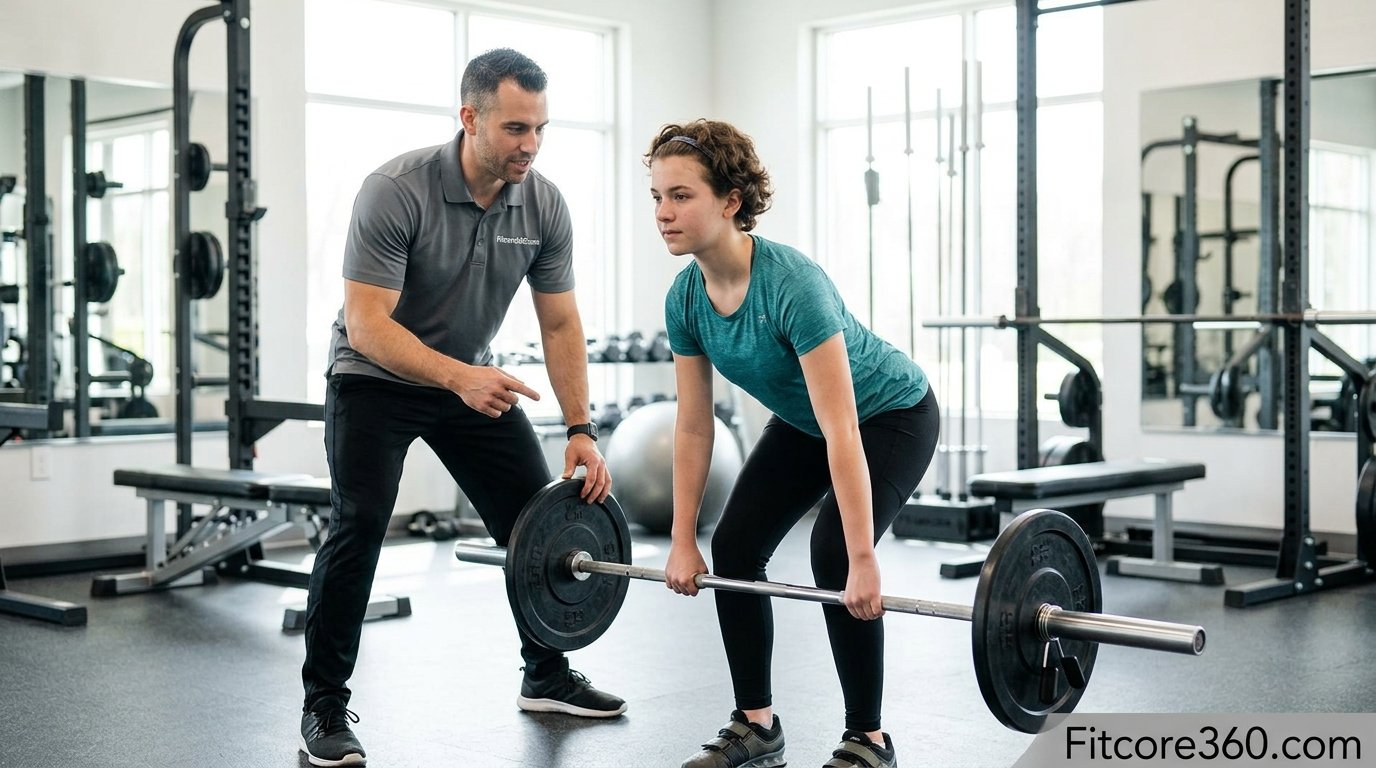
If you are here because someone told you that lifting weights will make you shorter, you can relax. Current guidance from major pediatric and sports medicine organizations is clear: resistance training that is well supervised, sensibly programmed, and technique-focused does not stunt growth in children or teenagers. In fact, it tends to improve bone density, coordination, confidence, and athletic performance.
That does not mean “anything goes.” Kids and teens are not tiny adults, and their bodies have a few unique vulnerabilities, especially around the areas where their bones are still growing. The real risk is not lifting itself. The real risk is poor form, ego-driven maximal attempts, unsupervised sessions with equipment that is too heavy, and training through pain.
In the rest of this guide, we will walk through how growth actually works, why the myth took hold, what studies and medical groups say, where real injury risks hide, and how to build a training plan that supports a growing body. If you are a parent wondering whether your child can start, or a teen wondering whether your plan is safe, you will find practical answers here. If you are wondering about the minimum age, our companion guide on how old you have to be to go to the gym covers the policy side of things.
| Claim | Verdict | Why |
|---|---|---|
| Lifting weights compresses the spine and makes you shorter | Myth | Any temporary compression resets after rest; it does not alter the growth plates |
| Teens should never lift heavy | Mostly myth | Appropriately loaded, coached lifting is considered safe and beneficial |
| Poor technique can cause injury | True | Injury risk rises with bad form, no supervision, and excessive load |
| Nutrition affects final height | True | Under-eating during puberty can limit growth potential |
Why this question deserves a careful answer
Parents often ask this question out of genuine love and caution, and teens ask it because they have heard it from coaches, relatives, or classmates. Dismissing the worry with a quick “that’s a myth” misses an opportunity to explain what is really going on. The truth is more reassuring and more useful than the rumor. Once you understand the biology, you can make confident decisions about training instead of relying on folklore.
It also helps to separate three different questions that often get mashed together: Will lifting make me shorter? Can lifting hurt me while I am still growing? And what is the best way to train during these years? The answers are no, it can if done carelessly, and with patience, coaching, and balance. Keep those three answers in mind as you read.
Starting out? A set of beginner-friendly adjustable dumbbells lets young lifters progress in small, safe jumps.
Shop Beginner Dumbbells on Amazon2. How Height Really Works: The Biology Behind Growing Taller
To understand why the gym is not the villain, it helps to know what actually decides how tall a person gets. Height is a polygenic trait, which means hundreds of genes each nudge it slightly up or down. Twin and family studies consistently estimate that genetics account for roughly 80 percent of the variation in adult height within a population. The remaining share comes from environmental factors, primarily nutrition, illness, and overall childhood health.
The growth timeline
Humans grow in distinct phases. Infancy brings very rapid growth. Early and middle childhood settle into a steady pace of a few centimeters per year. Then puberty delivers the growth spurt, driven by growth hormone, insulin-like growth factor 1, and sex hormones such as testosterone and estrogen. Girls usually spike earlier, often between ages 10 and 14, while boys typically peak a couple of years later, around 12 to 16. Individual variation is huge, and a late bloomer is not necessarily a short adult.
Hormones are the real drivers
Growth hormone is released in pulses, with the largest bursts occurring during deep sleep. Thyroid hormone, nutrition, and sex steroids all interact to set the pace of growth. Sex hormones eventually signal the growth plates to close, which ends vertical growth. None of this process is switched off by a squat or a bench press. Resistance exercise actually triggers a temporary rise in growth hormone and other anabolic signals, which is part of why training supports healthy development rather than hindering it.
What can genuinely affect growth
- Chronic undernutrition: not enough calories, protein, or key micronutrients during childhood and puberty.
- Chronic disease: conditions such as untreated celiac disease, thyroid problems, or growth hormone deficiency.
- Severe sleep deprivation: because growth hormone secretion peaks in deep sleep.
- Serious growth plate injuries: rare, but real, and usually linked to trauma rather than normal training.
Notice what is missing from that list: moderate, supervised exercise. Active kids tend to be healthier, sleep better, and eat more, all of which support growth. For a deeper look at how food choices influence outcomes in the gym, see our breakdown of how nutrition affects gym results.
Predicting adult height
A common rough estimate, often called the mid-parent method, averages the parents’ heights and adjusts slightly for a boy or a girl. It is not precise, and the result can easily be off by several centimeters either way, but it illustrates how strongly family heights shape outcomes. Pediatricians may also use bone age X-rays, which compare how mature the bones look to the child’s calendar age, to estimate how much growing is left. If your child is a late bloomer with delayed bone age, there is often plenty of growth ahead regardless of training.
Because puberty timing varies so widely, it is also common for a teen to feel short compared with friends at 13 and then catch up by 17. Comparing yourself to classmates is rarely informative. Focus on your own growth curve, which a doctor can track over time.
Fueling a growing, active body is easier with a good shaker bottle and a simple meal-prep routine.
Browse Shaker Bottles on Amazon3. Growth Plates Explained: The Part of Your Bones That Matters Most
When people worry about the gym stunting growth, they are really worried about growth plates. Their concern is not silly, because growth plates are the one place in a young skeleton that is genuinely softer and more vulnerable than the rest of the bone.
What is a growth plate?
A growth plate, medically called the epiphyseal plate, is a band of cartilage near the ends of long bones such as the femur, tibia, and forearm bones. Cartilage cells in the plate multiply, then gradually harden into bone. That process pushes the bone longer, which is how you gain height. When puberty finishes, the plates fuse into solid bone and vertical growth stops.
Why they are vulnerable
Because cartilage is weaker than mature bone, the plate can be the weak link when a major force hits it. A fall, a collision, or a sudden, high-load twisting event can cause a fracture through the plate. Most of these injuries occur in sports like football, gymnastics, and basketball, or in accidents, and the large majority heal well with proper treatment. The rare cases that cause lasting growth problems involve severe, untreated, or poorly managed fractures.
Repetitive stress and plate health
There is another category worth knowing: overuse. Repetitive high-impact activity such as long-distance running or heavy, repeated throwing can irritate the plate. Gymnasts have a well-documented condition at the wrist, and young pitchers can develop it at the shoulder or elbow. This is why youth sports medicine emphasizes rest days, varied activity, and avoiding early specialization. It is not an argument against lifting; it is an argument against excess and neglect of recovery.
What protects growth plates
- Qualified supervision
- Gradual load increases
- Rest days built into the week
- Reporting pain early
What puts them at risk
- Maximal one-rep attempts without a coach
- Dropping or bouncing weights
- Training through joint pain
- Overtraining one movement
How growth plates close
Closure is a gradual process driven largely by estrogen, even in boys, who convert some testosterone into estrogen. Different bones close at different times; the plates around the knee and wrist are among the last, and many are fully fused by the late teens, though some may remain open into the early twenties. After closure, height no longer increases, and the old plate shows up as a faint line on an X-ray.
A key point: normal, healthy training does not speed up or slow down that closure. The signal to close comes from hormones, not from muscle contraction or the weight on a bar. The only way exercise could interfere is through significant trauma to the plate itself, which is why accident prevention, supervision, and avoiding extreme loads matter so much for young lifters.
Joint-friendly floor protection also cuts slip and drop hazards in home training spaces.
See Gym Flooring on Amazon4. Where the “Gym Stunts Your Growth” Myth Came From
Myths survive because they feel logical. The idea that weights press you down and shrink you has several plausible-sounding roots, and understanding them makes it easier to let the belief go.
Old medical caution that got oversimplified
Decades ago, some doctors and athletic organizations advised kids to avoid weight training because of fears about growth plate fractures. Early case reports described injuries in young lifters, but when researchers dug deeper, they found that most of those injuries involved unsupervised home training, poor technique, or heavy equipment used carelessly. The nuance faded, and “weights are dangerous for kids” turned into “weights stunt your growth.”
Spinal compression is real, but tiny and temporary
Your spine does compress a little throughout the day. Spinal discs lose a bit of fluid under load, and people are slightly shorter in the evening than in the morning, usually by about a centimeter or so. Heavy lifting can exaggerate this for a short period. It reverses with rest and sleep, and it has nothing to do with your adult height.
Visual illusions
Muscular people often look shorter because their frames appear wider and more compact. Several elite strength sport athletes are not particularly tall, so people connect the dots incorrectly. The causation actually runs the other way: shorter limbs offer mechanical advantages for lifting, so those with compact builds are often drawn to, and successful in, strength sports. Meanwhile, plenty of tall athletes lift heavy as part of their conditioning, including basketball and volleyball players.
Correlation with undereating
Some sports that emphasize weight classes encourage restrictive eating, and under-fueling genuinely harms growth. The sport gets blamed, but the cause is inadequate nutrition. A lifter who eats well and sleeps enough does not face that problem.
| Source of the myth | What actually happens |
|---|---|
| Early injury reports | Mostly unsupervised, poor technique, excessive load |
| Spine compresses | Temporary, fully reversible with rest |
| Muscular people look short | Visual effect and body-type selection |
| Weight-class dieting | Nutrition issue, not a lifting issue |
Why the myth persists in schools and families
Many adults heard the warning as children, from a gym teacher or a well-meaning relative, and passed it on without checking the source. Social media adds fuel: short clips of unusually short bodybuilders or gymnasts get shared as “proof,” while the thousands of tall athletes who lift are never mentioned. Confirmation bias does the rest. We notice examples that support what we already believe and ignore those that do not.
If someone insists on the myth, ask what evidence they are relying on. You will often discover it is a story about one person rather than a pattern in data. Gently offering information from pediatric and sports medicine organizations tends to be more effective than arguing.
A quality weight belt can make heavy training feel more stable once a coach clears a lifter to use one.
Compare Weightlifting Belts on Amazon5. What the Research and Medical Organizations Actually Show
Opinion is cheap, so let’s look at the weight of evidence. Over the past few decades, researchers have studied resistance training in children and adolescents extensively, and the findings are remarkably consistent.
Position statements from expert groups
Major bodies in pediatrics, sports medicine, and strength and conditioning have all issued guidance saying that youth resistance training is safe and beneficial when it is properly designed and supervised. They note that it can improve muscular strength, bone health, body composition, sports performance, and injury resilience, and that there is no evidence it negatively affects linear growth in children or teens.
Injury data
When researchers compare injury rates across youth activities, supervised strength training generally shows lower injury rates than team sports like football, soccer, and basketball. Most reported weightlifting injuries in young people are muscle strains and sprains. The relatively few growth plate injuries that do occur tend to trace back to accidents with equipment, dropped weights, or poor supervision.
Bone health benefits
Adolescence is the critical window for building peak bone mass. Loading the skeleton through resistance exercise and impact activity encourages bones to become denser and stronger. Because roughly a quarter of adult bone mass is accumulated in the two years around peak growth, teens who train sensibly may be investing in lower fracture risk later in life.
Other developmental benefits
- Motor skills: improved coordination, balance, and body awareness.
- Mental health: better self-esteem, mood, and stress management.
- Metabolic health: improved insulin sensitivity and body composition.
- Habit formation: young people who learn proper technique tend to stay active later in life.
| Outcome | Effect of supervised youth lifting |
|---|---|
| Final adult height | No negative effect observed |
| Bone density | Generally improved |
| Sports injury risk | Often reduced through stronger tissues |
| Strength | Meaningful gains, mostly neural early on |
For adults reading this to guide a teen’s training, our guide to setting up a home gym can help you create a safe space with the right equipment and layout.
What studies of young athletes reveal
Supervised programs in children and adolescents, including those studying prepubescent kids, have repeatedly found strength improvements without adverse effects on growth. Researchers have followed groups of young athletes who started lifting early and found their adult heights tracked with their parents’ heights, as expected. Some studies even show better bone mineral content in lifting groups compared with sedentary peers.
It is also worth noting what the studies do not cover. Most involve controlled, coached programs rather than unsupervised training with extreme loads, so their reassuring findings apply to well-run programs. This is why the advice throughout this guide keeps returning to supervision, technique, and gradual progression.
Looking for a safe, space-saving way to start training at home? Resistance band sets scale easily for different strength levels.
Shop Resistance Band Sets on Amazon6. Real Risks and Real Injuries: What Parents and Teens Should Watch
Saying the gym does not stunt growth is not the same as saying it carries zero risk. Honest advice means naming the actual hazards so they can be avoided.
Common injury patterns
- Muscle strains: usually from too much load too quickly or poor warm-ups.
- Lower back pain: often from rounding the spine during deadlifts or hyperextending during overhead lifts.
- Shoulder irritation: frequently linked to excessive bench pressing with poor scapular control.
- Wrist and elbow pain: overuse in pressing or gripping tasks.
- Dropped-weight accidents: pinched fingers, crushed toes, or worse.
Red flags that need medical attention
Sharp pain at a joint, swelling that does not settle, pain that wakes you at night, a limp that does not clear, or tenderness directly on a bony area at the end of a long bone should all be checked by a clinician. In a growing athlete, tenderness over a growth plate deserves extra caution, since a plate injury can look a lot like a sprain.
The biggest risk factors
- No coaching: learning from social media clips instead of a qualified instructor.
- Ego lifting: chasing a one-rep max before technique is automatic.
- Poor recovery: training every day without rest or sleep.
- Unsafe setup: no safety bars on squats, no spotter on bench, cluttered floors.
- Playing through pain: assuming discomfort will “go away” on its own.
Safer habits
- Warm up for 8 to 10 minutes
- Use safety catches and spotters
- Stop sets when form slips
- Track pain separately from effort
Risky habits
- Max-out days without coaching
- Skipping warm-ups
- Copying adult programs
- Ignoring joint pain
Grip and wrist stress are common trouble spots for new lifters. If you want to understand them better, read about how grip strength improves deadlifts and pull-ups and our guide to wrist wraps for bench press.
Overtraining and burnout
Not every risk is physical trauma. Training too often, adding too much volume, or combining lifting with several other intense sports without enough rest can lead to fatigue, poor sleep, irritability, declining performance, and a higher injury rate. A teen who suddenly loses interest, sleeps poorly, or complains of constantly sore muscles may be doing too much. Back off, add a rest day, and make sure the diet matches the workload.
Parents should also watch for signs of unhealthy relationships with food or body image, which can show up in gym settings. If a young lifter becomes preoccupied with weight, restricts meals, or compares their body obsessively, talk with a doctor. Healthy training should leave them feeling stronger and more capable, not anxious.
A first-aid kit and a few basic safety items belong in every home gym, especially if teens train there.
See Gym First Aid Kits on Amazon7. The Safe Starting Age and How to Set Up Right
Is there a magic age at which lifting becomes acceptable? Not exactly. Experts generally say a child is ready for structured resistance training when they can follow directions, maintain balance and posture, and understand safety rules. For many children, that happens around 7 or 8 years old, often with bodyweight movements first.
Age-by-age overview
| Age range | Focus | Typical tools |
|---|---|---|
| 7 to 10 | Movement quality, play, bodyweight basics | Bodyweight, light bands, medicine balls |
| 11 to 14 | Technique, light external load, general fitness | Bands, dumbbells, light barbell with coach |
| 15 to 17 | Progressive overload, sport-specific work | Barbells, machines, trap bar, supervised |
These ranges are guidelines, not rules. A mature, well-coached 13 year old can lift safely, while an unfocused 16 year old may need more guidance first. Many commercial gyms have their own age policies, which is where our gym age guide comes in handy.
Choosing a coach or program
- Look for certifications in strength and conditioning with youth experience.
- Watch a session: do they teach technique first and load second?
- Check for a clear plan for warm-ups, rest, and progression.
- Avoid anyone who promotes max lifts for beginners or crash diets.
Setting up the training space
A good environment reduces risk. Use proper flooring, clear the area, store plates away, and make sure equipment fits the lifter. A trap bar is often a friendlier way to learn the hinge pattern than a straight barbell, which is why you will find it in many youth programs. If you are curious about the equipment, take a look at our best trap bars guide and the quick answer on how much a trap bar weighs.
Gym policies and alternatives
Some commercial gyms restrict minors or require adult supervision, so before signing up, ask about the policy. School weight rooms, community centers, youth sports programs, and private coaching studios are often better suited to younger lifters, and they tend to have equipment sized appropriately. If a gym is not an option, a few pieces of home equipment and a clear plan can do a lot.
Bodyweight training such as push-ups, pull-ups, lunges, and planks is also a perfectly good foundation. Many strong adults credit years of simple bodyweight work for their later success. There is no rush to touch a barbell, and there is no shame in progressing slowly.
A light starter barbell kit helps beginners learn the movements without overloading.
Explore Barbell Sets on Amazon8. Programming for Growing Lifters: A Smart, Safe Framework
Good youth programming looks different from a bodybuilder’s split or a powerlifter’s peaking block. It emphasizes learning, balanced development, and sustainability.
Core principles
- Technique before load: master the pattern with an empty bar, bands, or bodyweight first.
- Moderate reps: 8 to 15 repetitions per set tends to build skill and strength without excessive joint stress.
- Two to three sessions weekly: on non-consecutive days, with at least one full rest day between.
- Progress gradually: add small amounts of weight or a rep or two only when form is consistent.
- Balance the body: pair every push with a pull and keep the core and legs in the plan.
A sample three-day framework
| Day | Main movements | Sets x reps |
|---|---|---|
| Day 1 | Goblet squat, push-up, dumbbell row, plank | 3 x 10 to 12 |
| Day 2 | Romanian deadlift (light), overhead press, band pull-apart, side plank | 3 x 10 to 12 |
| Day 3 | Split squat, incline push-up, lat pulldown or assisted pull-up, carry | 3 x 8 to 12 |
Warm-ups and cool-downs
A good warm-up raises body temperature and primes the joints: five minutes of easy cardio, followed by dynamic drills such as leg swings, arm circles, hip hinges, and light practice sets. Cool-downs can be as simple as walking and gentle mobility work.
What about heavy lifting?
Older teens who have built a solid base can train heavier under qualified supervision. Rather than avoiding heavy loads outright, the goal is to earn them with months of consistent technique. Equipment like lifting belts and straps becomes relevant later, and our guides on whether to wear a belt for every lift and when to start using lifting straps explain how to use them wisely rather than as a crutch.
Mobility and balance
Tools such as slant board exercises and resistance bands for rehab help improve ankle mobility and joint health, which supports better squat depth and safer movement overall.
Progression made simple
A useful rule for beginners is to keep one or two reps “in the tank,” meaning you could have done a couple more with good form. When every set of a given exercise feels easy across two consecutive sessions, increase the load by the smallest practical amount. If form deteriorates or the movement feels painful, drop back a step. Keeping a short training log, even in a phone’s notes app, helps you see steady improvement and spot warning signs early.
Deload weeks also help. Every four to six weeks, reduce the volume or intensity for several days. This gives joints and connective tissue time to adapt and lowers the risk of nagging overuse problems. Think of it as a planned pause that makes the next block stronger.
A sturdy slant board helps ankle mobility and squat form, two common weak points in young lifters.
Find Slant Boards on Amazon9. Nutrition, Sleep and Recovery: The Real Growth Levers
If you want to protect your height potential, the gym is not where you should focus your worry. Fuel and rest are. A teenager who trains three times a week but eats too little and sleeps five hours a night is far more likely to fall short of their genetic potential than one who trains hard, eats well, and sleeps deeply.
Eating enough, and eating well
Growing bodies need plenty of energy. Active teens, especially boys going through a growth spurt, can need well over two thousand five hundred calories a day, and some need considerably more. Under-eating forces the body to prioritize survival over growth. Build meals around these pillars:
- Protein: eggs, dairy, poultry, fish, legumes, and tofu support tissue repair and growth.
- Calcium and vitamin D: milk, yogurt, fortified foods, and safe sun exposure for strong bones.
- Complex carbohydrates: oats, rice, potatoes, and fruit for training energy.
- Healthy fats: nuts, olive oil, avocado, and oily fish for hormones and brain health.
- Iron and zinc: red meat, beans, seeds, and leafy greens for growth and immunity.
Sleep is where growth happens
Most growth hormone is released during deep sleep, and sleep also drives muscle repair, learning, and mood. Teens generally need eight to ten hours per night. Late-night screen time, caffeine, and energy drinks all sabotage this, so protecting sleep is a practical growth strategy.
Supplements: handle with care
Young lifters do not need pre-workout formulas, fat burners, or testosterone boosters, and several of these products carry real risks for developing bodies. A balanced diet covers nearly everything. If a doctor or dietitian recommends a specific supplement, follow their advice, and avoid anything marketed as a shortcut.
| Lever | Target for most teens | Why it matters |
|---|---|---|
| Sleep | 8 to 10 hours | Growth hormone and recovery |
| Protein | Included at every meal | Muscle and tissue repair |
| Hydration | Water through the day | Performance and focus |
| Rest days | At least 1 to 2 weekly | Prevents overuse injuries |
For a deeper look at fueling for results, revisit our article on how nutrition affects gym results.
Hydration and meal timing
Staying hydrated supports energy, focus, and recovery. Most teens do well with water through the day and a bit more around training. A balanced snack with carbohydrates and protein, such as yogurt with fruit or a sandwich, about an hour or two before training and another meal afterward helps muscles refuel. Skipping breakfast or running on empty makes workouts feel harder and slows recovery.
Avoid energy drinks, which contain high doses of caffeine and sugar that can disrupt sleep and heart rhythm in young people. Chocolate milk, bananas, or a simple turkey sandwich can serve as inexpensive post-workout fuel.
A good food scale and meal-prep containers make it simple to eat enough, consistently.
Shop Meal Prep Containers on Amazon10. Things That Can Genuinely Limit Height (And Things That Cannot)
Clearing up the gym myth opens the door to a more important question: what really can influence how tall someone gets? Here is a grounded look at the true factors, plus a few popular claims that do not hold up.
Factors that can matter
- Genetics: your parents’ heights are the single best predictor of your own.
- Puberty timing: earlier puberty can mean earlier plate closure, though final height is a more complex outcome.
- Nutrition in childhood: chronic shortfalls can reduce final height.
- Medical conditions: hormone disorders and certain chronic illnesses can be treated if diagnosed.
- Smoking and heavy substance use: not helpful for development in any way.
Things that do not stunt growth
- Lifting weights with proper technique.
- Drinking coffee, which is more of a sleep concern than a height concern.
- Playing sports like basketball, football, or gymnastics when done safely.
- Normal, healthy carrying of a backpack.
Things that do not make you taller either
Many products promise extra inches through stretching gadgets or supplements. Hanging or inversion can create a very temporary decompression of the spine, but it does not lengthen bones. If you are curious about the topic, read our evidence-focused article on whether inversion therapy actually works, and review the inversion table safety guide before trying one.
The role of stress and mental health
Prolonged stress and poor mental health can affect appetite, sleep, and hormones, indirectly influencing growth and well-being. Exercise tends to help here, since regular activity is linked with lower anxiety and better mood in adolescents. That is another reason the gym is more friend than foe for the growing body, provided the environment is positive and free from pressure or body shaming.
Encourage young lifters to focus on what their bodies can do rather than how they look. Celebrating a first pull-up or a personal best in a plank builds healthy confidence that lasts well beyond high school.
Tracking growth at home is easier with a simple wall-mounted height chart and a reliable scale.
View Growth Charts on Amazon11. Gear That Helps Teens Train Safely
You do not need a mountain of equipment to train well, but some items do make sessions safer and more comfortable. Here is a practical shortlist.
Essentials
- Supportive training shoes: flat, stable soles help with squats and deadlifts. For heavier training later on, see our powerlifting shoes guide.
- Resistance bands: low-cost and scalable. Compare options in loop vs tube vs fabric bands.
- Adjustable dumbbells: let lifters move up in small increments.
- Chalk or grip aids: can help once grip becomes a limiter. See gym chalk for sweaty hands.
- Flooring and mats: protect joints and equipment. Check best home gym flooring.
Things to hold off on
Belts, straps, and heavy-duty wraps are tools for experienced lifters handling serious weights. Beginners should learn to brace and grip naturally first. When the time comes, our guides on weightlifting belts and lever vs prong belts can help you choose.
| Gear | Beginner priority | Notes |
|---|---|---|
| Flat training shoes | High | Stability beats cushioning |
| Resistance bands | High | Great for warm-ups and learning patterns |
| Dumbbells | High | Easy to scale gradually |
| Lifting belt | Low | Only after technique is solid |
| Lifting straps | Low | Use sparingly for heavy pulls |
Home training pros
- Convenient and private
- Parents can supervise
- Lower long-term cost
Home training cons
- Easy to skip safety setup
- No coach on hand
- Space and budget limits
If you are planning a full setup, consider the best all-in-one home gyms for a compact, guided option.
Buying smart on a budget
Quality equipment does not have to cost a fortune. Start with a few essentials and add pieces as skills and needs grow. Look for adjustable options that cover multiple stages, read reviews with an eye for durability and safety, and avoid gimmicky gadgets that promise dramatic results. Secondhand equipment can be a great value if you inspect it for rust, cracks, and loose parts. Always make sure benches, racks, and bars are rated for the loads you plan to use and set up on a stable surface.
Flat, stable training shoes are one of the best first purchases for a young lifter.
Shop Training Shoes on Amazon12. The Parent and Teen Checklist: Putting It All Together
Before the first session, run through this checklist. It condenses everything above into steps you can actually follow.
Before starting
- Confirm the young lifter is willing, focused, and able to follow instructions.
- Have a pediatrician check in if there are any medical concerns or past injuries.
- Find a qualified coach or a well-reviewed program that values technique.
- Set a goal that is about skill and health, not just numbers.
During training
- Warm up every session.
- Use controlled tempo and full range of motion.
- Stop any set when technique breaks down.
- Keep sessions to 45 to 60 minutes.
- Report pain, especially near joints.
Outside the gym
- Eat balanced meals with enough calories and protein.
- Protect sleep with a consistent schedule.
- Take rest days seriously.
- Mix in other activities like swimming, cycling, or sport.
For ideas on structuring broader fitness, you might enjoy our guides to a 20-minute battle rope HIIT workout and the best resistance band systems.
A final word for parents
Your role is to support, not to micromanage. Ask your teen what they enjoy about training, what feels hard, and whether anything hurts. Praise effort and consistency over numbers. Make sure the environment is safe and that coaches respect your child’s pace. If something feels off, trust your instincts, pause, and seek advice. Young lifters thrive when they feel supported, and the habits formed now can serve them for life.
Ready to build a simple, safe home routine? A basic starter bundle covers most of what a beginner needs.
Browse Home Workout Gear on AmazonFrequently Asked Questions
Does lifting weights stunt your growth?
No. Research and expert medical guidance indicate that supervised, properly designed resistance training does not stunt growth in children or teens. Poor technique and accidents are the real risk, not lifting itself.
Can the gym damage growth plates?
It is possible but uncommon. Growth plate injuries usually result from accidents, dropped weights, or excessive loads without supervision. Good coaching, sensible loads, and proper form dramatically reduce the risk.
At what age can a child start lifting weights?
Many children are ready for basic bodyweight and light resistance work around 7 or 8, once they can follow instructions and keep good posture. Heavier loading usually comes later, with qualified supervision.
Is it safe for a 13 year old to go to the gym?
It can be, if the program is age-appropriate, coached, and focused on technique. Many gyms also set their own age rules, so check their policies first.
Does heavy lifting make you shorter?
No. Heavy lifting can compress spinal discs for a short time, but this reverses with rest and does not change adult height.
What actually determines how tall I will be?
Mostly genetics, with nutrition, sleep, general health, and hormones making up the rest. Exercise supports healthy development rather than limiting it.
Should teens avoid deadlifts and squats?
Not necessarily. Both can be done safely with light loads, good technique, and coaching. Variations like goblet squats and trap bar deadlifts are often friendlier starting points.
How many days per week should a teen lift?
Two to three non-consecutive days is plenty for most beginners, with other activity and rest days in between.
Do protein shakes or supplements affect growth?
A balanced diet is usually enough. Whole foods should come first, and any supplement should be discussed with a doctor or dietitian. Avoid pre-workouts, fat burners, and hormone boosters.
Can undereating make me shorter?
Yes. Chronic under-eating during childhood and puberty can limit growth. That is one reason nutrition matters more than the gym when it comes to height.
Are lifting belts and straps okay for teens?
They are generally unnecessary for beginners. Learn to brace and grip naturally first, and consider these tools only once heavier training is appropriate and a coach agrees.
When should I see a doctor about training pain?
See a clinician if you have sharp or persistent joint pain, swelling, tenderness over a bony area near a joint, or a limp that does not resolve. In growing athletes, early evaluation is especially important.
Conclusion: Train Smart, Eat Well, Sleep Deep, and Grow Without Fear
So, does the gym stunt your growth? The evidence says no. Done thoughtfully, with supervision, sensible loads, and respect for recovery, strength training is one of the best things a young person can do for bones, muscles, confidence, and long-term health. Your genes, your nutrition, your sleep, and your overall health will decide your height far more than any set of squats ever could.
The smart move is to respect the real risks: skip ego lifting, get coaching, build a good setup, and listen to your body. Start small, stay consistent, and let progress come naturally. If you want to keep learning, explore more guides on FitCore360 to build a safe, effective routine at any stage.
Take the first step today with simple, safe gear that grows with you.
Start Building Your Home Gym on Amazon