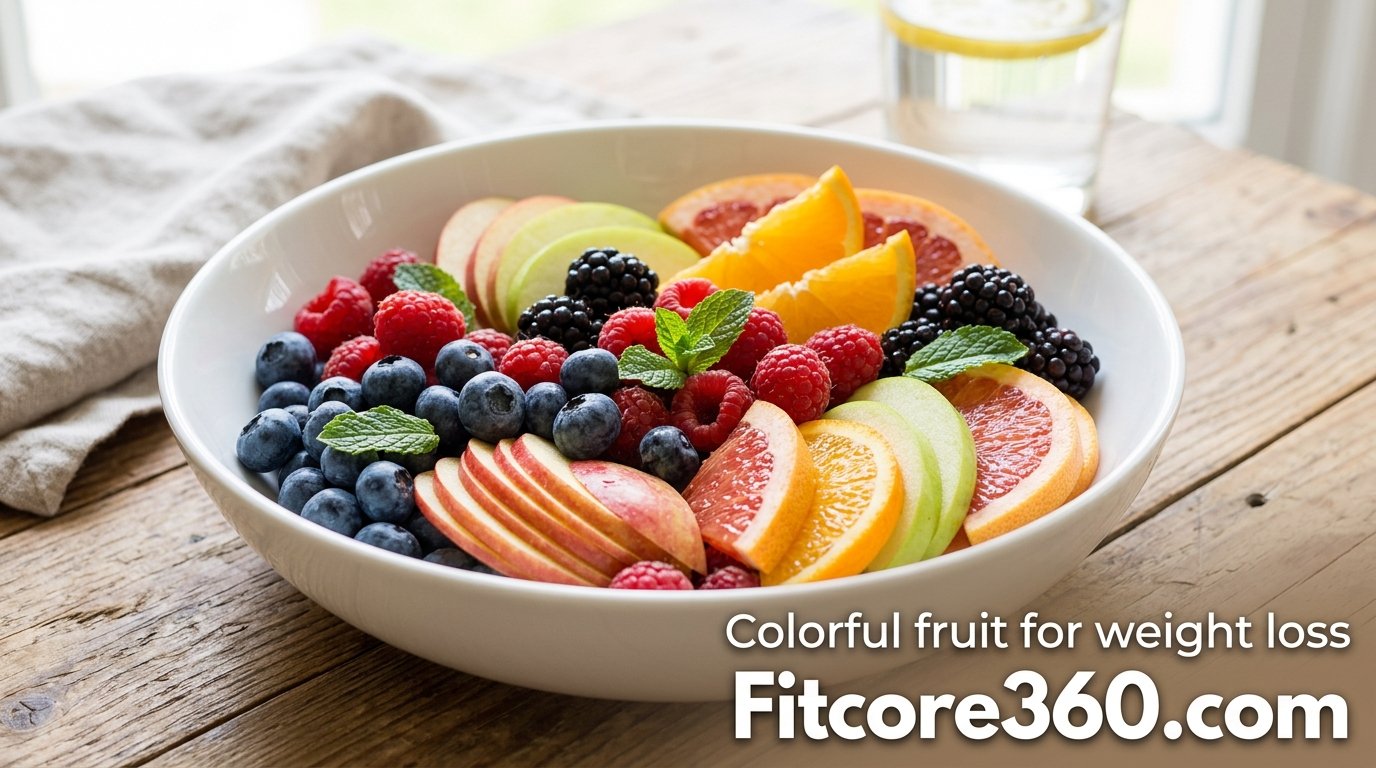
Best Fruits for Weight Loss: What to Eat, How Much, and Why It Works
Fruit gets blamed for sugar and praised as a miracle, and neither story is quite right. Here is a practical, honest ranking of the fruits that genuinely help you feel full, eat less without suffering, and stay consistent.
Ask ten people which fruit is best for weight loss and you will get ten confident answers, half of them contradicting the other half. One friend swears by grapefruit. Another says to avoid bananas because of the sugar. A coworker insists that fruit after 6 p.m. turns straight into fat. The internet makes it worse, with headlines promising that one magic berry will melt belly fat overnight.
The truth is calmer and far more useful. Whole fruit is one of the easiest foods to build a fat-loss plan around, because it delivers a lot of volume, fiber, water, and sweetness for relatively few calories. It satisfies the craving for something sugary without the energy density of cookies, candy, or ice cream. But not every fruit behaves the same way, portions still matter, and the form you eat it in (whole, dried, juiced, or blended) changes the result dramatically.
In this guide we will walk through the fruits that tend to work best, explain the simple science behind why, flag the ones that need a little more portion awareness, and show you how to fit fruit into real days, real meals, and real training weeks. If you want the bigger picture on how food choices shape your results, our breakdown of how nutrition affects gym results is a good companion read.
1. How Fruit Actually Helps You Lose Weight
Weight loss comes down to a sustained calorie deficit, but how you create that deficit decides whether the process feels manageable or miserable. Fruit helps in four distinct ways, and understanding them makes it easier to choose well.
It lowers the calorie density of your day
Calorie density is simply how many calories sit in a given weight of food. A cup of strawberries has about fifty calories. A cup of granola can run past four hundred. If your plate or bowl looks the same size but contains a fruit-heavy option instead of a refined, sugary one, you take in far fewer calories without feeling like you ate less.
It brings fiber, which slows everything down
Fiber adds bulk, slows digestion, and blunts the speed at which sugars hit your bloodstream. Soluble fiber, found in apples, pears, citrus, and berries, forms a gel in the gut that keeps you feeling full longer. Insoluble fiber adds structure and supports regular digestion. Most adults fall short of the commonly recommended intake, and fruit is one of the easiest ways to close the gap.
It satisfies sweet cravings in a controlled way
Many people do not fail diets because of hunger. They fail because of cravings, usually for sweets in the evening. A bowl of cold grapes, a juicy peach, or frozen berries with a spoonful of yogurt scratches the same itch as dessert at a fraction of the cost. That swap, repeated over weeks, quietly removes hundreds of calories.
It keeps you hydrated and nourished
Many fruits are between 80 and 95 percent water, and they bring potassium, vitamin C, polyphenols, and other plant compounds along with them. Eating in a deficit is easier when you are not also low on micronutrients, and fruit makes that simpler.
| Benefit | How it helps fat loss | Best examples |
|---|---|---|
| Low energy density | Big portions for few calories | Watermelon, strawberries, cantaloupe |
| High fiber | Longer-lasting fullness | Raspberries, pears, guava |
| Natural sweetness | Replaces dessert and candy | Peaches, cherries, mango (portioned) |
| Water content | Volume and hydration | Oranges, grapefruit, melons |
Looking for a food scale or fruit prep tools to make portioning simple? Browse popular picks on Amazon.
Check Prices on Amazon2. Fiber, Water and Energy Density: The Science Made Simple
You do not need a nutrition degree to eat fruit well, but a few concepts explain almost every recommendation in this article. Once they click, you can evaluate any fruit you meet at the grocery store.
Energy density
Researchers who study eating behavior have repeatedly observed that people tend to eat a fairly consistent weight of food each day, not a consistent number of calories. When the foods on your plate are water-rich and fibrous, that same weight carries fewer calories. This is the core reason fruit and vegetables are staples of nearly every sensible weight-management approach. Foods under roughly 1 calorie per gram, like most fresh fruit, are considered low density. Foods above 4 calories per gram, like crackers, chocolate, and nuts, are high density, which is why they are easy to overeat.
Fiber and fullness
Whole fruit has a structure of cell walls, pectin, and fiber that your body must break down. That takes time, which means a slower rise in blood sugar and a longer signal of fullness. Fruit juice has stripped most of that structure away. A glass of orange juice can contain the sugar of three or four oranges with almost none of the chewing, fiber, or satisfaction, which is why it is so much easier to drink than to eat.
Glycemic response without the fear
The glycemic index ranks how quickly a food raises blood sugar. Most whole fruits have a low to moderate glycemic index because fiber and fructose slow the response. Fructose is processed mainly by the liver and does not spike blood glucose the way pure glucose does. Eaten in whole form and normal portions, fruit sugar is not the villain it is often made out to be. The problems appear with concentrated sources: juice, dried fruit eaten by the handful, sweetened canned fruit, and smoothies that pack six servings into one glass.
Chewing, volume, and the speed of eating
Eating slowly gives your body time to register fullness. A whole apple takes several minutes to eat, whereas a smoothie can be finished in ninety seconds. That difference alone can change how satisfied you feel an hour later.
| Fruit (typical serving) | Approx. calories | Approx. fiber | Water content |
|---|---|---|---|
| Raspberries, 1 cup | 65 | 8 g | ~86% |
| Strawberries, 1 cup | 50 | 3 g | ~91% |
| Medium apple | 95 | 4.5 g | ~86% |
| Medium pear | 100 | 5.5 g | ~84% |
| Watermelon, 1 cup | 46 | 0.6 g | ~92% |
| Orange, medium | 62 | 3 g | ~87% |
| Grapes, 1 cup | 105 | 1.4 g | ~81% |
| Raisins, 1/4 cup | 125 | 1.5 g | ~15% |
Notice what the last row shows. A quarter cup of raisins has more than twice the calories of a cup of grapes, because the water has been removed. The nutrients and sugars are the same, but the volume shrinks, which makes overeating effortless. We will return to this when we discuss dried fruit.
Reading labels on packaged fruit products
Once fruit goes into a package, the marketing starts. Words like “made with real fruit” or “no added sugar” can be misleading. Fruit snacks, fruit bars, and bottled smoothies are often built from concentrated fruit juice, which behaves much more like sugar than like whole fruit. Check the ingredient list: a short list that starts with the fruit itself is a good sign. Look at the serving size too, since a bag that looks like a single portion may contain two or three servings. When in doubt, the produce aisle and the frozen section are the safest places to shop.
Want a shaker bottle or blender for fruit-based snacks and shakes? See top-rated options on Amazon.
Check Prices on Amazon3. Best Berries for Weight Loss
If there is a single category to put on top of the list, it is berries. They are low in calories, remarkably high in fiber for their size, rich in anthocyanins and other polyphenols, and they feel like a treat. Frozen berries are as nutritious as fresh and often cheaper, so there is no excuse to skip them in winter.
Raspberries
Raspberries are the fiber champions of the fruit aisle. A single cup delivers around eight grams of fiber for roughly sixty-five calories. That is a third of a day’s fiber target in a small bowl. Their tartness also makes them hard to overeat, which is a helpful built-in brake. Fold them into plain yogurt or oatmeal, or eat them frozen straight from the bag as a crunchy, icy snack.
Blackberries
Blackberries are a close second at around seven to eight grams of fiber per cup and about sixty calories. They contain less sugar than many other fruits and bring plenty of vitamin C and vitamin K. Their deep color signals a dense load of antioxidants. Try them over cottage cheese or blended into a protein shake.
Strawberries
Strawberries are one of the lowest-calorie fruits per cup, around fifty, and are more than 90 percent water. They are sweet enough to feel indulgent and sturdy enough to meal-prep. Slice them over whole-grain toast with a little ricotta, or dip them in melted dark chocolate if you want a controlled dessert. They also supply more vitamin C per cup than many people expect.
Blueberries
Blueberries have a bit more sugar and calories at about eighty-five per cup, but they remain an excellent choice. Observational research has linked regular berry intake with healthier weight over time, and blueberries are among the most studied. They travel well, freeze beautifully, and add natural sweetness to oats and smoothies so that you can cut back on added sugar.
Cranberries and cherries (a note)
Fresh cranberries are tart and rarely eaten raw, while sweetened dried cranberries are loaded with added sugar, so treat them like candy rather than fruit. Cherries are technically stone fruits and are covered later, but they pair well with the berry group when in season.
Pros of berries
- High fiber per calorie
- Naturally portion-friendly
- Great frozen, so available year-round
- Rich in polyphenols and vitamin C
- Work in sweet and savory meals
Cons of berries
- Fresh berries spoil quickly
- Organic can be pricey out of season
- Sweetened frozen or dried versions add sugar
How to use berries on a fat-loss plan
- Stir a cup of mixed berries into high-protein yogurt for breakfast
- Blend frozen berries with milk and protein for a thick shake
- Keep a bag of frozen raspberries for late-night dessert cravings
- Top oatmeal or chia pudding for sweetness without syrup
- Add to salads with spinach, feta, and chicken
- Freeze into ice cubes with sparkling water for a treat
When you are choosing a snack to pair with berries, our roundup of the best snacks for weight loss offers plenty of high-protein partners that make a berry bowl even more filling.
Five simple berry ideas under 200 calories
- Berry cottage cheese bowl: Half a cup of cottage cheese topped with a cup of raspberries and a pinch of cinnamon delivers protein and fiber together.
- Frozen yogurt bark: Spread plain Greek yogurt on a tray, scatter blueberries and sliced strawberries, freeze, and snap into pieces for a dessert that feels indulgent.
- Overnight oats: Combine rolled oats, milk, chia seeds, and mashed blackberries, then refrigerate overnight for a grab-and-go breakfast.
- Berry spinach salad: Strawberries, spinach, a little goat cheese, and balsamic vinegar make a lunch side that does not feel like diet food.
- Chilled berry soup: Blend strawberries with a splash of lime, mint, and unsweetened yogurt for a refreshing summer snack.
Rinse fresh berries just before eating instead of when you bring them home, because moisture speeds up mold. If a container starts to turn, freeze what remains right away so nothing goes to waste. Treating berries as a staple you always have on hand, rather than an occasional luxury, is one of the simplest changes you can make.
Stock up on freeze-dried berries, frozen fruit storage containers, and more. Shop berry essentials on Amazon.
Check Prices on Amazon4. Best Apples and Pears for Weight Loss
Apples and pears are the workhorses of a weight-loss fruit bowl. They are inexpensive, portable, available nearly everywhere, and they require real chewing. Both are packed with pectin, a soluble fiber that forms a gel in the digestive tract and slows the movement of food, which is a big part of why they keep you full.
Apples
A medium apple has about ninety-five calories and four to five grams of fiber, most of it in the skin, so leave the peel on. Because an apple takes several minutes to eat, it works well as a pre-meal snack. In studies where participants ate a whole apple before a meal, many ended up consuming fewer calories at the meal than when they skipped the apple or drank juice instead. That is not magic, just the combination of volume, chewing, and fiber doing their job.
Varieties differ slightly. Granny Smith apples are tart, a little lower in sugar, and high in fiber. Honeycrisp and Fuji are sweeter and satisfy dessert cravings. Choose whichever you enjoy most, because enjoyment drives consistency. A slice of apple with a tablespoon of natural peanut butter is a classic pairing that adds protein and healthy fat.
Pears
Pears are arguably the fiber superstar of the pome family, with around five to six grams in a medium fruit, again mostly in the skin. They also contain sorbitol, a natural sugar alcohol that supports regularity, though eating several in one sitting can cause stomach upset in sensitive people. A ripe pear is soft, juicy, and wonderfully sweet, which makes it feel like a genuine dessert. Slice one over cottage cheese or warm it with cinnamon for a cozy evening treat.
Asian pears
Asian pears are crisp like apples, juicy, and mild. They contain similar fiber and calories to regular pears and make a refreshing option when you want crunch without effort.
| Fruit | Calories (medium) | Fiber | Best use |
|---|---|---|---|
| Granny Smith apple | ~90 | ~4.5 g | Pre-meal snack, salads |
| Honeycrisp / Fuji apple | ~100 | ~4 g | Dessert swap |
| Bartlett / Anjou pear | ~100 | ~5.5 g | Evening treat, with yogurt |
| Asian pear | ~100 | ~5 g | Crunchy snack |
Grab an apple slicer, produce keeper, or snack containers to make healthy fruit effortless.
Check Prices on Amazon5. Best Citrus Fruits for Weight Loss
Citrus fruits combine high water content, solid fiber when eaten whole, and a bright flavor that feels refreshing rather than heavy. They also deliver generous vitamin C and flavonoids such as hesperidin and naringenin.
Grapefruit
Grapefruit has the strongest reputation of any weight-loss fruit, and some of it is deserved. Half a grapefruit has around fifty calories, a good dose of fiber and water, and a bitter-sweet taste that slows you down. A frequently cited clinical trial found that participants who ate half a grapefruit before meals lost slightly more weight than a control group, although such studies are small and results are mixed. Think of grapefruit as a helpful, filling pre-meal habit, not a fat burner.
Oranges
A medium orange offers around sixty calories, three grams of fiber, and more than a day’s worth of vitamin C. The segments force you to eat slowly, and the sweetness is satisfying. Eat the fruit, not the juice. Three to four oranges are squeezed into a single glass of juice, with almost no fiber left, so you drink hundreds of calories without much fullness.
Tangerines, clementines, and mandarins
These small, easy-to-peel citrus fruits are perfect for portion control. Two clementines are around seventy calories and take several minutes to peel and eat. They are ideal for desk drawers, gym bags, and kids’ lunch boxes. The act of peeling is a built-in pause that slows mindless snacking.
Lemons and limes
You will not eat these like an orange, but lemon and lime juice can brighten water, salads, fish, and chicken, making low-calorie meals taste far more exciting. Flavored water made with citrus slices can help you drink more fluids and cut back on sugary drinks, which is one of the simplest calorie reductions available.
Pros of citrus
- Very filling for the calories
- Excellent vitamin C source
- Easy to portion and carry
- Refreshing, hydrating flavors
Cons of citrus
- Acidity can aggravate reflux in some people
- Grapefruit interacts with certain medications
- Juice removes the benefits of fiber
Pick up a citrus juicer for infused water, or a fruit bowl and snack organizer for your kitchen counter.
Check Prices on Amazon6. Best Melons and Water-Rich Fruits for Weight Loss
If volume is your priority, melons are hard to beat. They are so full of water that you can eat enormous portions and still land at a modest calorie number. They are particularly useful in hot weather, when appetite drops and thirst increases.
Watermelon
Watermelon is over ninety percent water and around forty-six calories per cup. A wedge as big as your forearm may total only about eighty to one hundred calories. It contains lycopene, the same pigment found in tomatoes, along with a little citrulline, an amino acid linked to healthy blood flow. Because the fiber content is low, watermelon is less filling than berries or apples per calorie, so pair it with something that has protein, like feta cheese, cottage cheese, or a handful of almonds. Frozen cubes make a fantastic popsicle replacement.
Cantaloupe
Cantaloupe has around fifty-five calories per cup, a gentle sweetness, and a lot of vitamin A and vitamin C. It is very easy to eat in large quantities, so a full cup of cubes works nicely as a mid-afternoon snack, or wrapped in a thin slice of prosciutto for a satisfying sweet and salty bite.
Honeydew
Honeydew is similar in water content and slightly higher in sugar, but still low in calories at about sixty per cup. Its mild flavor works well in fruit salads with mint and lime.
Why melons shine for dieting
- Massive volume: A big bowl feels like a real meal-side for very few calories.
- Hydration: They help you meet fluid needs, especially during hot weather or training.
- Convenience: Cut once, eat for several days.
- Sweetness: They are effective replacements for ice cream and candy.
| Melon | Calories per cup | Notable nutrients | Pair with |
|---|---|---|---|
| Watermelon | ~46 | Lycopene, citrulline, vitamin C | Feta, mint, Greek yogurt |
| Cantaloupe | ~55 | Vitamin A, vitamin C, potassium | Cottage cheese, prosciutto |
| Honeydew | ~60 | Vitamin C, potassium | Lime, mint, berries |
Make hydration easy with a large insulated water bottle and a melon baller for fast, portioned fruit cups.
Check Prices on Amazon7. Best Stone Fruits and Kiwi for Weight Loss
Stone fruits, those with a single hard pit, bring summer sweetness with modest calories. Kiwi does not belong to the same family, but its profile fits well here as a bright, fiber-rich, vitamin C-packed option.
Peaches and nectarines
A medium peach has about sixty calories and two to three grams of fiber. Juicy, fragrant, and satisfying, it is one of the best fruit-for-dessert swaps available. Grill halves for a few minutes and top with a spoonful of Greek yogurt and cinnamon, and you have a dessert that feels indulgent for roughly a hundred calories.
Plums and prunes
Fresh plums are lower in calories than most people expect, around thirty per fruit, and offer a pleasant tartness. Dried plums (prunes) are a different story: concentrated, calorie-dense, and easy to overeat, although their fiber and sorbitol make them useful for regularity in small servings.
Apricots
Fresh apricots are delicate, low in calories at roughly seventeen each, and rich in vitamin A. Three or four make a light snack. Dried apricots, like all dried fruit, should be measured out carefully.
Cherries
Cherries have about ninety calories per cup with pits, and they have a satisfying habit of slowing you down because you must handle each one. Tart cherries contain compounds that interest researchers for exercise recovery. They are best eaten fresh or frozen without added sugar.
Kiwi
A medium kiwi has around forty-two calories, roughly two grams of fiber, and more vitamin C than an orange. Some research suggests kiwi may support digestion and regularity, which can reduce bloating and make your midsection feel less puffy during a diet. You can eat the skin of gold kiwi after washing, and many people do for extra fiber, though the fuzzy green skin is not to everyone’s taste.
Pros
- Naturally sweet and dessert-like
- Low calories per piece
- Great grilled, baked, or frozen
- Kiwi adds high vitamin C and digestive support
Cons
- Short peak season
- Pits and prep add effort
- Dried versions are very calorie-dense
Cherry pitters, fruit bowls, and meal prep containers can make stone fruit snacks easy. Check them out on Amazon.
Check Prices on Amazon8. Best Tropical Fruits for Weight Loss
Tropical fruits get a bad rap for being sugary, and some of that is true. But several are worth including, as long as you pay attention to portions and choose whole fruit over juice.
Guava
Guava is a hidden gem. A cup of guava has around 110 calories, but also about nine grams of fiber, a hefty dose of vitamin C, and a flavor that sits between pear and strawberry. If you can find it fresh or frozen, it is one of the most fiber-dense fruits in the world.
Papaya
Papaya provides about sixty calories per cup of cubes, with a soft texture and mild sweetness. It contains an enzyme called papain, which supports protein digestion. A squeeze of lime elevates the flavor and makes it feel like a tropical dessert.
Pineapple
Pineapple has roughly eighty calories per cup and contains bromelain, an enzyme often marketed for fat loss. Bromelain does not burn fat, but pineapple is hydrating, sweet, and strongly flavored enough that a small amount satisfies. Eat fresh or unsweetened frozen, not canned in syrup.
Mango
Mango has around one hundred calories per cup and more natural sugar than most fruits, but it also brings vitamin C, vitamin A, and fiber. A half cup is a sensible portion that satisfies a sweet craving. Frozen mango chunks blended with a little water make a surprisingly creamy sorbet-style dessert.
Bananas
Bananas are not the diet disaster some claim. A medium banana has about 105 calories and three grams of fiber, plus potassium. Slightly underripe bananas contain more resistant starch, which acts like fiber and slows digestion. Bananas are particularly useful around workouts, which we cover in the training section. If you are worried about portion size, choose a smaller banana or eat half with peanut butter.
Avocado
Botanically a fruit, avocado is the odd one out here: low in sugar, high in healthy fats, and calorie-dense. A quarter to a third of an avocado adds creaminess and satisfaction to meals and may help you stay full, but the portion matters because a whole one can run over 250 calories.
| Tropical fruit | Serving | Approx. calories | Verdict |
|---|---|---|---|
| Guava | 1 cup | 110 | Excellent, very high fiber |
| Papaya | 1 cup cubes | 60 | Excellent, light and hydrating |
| Pineapple | 1 cup chunks | 80 | Good, choose fresh or unsweetened |
| Mango | 1/2 cup | 50 | Good in small portions |
| Banana | 1 medium | 105 | Good, great pre-workout |
| Avocado | 1/3 fruit | 80–100 | Good fat source, watch portion |
How to enjoy tropical fruit without overdoing it
The trick with tropical fruit is to treat it like a flavor booster rather than a bulk snack. A few cubes of mango on a chicken salad, a handful of pineapple on a protein bowl, or a slice of papaya with lime after dinner delivers the taste you are craving without a big calorie bill. Freezing helps too: frozen mango and pineapple chunks take longer to eat and feel like a treat, and they blend into thick, spoonable desserts with no added sugar. If you notice you are eating tropical fruit mindlessly, switch to a smaller bowl and put the rest away before you start.
Also pay attention to ripeness. Riper fruit is sweeter and generally higher in sugar, while firmer fruit is more tart and slightly higher in resistant starch in the case of bananas. Neither is wrong; it simply gives you a lever to adjust. If you want a bigger portion, pick slightly firmer fruit. If you want a small, intensely sweet bite, choose it ripe.
Shop tropical fruit tools, smoothie cups, and snack-sized containers to take your fruit on the go.
Check Prices on Amazon9. Fruits and Forms to Portion Carefully
No fruit is forbidden. But some fruits, and some forms of fruit, make it very easy to eat a lot of calories without feeling full. Knowing which ones helps you enjoy them without stalling your progress.
Dried fruit
Raisins, dates, dried mango, dried cranberries, and banana chips are concentrated. Removing the water shrinks the volume, so a small handful hides a surprising number of calories, and many commercial versions are also coated in added sugar or oil. Dried fruit is not bad, and it is a convenient hiking and endurance food, but treat it as a measured topping, not a snack to eat from the bag. A tablespoon or two over oatmeal is plenty.
Fruit juice
Juice delivers the sugar without the fiber and chewing. A typical glass of orange or apple juice has 110 to 150 calories and does little to curb hunger. If you love juice, keep it small, around 4 ounces, or dilute it with sparkling water. Better yet, eat the whole fruit.
Smoothies
Smoothies can be excellent or accidentally enormous. A well-built one with a cup of berries, protein, and ice is a fantastic meal replacement. A shop-bought version with juice, sorbet, banana, mango, and honey can hit 600 calories before you realize it. Build your own and keep fruit to one to two servings.
Canned fruit in syrup
Fruit canned in heavy syrup carries extra sugar. Look for options packed in water or their own juice, and drain them. Frozen fruit without added sugar is almost always a better value.
Grapes and large servings of cherries
Grapes are small, sweet, and addictive. A cup is around 105 calories, and it is simple to eat three cups on the couch. Freeze them for a slow-eating treat or portion them into a bowl rather than eating from the bunch.
| Form | Typical amount | Approx. calories | Fullness factor |
|---|---|---|---|
| Whole orange | 1 medium | 62 | High |
| Orange juice | 8 oz | 110 | Low |
| Fresh grapes | 1 cup | 105 | Moderate |
| Raisins | 1/4 cup | 125 | Low |
| Fresh pineapple | 1 cup | 80 | Moderate |
| Pineapple in heavy syrup | 1 cup | 190 | Low |
| Bottled fruit smoothie | 16 oz | 250–400 | Low to moderate |
Measuring cups, portion containers, and snack bags make it easier to keep dried fruit and nuts in check.
Check Prices on Amazon10. The Full Ranking: Best Fruits for Weight Loss Compared
Here is a side-by-side look at the fruits we have covered, ranked by how well they typically support fullness and a calorie deficit. No ranking is perfect, because preferences, budgets, and medical needs differ, but this gives you a clear starting point.
| Rank | Fruit | Serving | Calories | Fiber | Why it works |
|---|---|---|---|---|---|
| 1 | Raspberries | 1 cup | 65 | 8 g | Top fiber, hard to overeat |
| 2 | Strawberries | 1 cup | 50 | 3 g | Low calorie, very versatile |
| 3 | Apples | 1 medium | 95 | 4.5 g | Chewy, pectin-rich, portable |
| 4 | Pears | 1 medium | 100 | 5.5 g | High fiber, dessert-like |
| 5 | Grapefruit | 1/2 | 52 | 2 g | Filling pre-meal fruit |
| 6 | Blackberries | 1 cup | 62 | 7.5 g | High fiber, low sugar |
| 7 | Oranges | 1 medium | 62 | 3 g | Water-rich, slow to eat |
| 8 | Kiwi | 1 medium | 42 | 2 g | Vitamin C, digestion support |
| 9 | Watermelon | 1 cup | 46 | 0.6 g | Huge volume, hydrating |
| 10 | Cantaloupe | 1 cup | 55 | 1.4 g | Sweet, low calorie |
| 11 | Peaches | 1 medium | 58 | 2.5 g | Dessert swap |
| 12 | Guava | 1 cup | 110 | 9 g | Exceptional fiber |
| 13 | Blueberries | 1 cup | 85 | 3.5 g | Antioxidants, easy to portion |
| 14 | Papaya | 1 cup | 60 | 2.5 g | Light, hydrating |
| 15 | Cherries | 1 cup | 90 | 3 g | Slow to eat |
| 16 | Pineapple | 1 cup | 80 | 2 g | Intensely sweet |
| 17 | Banana | 1 medium | 105 | 3 g | Workout fuel, filling |
| 18 | Mango | 1/2 cup | 50 | 1.3 g | Great in small portions |
Which fruit is best for your goal?
- Max fullness: raspberries, pears, apples, guava
- Max volume for calories: watermelon, strawberries, cantaloupe
- Dessert replacement: peaches, cherries, mango, grilled pineapple
- Pre-meal appetite control: apple, grapefruit, orange
- On-the-go convenience: apples, clementines, bananas, grapes
- Budget-friendly: apples, bananas, frozen berries, oranges
How much fruit is enough?
Most dietary guidelines suggest roughly two cups of fruit per day for adults, though the amount varies by age, sex, and activity level. Two to three servings of whole fruit, spread through the day, fits comfortably within most fat-loss plans. Some people thrive on more, particularly if it replaces sweets. The important thing is that fruit fills space that would otherwise go to denser foods, instead of simply adding on top.
Budget and seasonality: getting more fruit for less
Healthy eating does not have to be expensive. Apples, bananas, oranges, and cabbage-sized melons are among the cheapest ways to add volume to your diet. Berries can be costly fresh, but frozen bags are often half the price, and they are ready whenever you are. Buy in season when you can, because prices drop and flavor improves, and fall back on frozen for the rest of the year. Ugly or bruised produce is often discounted and perfectly fine for smoothies, baking, or stewing.
Consider this simple order of operations when you shop: start with two or three staples you know you will eat every week (an apple variety, a citrus, a frozen berry mix), add one seasonal fruit for variety, and add one new fruit each month to keep things interesting. Variety matters, because different fruits provide different vitamins and plant compounds, and boredom is one of the quickest ways a healthy habit dies.
Compare top-rated kitchen scales, blenders, and fruit storage gear in one place on Amazon.
Check Prices on Amazon11. Smart Ways to Eat Fruit for Fat Loss
Choosing the right fruit is half the battle. How you eat it can double the benefit, especially if you build meals that pair fruit with protein, healthy fat, and fiber-rich grains.
Pair fruit with protein
Fruit on its own is mostly carbohydrate and digests relatively quickly. Adding protein, such as Greek yogurt, cottage cheese, nuts, or a protein shake, stretches fullness for hours. Apple slices with peanut butter, berries with skyr, or a peach with ricotta hit this sweet spot. If you want a grab-and-go option, check our guide to the best protein bars for weight loss for something to pair with a piece of fruit when you are on the move.
Eat whole fruit before meals
A piece of fruit about fifteen to thirty minutes before a meal can take the edge off hunger so you naturally eat less at the table. Apples, oranges, and grapefruit are good picks.
Does timing matter?
There is no scientific basis for the idea that fruit eaten at night is automatically stored as fat. Total calories and overall food quality matter most. If a fruit-based evening snack stops you from raiding the pantry, it is doing you a favor.
Choose frozen and fresh equally
Frozen fruit is typically picked ripe and flash-frozen, preserving most nutrients. It is convenient, reduces waste, and makes thick smoothies and quick desserts. Just check the label for added sugar.
A sample day with fruit
| Meal | Fruit idea | Pair with |
|---|---|---|
| Breakfast | 1 cup mixed berries | Greek yogurt and a spoonful of oats |
| Mid-morning | 1 apple | 1 tbsp almond butter |
| Lunch | Orange segments in a spinach salad | Grilled chicken and olive oil |
| Afternoon | 1 cup cantaloupe or watermelon | Handful of pistachios |
| Dinner | Pineapple or mango salsa | Grilled fish and vegetables |
| Evening | Warm cinnamon pear or frozen grapes | Cup of herbal tea |
Easy fruit swaps for common calorie traps
- Swap ice cream for frozen banana and berry blends
- Swap candy for frozen grapes or clementines
- Swap sugary cereal for oatmeal topped with berries
- Swap soda for sparkling water with citrus slices
- Swap cookies for baked cinnamon apples
Common mistakes to avoid
- Only eating fruit: Fruit lacks enough protein and fat to be a complete diet. Balance matters.
- Drinking your fruit: Juice and big smoothies skip the chewing and fiber.
- Going overboard on dried fruit: Easy to eat 400 calories without noticing.
- Assuming healthy means unlimited: Even good foods have calories.
- Cutting out fruit entirely: Fear of sugar can lead to missing out on one of the most helpful foods for sustainable weight loss.
Shopping, storing, and prepping fruit so you actually eat it
The most nutritious fruit in the world does nothing if it rots in your crisper drawer. A few small systems make a big difference. Wash and cut sturdy fruit such as melons, pineapple, and apples soon after shopping and keep them in clear containers at eye level in the fridge. Store bananas away from other fruit, because they release ethylene gas that speeds ripening. Keep berries in a breathable container lined with a paper towel. Freeze overripe bananas, peaches, and mango in portioned bags so they become tomorrow’s smoothie instead of the trash.
Ten minutes of prep on a Sunday can cover most of the week. Portion fruit into single-serving cups, pre-mix smoothie packs in freezer bags, and keep a bowl of whole fruit where you can see it. People eat what is convenient and visible, so make fruit the easiest option in your kitchen and make the less helpful snacks slightly harder to reach.
Build better fruit-and-protein snacks with shaker bottles, meal prep containers, and more.
Check Prices on Amazon12. Fruit and Your Training: Fueling Fat Loss Workouts
Nutrition and movement work together. Fruit can fuel your workouts, support recovery, and keep you hydrated, while exercise adds the energy expenditure that makes your calorie deficit larger and your results better.
Before you train
A banana, a small apple, or a handful of grapes about thirty to sixty minutes before exercise provides quick carbohydrates that top off your energy. For longer or harder sessions, bananas and dates are practical choices, since they digest relatively easily. If you train first thing in the morning and cannot stomach a full meal, a banana with a glass of water is a simple option.
After you train
Pairing fruit with protein after exercise helps refill glycogen and supports muscle repair. A smoothie with berries, banana, and whey or plant protein is the classic example. Tart cherries and watermelon are popular recovery foods, thanks to their antioxidant content and hydration.
Match your fruit to your workout
| Workout | Best fruit | Why |
|---|---|---|
| Morning cardio | Banana or half a banana | Quick, easy-to-digest carbs |
| Heavy strength session | Apple or pear plus protein afterward | Steady energy, protein for repair |
| HIIT or conditioning | Grapes, dates (small), orange | Fast energy and hydration |
| Long steady cardio | Banana, dried fruit in small amounts | Portable carbs during effort |
| Recovery day | Berries, tart cherries, watermelon | Antioxidants and hydration |
Put the energy to work
Fruit helps most when it supports consistent movement. If you are building a place to train at home, our guide to home gym setup will help you plan the space, and the best all-in-one home gyms are worth a look if you want a single machine to cover strength work. For cardio, compare the best treadmills, the best ellipticals for home, and our rower machine guide. If you prefer short, intense sessions, try this 20-minute battle rope HIIT workout, or explore resistance band systems for low-impact strength training anywhere. You can find more guides across FitCore360.
Hydration and recovery
Water-rich fruits help with hydration, but they do not replace drinking water. Sip fluids throughout the day, especially during hard training. If you take part in intense sweat sessions, supplement with electrolytes as needed.
Build habits that stick
- Keep a visible fruit bowl on the counter
- Wash and prep fruit when you get home
- Pack fruit in your gym bag the night before
- Stock frozen fruit for emergencies
- Pair fruit with a protein you enjoy
- Track how full you feel, not just calories
A realistic four-week fruit plan
If you like having a structure to follow, try this gentle progression. In week one, simply add one serving of whole fruit to breakfast and keep everything else the same. In week two, swap your usual afternoon snack for a fruit and protein pairing, such as an apple with cheese or berries with yogurt. In week three, replace one sugary drink or dessert per day with fruit, such as sparkling water with citrus or frozen grapes. In week four, build two of your own go-to fruit combinations and prep them ahead so they are always available. By the end of the month, the habit will feel automatic, and you will likely notice smaller cravings, steadier energy, and a more comfortable digestive rhythm.
Track progress with more than the scale. Notice how your clothes fit, how your energy feels through the afternoon, and how your workouts are going. Weight fluctuates daily with water and digestion, so look for trends over several weeks instead of reacting to a single morning weigh-in. If progress stalls, review portion sizes, liquid calories, and overall protein intake before blaming fruit, since those are usually the real culprits.
Fuel your workouts with gym bag essentials, bottles, and recovery gear. Explore the best sellers on Amazon.
Check Prices on AmazonConclusion: Make Fruit Your Easy Win
The best fruits for weight loss are not mysterious. They are the ones that fill you up, taste good, and replace foods with far more calories. Raspberries, strawberries, apples, pears, grapefruit, oranges, kiwi, watermelon, peaches, and guava consistently earn their place because of fiber, water, and flavor. Bananas, mango, pineapple, and grapes can be enjoyed in sensible portions, while juice, dried fruit, and syrupy canned fruit are better treated as occasional extras.
Start small. Pick two or three fruits from this list, add one serving to breakfast, one to an afternoon snack, and keep a frozen option for evening cravings. Combine them with protein, move your body regularly, and give the habit a few weeks to settle in. Sustainable fat loss is rarely dramatic. It is built from small, repeatable choices, and a bowl of fruit is among the easiest ones you can make.
Ready to put this into practice? Grab fruit prep tools, blender bottles, and healthy kitchen essentials in one easy search.
Shop on AmazonFrequently Asked Questions
What is the best fruit for weight loss?
There is no single winner, but raspberries, strawberries, apples, pears, and grapefruit rank near the top thanks to their fiber, water content, and low calorie density. The best choice is whichever one you enjoy enough to eat regularly in place of higher-calorie snacks.
Which fruit burns belly fat the fastest?
No fruit specifically burns belly fat. You cannot spot-reduce fat from one area with any food. Fruits help by keeping you full and replacing calorie-dense foods, which supports an overall calorie deficit that reduces fat across the body, including the midsection.
Can I eat fruit every day and still lose weight?
Yes. For most people, two to three servings of whole fruit daily fit well into a weight-loss plan. Fruit tends to help by improving fullness and replacing sweets. Check with your healthcare provider if you have a medical condition that affects how you handle carbohydrates.
Is fruit sugar bad for weight loss?
Natural sugar in whole fruit comes packaged with fiber, water, and nutrients, which slows absorption and increases fullness. Problems arise mostly with juice, dried fruit eaten in large amounts, and sweetened products. Whole fruit in normal portions is not a common cause of weight gain.
Are bananas bad for weight loss?
No. A medium banana has about 105 calories and offers fiber, potassium, and satisfying sweetness. Slightly underripe bananas contain more resistant starch. They work especially well before a workout. Just watch portion size if you eat several a day.
Is it better to eat fruit before or after a meal?
Either can work. Eating fruit before a meal may reduce how much you eat, since it takes the edge off hunger. Eating it after provides a sweet finish without dessert. Choose whichever timing helps you stay consistent.
Is it okay to eat fruit at night?
Yes. Fruit does not turn to fat just because of the clock. Total daily calories matter far more than timing. A bowl of berries or a baked pear in the evening can help curb cravings for higher-calorie desserts.
Are smoothies good for weight loss?
They can be, if you build them thoughtfully. Use one to two servings of fruit, add protein, and avoid juice and added sweeteners. Oversized shop smoothies can contain 400 to 600 calories and are less filling than eating the same fruit whole.
Is dried fruit healthy for weight loss?
Dried fruit has nutrients and fiber but is very calorie-dense because the water is removed. Measure small portions, such as a tablespoon or two on oatmeal, and choose unsweetened varieties without added sugar or oil.
Is frozen fruit as healthy as fresh fruit?
Generally yes. Frozen fruit is usually frozen shortly after harvest, preserving most of its nutrients and fiber. Choose bags without added sugar, and enjoy them in smoothies, oatmeal, or as a cold snack.
Does grapefruit really help you lose weight?
Grapefruit is low in calories and filling, and some small studies hint at modest benefits when eaten before meals. It is not a fat burner. Importantly, grapefruit can interact with certain medications, so confirm with your pharmacist or doctor first if you take prescriptions.
How much fruit should I eat per day to lose weight?
A common guideline for adults is around two cups of fruit per day, though needs vary. Aim for whole fruit spread across meals and snacks, and let it replace higher-calorie foods rather than simply adding to them.
You May Also Like
Keep reading with more guides from FitCore360 to help you train smarter, recover better, and build the right setup at home.
Pingback: Best Vegetables for Weight Loss: Complete Guide